ABS Injection Molding Grade Resin
CN → US| HS Code | Tariff Rate | Origin | Destination | Doc |
|---|---|---|---|---|
| 3903300000 | 41.5% | CN | US | Official Doc |
| 3903905000 | 41.5% | CN | US | Official Doc |
Product Images
AI Analysis
🧪 ABS Injection Molding Grade Resin (Acrylonitrile-Butadiene-Styrene)
🌐 HS Code Reference & Customs Clearance Guide | 2026 Latest Tariff Analysis | Professional Clearance Strategy
📌 Part 1: Product Definition & Classification: Do You Really Understand "ABS Resin"?
ABS resin is a thermoplastic polymer known for its toughness, rigidity, and impact resistance. In international trade, it is strictly classified under Chapter 39 (Plastics and Articles Thereof) as "Polymers of Styrene." However, the specific HS code depends entirely on the chemical composition:
1. ABS Copolymers (Acrylonitrile-Butadiene-Styrene):
These are three-component copolymers. They are explicitly listed under heading 3903.30. This is the standard code for "engineering grade" ABS used in automotive parts, electronics casings, and toys.
2. Other Styrene Polymers:
If the product is a homopolymer of styrene (Polystyrene) or a copolymer that does not fit the strict definition of ABS (e.g., SAN, SBR, or other modified styrenics not classified as ABS), it falls under 3903.90.
⚠️ Key Distinction Point:
- If the material is specifically Acrylonitrile-Butadiene-Styrene (ABS) → HS Code: 3903.30.00.00
- If it is Styrene-based but NOT ABS (e.g., Polystyrene, SAN, or other "other" styrene polymers) → HS Code: 3903.90.50.00
📦 Part 2: HS Code Classification Details (2026 Official Tariff Reference)
Based on the provided data, here are the two possible classifications for "Polymers of Styrene, in Primary Forms":
| HS Code | Product Description | Applicability | Tax Rate Details |
|---|---|---|---|
3903.30.00.00 |
ABS Copolymers (Acrylonitrile-butadiene-styrene) | Standard ABS injection molding grade, engineering plastic | Total Tax: 0.0% Base: 0.0% Additional: 0.0% |
3903.90.50.00 |
Other Polymers of Styrene (Other) | Polystyrene (PS), SAN, or other styrene copolymers NOT classified as ABS | Total Tax: 31.5% Base: 6.5% Additional: 25.0% |
🔍 Critical Reminder:
- ABS is Special: ABS gets 0% total tax.
- Mistaken Identity is Expensive: If you mistakenly declare ABS as "Other Styrene Polymers" (3903.90.50.00), you will pay 31.5% tax.
- Conversely, if you declare non-ABS styrene polymers as ABS (3903.30.00.00), you will face under-declaration penalties and back-taxes.
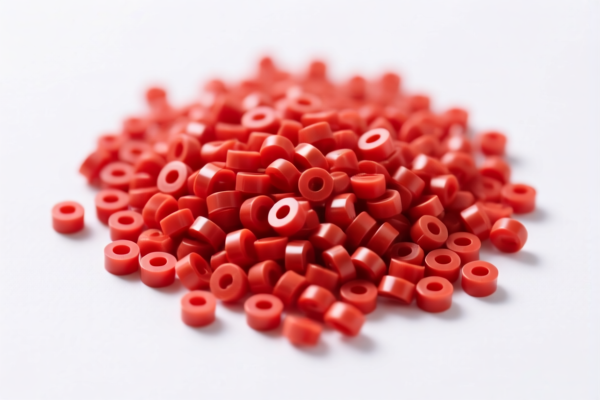
- Primary Forms Only: This classification applies only to raw resin in primary forms (granules, pellets, powder). If processed into finished articles (e.g., pre-made plastic chairs), different codes apply.
💰 Part 3: 2026 Latest Tariff Rate Details (With Additional Taxes & Policy Add-ons)
✅ Applicable Country: United States (US)
✅ Origin: China (CN)
✅ Effective Time: 2026 Tariff Schedule (Reflecting Section 301 Duties)
🎯 1. 3903.30.00.00 —— ABS Copolymers (The Correct Code for ABS Resin)
| Item | Content |
|---|---|
| Base Tariff Rate | 0% (Ad Valorem) |
| USITC Additional Duty (Section 301) | 0% (Exempted) |
| IEEPA Additional Duty | 0% |
| Total Tax Rate | 0% |
| Tax Calculation | CIF Value × 0% = $0 Duty |
| De Minimis Eligibility | ❌ No (Standard for bulk chemicals) |
| Legal Basis Path | USITC:3903.30.00.00 → Exempt from Section 301 List 4 |
📌 Explanation:
- ABS copolymers are explicitly exempted from the 25% Section 301 tariffs that affect many other Chinese-made goods.
- This makes ABS one of the most tariff-friendly engineering plastics importing into the US.
- Total Cost Impact: Minimal. Only standard customs processing fees apply; no duty burden.
🎯 2. 3903.90.50.00 —— Other Polymers of Styrene (If Misclassified or Non-ABS)
| Item | Content |
|---|---|
| Base Tariff Rate | 6.5% |
| USITC Additional Duty (Section 301) | +25% |
| IEEPA Additional Duty | Not specified in data (Assumed included in Section 301 total) |
| Total Tax Rate | 31.5% |
| Tax Calculation | CIF Value × 31.5% |
| De Minimis Eligibility | ❌ No |
| Legal Basis Path | USITC:3903.90.50.00 → Subject to Section 301 List 4B |
📌 Note:
- If your resin is not ABS (e.g., Polystyrene/PS), you must pay 31.5%.
- This rate is significantly higher than ABS.
- Misclassifying ABS as "Other Styrene Polymers" would result in paying 31.5% unnecessarily.
- Misclassifying non-ABS as ABS would lead to customs audits, fines, and back-taxes of 31.5% + penalties.
🛠️ Part 4: Customs Clearance Practical Advice (Avoid Pitfalls)
✅ 1. Documentation Checklist (Non-negotiable)
| Document | Required | Purpose |
|---|---|---|
| ✅ Certificate of Composition | ✔️ | Must explicitly state "Acrylonitrile-Butadiene-Styrene (ABS) Copolymer" with percentage breakdown if required. |
| ✅ Technical Data Sheet (TDS) | ✔️ | Proves it is an engineering resin, not a finished product or a different polymer. |
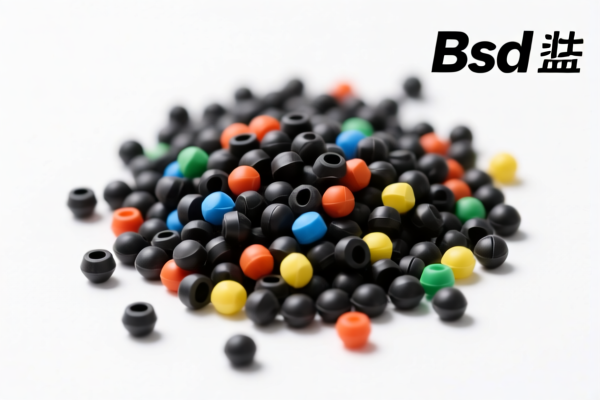
| ✅ Product Photo (Granules/Pellets) | ✔️ | Must show raw material form, not molded parts. |
| ✅ Commercial Invoice | ✔️ | Description must match HS Code exactly: "ABS Copolymer Resin" vs. "Polystyrene". |
| ✅ Origin Certificate | ✔️ | To prove origin and confirm Section 301 status. |
✅ 2. Declaration Tips (Key Mantra)
🔥 “ABS gets 0%, PS gets 31.5% – Be Precise!”
| Scenario | Correct Declaration | Wrong Declaration | Consequence |
|---|---|---|---|
| Standard ABS Resin | 3903.30.00.00 – ABS Copolymers |
3903.90.50.00 – Other Styrene Polymers |
Overpayment of 31.5% tax |
| Polystyrene (PS) Resin | 3903.90.50.00 – Other Styrene Polymers |
3903.30.00.00 – ABS Copolymers |
Underpayment + Fines + Back Taxes |
| Finished ABS Parts | 3926.90.98 – Other Plastic Articles |
3903.30.00.00 – Resin |
Wrong Chapter – Customs Holds Shipment |
✅ 3. Special Cases & Handling
| Situation | Handling Advice |
|---|---|
| ABS Blends | If the material is ABS blended with other polymers (e.g., PC/ABS), it may still fall under 3903.30 if ABS is the essential character. However, complex blends may require expert classification. |
| Recycled ABS | Must clearly state "Recycled ABS Resin." If it does not meet the definition of a "copolymer" in primary form, it may be reclassified. |
| Colored vs. Natural | Colorants do not change the HS code. Natural or colored ABS is still 3903.30.00.00. |
| Impact Modifiers | If butadiene content is altered significantly, ensure the product still meets the definition of ABS. Otherwise, it may fall under "Other." |
🌍 Part 5: Global Market Comparison (2026 Latest)
| Country/Region | Recommended HS Code | Duty Rate (China Origin) | Key Certifications | Notes |
|---|---|---|---|---|
| 🇺🇸 USA | 3903.30.00.00 (ABS) |
0% | EPA, TSCA | Key Benefit: ABS is exempt from Section 301 tariffs. |
| 🇨🇳 China | 3903.30.00.00 |
5.5% | N/A | Import duty for Chinese imports into China (if applicable via free trade zones). |
| 🇪🇺 EU | 3903.30 |
6.5% | REACH Registration | REACH Compliance is Critical for all plastics imports. |
| 🇬🇧 UK | 3903.30 |
6.5% | UK REACH | Post-Brexit UK REACH required. |
| 🇮🇳 India | 3903.30 |
7.5% - 10% | BIS (if applicable) | High import duties apply; not exempt. |
📌 Conclusion:
- USA is the most favorable market for ABS resin due to the 0% duty rate.
- Europe and India have moderate duties (~6.5-10%).
- Always confirm REACH compliance for EU/UK shipments to avoid border delays.
📌 Part 6: Common Mistakes & Pitfalls (Lessons Learned)
❌ Mistake 1: Declaring ABS as "Polystyrene" to confuse customs.
👉 Result: Customs laboratory testing will identify the polymer. 31.5% back-taxes + 200% penalty.
❌ Mistake 2: Declaring "ABS Blend" as "ABS" without documentation.
👉 Result: If the blend is PC/ABS or ASA, it may have a different tariff rate. Misclassification risks.
❌ Mistake 3: Ignoring the "Primary Forms" requirement.
👉 Result: If shipped as molded parts (e.g., laptop cases), HS Code 3903.30.00.00 is invalid. Use 3926.90.98. Customs Seizure Risk.
✅ Correct Practice:
"ABS Copolymer Resin, Primary Form, Granules, Model XYZ, TDS Attached, 100% ABS Composition"
🎯 Part 7: Conclusion: Precision Saves Money!
🎯 Remember the Mantra:
🔹 "ABS is 0%, Other is 31.5% – Know Your Polymer!"
🔹 "Primary Form Only – If Molded, It’s Not 3903.30!"
📌 Pro Tip:
- If you are importing ABS into the USA, ensure your supplier provides a Certificate of Analysis (COA) confirming the material is an ABS Copolymer.
- For PC/ABS blends, consult a customs broker to determine if it still qualifies for 3903.30.00.00 or falls under "Other" (3903.90.50.00).
- Pre-clearance: Submit a Binding Tariff Information (BTI) or Advance Ruling application to US Customs if the composition is ambiguous.
📣 Immediate Action:
📞 Verify your Material Safety Data Sheet (MSDS) and TDS.
🚀 Ensure your invoice reads "ABS Copolymer" not just "Plastic Resin."
💼 Save 31.5% by being accurate!
✨ Professional Clearance Starts with Precise Classification!
💼 Your Profit Margin Depends on Correct HS Codes!
Customer Reviews
About HS Code Classification
The Harmonized System (HS) is an internationally standardized nomenclature developed by the World Customs Organization (WCO) to classify traded products. Over 200 countries use the HS system as the basis for customs tariffs, trade statistics, and import/export regulations.
Each HS code follows a hierarchical structure:
- Chapter (2 digits) — Broad category of goods (e.g., Chapter 84: Machinery and Mechanical Appliances)
- Heading (4 digits) — More specific grouping within the chapter
- Subheading (6 digits) — Internationally standardized breakdown, used by all WCO member countries
- National subdivisions (8-10 digits) — Country-specific extensions for further classification, such as US HTSUS 10-digit codes
Correct HS code classification is essential for smooth customs clearance, accurate duty payment, and compliance with trade regulations. Misclassification can lead to customs delays, overpayment of duties, or penalties.
When importing from CN to US, the applicable tariff rates may include:
- Most-Favored-Nation (MFN) rate — The standard duty rate applied to WTO members
- General rate — Applied to countries without trade agreements
- Trade remedy duties — Additional tariffs such as Section 301 (anti-dumping), Section 232 (national security), or countervailing duties
The information provided on this page is for reference purposes only. For official classification, please consult with your local customs authority or a licensed customs broker.