ABS Plastic Reducing Fitting
CN → US| HS Code | Tariff Rate | Origin | Destination | Doc |
|---|---|---|---|---|
| 3917400030 | 40.3% | CN | US | Official Doc |
| 3917400095 | 40.3% | CN | US | Official Doc |
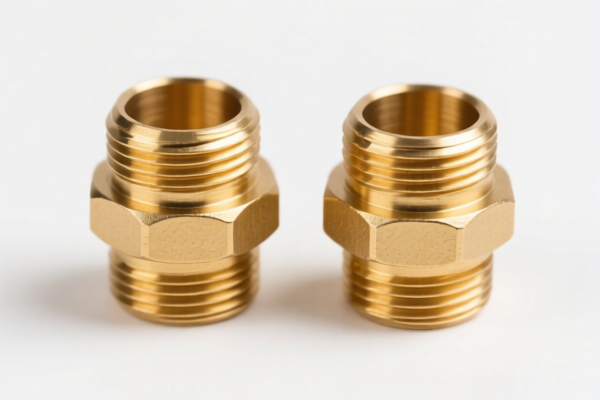
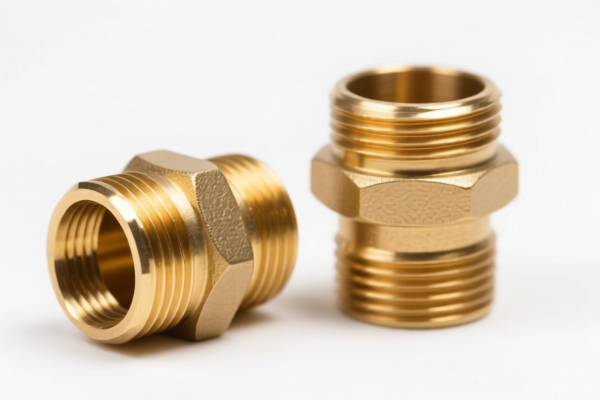
Product Images


AI Analysis
🚰 ABS Plastic Reducing Fitting (Drain/Waste/Vent)
🌐 HS Code Reference & Clearance Guide | 2026 Latest Tariff Analysis | Professional-Level Customs Strategy
📌 I. Product Definition & Classification: What exactly is an "ABS Reducing Fitting"?
An ABS Reducing Fitting is a critical component in plumbing systems, specifically designed for Drain, Waste, and Vent (DWV) applications. It is made from Acrylonitrile-Butadiene-Styrene (ABS), a durable, impact-resistant thermoplastic polymer.
In international trade, these fittings are strictly categorized by their pressure rating and chemical composition. For ABS DWV fittings, the classification hinges on two main factors: 1. Material: Specifically Acrylonitrile-Butadiene-Styrene (ABS). 2. Pressure Rating: Whether they are "Pressure Rated" or "Non-Pressure Rated" (DWV).
⚠️ Key Distinction:
- DWV Fittings: Used for gravity-fed waste lines. Not designed to withstand high internal pressure. These are the primary target for this analysis.
- Pressure Fittings: Used for water supply lines. These would fall under different subheadings (e.g., 3917.40.00.30 variants or other pressure-rated codes).
- Material Specificity: "Plastics" is a broad category. If the fitting is made of PVC, CPVC, or other polymers, it will not use the ABS-specific code (3917.40.00.30).
📦 II. HS Code Classification Details (2026 Latest Tariff Authoritative Comparison)
Based on the provided data, here are the two primary HS Codes for ABS Reducing Fittings, differentiated by their specific duty sub-categories.
| HS Code | Product Description | Application Scenario | Key Characteristic |
|---|---|---|---|
3917.40.00.30 |
Fittings Plumbing fittings, not pressure rated (Drain/Waste/Vent (DWV)): Of acrylonitrile-butadiene-styrene | Standard home plumbing, sewer lines, vent stacks, ABS drainage systems | ✅ Specific to ABS + Non-Pressure (DWV) |
3917.40.00.95 |
Fittings Other | Generic plastic fittings not specifically defined as DWV or other specific materials | ✅ "Catch-all" for other plastic fittings, non-ABS, or pressure-rated if not otherwise specified |
🔍 Critical Reminder:
- Code3917.40.00.30is the most accurate for standard ABS DWV reducing fittings. It is specific to the material (ABS) and the use (Non-Pressure/DWV).
- Code3917.40.00.95is a residual category. It should only be used if the fitting is NOT ABS (e.g., PVC) or NOT DWV (e.g., Pressure Pipe Fittings) and does not fit other specific subheadings.
- Do not mix materials: If you are importing PVC reducing fittings,3917.40.00.30is incorrect. You must check PVC-specific codes or use95if no other specific PVC code applies.
💰 III. 2026 Latest Tariff Rate Details (Detailed Tax Clauses)
✅ Applicable Country: United States (US)
✅ Origin: China (CN) (Assumed based on typical trade data structure; verify if origin differs)
✅ Effective Time: Current Tariff Schedule (2026)
🎯 1. 3917.40.00.30 —— ABS Plastic DWV Fittings (Non-Pressure Rated)
| Item | Content |
|---|---|
| Base Tariff Rate | 0.0% (Ad Valorem) |
| Additional Tariffs (Section 301/Other) | 0.0% |
| Total Tax Rate | 0.0% |
| Tax Calculation | CIF Value × 0% = $0.00 |
| Eligibility for De Minimis | ✅ Yes (Likely eligible for $800 de minimis exemption if shipped via low-value shipment, subject to current CBP enforcement) |
| Legal Basis Path | HTSUS:3917.40.00.30 → Base: 0.0% → Additional: 0.0% |
📌 Explanation:
- This code enjoys a zero-duty status for base tariffs.
- Unlike electronics or steel, plastic plumbing fittings (specifically ABS DWV) are currently not subject to significant Section 301 punitive tariffs or IEEPA surcharges in this specific subheading.
- Cost Advantage: This is a highly competitive product for import into the US, with no direct customs duty cost.
🎯 2. 3917.40.00.95 —— Other Plastic Fittings (Generic)
| Item | Content |
|---|---|
| Base Tariff Rate | 0.0% (Ad Valorem) |
| Additional Tariffs (Section 301/Other) | 0.0% |
| Total Tax Rate | 0.0% |
| Tax Calculation | CIF Value × 0% = $0.00 |
| Eligibility for De Minimis | ✅ Yes (Likely eligible for $800 de minimis exemption) |
| Legal Basis Path | HTSUS:3917.40.00.95 → Base: 0.0% → Additional: 0.0% |
📌 Note:
- While the tax rate is also 0%, using this code for ABS DWV fittings is incorrect classification.
- Misclassification from30to95might not trigger a tax penalty (since both are 0%), but it violates customs declaration accuracy laws.
- Risk: Incorrect HS Code can lead to audit flags, even if no tax is owed. Always use the most specific code (30).
🛠️ IV. Customs Clearance Practical Advice (Battle-Tested Pitfall Guide)
✅ 1. Required Documentation Checklist (Non-Negotiable)
| Document | Required? | Explanation |
|---|---|---|
| ✅ Commercial Invoice | ✔️ | Must clearly state: "ABS Reducing Fitting, DWV, Non-Pressure Rated" |
| ✅ Product Specifications | ✔️ | Include material: 100% ABS, Diameter, Schedule (e.g., SCH 40/SCH 80), Pressure Rating: Non-Pressure |
| ✅ Material Safety Data Sheet (MSDS) | ✔️ | Required for plastic resins/chemicals. Confirms ABS composition |
| ✅ HS Code Confirmation | ✔️ | Declare 3917.40.00.30 for ABS DWV. Do not use generic "Plastic Fitting" without material specification |
| ✅ Country of Origin Certificate | ✔️ | If claiming any preferential rates (though 0% is standard) |
| ✅ Packing List | ✔️ | Detail net/gross weight, number of fittings per box |
✅ 2. Declaration Tips (Key Mnemonics)
🔥 “Material First, Use Second, Code Specific, Zero Tax Clear!”
| Scenario | Correct Declaration | Incorrect Practice |
|---|---|---|
| ABS DWV Reducing Fitting | 3917.40.00.30 |
Generic "Plastic Fitting" → Risk of Audit |
| PVC DWV Fitting | Not 3917.40.00.30 | Use PVC-specific code or 95 if no other |
| ABS Pressure Pipe Fitting | Not 3917.40.00.30 | Use Pressure-rated code (if different) |
| Mixed Materials | Separate Lines | Do not lump PVC and ABS together |
✅ 3. Special Handling Scenarios
| Scenario | Handling Advice |
|---|---|
| OEM Custom Fittings | Provide client order + design drawings. Ensure material is explicitly ABS. |
| Fittings with Metal Threads | If >50% by weight/value is metal, may need reclassification. Ensure plastic is dominant. |
| Small Quantity Samples | Use Section 321 (De Minimis) if under $800. No duty, no formal entry required. |
| Bulk Shipment (> $800) | Formal Entry Required. Still 0% duty, but requires broker filing. |
🌍 V. Global Market Clearance Comparison (2026 Latest)
| Country/Region | Recommended HS Code | Tariff | Certification Required | Notes |
|---|---|---|---|---|
| 🇺🇸 United States | 3917.40.00.30 |
0.0% | None specific (ASTM D2665 compliance) | Best Market: Zero duty, high demand |
| 🇨🇳 China | 3917.40.00.90 |
0.0% - 5% | CCC (if applicable) | Check local PL standards |
| 🇪🇺 European Union | 3917.29.00 |
0.0% - 2.7% | CE Marking (Plastics Regulation) | Different HS structure (8-digit EU code) |
| 🇨🇦 Canada | 3917.40.00.90 |
0.0% | None | Similar to US, zero duty |
| 🇦🇺 Australia | 3917.40.00.00 |
5.0% | None | Higher duty than US |
📌 Conclusion:
- USA is the most favorable market for ABS DWV fittings due to 0% tariff.
- EU and Australia have higher duties or different HS structures.
- No Anti-Dumping Duties currently apply to ABS plastic fittings in the US.
📌 VI. Common Errors & Pitfall Guide (Lessons from the Field)
❌ Error 1: Declaring "Plastic Fitting" without specifying ABS
👉 Consequence: CBP may reclassify to 3917.40.00.95 or ask for clarification → Delay.
✅ Fix: Always specify "Acrylonitrile-Butadiene-Styrene (ABS)".
❌ Error 2: Confusing DWV with Pressure Fittings
👉 Consequence: If labeled as Pressure, but is DWV, it may fail inspection for plumbing codes.
✅ Fix: Clearly state "Non-Pressure Rated" or "DWV" on invoice.
❌ Error 3: Using PVC Codes for ABS Fittings
👉 Consequence: Misclassification. Even if tax is 0%, it creates record-keeping errors.
✅ Fix: Verify material. ABS ≠ PVC.
❌ Error 4: Ignoring Material Safety Data Sheets (MSDS)
👉 Consequence: Customs may hold shipment for chemical verification.
✅ Fix: Provide MSDS for ABS resin/fittings.
🎯 VII. Conclusion: Professional Declaration, Zero Duty, Fast Clearance!
🎯 Remember the Mnemonic:
🔹 "ABS DWV, Code 30, Zero Duty, No Worry!"
🔹 "Pressure vs. Gravity, Know the Difference!"
🔹 "PVC is not ABS, Do Not Mix!"
📌 Pro Tip:
If you are importing small quantities (under $800 per shipment), use Section 321 (De Minimis) for fastest clearance. No broker fee, no formal entry.
For bulk shipments, still 0% duty, but you need a licensed customs broker for formal entry.
📣 Immediate Action:
📞 Confirm Material: ABS
📞 Confirm Use: DWV (Non-Pressure)
📞 Declare HS Code: 3917.40.00.30
🚀 Enjoy Zero Tariff, Smooth Clearance, and High Profit Margins!
✨ Professional Customs, Started with Precise Classification!
💼 Your Every Dollar Saved Counts!
Customer Reviews
About HS Code Classification
The Harmonized System (HS) is an internationally standardized nomenclature developed by the World Customs Organization (WCO) to classify traded products. Over 200 countries use the HS system as the basis for customs tariffs, trade statistics, and import/export regulations.
Each HS code follows a hierarchical structure:
- Chapter (2 digits) — Broad category of goods (e.g., Chapter 84: Machinery and Mechanical Appliances)
- Heading (4 digits) — More specific grouping within the chapter
- Subheading (6 digits) — Internationally standardized breakdown, used by all WCO member countries
- National subdivisions (8-10 digits) — Country-specific extensions for further classification, such as US HTSUS 10-digit codes
Correct HS code classification is essential for smooth customs clearance, accurate duty payment, and compliance with trade regulations. Misclassification can lead to customs delays, overpayment of duties, or penalties.
When importing from CN to US, the applicable tariff rates may include:
- Most-Favored-Nation (MFN) rate — The standard duty rate applied to WTO members
- General rate — Applied to countries without trade agreements
- Trade remedy duties — Additional tariffs such as Section 301 (anti-dumping), Section 232 (national security), or countervailing duties
The information provided on this page is for reference purposes only. For official classification, please consult with your local customs authority or a licensed customs broker.