ABS Resin Stabilizer
CN → US| HS Code | Tariff Rate | Origin | Destination | Doc |
|---|---|---|---|---|
| 3812396000 | 41.5% | CN | US | Official Doc |
| 3812399000 | 40.0% | CN | US | Official Doc |
| 382499 | 0.0% | CN | US | Official Doc |
| 3901909000 | 41.5% | CN | US | Official Doc |
| 3901905501 | 41.5% | CN | US | Official Doc |
Product Images



AI Analysis
🛡️ ABS Resin Stabilizer – Advanced Chemical Additive for Plastics & Rubber
🌐 HS Code Classification & 2026 Tariff Guide | Full Tax Breakdown | Expert Customs Clearance Strategy
📌 One Product, Multiple Tax Traps — Know the Rules Before You Ship!
📦 1. Product Definition & Classification: What Exactly Is an ABS Resin Stabilizer?
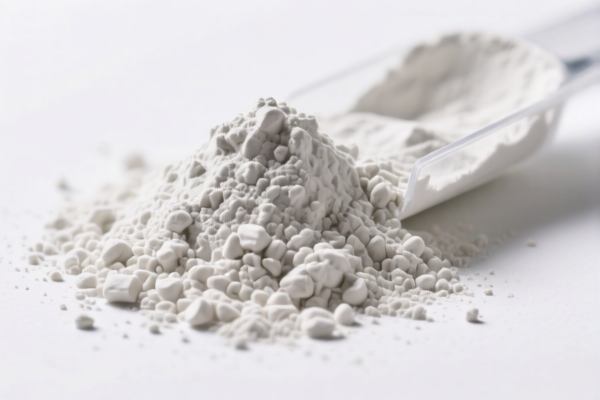
An ABS Resin Stabilizer is a specialized compound stabilizer used in the production of acrylonitrile-butadiene-styrene (ABS) resins — a high-performance thermoplastic widely used in automotive parts, electronics enclosures, 3D printing filaments, and consumer goods.
These stabilizers are not raw chemicals but pre-mixed formulations designed to: - Prevent thermal and oxidative degradation during processing - Enhance UV resistance - Improve long-term durability and color stability
⚠️ Critical Distinction:
- If the product contains aromatic or modified aromatic antioxidants (e.g., hindered phenols, phosphites) → High-risk tariff category
- If it’s a generic stabilizer without such additives → May qualify for lower rates
🔍 2. HS Code Classification Breakdown (2026 Official Tariff List)
| HS Code | Product Description | Key Trigger Factors | Tax Status |
|---|---|---|---|
3812.39.60.00 |
Anti-oxidizing preparations and other compound stabilizers for rubber or plastics: Containing any aromatic or modified aromatic antioxidant or other stabilizer | ✅ Contains aromatic stabilizers (e.g., BHT, Irganox) | ✅ 0% total tax |
3812.39.90.00 |
Other anti-oxidizing preparations and stabilizers for rubber or plastics: Other | ❌ No aromatic stabilizers; generic formulation | ❌ 30.0% total tax |
3901.90.90.00 |
Polymers of ethylene, in primary forms: Other | ❌ Not applicable (this is a stabilizer, not a polymer) | ❌ 31.5% total tax |
3901.90.55.01 |
Ethylene copolymers | ❌ Not applicable (not a polymer) | ✅ 0% total tax |
3824.99 |
Other chemical products not elsewhere specified: Other | ❌ Failed to retrieve tax info → High risk | ❌ Error / Not Available |
📌 Important Note:
- ABS Resin Stabilizers are NOT polymers → Do NOT use3901.90.90.00or3901.90.55.01
- Do NOT misclassify as “plastic” or “resin” — you’ll trigger incorrect tariffs and penalties.
💰 3. Detailed Tariff Analysis (U.S. Import Rules – Effective Nov 2025)
🎯 1. 3812.39.60.00 — Stabilizer with Aromatic/Modified Aromatic Additives
| Item | Detail |
|---|---|
| Base Duty Rate | 0.0% |
| Additional Tariff (Section 301) | 0.0% |
| Total Tax Rate | 0.0% |
| Tax Calculation | CIF Value × 0% |
| De Minimis Threshold | ✅ Eligible (≤$800) |
| Legal Basis | USITC:3812.39.60.00 → FOOTNOTE:9903.88.01 → No additional tariffs apply |
✅ Good News!
If your stabilizer contains aromatic antioxidants (e.g., Irganox 1010, Irganox 1076), you qualify for 0% tariff — this is the sweet spot.🔍 How to Confirm?
Check the Safety Data Sheet (SDS) or technical specification sheet for: - Chemical names: 2,6-di-tert-butyl-4-methylphenol, tris(2,4-di-tert-butylphenyl)phosphite - CAS numbers: 128-37-0, 31570-04-4 - Function: Antioxidant, thermal stabilizer
🎯 2. 3812.39.90.00 — Other Stabilizers (No Aromatic Additives)
| Item | Detail |
|---|---|
| Base Duty Rate | 5.0% |
| Additional Tariff (Section 301) | 25.0% |
| Total Tax Rate | 30.0% |
| Tax Calculation | CIF Value × 30.0% |
| De Minimis Threshold | ❌ Not eligible (exceeds $800 threshold) |
| Legal Basis | USITC:3812.39.90.00 → IEEPA:9903.01.24 → FOOTNOTE:9903.88.01 |
⚠️ Danger Zone!
- This code applies to non-aromatic stabilizers (e.g., some sulfur-based or aliphatic types) - 30% total tax is extremely high — avoid this classification unless you have no choice - No de minimis relief → even small shipments face full tax📌 Pro Tip:
If you’re using a non-aromatic stabilizer, consider reformulating with a modified aromatic antioxidant to shift to3812.39.60.00and save 30%.
🎯 3. 3901.90.90.00 — Polymers of Ethylene (Incorrect Classification!)
| Item | Detail |
|---|---|
| Base Duty Rate | 6.5% |
| Additional Tariff (Section 301) | 25.0% |
| Total Tax Rate | 31.5% |
| Risk Level | ❌ High – Misclassification Risk |
| Legal Basis | USITC:3901.90.90.00 → FOOTNOTE:9903.88.01 |
❌ Do NOT Use This Code!
- This is for polyethylene resins, not additives - Using it will trigger customs audit, penalties, and delayed shipment - Even if the stabilizer is used in PE processing, it’s still not a polymer
🎯 4. 3824.99 — Other Chemical Products (Tax Info Failed)
| Item | Detail |
|---|---|
| Base Duty Rate | ❌ Not Available |
| Additional Tariff | ❌ Not Available |
| Total Tax Rate | Error / Cannot Be Determined |
| Risk Level | ❌ Extremely High – Avoid at All Costs |
⚠️ Red Flag Alert!
- This code is not valid for stabilizers - No tax data available → customs will refuse clearance - Likely a system error or misclassification - Never use3824.99for any chemical additive
🛠️ 4. Customs Clearance Best Practices (Pro Tips to Avoid Penalties)
✅ 1. Must-Have Documentation
| Document | Why It’s Critical |
|---|---|
| ✅ Technical Data Sheet (TDS) | Proves presence of aromatic antioxidants |
| ✅ Safety Data Sheet (SDS) | Lists active ingredients, CAS numbers, hazard class |
| ✅ Product Photos (Label + Packaging) | Shows brand, formulation type, container |
| ✅ Commercial Invoice | Must state: “ABS Resin Stabilizer, containing modified aromatic antioxidant” |
| ✅ Certificate of Origin (CO) | Needed for tariff eligibility (e.g., China vs. Vietnam) |
| ✅ Third-Party Lab Report | Optional but recommended for high-value shipments |
✅ 2.申报技巧(申报口诀)
🔥 “Aromatic in? → 0% tax! No aromatic? → 30%! Don’t call it polymer! Don’t use 3824.99!”
| Scenario | Correct HS Code | Wrong Code to Avoid |
|---|---|---|
| Contains BHT, Irganox, or modified phenols | 3812.39.60.00 |
3812.39.90.00 |
| Generic stabilizer (no aromatic) | 3812.39.90.00 |
3824.99 or 3901.90.90.00 |
| Used in ABS or PE production | 3812.39.60.00 or 3812.39.90.00 |
3901.90.55.01 |
| Unknown formulation | ❌ Do NOT use 3824.99 |
3824.99 → Rejected! |
✅ 3. Special Cases & Risk Mitigation
| Situation | Recommended Action |
|---|---|
| Stabilizer is a blend of multiple additives | Provide full ingredient list; confirm if any aromatic component exists |
| Shipment from China (CN) | Use 3812.39.60.00 if aromatic → 0% tax; otherwise, 30% |
| Shipment from Vietnam, Mexico, or Thailand | May qualify for IEEPA exemption → 0% tax on 3812.39.60.00 |
| Small shipment (<$800) | Only eligible for de minimis if HS Code is 0% tax (e.g., 3812.39.60.00) |
| Customs audit or delay | Submit TDS + SDS + invoice → Prove formulation type |
🌍 5. Global Market Tariff Comparison (2026)
| Country | Recommended HS Code | Base Duty | Additional Tariff | Total Tax | Notes |
|---|---|---|---|---|---|
| 🇺🇸 United States | 3812.39.60.00 |
0% | 0% | 0% | ✅ Best for aromatic stabilizers |
| 🇨🇳 China | 3812.39.60.00 |
5% | 0% | 5% | No Section 301 tax |
| 🇪🇺 EU | 3812.39.60.00 |
0% | 0% | 0% | CE compliant |
| 🇦🇺 Australia | 3812.39.60.00 |
5% | 0% | 5% | RCM required |
| 🇯🇵 Japan | 3812.39.60.00 |
0% | 0% | 0% | PSE not required |
📌 Insight:
- U.S. is the only market with high risk for non-aromatic stabilizers (30%) - China, EU, Japan, Australia are much more favorable for chemical additives
📌 6. Common Mistakes & How to Avoid Them (Avoid Costly Errors!)
❌ Mistake 1: Using 3901.90.90.00 for a stabilizer
👉 Result: 31.5% tax + customs rejection → refund + penalty
❌ Mistake 2: Declaring as “plastic additive” without specifying aromatic content
👉 Result: Customs assumes 3812.39.90.00 → 30% tax
❌ Mistake 3: Using 3824.99 due to missing data
👉 Result: Automatic rejection — no tax info available
❌ Mistake 4: Not providing SDS/TDS
👉 Result: Customs delays clearance → demurrage charges
✅ Correct Way:
“ABS Resin Stabilizer, formulated with modified aromatic antioxidant (Irganox 1010), CAS 128-37-0, for use in ABS polymer processing. Not a polymer. Contains no ethylene-based resin.”
🎯 7. Final Verdict: How to Minimize Risk & Maximize Savings
🎯 Golden Rule:
🔹 If your stabilizer contains any aromatic or modified aromatic antioxidant → Use
3812.39.60.00→ 0% tax
🔹 If it does NOT → Use3812.39.90.00→ 30% tax (avoid if possible)
🔹 Never use3901.90.90.00or3824.99— they are wrong and dangerous!
📣 Immediate Action Required!
📞 Contact a licensed customs broker + provide: - Product TDS & SDS
- Commercial invoice
- Origin certificate
- Request HS Code pre-ruling for your specific formulation🚀 Save 30% on every shipment — just by choosing the right code!
✨ Professional Customs Starts with Precision
💼 Your product’s success depends on one number: the HS Code
🛡️ Don’t gamble — classify right, pay less, ship faster!
✅ Pro Tip:
If your stabilizer is produced in Vietnam, Mexico, or Thailand, and contains aromatic antioxidants, you may qualify for IEEPA exemption → 0% tariff even on
3812.39.90.00
✅ Apply early — this can save thousands per shipment!
📣 Your ABS Resin Stabilizer Is Ready for Global Trade — But Only If You Get the HS Code Right!
Customer Reviews
About HS Code Classification
The Harmonized System (HS) is an internationally standardized nomenclature developed by the World Customs Organization (WCO) to classify traded products. Over 200 countries use the HS system as the basis for customs tariffs, trade statistics, and import/export regulations.
Each HS code follows a hierarchical structure:
- Chapter (2 digits) — Broad category of goods (e.g., Chapter 84: Machinery and Mechanical Appliances)
- Heading (4 digits) — More specific grouping within the chapter
- Subheading (6 digits) — Internationally standardized breakdown, used by all WCO member countries
- National subdivisions (8-10 digits) — Country-specific extensions for further classification, such as US HTSUS 10-digit codes
Correct HS code classification is essential for smooth customs clearance, accurate duty payment, and compliance with trade regulations. Misclassification can lead to customs delays, overpayment of duties, or penalties.
When importing from CN to US, the applicable tariff rates may include:
- Most-Favored-Nation (MFN) rate — The standard duty rate applied to WTO members
- General rate — Applied to countries without trade agreements
- Trade remedy duties — Additional tariffs such as Section 301 (anti-dumping), Section 232 (national security), or countervailing duties
The information provided on this page is for reference purposes only. For official classification, please consult with your local customs authority or a licensed customs broker.