ATV Tires
CN → US| HS Code | Tariff Rate | Origin | Destination | Doc |
|---|---|---|---|---|
| 4011902010 | 39.0% | CN | US | Official Doc |
| 4011901010 | 35.0% | CN | US | Official Doc |
Product Images
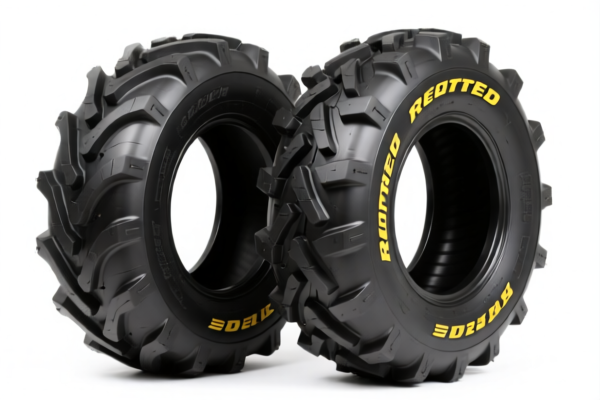
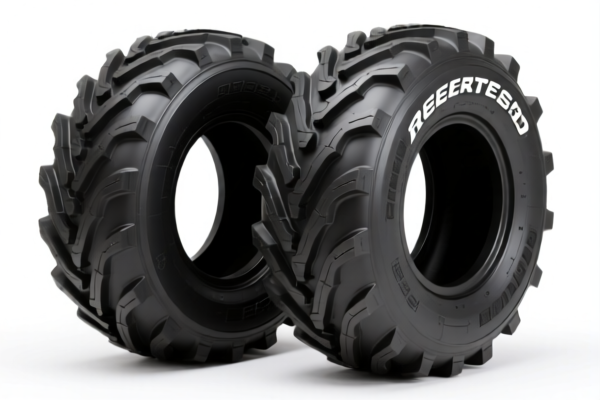
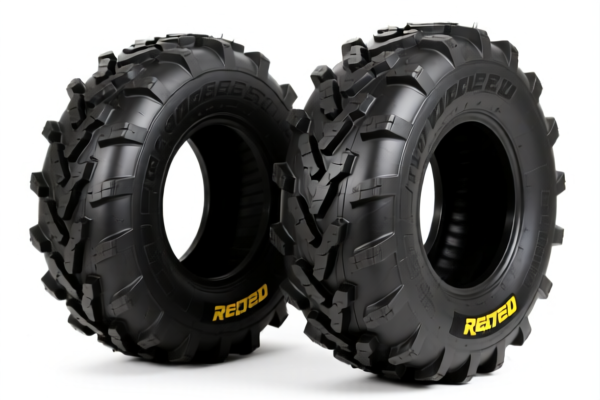
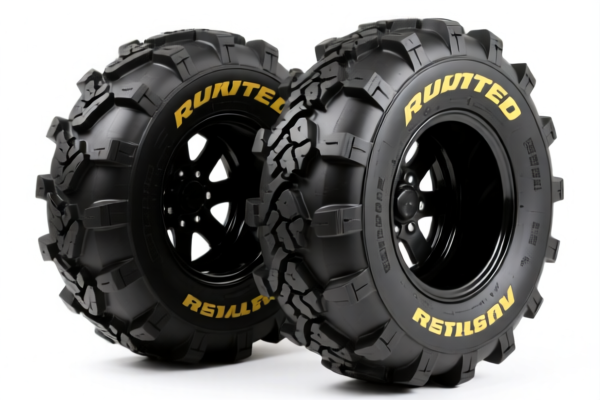
AI Analysis
🚜 ATV Tires (New Pneumatic Rubber Tires for All-Terrain Vehicles)
🌐 HS Code Reference & Clearance Guide | 2026 Latest Tariff Analysis | Specialized Clearance Strategy for Off-Road Vehicles 📌 I. Product Definition & Classification: What Exactly Are "ATV Tires"?
ATV tires are specialized rubber products designed for off-road use, specifically on All-Terrain Vehicles (ATVs), golf carts, and similar light utility vehicles. In international trade, the classification hinges strictly on tread pattern and specific application.
Two Key Categories: 1. "Herring-bone" or Similar Tread: Designed for high traction on mud, sand, or uneven terrain. 2. Other Radial Tires: Standard radial construction for turf, lawn, garden, or trailer applications where extreme off-road traction is not the primary design feature.
⚠️ Critical Distinction:
- If the tire has a "herring-bone" (V-shaped or zig-zag) or similar aggressive tread → It falls under 4011.90.10.10.
- If it is a Radial tire used on ATVs/Golf Carts but does NOT have the specific "herring-bone" tread → It falls under 4011.90.20.10.
📦 II. HS Code Classification Details (2026 Latest Tariff Authority Comparison)
| HS Code | Product Description | Key Feature | Specific Application |
|---|---|---|---|
4011.90.10.10 |
New pneumatic tires, of rubber: Other: Having a "herring-bone" or similar tread | ✅ Herring-bone/V-tread | Golf carts, ATVs, turf/lawn/garden, trailers |
4011.90.20.10 |
New pneumatic tires, of rubber: Other: Radial Of a kind used on golf carts, all-terrain vehicles... | ✅ Radial Construction (Non-herringbone) | Golf carts, ATVs, turf/lawn/garden, trailers |
🔍 Key Insight:
- Both codes are for "Other" tires (non-truck, non-passenger car). - Both are explicitly for Golf Carts, ATVs, and Trailer applications. - The sole differentiator is the tread pattern for the first code, vs. construction type (Radial) for the second code when herring-bone is absent.
💰 III. 2026 Latest Tariff Rate Breakdown (Including Additional Duties)
✅ Applicable Country: United States (US)
✅ Origin: China (CN)
✅ Effective Date: Current US Trade Policy (Section 301 + IEEPA)
🎯 1. 4011.90.10.10 — Herring-bone/ Similar Tread Tires
| Item | Content |
|---|---|
| Base Tariff | 0.0% (Ad Valorem) |
| Section 301 Additional Tariff | +25.0% |
| Total Tax Rate | 25.0% |
| Tax Calculation | CIF Value × 25% |
| De Minimis Exemption | ❌ Not Eligible (High-risk category for small parcels) |
| Legal Basis | HTSUS 4011.90.10.10 + USITC Footnote for Section 301 |
📌 Explanation:
- While the base MFN tariff is 0%, the Section 301 additional duty of 25% applies to all Chinese-made tires in this category. - This is a standard high-risk tariff for rubber products.
🎯 2. 4011.90.20.10 — Radial Tires (Non-Herring-bone)
| Item | Content |
|---|---|
| Base Tariff | 4.0% (Ad Valorem) |
| Section 301 Additional Tariff | +25.0% |
| Total Tax Rate | 29.0% |
| Tax Calculation | CIF Value × 29% |
| De Minimis Exemption | ❌ Not Eligible |
| Legal Basis | HTSUS 4011.90.20.10 + USITC Footnote for Section 301 |
📌 Explanation:
- This code carries a 4% base duty PLUS the 25% Section 301 surcharge. - Total 29% is significantly higher than the herring-bone variant due to the base tariff component. - Risk Alert: Misclassifying a herring-bone tire as "Other Radial" to avoid the base tariff is a common audit target. Customs will inspect tread patterns.
🛠️ IV. Clearance Practical Advice (实战避坑指南)
✅ 1. Required Documentation Checklist (Non-Negotiable)
| Document | Mandatory? | Purpose |
|---|---|---|
| ✅ Detailed Product Specs | ✔️ | Must specify: Tread pattern (Herring-bone vs. Radial), Size (e.g., 25x8-12), Load Index, Speed Rating. |
| ✅ Tread Pattern Photos | ✔️ | CRITICAL: Clear images of the tread must prove if it is "Herring-bone" or "Other". |
| ✅ Commercial Invoice | ✔️ | Must explicitly state "New Pneumatic Tires for ATV/Golf Cart". |
| ✅ Packing List | ✔️ | List each tire individually with HS Code reference. |
| ✅ Certificate of Origin | ✔️ | To confirm Chinese origin (triggers Section 301). |
| ✅ Brand/Model Info | ✔️ | Avoid generic descriptions like "Tires for Vehicle". |
✅ 2. Classification Strategy & Tips
🔥 "Check the Tread, Then Check the Construction!"
| Scenario | Correct HS Code | Incorrect HS Code | Consequence |
|---|---|---|---|
| Tire has V-shaped/Herring-bone tread | 4011.90.10.10 (25%) |
4011.90.20.10 (29%) |
Overpay 4% on base tariff if misclassified. |
| Tire is Radial, no Herring-bone | 4011.90.20.10 (29%) |
4011.90.10.10 (25%) |
Underpay 4% → Customs audit, penalties, back-taxes. |
| Tire for Lawn Mower (not Golf/ATV) | Likely 4011.90.90 (General) |
4011.90.20.10 |
Misclassification: Wrong application scope. |
📌 Key Tip:
- Do NOT assume all ATV tires are the same.
- If the tire is marketed for "Mud/Sand," it is likely Herring-bone (4011.90.10.10).
- If marketed for "Turf/Garden/Golf Cart," check the sidewall for "Radial." If radial and no V-tread, use4011.90.20.10.
✅ 3. Special Cases & Risk Management
| Situation | Handling Advice |
|---|---|
| Mixed Container | Separate Herring-bone and Radial tires in different packages if possible. Clear documentation per package. |
| Used vs. New | These HS Codes are for NEW tires only. Used tires fall under different codes (e.g., 4012.10). Misdeclaring used as new is illegal. |
| Importer Security Filing (ISF) | File 10 days prior to loading. Misclassification here leads to $5,000 fines. |
| Anti-Circumvention | Ensure no "essential Chinese components" are assembled in other countries to bypass tariffs. |
🌍 V. Global Market Comparison (2026 Latest)
| Country/Region | Recommended HS Code | Total Tax Rate (China Origin) | Key Certifications | Notes |
|---|---|---|---|---|
| 🇺🇸 USA | 4011.90.10.10 / 4011.90.20.10 |
25% / 29% | DOT, SNR (if applicable) | Highest duty environment. |
| 🇨🇳 China | 4011.90.10 / 4011.90.20 | 0% - 15% (Export duty may apply) | GB Standards | Export duty varies; check current MOFCOM list. |
| 🇪🇺 EU | 4011.20 (if radial) / 4011.10 | 0% - 4% | E-Mark, DOT | No Section 301 equivalent. Lower cost entry. |
| 🇦🇺 Australia | 4011.20 | 5% | SAA, RCM | Moderate duties, strong quality checks. |
📌 Conclusion:
- The US market is the most expensive due to the 25% Section 301 duty. - EU and other markets are significantly cheaper (0-5%). Consider diversifying supply chains to Southeast Asia (Vietnam, Thailand) if exporting to the US, as these countries often have different tariff treatment for tires.
📌 VI. Common Mistakes & Pitfalls (Blood & Tears Lessons)
❌ Mistake 1: Ignoring the Tread Pattern
👉 Consequence: Classifying Herring-bone tires as "Other Radial" to save 4% base duty.
Result: Customs inspection reveals tread pattern → Back-taxes + Penalties.
❌ Mistake 2: Using Generic Descriptions
👉 Consequence: Describing as "Rubber Tires for Vehicles" without specifying ATV/Golf Cart.
Result: Customs may assign a general tire code with higher duties or reject the shipment for insufficient detail.
❌ Mistake 3: Confusing New with Remolded/Used
👉 Consequence: Using 4011 codes for used tires.
Result: Illegal import. Tires for reuse fall under 4012.10 with different regulations.
✅ Correct Approach:
"New Radial Pneumatic Tire, 25x8-12, for ATV, Tread Pattern: Herring-bone, Origin: China, Model: XYZ-250"
🎯 VII. Conclusion: Precision Classification Saves Money!
🎯 Remember the Mantra:
🔹 "Herring-bone? 0% Base + 25% Add = 25% Total."
🔹 "Radial (Non-Herring)? 4% Base + 25% Add = 29% Total."
🔹 "Don't Guess the Tread, Photograph It!"
📌 Pro Tip:
- If your ATV tires are manufactured in Vietnam, Thailand, or Indonesia, you may avoid the 25% Section 301 duty entirely (depending on current rules of origin).
- Strongly recommend applying for a Binding Ruling from US CBP if you import large volumes, to lock in the HS Code and duty rate.
📣 Immediate Action Required:
📞 Contact Your Freight Forwarder with Tread Photos + Product Specs
🚀 Secure Your Supply Chain – Consider diversifying origins to mitigate 29% tax risk!
✨ Professional Clearance Starts with Accurate Classification!
💼 Every Percentage Point Counts in the Tire Industry!
Customer Reviews
About HS Code Classification
The Harmonized System (HS) is an internationally standardized nomenclature developed by the World Customs Organization (WCO) to classify traded products. Over 200 countries use the HS system as the basis for customs tariffs, trade statistics, and import/export regulations.
Each HS code follows a hierarchical structure:
- Chapter (2 digits) — Broad category of goods (e.g., Chapter 84: Machinery and Mechanical Appliances)
- Heading (4 digits) — More specific grouping within the chapter
- Subheading (6 digits) — Internationally standardized breakdown, used by all WCO member countries
- National subdivisions (8-10 digits) — Country-specific extensions for further classification, such as US HTSUS 10-digit codes
Correct HS code classification is essential for smooth customs clearance, accurate duty payment, and compliance with trade regulations. Misclassification can lead to customs delays, overpayment of duties, or penalties.
When importing from CN to US, the applicable tariff rates may include:
- Most-Favored-Nation (MFN) rate — The standard duty rate applied to WTO members
- General rate — Applied to countries without trade agreements
- Trade remedy duties — Additional tariffs such as Section 301 (anti-dumping), Section 232 (national security), or countervailing duties
The information provided on this page is for reference purposes only. For official classification, please consult with your local customs authority or a licensed customs broker.