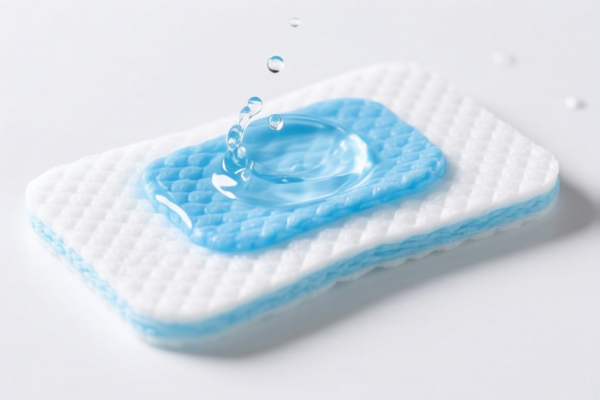
Absorbent Paper Pad
CN → US| HS Code | Tariff Rate | Origin | Destination | Doc |
|---|---|---|---|---|
| 4823907000 | 35.0% | CN | US | Official Doc |
| 4818900080 | 17.5% | CN | US | Official Doc |
| 4818100000 | 35.0% | CN | US | Official Doc |
| 4823901000 | 35.0% | CN | US | Official Doc |
| 4818900020 | 17.5% | CN | US | Official Doc |
Product Images


AI Analysis
🧻 Absorbent Paper Pads (Absorbent Paper Pads)
🌐 HS Code Reference & Customs Clearance Guide | 2026 Latest Tariff Analysis | Professional Clearance Strategy
📌 I. Product Definition: What Exactly is an "Absorbent Paper Pad"?
Absorbent paper pads are porous paper products designed specifically to soak up liquids, oils, blood, or other fluids. They are distinct from standard writing or printing paper. In international trade, their classification depends heavily on their specific use (e.g., hygiene, industrial, or general packaging) and form (e.g., cut into specific shapes/pads vs. rolls).
⚠️ Key Distinction:
- If used for sanitary/hygienic purposes (household, medical, personal care) → Typically falls under Chapter 4818.
- If used for industrial, general, or non-specific purposes (e.g., oil spill mats, general packaging liners, general-purpose absorbents) → Typically falls under Chapter 4823.
- Crucial Point: The description "Material: Paper, Form: Pad" in the data suggests a physical form that triggers specific subheading considerations, but the end-use is the primary driver for the 4-digit heading.
📦 II. HS Code Classification Details (2026 Authoritative Reference)
Based on the provided data, here are the specific HS Codes, their summaries, and why they apply.
| HS Code | Summary Description | Key Characteristics & Application Scenario |
|---|---|---|
| 4823.90.70.00 | Absorbent Paper Pad, Material: Paper, Form: Pad, Fits Cellulose Products | General Purpose/Industrial: Focuses on the form ("Pad") and material (Paper/Cellulose). Often used when the specific sanitary purpose isn't the primary identifier, or for general absorbent mats (e.g., oil-absorbing pads). |
| 4818.90.00.80 | Absorbent Paper Pad, Paper Goods for Hygiene or Cleaning Purposes | Hygiene/Cleaning: Specifically designated for pads used in hygienic or cleaning contexts (e.g., kitchen absorbent towels, cleaning wipes). This is a "Other" subcategory under hygiene paper goods. |
| 4818.10.00.00 | Absorbent Paper Pad, For Hygiene, Household, or Similar Paper Uses | Standard Sanitary Paper: Usually refers to toilet paper, tissue, or household towels. If the "pad" is essentially a thick, single-use tissue for hygiene, this is the standard code. |
| 4823.90.10.00 | Absorbent Paper Pad, Paper Pulp, Cut to Size or Shape | Processed/Pulp-Based: Emphasizes the manufacturing process (cut to shape/size) and material (Paper Pulp). Common for pre-cut industrial absorbents or non-woven-like paper pads. |
| 4818.90.00.20 | Paper Pulp Absorbent Pad, Material: Pulp, For Hygiene/Household Use | Household Pulp Pads: Specifically for household absorbents made from pulp (e.g., heavy-duty kitchen roll pads). Combines hygiene use with pulp material. |
🔍 Classification Logic:
- 4818.10 / 4818.90: Choose these if the product is explicitly for human hygiene, household cleaning, or sanitary use.
- 4823.90: Choose these if the product is for industrial, technical, or general-purpose absorption (e.g., oil spills, machinery maintenance, or if the "pad" form is the dominant feature rather than the sanitary function).
- Material Nuance: "Paper" vs. "Paper Pulp" distinctions in the summaries suggest that manufacturing form (pulp vs. finished paper sheet) may influence the 10-digit subheading in specific customs jurisdictions.
💰 III. 2026 Latest Tariff Rate Breakdown (Including Surtaxes & Policy Add-ons)
✅ Applicable Country: United States (US)
✅ Origin: China (CN)
✅ Effective Date: Current as of 2026 Analysis (Reflecting ongoing Section 301 & IEEPA measures)
🎯 1. 4823.90.70.00 & 4818.10.00.00 & 4823.90.10.00
(High Surtax Category)
| Item | Detail |
|---|---|
| Base Tariff | 0.0% (Ad Valorem) |
| Section 301 Surtax | +25.0% |
| IEEPA Surcharge (Section 122) | +10.0% |
| Total Effective Tax Rate | 35.0% |
| Tax Calculation | CIF Value × 35% |
| De Minimis Eligibility | ❌ NO (Not eligible for $800 de minimis exemption due to surtaxes) |
| Legal Basis Path | USITC:4823.90.70.00 → USITC:4818.10.00.00 → FOOTNOTE:301 → IEEPA:122 |
📌 Explanation:
- Base Tariff is 0%: These paper products have low base duties.
- High Surtax: The 25% Section 301 tariff applies to most Chinese paper products.
- 122 Section Add-on: An additional 10% applies under specific emergency/economic provisions.
- Total 35%: This is a significant cost burden. Importers must price this into their margin.
🎯 2. 4818.90.00.80 & 4818.90.00.20
(Lower Surtax Category)
| Item | Detail |
|---|---|
| Base Tariff | 0.0% (Ad Valorem) |
| Section 301 Surtax | +7.5% |
| IEEPA Surcharge (Section 122) | +10.0% |
| Total Effective Tax Rate | 17.5% |
| Tax Calculation | CIF Value × 17.5% |
| De Minimis Eligibility | ❌ NO (Still subject to surtaxes, though lower) |
| Legal Basis Path | USITC:4818.90.00.80 → USITC:4818.90.00.20 → FOOTNOTE:301 → IEEPA:122 |
📌 Explanation:
- Lower Surcharge: Some hygiene-related paper products (specifically under 4818.90) may benefit from a reduced Section 301 rate of 7.5% instead of 25%, depending on the specific tariff engineering and historical classification precedents.
- Total 17.5%: Still high, but significantly cheaper than the 35% category.
- Key Strategy: If your product can be legitimately classified under 4818.90 (hygiene/cleaning purpose), you save 17.5% in tariffs.
🛠️ IV. Customs Clearance Practical Advice (Pitfall Avoidance Guide)
✅ 1. Documentation Checklist (Non-Negotiable)
| Document | Required? | Notes |
|---|---|---|
| ✅ Product Specification Sheet | YES | Must clearly state: Material (Paper/Pulp), Form (Pad/Cut), and Intended Use (Hygiene vs. Industrial). |
| ✅ Commercial Invoice | YES | Must match the HS Code exactly. Avoid vague terms like "Paper Goods." Use "Absorbent Paper Pad for Hygiene" or "Industrial Absorbent Pad." |
| ✅ Packing List | YES | Detail weight and quantity. Ensure no mixed shipments of different HS codes without clear separation. |
| ✅ Certificate of Origin (CO) | YES | Essential for determining eligibility for any future exemptions (though currently limited for CN origin). |
| ✅ Third-Party Test Report | Optional but Recommended | Proof of absorbency rate, safety (if for food/hygiene), and material composition (100% paper vs. synthetic blend). |
✅ 2. Classification Strategy & Naming Tips
🔥 "Use Defines Code, Form Defines Subheading!"
| Scenario | Recommended HS Code | Why? | Risk if Misclassified |
|---|---|---|---|
| Household Kitchen Absorbent Pads | 4818.90.00.20 | Explicitly for household hygiene. Eligible for lower 7.5% surtax. | If classified as 4823, you pay 35% instead of 17.5%. |
| Medical/Sanitary Absorbent Pads | 4818.10.00.00 or 4818.90.00.80 | Primary purpose is sanitary/hygiene. | Higher 35% tax if deemed "industrial." |
| Industrial Oil-Absorbing Pads | 4823.90.70.00 or 4823.90.10.00 | For industrial/technical use. Not for human hygiene. | If claimed as "industrial" but found to be "hygiene," customs may penalize for misdeclaration. |
| Pre-Cut Pulp Pads (Generic) | 4823.90.10.00 | Emphasizes cut-to-shape process and pulp material. | Vague descriptions lead to delays. |
✅ 3. Special Cases & Tips
| Situation | Handling Advice |
|---|---|
| Mixed Shipment | If shipping both hygiene (4818) and industrial (4823) pads, separate them in the invoice. Do not mix under one HS code to avoid audit flags. |
| "Pad" Definition | Ensure the product is indeed a "pad" (flat, square/round, absorbent). If it's a roll, it might fall under different subheadings (e.g., 4818.20). |
| Material Composition | If the pad contains non-paper fibers (e.g., synthetic absorbents), it may NOT qualify for Chapter 48. It could fall under Chapter 59 (Impregnated Textiles) or Chapter 39 (Plastics), which have different tariff structures. Stick to 100% paper/pulp for Chapter 48. |
| Pre-Ruling | Given the 17.5% vs 35% difference, consider applying for a Binding Tariff Information (BTI) or Customs Ruling with US CBP before large shipments. |
🌍 V. Global Market Comparison (2026 Snapshot)
| Country/Region | Recommended HS Code | Base Tariff | Notes for China Origin |
|---|---|---|---|
| 🇺🇸 USA | 4818.90 or 4823.90 | 0% + Surtax (17.5% or 35%) | High Surtax Risk. Optimize for 4818.90 to save 17.5%. |
| 🇨🇳 China | 4818.90 or 4823.90 | ~0-6% | Low base duty. Focus on VAT (13%). |
| 🇪🇺 EU | 4818.90 or 4823.90 | ~6-8% | No Section 301. Standard MFN rates apply. |
| 🇬🇧 UK | 4818.90 or 4823.90 | ~0-6% | Post-Brexit tariffs. Generally favorable for paper goods. |
| 🇯🇵 Japan | 4818.90 or 4823.90 | 0-3% | Very low tariffs. Focus on safety certifications. |
📌 Conclusion:
- USA is the most complex market due to surtaxes.
- Classification as "Hygiene" (4818) is the most cost-effective strategy for US imports, reducing the effective tax rate from 35% to 17.5%.
- Documentation must clearly support "Hygiene/Household Use" if claiming 4818.90.
📌 VI. Common Errors & Pitfalls (Lessons Learned)
❌ Error 1: Calling all "paper pads" 4823.90.70.00 regardless of use.
👉 Consequence: Paying 35% tax when 17.5% was available by correctly classifying as hygiene product (4818.90).
❌ Error 2: Using vague descriptions like "Paper Product" on the invoice.
👉 Consequence: Customs delay, potential reclassification to a higher duty rate, and penalties.
❌ Error 3: Including synthetic fibers without disclosure.
👉 Consequence: Misclassification under Chapter 59 or 39, leading to different duty rates and potential seizure.
✅ Correct Practice:
"Absorbent Paper Pad, 100% Wood Pulp, Cut to 10cm x 10cm, For Household Kitchen Cleaning Use, Model ABC."
🎯 VII. Conclusion: Professional Clearance, Cost Optimization!
🎯 Remember the Key Strategy:
🔹 "Use is King: Hygiene = 17.5%, Industrial = 35%!"
🔹 "Document the Purpose: 'For Cleaning' vs. 'For Machinery' makes a huge difference."
📌 Pro Tip:
If your absorbent pads are exclusively for household hygiene, insist on 4818.90.00.20 or 4818.90.00.80. This saves you 17.5% in tariffs compared to the general 4823 classification. For industrial pads, 4823.90 is appropriate, but expect the higher 35% rate.
📣 Immediate Action:
📞 Contact your customs broker to review product specs.
📄 Update invoices to include explicit "Intended Use" statements.
🚀 Apply for a binding ruling if you are unsure about the 4818 vs. 4823 distinction.
✨ Accurate Classification Starts with Clear Documentation!
💼 Every percentage point matters—save 17.5% today!
Customer Reviews
About HS Code Classification
The Harmonized System (HS) is an internationally standardized nomenclature developed by the World Customs Organization (WCO) to classify traded products. Over 200 countries use the HS system as the basis for customs tariffs, trade statistics, and import/export regulations.
Each HS code follows a hierarchical structure:
- Chapter (2 digits) — Broad category of goods (e.g., Chapter 84: Machinery and Mechanical Appliances)
- Heading (4 digits) — More specific grouping within the chapter
- Subheading (6 digits) — Internationally standardized breakdown, used by all WCO member countries
- National subdivisions (8-10 digits) — Country-specific extensions for further classification, such as US HTSUS 10-digit codes
Correct HS code classification is essential for smooth customs clearance, accurate duty payment, and compliance with trade regulations. Misclassification can lead to customs delays, overpayment of duties, or penalties.
When importing from CN to US, the applicable tariff rates may include:
- Most-Favored-Nation (MFN) rate — The standard duty rate applied to WTO members
- General rate — Applied to countries without trade agreements
- Trade remedy duties — Additional tariffs such as Section 301 (anti-dumping), Section 232 (national security), or countervailing duties
The information provided on this page is for reference purposes only. For official classification, please consult with your local customs authority or a licensed customs broker.