Acetamide Wettable Powder
CN → US| HS Code | Tariff Rate | Origin | Destination | Doc |
|---|---|---|---|---|
| 2924294700 | 41.5% | CN | US | Official Doc |
| 2924294300 | 41.5% | CN | US | Official Doc |
| 3808990800 | 41.5% | CN | US | Official Doc |
| 3808931500 | 41.5% | CN | US | Official Doc |
Product Images
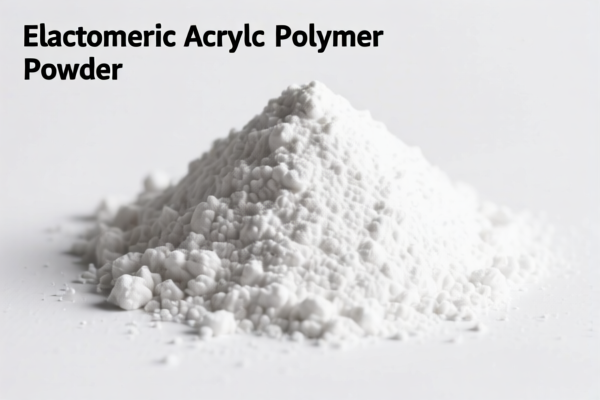


AI Analysis
🧪 Acetamide Wettable Powder (Pesticide Formulation)
🌐 HS Code Reference & Customs Clearance Guide | 2026 Latest Tariff Analysis | Professional Clearance Strategy
📌 I. Product Definition & Classification: What Exactly is "Acetamide Wettable Powder"?
Acetamide Wettable Powder (WP) is a specialized agrochemical formulation. Unlike pure chemical reagents, this product is a preparation designed for agricultural application (herbicide/pesticide).
In international trade, it is classified based on two key factors: 1. Chemical Nature: Acetamide is an organic compound ($C_2H_5NO$). 2. Form & Purpose: It is a "Wettable Powder" (WP), meaning it is a dry formulation containing the active ingredient mixed with carriers and wetting agents, intended for dilution in water before application.
⚠️ Key Distinction Point:
- Pure Chemicals: If sold as a high-purity laboratory reagent or industrial raw material without agricultural intent → Chapter 29 (Organic Chemicals)
- Agricultural Preparations: If sold as a formulated product for pest/herb control → Chapter 38 (Miscellaneous Chemical Products)
📦 II. HS Code Classification Details (2026 Latest Tariff Authority Comparison)
Based on the provided data, there are four potential HS Codes depending on whether the customs authority views the product as a "Chemical Compound" or an "Agricultural Preparation."
| HS Code | Product Description | Application Scenario | Classification Logic |
|---|---|---|---|
3808.93.15.00 |
Other preparations, containing aromatic/heterocyclic compounds (Wettable Powder) | Herbicides/Regulators in WP form | ✅ Preparation: Fits "Aromatic/Modified Aromatic" derivative characteristics for pesticides. |
2924.29.47.00 |
Amides of carbamic acids (Wettable Powder) | Primary form inferred as pesticide | ✅ Chemical + Pesticide: Based on functional group (amide) and inferred agricultural use. |
2924.29.43.00 |
Other monocarboxylic acid amides (Wettable Powder) | Pesticide use consistent with structure | ✅ Chemical + Pesticide: Carboxylic acid amide category; consistent with agricultural use. |
3808.99.08.00 |
Other preparations (Pesticide Intermediates/Components) | Pesticide formulation/intermediate | ✅ Preparation: Fits general pesticide preparation category if not specifically aromatic. |
🔍 Critical Reminder:
-3808Codes are generally preferred for formulated products (WP, EC, SC) intended for direct agricultural use.
-2924Codes are used if the product is classified primarily by its chemical structure (amide group) rather than its formulated state.
- Conflict Check: Ensure no material/usage conflicts exist. All four options in the data source assume Pesticide/Agricultural Use.
💰 III. 2026 Latest Tariff Rate Breakdown (Including Surcharges & Policy Add-ons)
✅ Applicable Country: United States (US)
✅ Country of Origin: China (CN)
✅ Effective Date: From November 10, 2025 (including subsequent imports)
✅ Total Tax Rate: 41.5% (Consistent across all 4 HS Codes in the provided data)
🎯 1. Universal Tax Structure for Acetamide WP
| Item | Content |
|---|---|
| Base Tariff | 6.5% (Ad Valorem) |
| Section 301 Tariff (USITC) | +25.0% (Retaliation tariffs on Chinese goods) |
| Section 122 Tariff (IEEPA) | +10.0% (Additional tariffs under International Emergency Economic Powers Act) |
| Total Effective Rate | 41.5% |
| Tax Calculation | $ \text{CIF Value} \times 41.5\% $ |
| De Minimis Exemption? | ❌ NOT ELIGIBLE (Valued above $800 threshold or excluded categories; high-risk category) |
| Legal Pathway | USITC:3808/2924 → FOOTNOTE:301 → IEEPA:122 |
📌 Explanation:
- The 6.5% is the standard Most Favored Nation (MFN) rate for chemical preparations/compounds.
- The 25% is the Section 301 tariff, a major penalty on Chinese imports.
- The 10% is the Section 122 tariff, specifically applied to certain chemical and industrial goods from China.
- Combined Impact: A $10,000 shipment incurs $4,150 in tariffs. This significantly impacts margin.
🛠️ IV. Customs Clearance Practical Advice (Real-World Pitfall Avoidance)
✅ 1. Required Documentation Checklist (No Exceptions)
| Document | Must Provide? | Notes |
|---|---|---|
| ✅ Product Specification Sheet | ✔️ | Must specify "Wettable Powder," Active Ingredient % (e.g., Acetamide), and Physical State. |
| ✅ Safety Data Sheet (SDS) | ✔️ | Crucial. Must show UN Number (if hazardous) and hazard classification. |
| ✅ Certificate of Origin (CO) | ✔️ | Must specify China origin to assess correct tariff rates. |
| ✅ Commercial Invoice | ✔️ | Must clearly state "Acetamide Wettable Powder for Agricultural Use." |
| ✅ Packing List | ✔️ | Net/Gross weight must match. |
| ✅ EPA Registration Number (if US import) | ✔️ | Critical. If imported for agricultural use in the US, EPA approval is mandatory. Without it, goods may be seized. |
✅ 2. Declaration Strategy (Key Mantras)
🔥 "Formulation First, Structure Second, EPA Compliant, Tariff Optimized!"
| Scenario | Correct Declaration | Wrong Practice |
|---|---|---|
| Formulated Pesticide | Use 3808 (e.g., 3808.93.15.00) |
Misdeclaring as pure chemical (2924) to avoid higher scrutiny → Audit Risk |
| Raw Chemical Reagent | Use 2924 (e.g., 2924.29.43.00) |
Dealing as "preparation" → Misclassification |
| Unclear Composition | Provide detailed breakdown | Vague description "Chemical Powder" → Customs Hold |
| EPA Status | Declare "EPA Registered" (if applicable) | Omitting EPA info → Seizure/Destruction |
✅ 3. Special Handling for Wettable Powders
- Dust Control: WP can be dusty. Ensure packaging is sealed to prevent leakage during inspection.
- Hazardous Class: Check if Acetamide WP is classified as dangerous goods (e.g., flammable solid, toxic). If yes, additional IMDG/ADR documentation is required for air/sea freight.
- Labeling: Ensure labels are in English and include safety warnings, per US EPA/FDA regulations if applicable.
🌍 V. Global Market Clearance Comparison (2026)
| Country/Region | Recommended HS Code | Est. Tariff (China Origin) | Certification Requirements | Notes |
|---|---|---|---|---|
| 🇺🇸 USA | 3808.93.15.00 or 2924.29.43.00 |
41.5% | EPA Registration, FDA (if food-use) | High barrier due to tariffs & regulation. |
| 🇨🇳 China | 2924.29.43.00 or 3808.93.15.00 |
6.5% - 9% | CAACC (Pesticide Registration) | Lower tariff, strict registration. |
| 🇪🇺 EU | 3808.93 or 2924.29 |
6.5% + Anti-dumping? | REACH, ECHA Registration | High regulatory compliance cost. |
| 🇯🇵 Japan | 2924.29 or 3808 |
6.5% - 8% | JIS, MHLW Approval | Strict residue limits. |
📌 Conclusion:
- USA is the most challenging market due to the 41.5% total tariff and strict EPA regulations.
- Cost Efficiency: Consider sourcing from countries with US Free Trade Agreements (FTAs) if possible, to mitigate Section 301/122 tariffs.
- Pre-Arrival: Always confirm EPA status before shipping to avoid port delays.
📌 VI. Common Errors & Pitfalls (Blood & Tears Lessons)
❌ Error 1: Declaring as "Pure Acetamide" when it is a "Formulated WP"
👉 Consequence: Customs may reclassify to 3808, leading to penalties for misdeclaration and potential EPA violation.
❌ Error 2: Ignoring Section 122 Tariffs
👉 Consequence: Underpaying 10% → Back taxes + Interest + Fines.
❌ Error 3: Lack of EPA Registration for Agricultural Imports
👉 Consequence: Goods detained or destroyed at US port. Zero refund.
❌ Error 4: Vague Product Description
👉 Consequence: Customs broker cannot determine correct HTS → Exam Request → 3-4 week delay.
✅ Correct Practice:
"Acetamide Wettable Powder, 80% WP, Agricultural Herbicide, EPA Reg. No. XXXXX, Made in China"
🎯 VII. Conclusion: Precision Classification, Risk Mitigation, Cost Control
🎯 Remember These Mantras:
🔹 "WP is a preparation, not a pure chemical – Think Chapter 38 first."
🔹 "41.5% is the US reality – Plan margins accordingly."
🔹 "EPA is non-negotiable for agricultural use in the US."
📌 Pro Tip:
- Request a Binding Ruling (R15/R17) from CBP in advance if the classification between 2924 and 3808 is disputed.
- Verify SDN List: Ensure no sanctions apply to the supplier or specific chemical intermediates.
- Insurance: Consider Cargo Insurance and Tariff Insurance if available, given the high volatility of China-US trade policies.
📣 Immediate Action Required:
📞 Engage a licensed US Customs Broker specializing in Agrochemicals.
📄 Prepare SDS and EPA Registration Proof.
📉 Calculate Landed Cost: Include 41.5% tariff in your pricing model.
✨ Professional clearance starts with accurate classification!
💼 Every dollar of tariff saved is pure profit earned!
Customer Reviews
About HS Code Classification
The Harmonized System (HS) is an internationally standardized nomenclature developed by the World Customs Organization (WCO) to classify traded products. Over 200 countries use the HS system as the basis for customs tariffs, trade statistics, and import/export regulations.
Each HS code follows a hierarchical structure:
- Chapter (2 digits) — Broad category of goods (e.g., Chapter 84: Machinery and Mechanical Appliances)
- Heading (4 digits) — More specific grouping within the chapter
- Subheading (6 digits) — Internationally standardized breakdown, used by all WCO member countries
- National subdivisions (8-10 digits) — Country-specific extensions for further classification, such as US HTSUS 10-digit codes
Correct HS code classification is essential for smooth customs clearance, accurate duty payment, and compliance with trade regulations. Misclassification can lead to customs delays, overpayment of duties, or penalties.
When importing from CN to US, the applicable tariff rates may include:
- Most-Favored-Nation (MFN) rate — The standard duty rate applied to WTO members
- General rate — Applied to countries without trade agreements
- Trade remedy duties — Additional tariffs such as Section 301 (anti-dumping), Section 232 (national security), or countervailing duties
The information provided on this page is for reference purposes only. For official classification, please consult with your local customs authority or a licensed customs broker.