Acetamiprid Soluble Powder
CN → US| HS Code | Tariff Rate | Origin | Destination | Doc |
|---|---|---|---|---|
| 3808915001 | 40.0% | CN | US | Official Doc |
| 2933392700 | 16.5% | CN | US | Official Doc |
| 2933992200 | 16.5% | CN | US | Official Doc |
| 3808912501 | 41.5% | CN | US | Official Doc |
Product Images
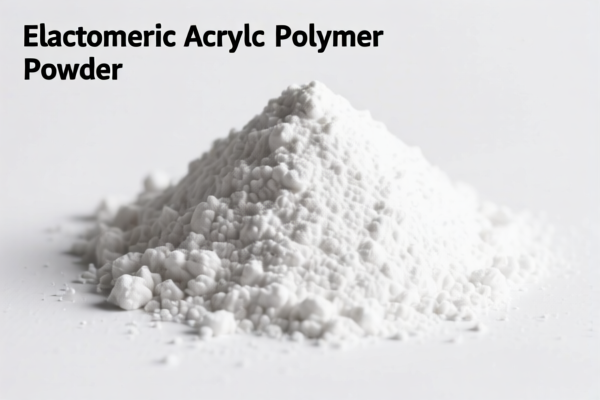

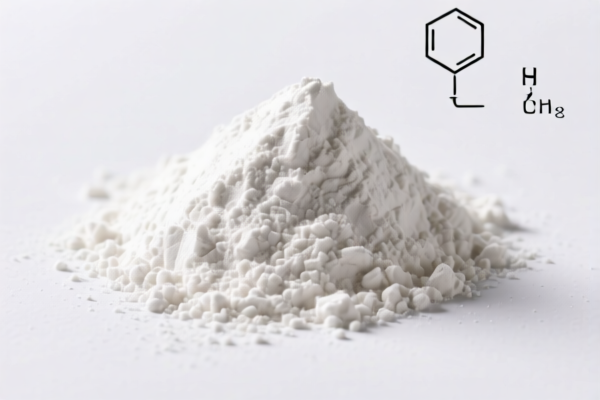

AI Analysis
🌿 Acetamiprid Soluble Powder (啶虫脒可湿性粉剂)
🌐 HS Code Classification & Tariff Guide | 2026 Updated | Expert Customs Clearance Strategy
📌 One Product, Four HS Codes — Know the Difference to Avoid 40%+ Tariffs!
📦 一、Product Definition & Classification: What Is Acetamiprid Soluble Powder?
Acetamiprid Soluble Powder is a systemic insecticide used in agriculture to control sucking pests like aphids, whiteflies, and thrips. It is formulated as a water-soluble powder (also known as soluble powder or wettable powder) for easy mixing with water and spraying.
⚠️ Key Classification Factors: - Active ingredient: Acetamiprid (a neonicotinoid insecticide) - Chemical structure: Contains pyridine ring and nitrogen heterocycle - Form: Powder (dry formulation), not liquid - Use: Pesticide / Crop protection agent
🔍 Critical Insight:
This product can be classified under multiple HS Codes depending on the focus of classification — whether it's the active ingredient, the chemical structure, or the form of the final product.
🧩 二、HS Code Classification Breakdown (2026 Latest Tariff Authority)
| HS Code | Product Description | Classification Basis | Applicable To |
|---|---|---|---|
3808.91.50.01 |
Acetamiprid soluble powder — insecticide active ingredient in powder form | By function: Insecticide, formulated as wettable powder | Most accurate for commercial trade |
2933.39.27.00 |
Acetamiprid — nitrogen-containing heterocyclic compound with pyridine ring | By chemical structure: Pyridine-based nitrogen heterocycle | For pure chemical or intermediate |
2933.99.22.00 |
Acetamiprid — nitrogen heterocycle compound, powder form | By chemical class: Heterocyclic compound, not specifically pesticide | Alternative for chemical classification |
3808.91.25.01 |
Acetamiprid — aromatic compound-based insecticide, powder form | By chemical structure: Aromatic ring system | Higher tariff risk due to broader category |
✅ Bottom Line:
- For commercial import/export,3808.91.50.01is the most appropriate — it reflects the product’s use as a pesticide. - The other codes are valid but riskier — especially under US trade policies.
💰 三、2026 US Tariff Breakdown (Detailed & Compliant)
✅ Target Market: United States (US)
✅ Origin: China (CN)
✅ Effective Date: November 10, 2025 (inclusive)
✅ Applicable to: All acetamiprid formulations imported into the US
🎯 1. 3808.91.50.01 — Insecticide Active Ingredient (Wettable Powder)
| Item | Detail |
|---|---|
| Base Tariff | 5.0% (ad valorem) |
| Section 301 (USITC) Additional Duty | +25.0% |
| Section 122 (IEEPA) Additional Duty | +10.0% |
| Total Effective Tariff | 40.0% |
| Tax Calculation | CIF Value × 40.0% |
| De Minimis Threshold | ❌ Not applicable (denied under US law) |
| Legal Basis Path | IEEPA:9903.01.25 → IEEPA:9903.01.24 → USITC:3808.91.50.01 → FOOTNOTE:9903.88.01 |
📌 Explanation:
- 25% USITC duty: Imposed under Section 301 of the Trade Act of 1974 — targeting Chinese goods deemed unfair trade practices. - 10% IEEPA duty: From the International Emergency Economic Powers Act, applied to goods from China since 2025. - Total 40% — one of the highest tariffs for agrochemicals in the US.
🎯 2. 2933.39.27.00 — Pyridine-Based Nitrogen Heterocycle Compound
| Item | Detail |
|---|---|
| Base Tariff | 6.5% |
| Section 301 (USITC) Additional Duty | 0.0% |
| Section 122 (IEEPA) Additional Duty | +10.0% |
| Total Effective Tariff | 16.5% |
| Tax Calculation | CIF × 16.5% |
| De Minimis Threshold | ✅ Yes (if below $800) |
| Legal Basis Path | IEEPA:9901.25 → IEEPA:9903.01.24 → 2933.39.27.00 → FOOTNOTE:9903.88.01 |
📌 Key Insight:
- No USITC 25% duty — because this code is not listed under Section 301. - Only 10% IEEPA applies. - Much lower risk — but only valid if you can prove it's a chemical intermediate, not a pesticide.
🎯 3. 2933.99.22.00 — Nitrogen Heterocycle Compound (Other)
| Item | Detail |
|---|---|
| Base Tariff | 6.5% |
| Section 301 (USITC) Additional Duty | 0.0% |
| Section 122 (IEEPA) Additional Duty | +10.0% |
| Total Effective Tariff | 16.5% |
| Tax Calculation | CIF × 16.5% |
| De Minimis Threshold | ✅ Yes |
| Legal Basis Path | Same as above |
📌 Note:
- Same tariff as2933.39.27.00— no USITC duty. - Useful for lab-grade or chemical intermediates, but not for commercial pesticide products.
🎯 4. 3808.91.25.01 — Aromatic Insecticide (Powder Form)
| Item | Detail |
|---|---|
| Base Tariff | 6.5% |
| Section 301 (USITC) Additional Duty | +25.0% |
| Section 122 (IEEPA) Additional Duty | +10.0% |
| Total Effective Tariff | 41.5% |
| Tax Calculation | CIF × 41.5% |
| De Minimis Threshold | ❌ Not applicable |
| Legal Basis Path | IEEPA:9903.01.25 → IEEPA:9903.01.24 → 3808.91.25.01 → FOOTNOTE:9903.88.01 |
⚠️ High-Risk Code!
- Highest tariff among all four — 41.5%. - Not recommended for commercial pesticide imports. - Only valid if the product is classified as aromatic-based, which is less precise than3808.91.50.01.
🛠️ 四、Customs Clearance Best Practices (Pro Tips to Save Money & Time)
✅ 1. Required Documentation (Must-Have List)
| Document | Required? | Purpose |
|---|---|---|
| ✅ Product Specification Sheet | ✔️ | Shows chemical structure, active ingredient, formulation |
| ✅ Certificate of Analysis (CoA) | ✔️ | Confirms acetamiprid content (e.g., 95%) |
| ✅ Safety Data Sheet (SDS) | ✔️ | Required for hazardous chemicals |
| ✅ Commercial Invoice | ✔️ | Must state “Acetamiprid Soluble Powder, Insecticide Formulation” |
| ✅ Bill of Lading / Packing List | ✔️ | For shipment tracking and customs audit |
| ✅ Certificate of Origin (CO) | ✔️ | Needed for tariff eligibility (e.g., China vs. Vietnam) |
| ✅ Third-Party Test Report (e.g., ISO, GLP) | ✔️ | Helps avoid classification disputes |
✅ 2.申报技巧(Key Tips for Accurate HS Code Selection)
🔥 “Target the Use, Not the Molecule!”
| Scenario | Correct HS Code | Why? |
|---|---|---|
| Commercial pesticide for farming | 3808.91.50.01 |
Matches purpose: insecticide, formulated for use |
| Lab-grade chemical, not for field use | 2933.39.27.00 or 2933.99.22.00 |
Matches chemical structure, not pesticide use |
| High-volume export to US | ❌ Avoid 3808.91.25.01 |
41.5% tariff — too high! |
| Small shipment (<$800) | 2933.39.27.00 or 2933.99.22.00 |
Can use de minimis exemption (16.5% vs. 40%) |
✅ 3. Special Cases & Solutions
| Situation | Recommended Action |
|---|---|
| Acetamiprid sold as intermediate | Use 2933.39.27.00 — lower tariff, but must prove no agricultural use |
| Mixed with other pesticides | Reclassify as mixture — may qualify for different tariff |
| Imported via Vietnam/Mexico | Change origin — can avoid 25% USITC duty if CO shows non-China origin |
| Customs audit or challenge | Submit pre-ruling request (Advance Ruling) to lock in HS Code |
🌍 五、Global Tariff Comparison (2026 Update)
| Country | Recommended HS Code | Base Tariff | Additional Duties | Notes |
|---|---|---|---|---|
| 🇺🇸 USA | 3808.91.50.01 |
5.0% | +25% (USITC) +10% (IEEPA) | Total: 40.0% |
| 🇨🇳 China | 3808.91.50.01 |
5.0% | 0% | No extra tariffs |
| 🇪🇺 EU | 3808.91.50.01 |
0% | 0% | No 301/IEEPA duties |
| 🇦🇺 Australia | 3808.91.50.01 |
5.0% | 0% | No extra duties |
| 🇯🇵 Japan | 3808.91.50.01 |
0% | 0% | No additional tariffs |
📌 Insight:
- The US is the only market imposing 40%+ tariffs on acetamiprid. - China, EU, Australia, Japan are much more favorable for exporters.
🚨 六、Common Mistakes & Costly Errors (Avoid These!)
❌ Mistake 1: Using 3808.91.25.01 for commercial pesticide
👉 Result: 41.5% tariff — $1,000+ extra per 1,000 kg!
❌ Mistake 2: Declaring as “chemical intermediate” without proof
👉 Result: Customs may reclassify → 40% duty + penalties
❌ Mistake 3: Not providing SDS or CoA
👉 Result: Delayed clearance, detention, or refusal
❌ Mistake 4: Using generic name “Insecticide Powder”
👉 Result: Customs may default to highest-risk code → 41.5%
✅ Best Practice:
Use precise description:
“Acetamiprid Soluble Powder, 95% Active Ingredient, For Agricultural Use, Formulated as Wettable Powder, Not for Lab Use”
🎯 七、Conclusion: Precision Wins — Save 20%+ in Tariffs!
🎯 Remember the Golden Rule:
🔹 “If it’s used as a pesticide, use
3808.91.50.01— even if it’s a chemical, use the purpose, not the molecule.”
🔹 “Avoid3808.91.25.01— it’s a trap!”
🔹 “Use2933.39.27.00only if it’s not for farming.”
📌 Final Tips: Stay Ahead of the Game
📞 Contact a US Customs Broker + Request an Advance Ruling (AR) for your HS Code
🌐 Consider shifting origin to Vietnam/Mexico to avoid 25% USITC duty
📊 Use de minimis ($800) for small shipments → pay only 16.5% instead of 40%
📄 Keep full documentation — audits happen!
📣 Act Now!
🚀 Pre-approve your HS Code → Avoid 40% surprise tariffs
💼 Your profit margin depends on this one decision!
✨ Smart Classification = Smooth Clearance = Higher Profits!
💼 Don’t let a wrong HS Code sink your shipment!
Customer Reviews
About HS Code Classification
The Harmonized System (HS) is an internationally standardized nomenclature developed by the World Customs Organization (WCO) to classify traded products. Over 200 countries use the HS system as the basis for customs tariffs, trade statistics, and import/export regulations.
Each HS code follows a hierarchical structure:
- Chapter (2 digits) — Broad category of goods (e.g., Chapter 84: Machinery and Mechanical Appliances)
- Heading (4 digits) — More specific grouping within the chapter
- Subheading (6 digits) — Internationally standardized breakdown, used by all WCO member countries
- National subdivisions (8-10 digits) — Country-specific extensions for further classification, such as US HTSUS 10-digit codes
Correct HS code classification is essential for smooth customs clearance, accurate duty payment, and compliance with trade regulations. Misclassification can lead to customs delays, overpayment of duties, or penalties.
When importing from CN to US, the applicable tariff rates may include:
- Most-Favored-Nation (MFN) rate — The standard duty rate applied to WTO members
- General rate — Applied to countries without trade agreements
- Trade remedy duties — Additional tariffs such as Section 301 (anti-dumping), Section 232 (national security), or countervailing duties
The information provided on this page is for reference purposes only. For official classification, please consult with your local customs authority or a licensed customs broker.