Acid and Alkali Resistant Filter Paper
CN → US| HS Code | Tariff Rate | Origin | Destination | Doc |
|---|---|---|---|---|
| 4823201000 | 35.0% | CN | US | Official Doc |
| 3822190030 | 10.0% | CN | US | Official Doc |
| 4823209000 | 35.0% | CN | US | Official Doc |
| 3822190080 | 10.0% | CN | US | Official Doc |
| 8421290065 | 35.0% | CN | US | Official Doc |
Product Images

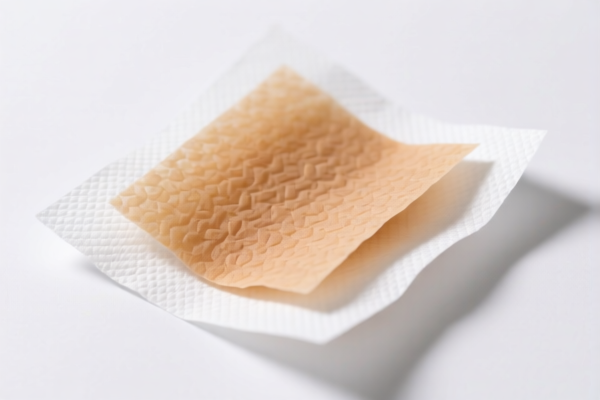
AI Analysis
🧪 Acid and Alkali Resistant Filter Paper
🌐 HS Code Reference & Customs Clearance Guide | 2026 Latest Tariff Analysis | Professional Clearance Strategy
📌 I. Product Definition & Classification: Do You Really Understand "Filter Paper"?
Acid and Alkali Resistant Filter Paper is a specialized consumable used in laboratory analysis, chemical processing, and industrial filtration. Its key feature is chemical resistance, allowing it to withstand strong acids and bases without degradation.
In international trade, its classification depends heavily on its primary use and physical characteristics: 1. Laboratory/Analytical Use: If primarily used for qualitative/quantitative analysis in labs (e.g., weighing precipitates), it falls under "Diagnostic or Laboratory Reagents." 2. Industrial/Liquid Filtration: If used for general liquid purification or separation in machinery, it may fall under "Machinery for Filtering/Purifying Liquids." 3. Paper Product: If classified purely by material (paper) without emphasizing specific laboratory certification or complex machinery integration, it may fall under "Filter Paper and Board."
⚠️ Key Distinction Point:
- If the product is marketed specifically as "Laboratory Consumables" with analytical precision →归入 3822.19.00.xx
- If marketed as "Industrial Filter Media" for machinery → 归入 8421.29.00.65
- If marketed simply as "Paper Products" (less common for high-resistance types) → 归入 4823.20.xx
📦 II. HS Code Classification Details (2026 Latest Tariff Authority Comparison)
| HS Code | Product Description | Application Scenario | Tax Rate (Total) | Tax Details |
|---|---|---|---|---|
3822.19.00.80 |
Diagnostic or Laboratory Reagents (Other) | Lab consumables, analytical testing, precipitate weighing | 10.0% | Base: 0%, Add-on: 0%, Sec. 301: 10% |
8421.29.00.65 |
Machines & Apparatus for Filtering/Purifying Liquids (Other) | Industrial liquid filtration, chemical plant consumables | 35.0% | Base: 0%, Add-on: 25%, Sec. 301: 10% |
4823.20.10.00 |
Filter Paper & Filter Paper Board | General paper-based filter media, basic filtration | 35.0% | Base: 0%, Add-on: 25%, Sec. 301: 10% |
3822.19.00.30 |
Diagnostic or Laboratory Reagents (Other) | Lab consumables, specific analytical use | 10.0% | Base: 0%, Add-on: 0%, Sec. 301: 10% |
4823.20.90.00 |
Other Filter Paper & Board | General paper filter media, non-lab specific | 35.0% | Base: 0%, Add-on: 25%, Sec. 301: 10% |
🔍 Important Reminder:
- Lowest Tariff Route: Choosing the "Laboratory/Reagent" category (3822.19.00.xx) results in a 10% total tax rate. This is significantly lower than the 35% rate for industrial machinery (8421) or paper products (4823). - Justification is Key: To qualify for the 10% rate, you must prove the product is used for diagnostic or laboratory purposes. If customs views it as general industrial filter paper, the rate jumps to 35%. - Section 301 Tariff: All these codes carry a 10% additional tariff under Section 301 (122条款).
💰 III. 2026 Latest Tariff Rate Breakdown (Including Surcharges)
✅ Applicable Country: United States (US)
✅ Origin: China (CN)
✅ Effective Time: 2025年11月10日起 (Including subsequent imports)
🎯 1. 3822.19.00.80 & 3822.19.00.30 —— Diagnostic or Laboratory Reagents (Optimal Choice)
| Item | Content |
|---|---|
| Base Tax Rate | 0% (ad valorem) |
| USITC Additional Tax | 0% (No 25% surcharge for this subheading under current trade wars) |
| Section 301 Tax | +10% (Applied to all Chinese imports under Section 301) |
| Total Tax Rate | 10% |
| Tax Calculation | CIF Value × 10% |
| De Minimis Eligibility | ❌ No (deny_de_minimis) |
| Legal Basis Path | USITC:3822.19.00.xx → SECTION_301:10% |
📌 Explanation:
- This category benefits from 0% base tariff and 0% USITC 301 surcharge (unlike machinery/paper). - Only the standard 10% Section 301 applies. - Total Cost Impact: Very low compared to other categories. This is the recommended classification if the product is lab-grade.
🎯 2. 8421.29.00.65 —— Machines & Apparatus for Filtering/Purifying Liquids (Industrial Use)
| Item | Content |
|---|---|
| Base Tax Rate | 0% |
| USITC Additional Tax | +25% (Applied to machinery parts/consumables under Chapter 84) |
| Section 301 Tax | +10% |
| Total Tax Rate | 35% |
| Tax Calculation | CIF Value × 35% |
| De Minimis Eligibility | ❌ No |
| Legal Basis Path | USITC:8421.29.00.65 → SECTION_301:10% + USITC Footnote:25% |
📌 Warning:
- If customs determines your filter paper is used in industrial liquid filtration machinery, this rate applies. - The 25% USITC surcharge is the main driver of high costs.
🎯 3. 4823.20.10.00 & 4823.20.90.00 —— Filter Paper & Board (Paper Products)
| Item | Content |
|---|---|
| Base Tax Rate | 0% |
| USITC Additional Tax | +25% (Applied to paper products under Chapter 48) |
| Section 301 Tax | +10% |
| Total Tax Rate | 35% |
| Tax Calculation | CIF Value × 35% |
| De Minimis Eligibility | ❌ No |
| Legal Basis Path | USITC:4823.20.xx → SECTION_301:10% + USITC Footnote:25% |
📌 Warning:
- Even though it's "paper," if it's classified under Chapter 48, it attracts the 25% surcharge. - This is more expensive than the laboratory reagent classification.
🛠️ IV. Customs Clearance Practical Advice (Real-World Pitfall Avoidance)
✅ 1. Preparation Checklist (Missing Items Will Cause Delays)
| Document | Required? | Explanation |
|---|---|---|
| ✅ Product Specifications Sheet | ✔️ | Must specify: Acid/Alkali resistance level, pore size, thickness, intended use (Lab vs. Industrial). |
| ✅ Certificate of Analysis (COA) | ✔️ | Proves chemical resistance properties. Crucial for lab classification. |
| ✅ Product Photos (Packaging & Label) | ✔️ | Label should mention "Laboratory Use" or "Analytical Grade" if aiming for 10% tax. |
| ✅ Commercial Invoice | ✔️ | Description must be precise: e.g., "Acid-Resistant Filter Paper for Laboratory Analysis" vs. "Industrial Filter Paper." |
| ✅ Packing List | ✔️ | Clear weight and volume details. |
| ✅ HS Code Pre-Ruling (Optional but Recommended) | ✔️ | Avoids disputes with CBP. |
✅ 2. Declaration Strategy (Key Mantras)
🔥 “Lab Grade = 10%, Industrial = 35%! Choose Wisely!”
| Scenario | Correct Declaration | Risk if Incorrect |
|---|---|---|
| Product is for Lab/Analytical Use | 3822.19.00.80 or 3822.19.00.30 |
If misdeclared as industrial: Tax increases from 10% to 35% + potential penalties. |
| Product is for Industrial Liquid Filtration | 8421.29.00.65 |
Cannot claim lab exemption; 35% is correct. |
| Product is General Paper Filter | 4823.20.10.00 or 4823.20.90.00 |
Same 35% rate; no advantage over industrial machinery. |
| Mixed Use (Lab & Industrial) | Choose 3822.19.00.xx if ≥50% lab use + provide proof | Risk of audit if usage is unclear. |
✅ 3. Special Cases & Handling
| Scenario | Handling Advice |
|---|---|
| OEM Custom Filter Paper | Provide customer order specifying "Laboratory Consumable" to support 3822 classification. |
| High-Performance Resistant Paper | If it has unique chemical resistance properties, provide Material Safety Data Sheet (MSDS) and Resistance Test Report. |
| Packaging as "Reagent Kit" | If sold with other lab consumables, bundle under 3822 if dominant purpose is lab use. |
| Duty Drawback | If imported for re-export, consider Duty Drawback program since base tax is 0%. |
🌍 V. Global Market Comparison (2026 Latest)
| Country/Region | Recommended HS Code | Tax Rate (China Origin) | Certification Requirements | Notes |
|---|---|---|---|---|
| 🇺🇸 USA | 3822.19.00.80 |
10% (Total) | None specific | Best rate for lab use. 35% for industrial/paper. |
| 🇨🇳 China | 3822.19.00.80 |
0% | GB Standards | No additional tariffs. |
| 🇪🇺 EU | 3822.19.00 |
0% | REACH Compliance | No surcharges. |
| 🇬🇧 UK | 3822.19.00 |
0% | UKCA Marking | No surcharges. |
| 🇯🇵 Japan | 3822.19.00 |
0% | JIS Standards | No surcharges. |
📌 Conclusion:
- USA is the only market with significant Section 301 and USITC surcharges. - Strategic Classification is Critical: By declaring as "Laboratory/Reagent" (3822), you save 25% compared to industrial/paper classifications. - Proof is Essential: You must demonstrate lab/analytical use to justify the lower rate.
📌 VI. Common Mistakes & Pitfall Guide (Blood-Tears Lessons)
❌ Mistake 1: Declaring as "Filter Paper" (4823) instead of "Laboratory Reagent" (3822)
👉 Consequence: Tax jumps from 10% to 35% → 25% extra cost!
❌ Mistake 2: Using vague terms like "Industrial Filter" when it's actually Lab Grade
👉 Consequence: Customs may still classify as 3822 if proof is strong, but risk of audit. Better to be precise: "Laboratory Grade."
❌ Mistake 3: Not providing Chemical Resistance Data
👉 Consequence: Customs may doubt the "Resistant" claim and reclassify as ordinary paper (4823.90), still 35%.
❌ Mistake 4: Assuming all "Filter Paper" is the same
👉 Consequence: Different chapters (38, 48, 84) have vastly different tax treatments.
✅ Correct Approach:
"Acid and Alkali Resistant Filter Paper, Laboratory Grade, for Quantitative Analysis, Pore Size 10μm, ISO Certified"
🎯 VII. Conclusion: Professional Classification Saves Money!
🎯 Remember the Mantra:
🔹 "Lab Use = 10%, Industrial/Paper = 35%!"
🔹 "Prove the Lab Use, Save 25%!"
🔹 "HS Code Determines Profit Margin!"
📌 Pro Tip:
If your product is used in both lab and industrial settings, choose the 3822.19.00.xx classification if the majority of the product is lab-grade, and provide supporting documentation (e.g., product catalog highlighting lab applications, marketing materials targeting labs). This can save significant duties on large shipments.
📣 Immediate Action:
📞 Consult a customs broker + Provide MSDS and Product Spec Sheet + Apply for HS Code Pre-Ruling if shipment volume is high.
🚀 Ensure your Commercial Invoice clearly states "For Laboratory/Analytical Use" to support the 10% tax rate.
✨ Professional Clearance, Start with Accurate Classification!
💼 Your Profit Margin Depends on the Right HS Code!
Customer Reviews
About HS Code Classification
The Harmonized System (HS) is an internationally standardized nomenclature developed by the World Customs Organization (WCO) to classify traded products. Over 200 countries use the HS system as the basis for customs tariffs, trade statistics, and import/export regulations.
Each HS code follows a hierarchical structure:
- Chapter (2 digits) — Broad category of goods (e.g., Chapter 84: Machinery and Mechanical Appliances)
- Heading (4 digits) — More specific grouping within the chapter
- Subheading (6 digits) — Internationally standardized breakdown, used by all WCO member countries
- National subdivisions (8-10 digits) — Country-specific extensions for further classification, such as US HTSUS 10-digit codes
Correct HS code classification is essential for smooth customs clearance, accurate duty payment, and compliance with trade regulations. Misclassification can lead to customs delays, overpayment of duties, or penalties.
When importing from CN to US, the applicable tariff rates may include:
- Most-Favored-Nation (MFN) rate — The standard duty rate applied to WTO members
- General rate — Applied to countries without trade agreements
- Trade remedy duties — Additional tariffs such as Section 301 (anti-dumping), Section 232 (national security), or countervailing duties
The information provided on this page is for reference purposes only. For official classification, please consult with your local customs authority or a licensed customs broker.