Acid and Alkali Resistant Material
CN → US| HS Code | Tariff Rate | Origin | Destination | Doc |
|---|---|---|---|---|
| 6903200000 | 35.0% | CN | US | Official Doc |
| 6903900050 | 35.0% | CN | US | Official Doc |
Product Images
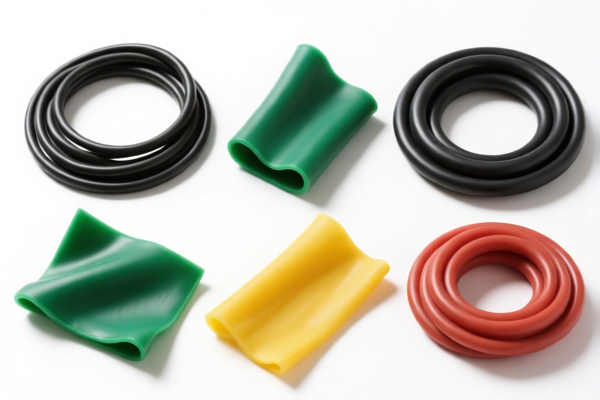
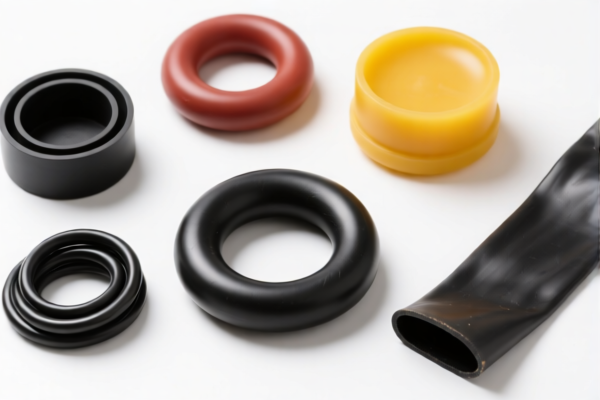
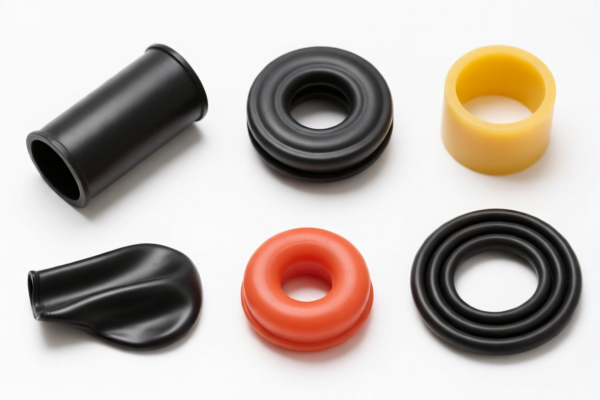

AI Analysis
🧪 Acid and Alkali Resistant Material (Refractory Ceramic Goods)
🌐 HS Code Reference & Customs Clearance Guide | 2026 Latest Tariff Analysis | Professional-Level Compliance Strategy
📌 I. Product Definition & Classification: What Are "Acid and Alkali Resistant Materials"?
"Acid and Alkali Resistant Material" in international trade typically refers to Refractory Ceramic Goods. These are non-metallic inorganic materials designed to withstand extreme chemical corrosion (acids/alkalis) and high temperatures. They are NOT simple pipes or tiles but specialized industrial components such as retorts, crucibles, muffles, nozzles, plugs, supports, cupels, tubes, pipes, sheaths, rods, and slide gates.
⚠️ Critical Distinction:
- These are NOT made of siliceous fossil meals (like diatomaceous earth). If they are, they fall under a different heading.
- The key classification factor is the chemical composition, specifically the Alumina (Al₂O₃) content.
- Goods containing >50% by weight of Alumina (or a mixture/compound of Alumina and Silica) are classified differently than those with lower content.
📦 II. HS Code Classification Details (2026 Latest Tariff Authority Comparison)
Based on the provided data, these goods fall under HS Code Chapter 69 (Ceramic Products), specifically 6903 (Refractory ceramic goods other than siliceous fossil meals).
| HS Code | Product Description | Key Classification Criteria |
|---|---|---|
6903.20.00.00 |
Other refractory ceramic goods (e.g., retorts, crucibles, muffles, nozzles, plugs, supports, cupels, tubes, pipes, sheaths, rods, slide gates), containing by weight more than 50% of alumina (Al₂O₃) or of a mixture/compound of alumina and silica (SiO₂). | High-Alumina Content: Must contain >50% Al₂O₃ (or Al₂O₃+SiO₂ compound). |
6903.90.00.50 |
Other refractory ceramic goods (e.g., retorts, crucibles, muffles, nozzles, plugs, supports, cupels, tubes, pipes, sheaths, rods, slide gates), other. | Other: Includes those with ≤50% alumina content, or other compositions not meeting the >50% threshold. |
🔍 Key Takeaway:
- The primary determinant is the Alumina (Al₂O₃) content by weight.
- If >50% → 6903.20.00.00
- If ≤50% or other compositions → 6903.90.00.50
- Both categories exclude goods made of siliceous fossil meals or similar siliceous earths (which would fall under 6902).
💰 III. 2026 Latest Tariff Rate Details (Including Surcharges)
✅ Applicable Country: United States (US)
✅ Origin: China (CN) (Assumed based on typical tariff structures for such goods; adjust if origin differs)
✅ Effective Time: Current USITC & IEEPA surcharges apply.
🎯 1. 6903.20.00.00 —— High-Alumina Refractory Ceramic Goods (>50% Al₂O₃)
| Item | Content |
|---|---|
| Base Tariff | 0.0% (ad valorem) |
| Section 301 Surcharge | +25.0% |
| Total Tax Rate | 25.0% |
| Tax Calculation | CIF Value × 25.0% |
| De Minimis Eligibility | ❌ Not Eligible (High-value industrial goods) |
| Legal Basis | USITC Heading 6903.20.00.00 + Section 301 Footnote |
📌 Explanation:
- The base tariff is 0%, meaning no standard import duty.
- However, Section 301 tariffs apply at 25% for Chinese-origin goods.
- Total effective duty: 25%. This is a significant cost factor for exporters.
🎯 2. 6903.90.00.50 —— Other Refractory Ceramic Goods
| Item | Content |
|---|---|
| Base Tariff | 0.0% (ad valorem) |
| Section 301 Surcharge | +25.0% |
| Total Tax Rate | 25.0% |
| Tax Calculation | CIF Value × 25.0% |
| De Minimis Eligibility | ❌ Not Eligible |
| Legal Basis | USITC Heading 6903.90.00.50 + Section 301 Footnote |
📌 Note:
- Despite different HS codes, the total tax rate is identical (25%) for both categories when originating from China.
- The distinction matters for customs verification and product compliance, not for duty calculation in this specific case.
🛠️ IV. Customs Clearance Practical Advice (Risk Avoidance Guide)
✅ 1. Required Documentation Checklist (All Mandatory)
| Document | Must Provide | Explanation |
|---|---|---|
| ✅ Product Specification Sheet | ✔️ | Must explicitly state Alumina (Al₂O₃) content % by weight. Critical for correct HS classification. |
| ✅ Technical Data Sheet | ✔️ | Details chemical composition, temperature resistance, and physical dimensions. |
| ✅ Product Photos | ✔️ | Clear images showing the item type (e.g., crucible, pipe, retort) and any markings. |
| ✅ Commercial Invoice | ✔️ | Must describe goods as "Refractory Ceramic Goods" with specific shape/function (e.g., "Alumina Crucible"). Avoid vague terms like "Industrial Part". |
| ✅ Packing List | ✔️ | Detail quantities, weights, and package dimensions. |
| ✅ Certificate of Origin | ✔️ | To verify country of origin (China triggers 25% surcharge). |
✅ 2. Declaration Tips (Key Mnemonics)
🔥 "Specify Alumina %, Define Shape, Avoid Vague Names!"
| Situation | Correct Declaration | Incorrect Approach |
|---|---|---|
| High-Alumina (>50%) | 6903.20.00.00 – "Refractory Ceramic Crucible, 80% Al₂O₃" |
Calling it "Ceramic Tube" without alumina spec |
| Low-Alumina/Other | 6903.90.00.50 – "Refractory Ceramic Retort, <50% Al₂O₃" |
Misclassifying as high-alumina to seek lower rates (risk of penalty) |
| Siliceous Earth Goods | NOT 6903 | Must be classified under 6902 (if applicable) |
✅ 3. Special Handling
| Situation | Handling Advice |
|---|---|
| Mixed Alumina Content | If a shipment contains items with >50% and ≤50% alumina, declare separately to ensure compliance. |
| Customs Inquiry | Be prepared to provide lab test reports confirming Al₂O₃ content if customs questions the classification. |
| OEM/Custom Parts | Clearly state the intended use (e.g., "for use in steel industry furnace") in the invoice to support "refratory goods" classification. |
🌍 V. Global Market Comparison (2026 Latest)
| Country/Region | Recommended HS Code | Tariff (China Origin) | Key Requirements | Notes |
|---|---|---|---|---|
| 🇺🇸 USA | 6903.20.00.00 / 6903.90.00.50 |
25% | Accurate Alumina % declaration | High risk of audit due to 25% surcharge. |
| 🇨🇳 China | 6903.20.00.00 / 6903.90.00.50 |
0-5% (varies) | Standard export declaration | Low import duty for domestic use. |
| 🇪🇺 EU | 6903.20 / 6903.90 |
0-4% | CE marking (if applicable), REACH compliance | No Section 301 equivalent. |
| 🇯🇵 Japan | 6903.20 / 6903.90 |
0-3% | JIS standards compliance | Stable tariff environment. |
📌 Conclusion:
- The US is the most challenging market due to the 25% Section 301 surcharge.
- Accurate declaration of Alumina content is critical to avoid misclassification penalties.
- For non-US markets, tariffs are significantly lower, but documentation standards remain high.
📌 VI. Common Errors & Pitfalls (Lessons Learned)
❌ Error 1: Vague description like "Ceramic Part"
👉 Consequence: Customs may classify under a higher-tariff code or require additional documentation → Delays & Penalties.
❌ Error 2: Not declaring Alumina content
👉 Consequence: Inability to distinguish between 6903.20 and 6903.90 → Potential misclassification risk.
❌ Error 3: Confusing with "Siliceous Earth" goods
👉 Consequence: If the product is actually made of diatomaceous earth, it should be under 6902, not 6903. Misclassification leads to rejection or fines.
✅ Correct Practice:
"Refractory Ceramic Crucible, 90% Al₂O₃, Used for Melting Metals, Model XYZ, Origin: China"
🎯 VII. Conclusion: Precise Classification, Smooth Clearance!
🎯 Remember:
🔹 "Alumina % Determines Code, 25% Surcharge is Real, Declare Precisely to Avoid Pain!"
🔹 "HS Code 6903 is Broad, Split into .20 and .90, Based on Chemical Composition!"
📌 Pro Tip:
- If your product has exactly 50% Alumina, it falls under 6903.90.00.50 ("Other").
- >50% falls under 6903.20.00.00.
- Always keep lab test reports ready for customs inspections.
📣 Immediate Action:
📞 Contact your customs broker + Provide technical data sheets + Verify Alumina content
🚀 Ensure smooth customs clearance for your acid/alkali-resistant materials!
✨ Professional classification saves time and money!
💼 Every percentage point of Alumina counts!
Customer Reviews
About HS Code Classification
The Harmonized System (HS) is an internationally standardized nomenclature developed by the World Customs Organization (WCO) to classify traded products. Over 200 countries use the HS system as the basis for customs tariffs, trade statistics, and import/export regulations.
Each HS code follows a hierarchical structure:
- Chapter (2 digits) — Broad category of goods (e.g., Chapter 84: Machinery and Mechanical Appliances)
- Heading (4 digits) — More specific grouping within the chapter
- Subheading (6 digits) — Internationally standardized breakdown, used by all WCO member countries
- National subdivisions (8-10 digits) — Country-specific extensions for further classification, such as US HTSUS 10-digit codes
Correct HS code classification is essential for smooth customs clearance, accurate duty payment, and compliance with trade regulations. Misclassification can lead to customs delays, overpayment of duties, or penalties.
When importing from CN to US, the applicable tariff rates may include:
- Most-Favored-Nation (MFN) rate — The standard duty rate applied to WTO members
- General rate — Applied to countries without trade agreements
- Trade remedy duties — Additional tariffs such as Section 301 (anti-dumping), Section 232 (national security), or countervailing duties
The information provided on this page is for reference purposes only. For official classification, please consult with your local customs authority or a licensed customs broker.