Acid and Alkali Resistant Plastic Drum
CN → US| HS Code | Tariff Rate | Origin | Destination | Doc |
|---|---|---|---|---|
| 3923900012 | 38.0% | CN | US | Official Doc |
| 3923900014 | 38.0% | CN | US | Official Doc |
Product Images
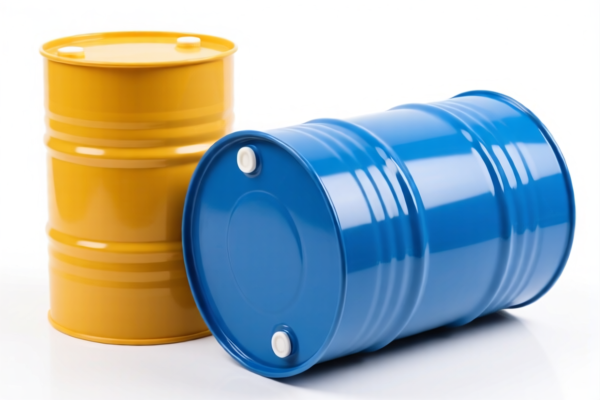
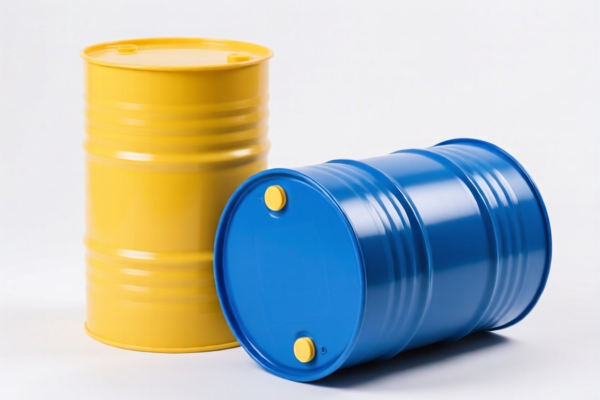
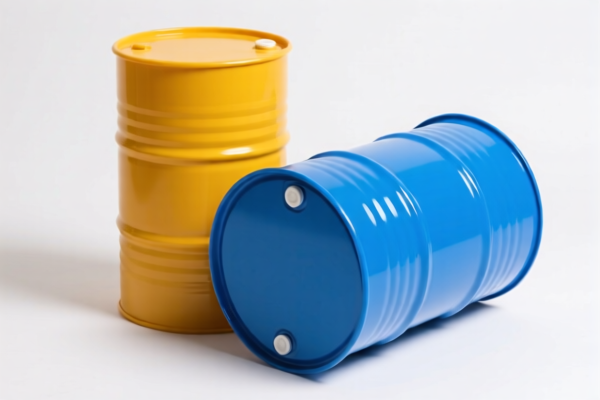
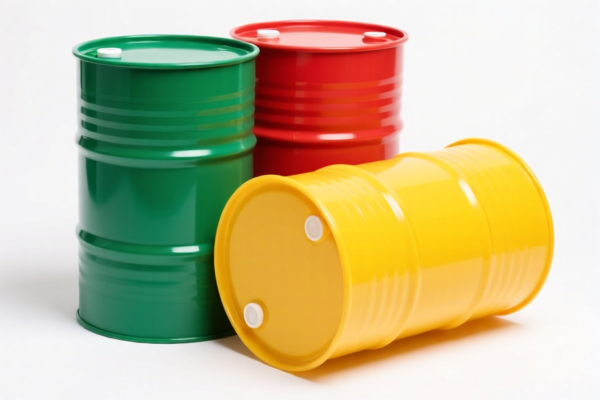
AI Analysis
🛢️ Acid and Alkali Resistant Plastic Drum
🌐 HS Code Reference & Customs Clearance Guide | 2026 Latest Tariff Analysis | Professional Clearance Strategy
📌 I. Product Definition & Classification: What Exactly is a "Plastic Drum" for Chemicals?
An Acid and Alkali Resistant Plastic Drum is a specialized industrial container designed for the safe conveyance, storage, and packing of corrosive liquids (such as sulfuric acid, hydrochloric acid, sodium hydroxide) and solid chemicals. In international trade, these goods fall under Chapter 39 (Plastics and Articles Thereof), specifically heading 3923 (Articles for the conveyance or packing of goods; stoppers, lids, caps and other closures, of plastics).
The critical distinction in classification lies in capacity and physical form. While the general category is "Plastic Articles for Packing," the US Harmonized Tariff Schedule (HTSUS) further细分 (sub-divides) these items based on volume for Buckets and Pails. Note: Large industrial "Drums" (e.g., 55-gallon/200L) often fall under different subheadings (like 3923.90.00.20 or 3923.29), but smaller drums, pails, and buckets (typically up to 6 gallons) are explicitly categorized by capacity ranges.
⚠️ Key Distinction Point:
- If the item is a Bucket/Pail with capacity < 11.36 Liters (3 Gallons) → HTS 3923.90.00.12
- If the item is a Bucket/Pail with capacity ≥ 11.36 Liters (3 Gallons) and ≤ 22.71 Liters (6 Gallons) → HTS 3923.90.00.14
- Note: If the "Drum" is a large 55-gallon drum, it does NOT fit these specific 8-digit codes and may fall under 3923.90.00.20 (Drums, 55 gal). However, based strictly on the provided , we focus on the pail/bucket ranges.
📦 II. HS Code Classification Details (2026 Latest Tariff Authority Comparison)
| HS Code | Product Description | Capacity Range | Typical Use Case | Resistant Property |
|---|---|---|---|---|
3923.90.00.12 |
Other Buckets and Pails, with/without lids, having capacity Less than 11.36 liters (3 gallons) | < 3 US Gal (< 11.36 L) | Small chemical samples, laboratory reagents, small paint buckets, cleaning agent packs | ✅ Yes (Acid/Alkali Resistant) |
3923.90.00.14 |
Other Buckets and Pails, with/without lids, having capacity 11.36 liters (3 gallons) or more, but not more than 22.71 liters (6 gallons) | 3–6 US Gal (11.36–22.71 L) | Industrial solvents, bulk cleaners, medium-sized chemical containers, hardware store buckets | ✅ Yes (Acid/Alkali Resistant) |
🔍 Critical Reminder:
- Both codes fall under "Other" articles of plastics for conveyance/packing (Chapter 39, Heading 3923).
- The material property (acid/alkali resistance) is usually achieved via material selection (e.g., HDPE, PP, PVC) but does not change the HS Code classification itself, as HTSUS 3923.90.00.12/14 is based on shape and capacity, not chemical resistance.
- If the container has a separate closure (lid/cap) declared separately, it may fall under 3923.90.00.10 (Closures), but if the lid is integral or packed with the bucket, the bucket code applies.
💰 III. 2026 Latest Tariff Rate Breakdown (Including Duties & Surcharges)
✅ Applicable Country: United States (US)
✅ Origin: China (CN) (Note: If origin is Vietnam/Malaysia, see below)
✅ Effective Date: 2025/2026
🎯 1. 3923.90.00.12 – Plastic Buckets/Pails (< 3 Gallons)
| Item | Content |
|---|---|
| Base Tariff Rate | 3.0% (ad valorem) |
| Section 301 Additional Duty | +25.0% (Under USITC Footnote 9903.88.01) |
| Total Tariff Rate | 28.0% |
| Tax Calculation | CIF Value × 28% |
| De Minimis Exemption | ❌ Not Applicable (Deny de minimis for Section 301 goods) |
| Legal Basis Path | HTSUS:3923.90.00.12 → USITC:9903.88.01 → Section 301 |
📌 Explanation:
- The 3% base rate is the standard Most Favored Nation (MFN) duty for plastic packing articles.
- The 25% additional duty is imposed under Section 301 of the Trade Act of 1974, targeting specific Chinese imports. Plastic buckets/pails are included in the tariff list.
- Total Cost Impact: A $10,000 shipment incurs $2,800 in duties. This is a significant cost factor.
🎯 2. 3923.90.00.14 – Plastic Buckets/Pails (3–6 Gallons)
| Item | Content |
|---|---|
| Base Tariff Rate | 3.0% (ad valorem) |
| Section 301 Additional Duty | +25.0% (Under USITC Footnote 9903.88.01) |
| Total Tariff Rate | 28.0% |
| Tax Calculation | CIF Value × 28% |
| De Minimis Exemption | ❌ Not Applicable |
| Legal Basis Path | HTSUS:3923.90.00.14 → USITC:9903.88.01 → Section 301 |
📌 Note:
- The tariff structure is identical to the smaller pails.
- Whether it holds 2 gallons or 5 gallons, the duty burden is the same percentage.
- No IEEPA surcharge is listed in the provided data for these specific codes (unlike some electronics), so the total remains 28%.
🛠️ IV. Customs Clearance Practical Advice (Battle-Tested Pitfall Avoidance)
✅ 1. Preparation Checklist (Must-Haves)
| Document | Required? | Explanation |
|---|---|---|
| ✅ Product Specification Sheet | ✔️ | Must specify material (e.g., HDPE), capacity (L/Gal), and chemical resistance claims. |
| ✅ Commercial Invoice | ✔️ | Clearly state "Plastic Bucket/Pail" not just "Drum." Include exact capacity. |
| ✅ Packing List | ✔️ | Separate lids/caps if sold separately; otherwise, declare as "With Lid." |
| ✅ Photo of Product & Label | ✔️ | Show capacity marking (e.g., "1 Gallon," "5L") and material recycling code (e.g., #2 HDPE). |
| ✅ Certificate of Origin (CO) | ✔️ | Critical for proving origin to apply correct Section 301 rates. |
| ✅ MSDS (Material Safety Data Sheet) | ✔️ | If the drums are pre-filled with chemicals, this is mandatory for dangerous goods (DG) clearance. |
✅ 2. Declaration Tips (Key Mantra)
🔥 “Capacity Dictates Code, Origin Dictates Duty, Material Dictates Safety!”
| Scenario | Correct Declaration | Wrong Practice |
|---|---|---|
| Small Paint Bucket (1L) | 3923.90.00.12 |
Misdeclare as "Container" → Audit Risk |
| Medium Chemical Pail (5L) | 3923.90.00.14 |
Overstate capacity to 10L → Incorrect Code |
| Large 55-Gallon Drum | Not these codes (Likely 3923.90.00.20) |
Using 3923.90.00.14 → Rejection/Seizure |
| Empty vs. Filled | Declare "Empty Containers" | Declaring "Filled with Acid" → Requires Hazmat/DG Clearance |
✅ 3. Special Cases & Handling
| Situation | Handling Advice |
|---|---|
| Pre-filled with Chemicals | If the drum contains acid/alkali, it becomes a Dangerous Goods (DG) shipment. Requires UN-rated packaging certification, proper labeling, and potentially different HS codes. |
| Lids Sold Separately | If lids are packed in a separate box, declare them under 3923.90.00.10 (Closures) or 3923.29 (Other articles) depending on type. Do not bundle unless intended as a set. |
| Non-Chinese Origin | If drums are manufactured in Vietnam, Thailand, or Mexico, the 25% Section 301 surcharge may be waived. Ensure the CO proves non-Chinese origin. |
| Recycled Plastic Content | If >50% recycled content, some buyers prefer this for sustainability, but it does not change the HS Code. |
🌍 V. Global Market Comparison (2026 Latest)
| Country/Region | Recommended HS Code (for <6L Pails) | Base Duty | Additional Duty (China) | Certification |
|---|---|---|---|---|
| 🇺🇸 USA | 3923.90.00.12 / .14 |
3.0% | +25.0% (Total 28%) | None (Standard) |
| 🇨🇳 China | 3923.90.00.10 (General) | 3.0% | 0% | None |
| 🇪🇺 EU | 3923.29.90 / 3923.30.00 | 3.0% - 6.5% | 0% (if MFN) | REACH (if in contact with food/chemicals) |
| 🇯🇵 Japan | 3923.29.000 | 3.0% | 0% | JIS Standard (optional) |
📌 Conclusion:
- The US market is the most expensive for Chinese-made plastic pails due to the 25% Section 301 surcharge.
- EU and Japan have lower or no additional duties, but stricter chemical contact regulations (REACH).
- For US importers, supply chain diversification (sourcing from non-China) is a strong cost-saving strategy.
📌 VI. Common Errors & Pitfall Guide (Blood & Tears Lessons)
❌ Mistake 1: Calling a 55-Gallon Drum a "Pail"
👉 Result: Customs will reject 3923.90.00.14 because it exceeds 6 gallons. May lead to 100% inspection or return.
✅ Fix: Use 3923.90.00.20 (Drums) for large containers.
❌ Mistake 2: Ignoring the "With or Without Lid" Clause
👉 Result: If lids are packed separately but declared as "With Lid," it may raise questions about packaging integrity.
✅ Fix: Clearly state "Pail with Lid" or "Pail, Lid Sold Separately" on the invoice.
❌ Mistake 3: Assuming "Plastic Drum" = Low Duty
👉 Result: Many importers forget the 25% Section 301 tariff.
✅ Fix: Budget for 28% total duty for China-origin goods entering the US.
❌ Mistake 4: Failing to Disclose Capacity
👉 Result: CBP (Customs) may assign a higher, unspecified duty rate pending review.
✅ Fix: Always include "Net Capacity: X Liters / X Gallons" on the label and invoice.
🎯 VII. Conclusion: Professional Declaration Saves Money!
🎯 Remember the Mantra:
🔹 "Under 3 Gallons: .12 | 3 to 6 Gallons: .14 | Over 6 Gallons: Wrong Code!"
🔹 "China Origin? Pay 28%. Non-China? Pay 3%!"
🔹 "Empty is Easy, Filled is Hazardous – Declare Correctly!"
📌 Pro Tip:
If your plastic drums are pre-filled with hazardous chemicals, ensure they meet UN 1H1/Y1H1 (HDPE drum/pail) standards and have proper Dangerous Goods labels. Failure to do so can result in fines, rejection, and safety violations.
📣 Immediate Action:
📞 Verify Capacity: Measure your pails accurately.
🌍 Check Origin: Confirm if production is in China to calculate the 28% vs 3% duty.
📄 Document Ready: Prepare specs, invoices, and photos before shipment.
✨ Precision in Classification, Profit in Clearance!
💼 Your plastic drums are simple goods, but complex duties – master them!
Customer Reviews
About HS Code Classification
The Harmonized System (HS) is an internationally standardized nomenclature developed by the World Customs Organization (WCO) to classify traded products. Over 200 countries use the HS system as the basis for customs tariffs, trade statistics, and import/export regulations.
Each HS code follows a hierarchical structure:
- Chapter (2 digits) — Broad category of goods (e.g., Chapter 84: Machinery and Mechanical Appliances)
- Heading (4 digits) — More specific grouping within the chapter
- Subheading (6 digits) — Internationally standardized breakdown, used by all WCO member countries
- National subdivisions (8-10 digits) — Country-specific extensions for further classification, such as US HTSUS 10-digit codes
Correct HS code classification is essential for smooth customs clearance, accurate duty payment, and compliance with trade regulations. Misclassification can lead to customs delays, overpayment of duties, or penalties.
When importing from CN to US, the applicable tariff rates may include:
- Most-Favored-Nation (MFN) rate — The standard duty rate applied to WTO members
- General rate — Applied to countries without trade agreements
- Trade remedy duties — Additional tariffs such as Section 301 (anti-dumping), Section 232 (national security), or countervailing duties
The information provided on this page is for reference purposes only. For official classification, please consult with your local customs authority or a licensed customs broker.