Acid and Fire Resistant Ramming Material
CN → USProduct Images

AI Analysis
🧱 Acid & Fire-Resistant Ramming Material (耐火捣打料)
🌐 HS Code Reference & Customs Clearance Guide | 2026 Latest Tariff Analysis | Professional Clearance Strategy
📌 I. Product Definition & Classification: Do You Truly Understand "Ramming Material"?
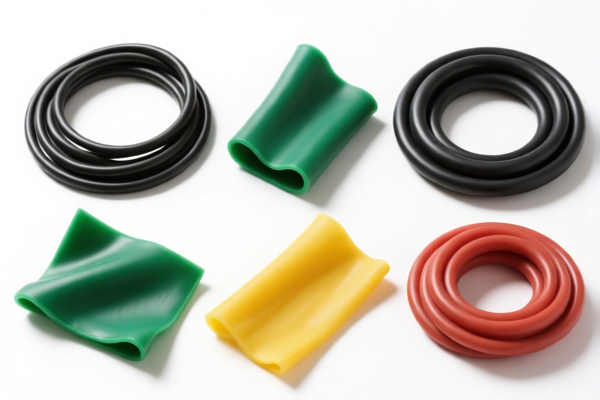
Acid and Fire-Resistant Ramming Material is a specialized refractory product used in high-temperature industrial furnaces, kilns, and smelters. It is typically composed of mineral aggregates (such as magnesia, alumina, or silica) bound by chemical agents (resins or asphalt). Unlike pre-formed bricks, it is supplied in a loose or semi-solid state and rammed into place to create a seamless, monolithic lining.
In international trade, classification depends on the material composition and the binding agent:
- Chemically Bonded Mineral Products: If the material is primarily mineral-based (magnesia/alumina) with chemical binders, it often falls under Chapter 68 (Articles of Stone or Similar Mineral Substances).
- Refractory Materials of Miscellaneous Chemical Products: If classified broadly under "Refractory" without a specific mineral entry, it may fall under Chapter 38.
- Ceramic Refractories: If perceived as an extension of ceramic construction materials, it may fall under Chapter 69.
⚠️ Key Classification Points:
- "Ramming Material" (捣打料): Implies a shape similar to cement/mortar or a loose powder/granular mix, not a pre-formed brick.
- "Acid & Fire Resistant": Indicates the functional attribute (Refractory), which is a primary keyword for Chapter 38 and Chapter 68/69.
- Binding Agent: The presence of resin or asphalt as a binder strongly points to 6815.91 (Chemically Bonded).
📦 II. HS Code Classification Details (2026 Latest Tariff Authority Comparison)
Based on the provided data, the following HS Codes are potential matches. Note that slight differences in interpretation can lead to different codes within the same tariff rate structure.
| HS Code | Product Description | Matching Logic (Summary) | Total Tax Rate |
|---|---|---|---|
| 3816.00.20.50 | Refractory Materials of Miscellaneous Chemical Products | Matches "Refractory" material attribute; "Ramming material" is similar to cement/mortar; not explicitly clay-based, fits "Other". | 38.0% |
| 6902.90.50.20 | Other Refractory Ceramic Constructional Goods | Matches "Refractory" material; belongs to "Other" category; inferred as an extended application of ceramic building materials. | 35.0% |
| 6815.99.41.10 | Articles of Stone or Similar Mineral Substances | Inferred by material: Magnesia/Alumina minerals + chemical binding = Stone/Mineral articles; unlisted "Other". | 35.0% |
| 6815.91.00.11 | Articles of Stone/Mineral Substances, Chemically Bonded | Matches: Mineral-based + Chemically bonded (resin/asphalt). No material conflict. | 35.0% |
| 3816.00.10.00 | Refractory Materials of Miscellaneous Chemical Products (Direct Match) | "Refractory" + "Ramming Material" fits the description directly. No extra inference needed. | 35.0% |
🔍 Critical Distinction:
- Chapter 38 (3816.00): Generally covers refractory mortars, cements, and similar mixtures. The code3816.00.10.00is a "Direct Match" with a 35% rate, while3816.00.20.50is slightly more interpretive but carries a higher 38% rate.
- Chapter 68 (6815.91/99): Focuses on the mineral nature + chemical bonding. Codes6815.91.00.11and6815.99.41.10both carry a 35% rate.
- Chapter 69 (6902.90): Focuses on ceramic properties. Code6902.90.50.20also carries a 35% rate.📌 Recommendation:
3816.00.10.00 and 6815.91.00.11 are the strongest candidates for a 35% total tax rate. 3816.00.20.50 should be avoided if possible due to the higher 38% rate, unless specific chemical composition documentation forces this classification.
💰 III. 2026 Latest Tariff Rate Breakdown (Including Surcharges & Policy Add-ons)
✅ Applicable Country: United States (US)
✅ Origin: China (CN)
✅ Effective Time: November 10, 2025 (and subsequent imports)
🎯 1. 3816.00.20.50 —— Refractory Materials (Miscellaneous Chemical)
| Item | Details |
|---|---|
| Base Duty | 3.0% (ad valorem) |
| Section 301 Surcharge | +25.0% (USITC Footnote) |
| IEEPA Surcharge | +10.0% (China/HK specific, effective Nov 10, 2025) |
| Total Tax Rate | 38.0% |
| Tax Calculation | CIF Value × 38.0% |
| De Minimis Exemption? | ❌ No (deny_de_minimis) |
| Legal Authority Path | USITC:3816.00.20.50 → IEEPA:9903.01.25 → USITC:Footnote |
📌 Explanation:
- The 3.0% base duty is relatively low, but the 25% Section 301 and 10% IEEPA add-ons make this the most expensive option.
- Total 38% is significantly higher than the 35% alternative. Avoid this code unless your chemical composition strictly mandates it.
🎯 2. 6902.90.50.20 —— Other Refractory Ceramic Goods
| Item | Details |
|---|---|
| Base Duty | 0.0% (ad valorem) |
| Section 301 Surcharge | +25.0% |
| IEEPA Surcharge | +10.0% |
| Total Tax Rate | 35.0% |
| Tax Calculation | CIF Value × 35.0% |
| De Minimis Exemption? | ❌ No |
| Legal Authority Path | USITC:6902.90.50.20 → IEEPA:9903.01.24 |
📌 Note:
- Base duty is 0%, but the surcharges bring the total to 35%.
- This code assumes the product is viewed as a "ceramic constructional good."
🎯 3. 6815.99.41.10 & 6815.91.00.11 —— Stone/Mineral Articles (Chemically Bonded)
| Item | Details |
|---|---|
| Base Duty | 0.0% (ad valorem) |
| Section 301 Surcharge | +25.0% |
| IEEPA Surcharge | +10.0% |
| Total Tax Rate | 35.0% |
| Tax Calculation | CIF Value × 35.0% |
| De Minimis Exemption? | ❌ No |
| Legal Authority Path | USITC:6815.91.00.11 / 6815.99.41.10 → IEEPA:9903.01.24 |
📌 Analysis:
- These codes are the most robust for "Acid and Fire-Resistant Ramming Material" if the primary component is mineral (MgO/Al2O3) and it is chemically bonded.
- 35% is the optimal rate among all options provided.
- 6815.91.00.11 is the most precise for "Chemically Bonded" mineral articles.
🎯 4. 3816.00.10.00 —— Refractory Materials (Miscellaneous Chemical, Direct Match)
| Item | Details |
|---|---|
| Base Duty | 0.0% (ad valorem) |
| Section 301 Surcharge | +25.0% |
| IEEPA Surcharge | +10.0% |
| Total Tax Rate | 35.0% |
| Tax Calculation | CIF Value × 35.0% |
| De Minimis Exemption? | ❌ No |
| Legal Authority Path | USITC:3816.00.10.00 → IEEPA:9903.01.24 |
📌 Note:
- Direct Match: The description "Refractory" + "Ramming Material" fits this code perfectly.
- Same Tax Rate as 6815: 35%.
- Advantage: Simpler classification logic (no need to argue "mineral" vs "ceramic").
🛠️ IV. Customs Clearance Practical Advice (Battle-Tested Pitfall Avoidance)
✅ 1. Required Documentation Checklist (Non-Negotiable)
| Document | Must Provide? | Purpose |
|---|---|---|
| ✅ Product Specification Sheet | ✔️ | Details mineral content (MgO, Al2O3, SiO2%), particle size, and binder type (resin/asphalt). |
| ✅ Material Safety Data Sheet (MSDS) | ✔️ | Proves chemical composition and binding agents. |
| ✅ Product Photos (Label & Bulk) | ✔️ | Shows the physical form (powder/granular) to distinguish from pre-formed bricks. |
| ✅ Commercial Invoice | ✔️ | Clearly state "Acid and Fire-Resistant Ramming Material" and HS Code. |
| ✅ Certificate of Origin (CO) | ✔️ | To determine USIPEA applicability (China-origin triggers +10%). |
| ✅ Packing List | ✔️ | Detail gross/net weight, volume, and packaging type (bags/boxes). |
✅ 2. Declaration Strategy (Key Mantra)
🔥 "Mineral + Chemical Bond = 6815.91; Refractory + General = 3816.00.10; Avoid 3816.00.20 (38% Tax)!"
| Scenario | Correct Declaration | Error to Avoid |
|---|---|---|
| Mineral-based, Resin-Bound | 6815.91.00.11 |
Misdeclaring as ceramic (6902) without proof → Risk of reclassification & penalties. |
| General Refractory Mix | 3816.00.10.00 |
Using 3816.00.20.50 → Paying extra 3% (38% vs 35%). |
| Pre-formed Bricks | 6902.10/90 |
Declaring "Ramming Material" for bricks → Complete Misclassification. |
| Loose Powder (No Binder) | 25xx (Minerals) |
Declaring as "Chemically Bonded" → Customs Audit Trigger. |
✅ 3. Special Case Handling
| Situation | Handling Advice |
|---|---|
| Mixed Binders | If resin and asphalt are mixed, 6815.91.00.11 is still strong if minerals are dominant. |
| Acid Resistance Claim | Provide lab reports showing pH resistance levels to support "Acid-Resistant" in description. |
| OEM Custom Grades | Provide customer specs to prove the "Ramming" nature (not brick). |
| Small Sample Shipments | Still subject to 35% duty; no de minimis exemption. |
🌍 V. Global Market Clearance Comparison (2026 Latest)
| Country/Region | Recommended HS Code | Total Duty (China Origin) | Certification Requirements | Notes |
|---|---|---|---|---|
| 🇺🇸 USA | 6815.91.00.11 / 3816.00.10.00 |
35% (25% Sec 301 + 10% IEEPA) | None specific for refractories | Avoid 3816.00.20.50 (38%). |
| 🇨🇳 China | 6815.91.00.11 |
0-5% (Import Duty) | CCC (if applicable) | Domestic production is common. |
| 🇪🇺 EU | 6815.99 / 6902 |
0-5% | REACH Compliance | No Section 301 equivalent. |
| 🇦🇺 Australia | 6815.91 |
5% | None | Competitive rate. |
| 🇯🇵 Japan | 6815.91 |
0-5% | PSE (if electrical) | Low duty. |
📌 Conclusion:
- The US is the highest-cost market due to Section 301 (25%) and IEEPA (10%) surcharges.
- Target HS Code:6815.91.00.11or3816.00.10.00for 35% total duty.
- Avoid:3816.00.20.50due to 38% total duty.
📌 VI. Common Mistakes & Pitfall Guide (Lessons from Blood & Tears)
❌ Mistake 1: Classifying as 3816.00.20.50 without justification
👉 Consequence: Paying 38% instead of 35% → Losing profit margin on high-volume shipments.
❌ Mistake 2: Declaring "Refractory Bricks" when it's "Ramming Material"
👉 Consequence: Customs may reject the entry as misdeclared, leading to delays, fines, and potential seizure.
❌ Mistake 3: Omitting "Chemically Bonded" in description
👉 Consequence: Customs may doubt the classification under 6815.91 and default to a higher scrutiny code.
❌ Mistake 4: Assuming De Minimis Exemption Applies
👉 Consequence: No exemption. All shipments, even samples, are subject to 35% duty.
✅ Correct Practice:
"Acid and Fire-Resistant Ramming Material, Chemically Bonded (Resin/Asphalt), Mineral Base (MgO/Al2O3), for Furnace Lining, Model XYZ, MSDS Attached"
🎯 VII. Conclusion: Precise Classification Saves Money!
🎯 Remember the Mantra:
🔹 "Mineral + Chemical Bond = 6815.91 (35%); Refractory General = 3816.00.10 (35%); Avoid 3816.00.20 (38%)!"
🔹 "HS Code Decides Fate; 3% Difference is Profit; Wrong Code Means Penalty!"
📌 Pro Tip:
If your ramming material has a complex chemical blend, consider applying for an Advance Ruling from US Customs (CBP) before large shipments. This provides legal certainty and protects against future audits.
📣 Immediate Action:
📞 Contact your customs broker + Provide MSDS & Spec Sheet + Apply for HS Code Advance Ruling
🚀 Ensure your Acid and Fire-Resistant Ramming Material clears smoothly, efficiently, and profitably!
✨ Professional Clearance Starts with Precise Classification!
💼 Every percentage point of duty is your bottom line!
Customer Reviews
About HS Code Classification
The Harmonized System (HS) is an internationally standardized nomenclature developed by the World Customs Organization (WCO) to classify traded products. Over 200 countries use the HS system as the basis for customs tariffs, trade statistics, and import/export regulations.
Each HS code follows a hierarchical structure:
- Chapter (2 digits) — Broad category of goods (e.g., Chapter 84: Machinery and Mechanical Appliances)
- Heading (4 digits) — More specific grouping within the chapter
- Subheading (6 digits) — Internationally standardized breakdown, used by all WCO member countries
- National subdivisions (8-10 digits) — Country-specific extensions for further classification, such as US HTSUS 10-digit codes
Correct HS code classification is essential for smooth customs clearance, accurate duty payment, and compliance with trade regulations. Misclassification can lead to customs delays, overpayment of duties, or penalties.
When importing from CN to US, the applicable tariff rates may include:
- Most-Favored-Nation (MFN) rate — The standard duty rate applied to WTO members
- General rate — Applied to countries without trade agreements
- Trade remedy duties — Additional tariffs such as Section 301 (anti-dumping), Section 232 (national security), or countervailing duties
The information provided on this page is for reference purposes only. For official classification, please consult with your local customs authority or a licensed customs broker.