Acoustic Panel
CN → US| HS Code | Tariff Rate | Origin | Destination | Doc |
|---|---|---|---|---|
| 6808000000 | 35.0% | CN | US | Official Doc |
| 6815990000 | 0.0% | CN | US | Official Doc |
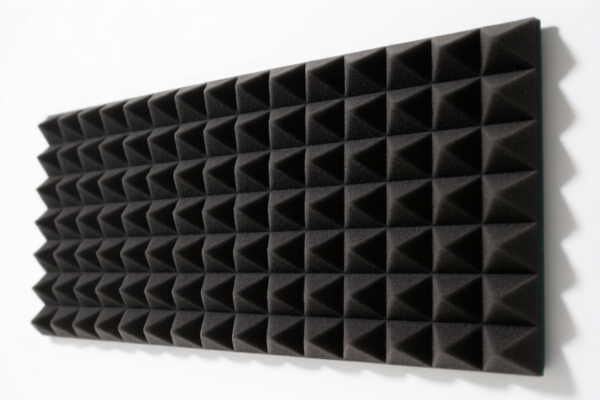
Product Images


AI Analysis
🎧 Acoustic Panels (Sound Absorbing Panels)
🌐 HS Code Reference & Clearance Guide | 2026 Latest Tariff Analysis | Professional Clearance Strategy
📌 I. Product Definition & Classification: Do You Really Understand "Acoustic Panels"?
Acoustic panels are specialized building materials used to control sound reverberation and noise levels in interiors. In international trade, they are primarily classified based on their raw material and binding agent. Unlike general construction materials, acoustic panels are strictly defined by their composition (vegetable fibers, wood waste, etc.) and the binder used to hold them together.
Key Distinction for Clearance: 1. Vegetable Fiber/Straw/Sawdust Based Panels: Agglomerated with cement, plaster, or other mineral binders → Falls under 6808. 2. Other Stone/Plaster/Cement Articles: If the product does not fit the specific "vegetable fiber/sawdust" description or uses non-mineral binders in a different form → May fall under 6815.
⚠️ Critical Identification Point:
- If the panel is made from wool, straw, wood shavings, or vegetable fibers bound with cement/plaster/mineral binders → It is a "Panel of vegetable fiber... agglomerated with mineral binders" → HS 6808.00.00.00.
- If the product is a generic "article of stone, plaster, cement" that does not fit the specific fiber/sawdust description of 6808, or if the binder is non-mineral/non-standard for 6808 → It may be classified as "Other articles... not elsewhere specified" → HS 6815.99.00.00.
📦 II. HS Code Classification Details (2026 Latest Tariff Authority Comparison)
Based on the provided data, here are the two possible classifications for Acoustic Panels:
| HS Code | Product Description | Applicable Scenario | Binding Agent Requirement |
|---|---|---|---|
6808.00.00.00 |
Panels, boards, tiles, blocks... of vegetable fiber, straw, or shavings/sawdust/waste of wood, agglomerated with cement, plaster or other mineral binders | Soundproofing panels made from wood fiber, straw, or sawdust held together with cement or plaster | ✅ Must use mineral binders (Cement/Plaster) |
6815.99.00.00 |
Other articles of stone, plaster, cement or similar materials, not elsewhere specified or included | Generic acoustic boards made of stone/plaster/cement that do not fit the specific "vegetable fiber/sawdust + mineral binder" criteria of 6808 | ❌ Does not fit 6808 specific description |
🔍 Important Reminder:
- HS 6808.00.00.00 is the primary classification for most commercial "wood fiber acoustic panels" because they are made of wood waste/shavings bound with mineral binders.
- HS 6815.99.00.00 is a residual category. If your acoustic panel is made of pure plaster blocks or stone composites not involving wood/vegetable fiber waste, it likely falls here. However, tax retrieval failed for this code in the current database.
💰 III. 2026 Latest Tariff Rate Details (Including Surcharges & Policy Add-ons)
✅ Applicable Country: United States (US)
✅ Origin: China (CN)
✅ Effective Time: 2025+ (Current Tariff Data)
🎯 1. 6808.00.00.00 —— Panels of Vegetable Fiber / Wood Shavings Agglomerated with Mineral Binders
| Item | Content |
|---|---|
| Base Tariff Rate | 0.0% (Ad Valorem) |
| USITC Additional Tariff | +25.0% (Section 301 Tariff) |
| Total Tax Rate | 25.0% |
| Tax Calculation | CIF Value × 25% |
| De Minimis Exemption | ❌ Not Available (Section 301 goods are excluded from de minimis) |
| Legal Basis Path | HS:6808.00.00.00 → USITC:Footnote 9903.88.01 → Total: 25% |
📌 Explanation:
- The base tariff is 0%, making the product duty-free from the perspective of standard trade agreements.
- However, 25% additional tariff applies under Section 301 for Chinese-origin goods.
- Total Cost Impact: You must pay 25% of the CIF value as duty. This is a significant cost factor for bulk acoustic panel imports.
- Note: There is no 10% IEEPA surcharge listed for this specific HS code in the provided data (unlike electronics). The total remains 25%.
🎯 2. 6815.99.00.00 —— Other Articles of Stone, Plaster, Cement, etc.
| Item | Content |
|---|---|
| Base Tariff Rate | Error |
| Additional Tariff | Error |
| Total Tax Rate | Error |
| Tax Calculation | Failed to retrieve tax information |
| De Minimis Exemption | Unknown |
| Legal Basis Path | HS:6815.99.00.00 → Tax Data: Missing |
📌 Warning:
- Tax information for6815.99.00.00is unavailable in the current database.
- Risk: Classifying here without confirmed tax data can lead to customs delays, audits, or incorrect duty payments.
- Recommendation: Verify this code with a licensed customs broker. It is often safer to use6808if the product contains any wood/fiber elements, as the tax is clear and known (25%).
🛠️ IV. Customs Clearance Practical Advice (Real-World Pitfall Guide)
✅ 1. Preparation Checklist (Essential Documents)
| Document | Required | Purpose |
|---|---|---|
| ✅ Product Specification Sheet | ✔️ | Must explicitly state composition (e.g., "90% Wood Fiber, 10% Cement Binder") |
| ✅ Material Safety Data Sheet (MSDS) | ✔️ | Proves the binding agent is mineral-based (cement/plaster) and not hazardous |
| ✅ Product Photos | ✔️ | Show the texture and cross-section to prove it is an agglomerated fiber panel |
| ✅ Commercial Invoice | ✔️ | Description must match HS Code: "Acoustic Panel, Wood Fiber Agglomerated with Cement" |
| ✅ Bill of Lading / Packing List | ✔️ | Confirm weight and quantity for duty calculation |
✅ 2. Declaration Tips (Key Rules)
🔥 “Be Specific About Material: Fiber + Mineral Binder = 6808”
| Scenario | Correct Declaration | Wrong Declaration |
|---|---|---|
| Wood Fiber Panel + Cement | 6808.00.00.00 |
"Soundproof Foam" → Misclassification |
| Plaster Board (No Fiber) | 6815.99.00.00 (Verify Tax) |
"Acoustic Panel" → Vague |
| Fabric-Wrapped Foam Panel | NOT 6808 | 6808.00.00.00 → Major Error (Foam is not vegetable fiber/wood waste) |
| Mineral Wool Panel | NOT 6808 | 6808.00.00.00 → Major Error (Mineral wool is glass/ceramic, not wood/straw) |
⚠️ Critical Distinction:
- Acoustic Panels made of Foam (Polyurethane, Melamine): Do NOT use 6808. These are usually classified under 3926 (Plastics) or 5703 (Carpeting) or 9403 (Furniture parts).
- Acoustic Panels made of Mineral Wool/Glass Wool: Do NOT use 6808. These are classified under 6815 or 5601.
- Only Panels made of Wood Fiber, Straw, or Sawdust bound with Cement/Plaster use 6808.
✅ 3. Special Cases
| Scenario | Handling Advice |
|---|---|
| Composite Panels | If a panel has wood fiber core but is faced with fabric/metal, declare the core material if it defines the essential character, but provide full specs. |
| Sample Shipments | Even for samples, 25% duty may apply if not eligible for de minimis (Section 301 exclusions vary; check current lists). |
| Origin Marking | Must clearly mark "Made in China" on panels and packaging to ensure accurate Section 301 application. |
🌍 V. Global Market Clearance Comparison (2026 Latest)
| Country/Region | Recommended HS Code | Tariff (China Origin) | Certification Requirements | Notes |
|---|---|---|---|---|
| 🇺🇸 USA | 6808.00.00.00 |
25% | None Specific | High duty due to Section 301 |
| 🇨🇳 China | 6808.00.00.00 |
~0-13%* | CCC (if applicable) | Tariff varies by exact sub-class |
| 🇪🇺 EU | 6808.00.00 |
0-6%* | CE (Construction Products Reg) | Varies by member state |
| 🇬🇧 UK | 6808.00.00 |
0-6%* | UKCA | Post-Brexit rules apply |
📌 Conclusion:
- USA is the most expensive market for wood-fiber acoustic panels due to the 25% flat additional tariff.
- EU/UK generally have lower or zero base tariffs for construction materials, but compliance with local building codes (fire rating) is critical.
- Always verify the material composition. If it's not wood/straw/cement,6808is incorrect.
📌 VI. Common Mistakes & Pitfalls (Lessons Learned)
❌ Mistake 1: Using "Acoustic Panel" as the only description
👉 Consequence: Customs cannot determine if it's foam, wool, or wood fiber. Delays & Inspections.
❌ Mistake 2: Classifying Foam/Melamine panels as 6808
👉 Consequence: Misclassification Penalty. Foam panels are not vegetable fiber/wood waste. They fall under different HS codes (e.g., 3926, 5601).
❌ Mistake 3: Ignoring the Binder Type
👉 Consequence: If the panel uses polymer/resin binders instead of cement/plaster, it may not qualify for 6808. It might fall under 3921 (Plastics) or 3906 (Acrylic/Resin boards).
✅ Correct Practice:
"Acoustic Panel, Wood Fiber Board, Agglomerated with Cement, Fire-Rated Class A, Model XYZ"
🎯 VII. Conclusion: Professional Declaration, Save Time & Money!
🎯 Remember the Golden Rule:
🔹 "Wood Fiber + Cement/Plaster = 6808 (25% Duty in US)"
🔹 "Foam/Wool/Resin ≠ 6808 → Check Other HS Codes!"
🔹 "Tax Data for 6815 is Missing → Avoid unless verified!"
📌 Tip:
If your acoustic panels are made from recycled wood or straw, they strongly support classification under 6808.00.00.00. Ensure your supplier provides a material composition letter confirming the use of vegetable fibers and mineral binders.
📣 Immediate Action:
📞 Contact a Customs Broker to verify material specs.
🚀 Use the description: "Wood Fiber Acoustic Panels, Cement-Bound" for accurate US clearance.
💼 Precision in Classification = Savings in Duty!
✨ Professional Clearance Starts with Accurate Classification!
💼 Every Dollar Saved is a Dollar Earned!
Customer Reviews
About HS Code Classification
The Harmonized System (HS) is an internationally standardized nomenclature developed by the World Customs Organization (WCO) to classify traded products. Over 200 countries use the HS system as the basis for customs tariffs, trade statistics, and import/export regulations.
Each HS code follows a hierarchical structure:
- Chapter (2 digits) — Broad category of goods (e.g., Chapter 84: Machinery and Mechanical Appliances)
- Heading (4 digits) — More specific grouping within the chapter
- Subheading (6 digits) — Internationally standardized breakdown, used by all WCO member countries
- National subdivisions (8-10 digits) — Country-specific extensions for further classification, such as US HTSUS 10-digit codes
Correct HS code classification is essential for smooth customs clearance, accurate duty payment, and compliance with trade regulations. Misclassification can lead to customs delays, overpayment of duties, or penalties.
When importing from CN to US, the applicable tariff rates may include:
- Most-Favored-Nation (MFN) rate — The standard duty rate applied to WTO members
- General rate — Applied to countries without trade agreements
- Trade remedy duties — Additional tariffs such as Section 301 (anti-dumping), Section 232 (national security), or countervailing duties
The information provided on this page is for reference purposes only. For official classification, please consult with your local customs authority or a licensed customs broker.