Acrylic Packaging Bag
CN → US| HS Code | Tariff Rate | Origin | Destination | Doc |
|---|---|---|---|---|
| 3923109000 | 38.0% | CN | US | Official Doc |
| 3920515090 | 41.5% | CN | US | Official Doc |
| 3923900080 | 38.0% | CN | US | Official Doc |
| 3920511000 | 41.0% | CN | US | Official Doc |
| 3923900080 | 38.0% | CN | US | Official Doc |
Product Images
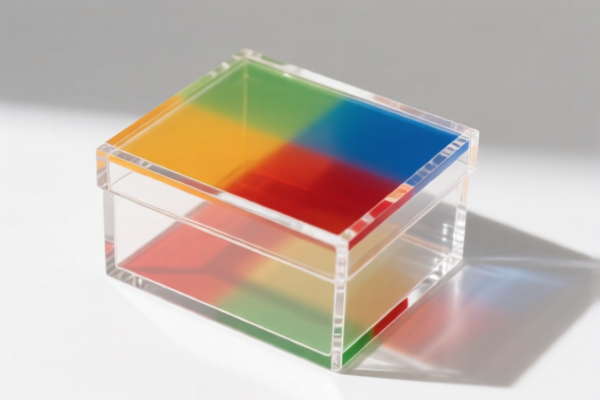
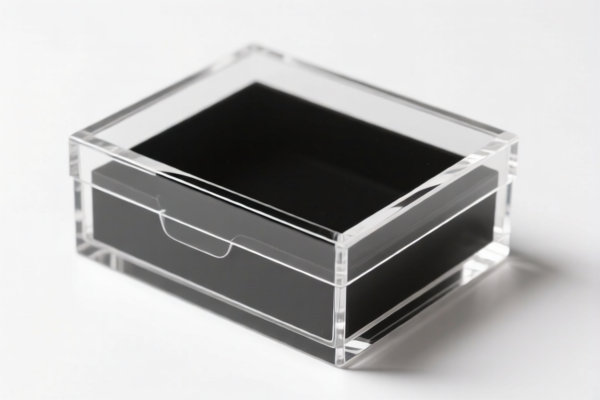
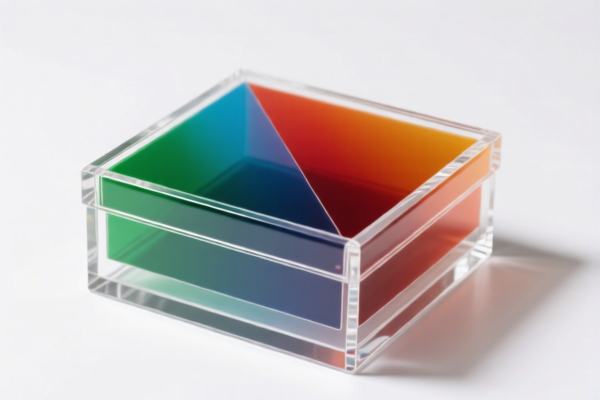

AI Analysis
🛍️ Acrylic Packaging Bags (Acrylic Resin Packaging Materials)
🌐 HS Code Reference & Customs Clearance Guide | 2026 Latest Tariff Analysis | Professional Compliance Strategy
📌 1. Product Definition & Classification: Understanding "Acrylic Packaging"
Acrylic packaging bags, primarily made of Polymethyl Methacrylate (PMMA) or general plastic resins, serve as protective, aesthetic, and functional packaging for logistics, retail, and consumer goods. In international trade, these items are classified based on their material composition and physical form.
Key Distinction:
- General Plastic Packaging (Chapter 3923): If the item is defined by its function as a package/container for transport, regardless of whether it is a bag, sheet, or container, it often falls under 3923.
- Specific Polymer Sheets/Films (Chapter 3920): If the item is specifically identified as a sheet, film, foil, or plate of acrylic polymer (PMMA) used as packaging material (rather than a finished bag structure), it may fall under 3920.
⚠️ Critical Classification Point:
- If the product is a finished bag or general plastic packaging item →归入 3923.xxxx
- If the product is a sheet/film of PMMA used for wrapping or packaging →归入 3920.xxxx
📦 2. HS Code Classification Details (2026 Latest Tariff Reference)
Based on the provided data, the following HS Codes apply to Acrylic Packaging Bags. Note that all listed codes are subject to significant US tariffs.
| HS Code | Product Description | Application Scenario | Key Characteristics |
|---|---|---|---|
3923.10.90.00 |
Acrylic Resin Packaging Materials | General transport/packaging supplies | Plastic material; classified under "Other articles for the conveyance or packing of goods." |
3920.51.50.90 |
PMMA Sheets/Films | Wrapping or protective film | Acrylic polymer (PMMA); form is film/plate/sheet; non-foam, non-reinforced. |
3923.90.00.80 |
Other Plastic Packaging Articles | General plastic packaging | Plastic material; "Other" category for plastic transport/packing items; excludes specific buckets/bottles. |
3920.51.10.00 |
Non-Foam PMMA Sheets | Specific acrylic film packaging | PMMA material; specific subtype of non-foam/non-reinforced acrylic sheets/films. |
3923.90.00.80 |
Book Packaging Films | Book cover/protective wrapping | Plastic film for books; falls under "Other plastic packaging articles." |
🔍 Important Note:
- The same HS Code (3923.90.00.80) appears for both general plastic packaging and book packaging films, indicating that form-specific sub-classes are not always distinct at this level, but the material type (PMMA vs. General Plastic) determines whether you look at3920or3923.
- PMMA (Acrylic) products often have higher base tariffs (6.0%-6.5%) compared to general plastic packaging (3.0%) due to their specific polymer nature.
💰 3. 2026 Latest Tariff Rate Breakdown (Including Surtaxes & Policy Additions)
✅ Applicable Country: United States (US)
✅ Origin: China (CN)
✅ Effective Date: Current rates apply as per 2025/2026 trade policies.
🎯 1. 3923.10.90.00 & 3923.90.00.80 —— General Plastic Packaging / Acrylic Resin Packaging
| Item | Content |
|---|---|
| Base Tariff | 3.0% (ad valorem) |
| Section 301 Surtax | +25.0% (USITC Footnote) |
| Section 122 Tariff | +10.0% (Specific 122-Clause Surcharge) |
| Total Tax Rate | 38.0% |
| Tax Calculation | CIF Value × 38.0% |
| De Minimis Exemption | ❌ Not Eligible (High tariff rates typically disqualify low-value shipments from Section 321 de minimis relief if subject to these surcharges.) |
| Legal Basis Path | Base Tariff 3.0% → Section 301: 25% → Section 122: 10% |
📌 Explanation:
- Base 3.0%: Standard MFN rate for plastic packaging articles.
- Section 301 (25%): Retaliatory tariff on Chinese goods under Trade Act of 1974, Section 301.
- Section 122 (10%): Additional tariff applied to specific Chinese imports under Section 122 of the Trade Act of 1974 (often used for national security or economic reasons).
- Total: 38%. This is a high-cost item. Importers must factor this into landed cost calculations.
🎯 2. 3920.51.50.90 & 3920.51.10.00 —— PMMA (Acrylic) Sheets/Films
| Item | Content |
|---|---|
| Base Tariff | 6.0% - 6.5% (ad valorem) |
| Section 301 Surtax | +25.0% (USITC Footnote) |
| Section 122 Tariff | +10.0% (Specific 122-Clause Surcharge) |
| Total Tax Rate | 41.0% - 41.5% |
| Tax Calculation | CIF Value × 41.0-41.5% |
| De Minimis Exemption | ❌ Not Eligible |
| Legal Basis Path | Base Tariff 6.0/6.5% → Section 301: 25% → Section 122: 10% |
📌 Explanation:
- Base 6.0-6.5%: Higher base rate for acrylic polymers (PMMA) compared to general plastics.
- Section 301 (25%) & Section 122 (10%): Same surcharges as above.
- Total: 41.0-41.5%. PMMA-based packaging is more expensive to import into the US than general plastic packaging due to the higher base rate.
🛠️ 4. Customs Clearance Practical Advice (Pitfall Avoidance Guide)
✅ 1. Preparation Checklist (Essential Documents)
| Document | Mandatory? | Description |
|---|---|---|
| ✅ Commercial Invoice | ✔️ | Must clearly state: "Acrylic Packaging Bag" or "PMMA Sheet for Packaging." |
| ✅ Packing List | ✔️ | Detail weight, dimensions, and quantity. |
| ✅ Product Specifications | ✔️ | Specify material: PMMA (Acrylic) vs. General Plastic. This determines the HS Code (3920 vs. 3923). |
| ✅ Material Safety Data Sheet (MSDS) | ✔️ | For chemical composition verification. |
| ✅ Country of Origin Certificate | ✔️ | To prove origin as China (subject to tariffs). |
| ✅ Photos of Product | ✔️ | Show finished bag vs. raw sheet to justify HS Code. |
✅ 2. Declaration Strategy (Key Tips)
🔥 "Material Matters! PMMA gets taxed higher. Be specific!"
| Scenario | Correct Declaration | Risk if Incorrect |
|---|---|---|
| Finished Bag (folded, stitched, sealed) | Use 3923.xxxx (e.g., 3923.10.90.00 or 3923.90.00.80) |
Misdeclaring as sheet may lead to seizure or penalty. |
| Raw PMMA Sheet used for packaging | Use 3920.51.xxxx (e.g., 3920.51.10.00) |
Misdeclaring as general plastic (3923) may result in underpayment if base rate differs, or overpayment if it's actually general plastic. |
| Book Cover Wrap | Use 3923.90.00.80 | Ensure it’s described as "packaging," not "stationery." |
| Mixed Shipment (Plastic + PMMA) | Split Declaration | Do not mix HS Codes. Separate lines for 3923 and 3920 to avoid audit flags. |
✅ 3. Special Considerations
| Issue | Advice |
|---|---|
| De Minimis (Section 321) | ❌ Do NOT rely on $800 de minimis exemption for these items if they are subject to Section 301/122 tariffs. US Customs may still collect taxes. |
| Labeled "Acrylic" | Ensure the invoice says "Acrylic" or "PMMA" if declaring under 3920. If it’s just "plastic," declare under 3923. Mislabeling is a common compliance error. |
| Packaging vs. Product | If the acrylic bag contains goods, the bag itself is subject to duty. The contents are declared separately. |
| Cost Impact | With 38-41.5% total tax, these items are high-cost imports. Consider sourcing from non-China countries if possible to avoid Section 301/122 tariffs. |
🌍 5. Global Market Comparison (2026 Update)
| Market | Recommended HS Code | Est. Total Tax (China Origin) | Notes |
|---|---|---|---|
| 🇺🇸 USA | 3923.10.90.00 / 3920.51.xxxx |
38.0% - 41.5% | High due to Section 301 (25%) + 122 (10%). |
| 🇨🇳 China | 3923 / 3920 |
6.0% - 13.0% | Lower base rates; no Section 301. |
| 🇪🇺 EU | 3923 / 3920 |
6.5% | No Section 301/122 equivalent; lower cost. |
| 🇬🇧 UK | 3923 / 3920 |
6.5% | Post-Brexit tariffs apply; no US-style surcharges. |
| 🇯🇵 Japan | 3923 / 3920 |
6.0% - 15% | Varies by specific subheading; no US surcharges. |
📌 Conclusion:
- The US market is the most expensive for acrylic packaging due to multiple layered tariffs.
- EU, UK, Japan, and China offer significantly lower tax burdens.
- For US importers, cost optimization may require exploring alternative materials (non-PMMA) or non-China sourcing.
📌 6. Common Errors & Pitfalls (Lessons Learned)
❌ Error 1: Declaring PMMA sheets as "General Plastic" (3923) to avoid higher base rates.
👉 Consequence: Customs audit reveals material is PMMA → Back taxes + Penalties (Base 6.5% vs 3.0%).
❌ Error 2: Ignoring Section 122 Tariff (10%).
👉 Consequence: Underpayment of duties → Late fees and interest.
❌ Error 3: Using "Acrylic Bag" without specifying if it's a finished bag or sheet.
👉 Consequence: HS Code ambiguity → Customs holds shipment for inspection.
✅ Correct Practice:
- For Finished Bags: "Plastic Packaging Bag, Acrylic Resin, For Transport, HS 3923.10.90.00"
- For Sheets: "Acrylic (PMMA) Sheet, Non-Foam, For Packaging, HS 3920.51.10.00"
🎯 7. Final Recommendations
🎯 Remember:
🔹 "Acrylic = PMMA = 3920 (Higher Base)"
🔹 "Plastic Bag = 3923 (Lower Base)"
🔹 "US Import = 38-41.5% Total Tax"
🔹 "No De Minimis Exemption for Surtaxed Goods"
📌 Pro Tip:
If your acrylic packaging bags are shipped from Vietnam, Mexico, or Thailand, you may avoid US Section 301/122 tariffs entirely. Consider supply chain diversification to reduce costs by up to 35%.
📣 Immediate Action:
📞 Verify Material Composition: Is it PMMA or General Plastic?
📦 Choose Correct HS Code:3920for PMMA Sheets,3923for Plastic Bags.
💰 Calculate Landed Cost: Include 38-41.5% tax in your pricing model.
✨ Professional clearance starts with accurate classification!
💼 Your margin depends on every percentage point!
Customer Reviews
About HS Code Classification
The Harmonized System (HS) is an internationally standardized nomenclature developed by the World Customs Organization (WCO) to classify traded products. Over 200 countries use the HS system as the basis for customs tariffs, trade statistics, and import/export regulations.
Each HS code follows a hierarchical structure:
- Chapter (2 digits) — Broad category of goods (e.g., Chapter 84: Machinery and Mechanical Appliances)
- Heading (4 digits) — More specific grouping within the chapter
- Subheading (6 digits) — Internationally standardized breakdown, used by all WCO member countries
- National subdivisions (8-10 digits) — Country-specific extensions for further classification, such as US HTSUS 10-digit codes
Correct HS code classification is essential for smooth customs clearance, accurate duty payment, and compliance with trade regulations. Misclassification can lead to customs delays, overpayment of duties, or penalties.
When importing from CN to US, the applicable tariff rates may include:
- Most-Favored-Nation (MFN) rate — The standard duty rate applied to WTO members
- General rate — Applied to countries without trade agreements
- Trade remedy duties — Additional tariffs such as Section 301 (anti-dumping), Section 232 (national security), or countervailing duties
The information provided on this page is for reference purposes only. For official classification, please consult with your local customs authority or a licensed customs broker.