Acrylic Plastic Advertising Board
CN → US| HS Code | Tariff Rate | Origin | Destination | Doc |
|---|---|---|---|---|
| 3926100000 | 15.3% | CN | US | Official Doc |
| 3920515090 | 41.5% | CN | US | Official Doc |
| 3920598000 | 41.5% | CN | US | Official Doc |
| 3926909989 | 22.8% | CN | US | Official Doc |
| 9503000071 | 10.0% | CN | US | Official Doc |
Product Images
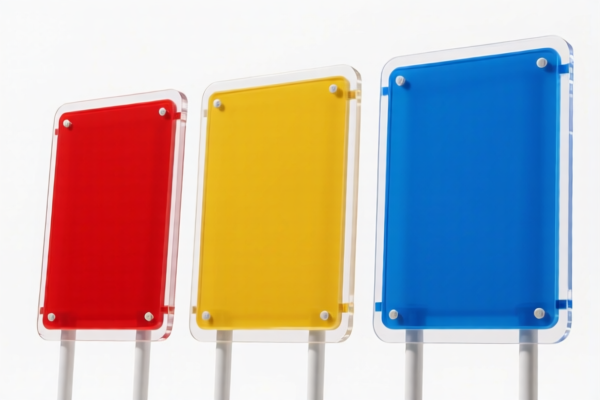
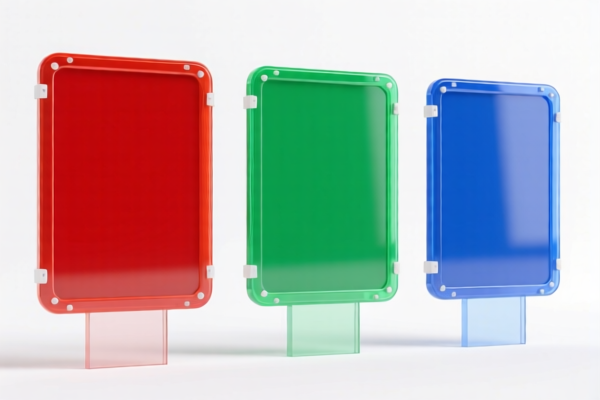
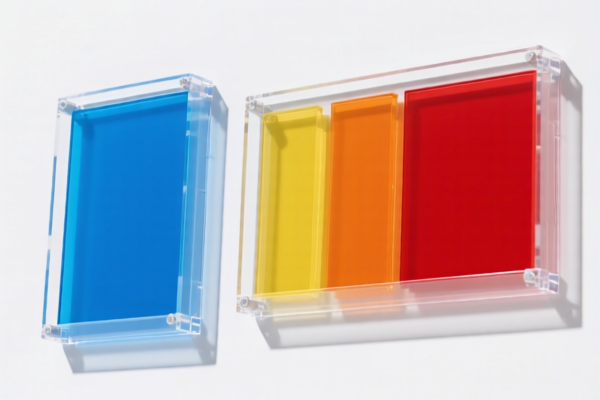
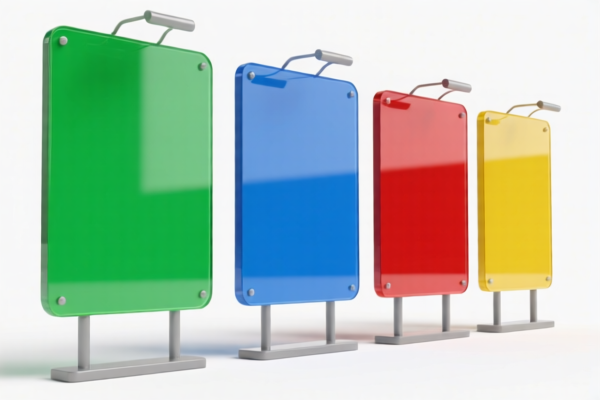
AI Analysis
🖥️ Acrylic Plastic Advertising Board (Acrylic Sheets/Plates)
🌐 HS Code Reference & Customs Clearance Guide | 2026 Latest Tariff Full Analysis | Professional Clearance Strategy 📌 I. Product Definition & Classification: Do You Really Understand "Acrylic"?
Acrylic plastic advertising boards are widely used in visual displays, signage, and exhibitions. In international trade, they are classified based on their form (finished vs. semi-finished) and intended use.
- Raw/Semi-finished Acrylic Sheets: Plain sheets, cut to size but without printing, cutting into specific shapes, or assembly. These are generally treated as plastics/plates.
- Finished Advertising Boards: If the board is printed with specific graphics, cut into a specific shape, or assembled with frames/lights, it may be considered a finished good or even a toy/artistic item depending on the final form and marketing.
⚠️ Key Distinction Point: * If it is a plain, unprinted sheet intended for further processing (cutting/printing by the buyer) → Usually classified under Chapter 39 (Plastics). * If it is a specific "toy" shape or a finished display board that doesn't fit standard "plates," it might fall under Chapter 95 (Toys) or Chapter 39 Miscellaneous Articles.
📦 II. HS Code Classification Details (2026 Latest Tariff Authority Comparison)
Based on the provided data, here are the four potential classifications for "Acrylic Plastic Advertising Board" and their corresponding tax implications.
| HS Code | Product Description (Summary from Data) | Application Scenario | Tax Rate | Key Risk/Note |
|---|---|---|---|---|
9503.00.00.71 |
Toys Category: Acrylic plastic toy pieces, material: acrylic plastic, form: sheet. | Advertising boards shaped like toys, or sold as "DIY toy kits" using acrylic sheets. | 10.0% | Lowest Tax! Requires proof it is for toy/play purposes, not just industrial signage. |
3926.10.00.00 |
Plastic Articles: Acrylic classified as plastic products, material: acrylic, form: piece/sheet. | General plastic parts, small decorative pieces, or non-standard sheet goods not fitting "plate" definitions. | 15.3% | Moderate tax. Good for "articles of plastic" that aren't strict raw plates. |
3926.90.99.89 |
Other Plastic Articles: Acrylic classified as plastic products, material: acrylic, form: sheet material. | Miscellaneous plastic sheets/boards not specifically listed as "plates" (e.g., if texture or coating excludes it from 3920). | 22.8% | Higher tax due to "Other" classification. |
3920.51.50.90 / 3920.59.80.00 |
Acrylic Polymer Plates/Sheets: Acrylic classified as acrylic polymer plates/sheets, material: acrylic, form: sheet. | Standard Raw Acrylic Sheets: Plain, unprinted, uncut sheets used as raw material. | 41.5% | Highest Tax! Includes 25% Section 301 Tariff + 10% IEEPA. Only for raw industrial materials. |
🔍 Critical Reminder: * Raw Sheets vs. Finished Goods: If you are exporting plain acrylic sheets for printing, Customs may lean toward 3920 (High Tax) unless you can prove it’s a "toy" (9503) or a "plastic article" (3926). * "Toy" Loophole: If the advertising board is shaped like a character, animal, or educational item, 9503.00.00.71 offers the lowest rate (10%) because it avoids the high Section 301 tariffs applicable to plastics.
💰 III. 2026 Latest Tariff Rate Details (Including Surcharges & Policy Add-ons)
✅ Applicable Country: United States (US)
✅ Origin: China (CN)
✅ Effective Date: 2025/2026 (Current Enforcement)
🎯 1. 9503.00.00.71 —— Toy Category (Acrylic Toy Pieces)
| Item | Content |
|---|---|
| Base Tariff | 0% (ad valorem) |
| Section 301 Surcharge | 0% (Exempt for Toys under Chapter 95 in this specific subheading) |
| IEEPA Surcharge | +10% (Targeting China/HK products, effective Nov 10, 2025) |
| Total Tariff | 10.0% |
| Tax Calculation | CIF Value × 10% |
| De Minimis Exemption | ❌ Not Applicable (General rule for China origin) |
| Legal Basis Path | IEEPA:9903.01.25 → USITC:9503.00.00.71 |
📌 Explanation: * This is the most cost-effective classification if the product can be justified as a "toy" or "play item." * It avoids the 25% Section 301 tariff entirely, which is usually applied to acrylic plastics (
3920). * Strategy: If your advertising board is shaped like a cartoon character, puzzle, or educational display, market it as a "Toy/Play Accessory" to utilize this rate.
🎯 2. 3926.10.00.00 —— Plastic Articles
| Item | Content |
|---|---|
| Base Tariff | 5.3% |
| Section 301 Surcharge | 0% |
| IEEPA Surcharge | +10% |
| Total Tariff | 15.3% |
| Tax Calculation | CIF Value × 15.3% |
| De Minimis Exemption | ❌ Not Applicable |
| Legal Basis Path | IEEPA:9903.01.25 → USITC:3926.10.00.00 |
📌 Explanation: * If the product is a small plastic accessory or decorative piece (not a standard sheet), this classification applies. * No Section 301 surcharge, making it significantly cheaper than the
3920classification.
🎯 3. 3926.90.99.89 —— Other Plastic Articles (Sheet Material)
| Item | Content |
|---|---|
| Base Tariff | 5.3% |
| Section 301 Surcharge | +7.5% (Note: Data specifies 7.5% surcharge here, distinct from 25%) |
| IEEPA Surcharge | +10% |
| Total Tariff | 22.8% |
| Tax Calculation | CIF Value × 22.8% |
| De Minimis Exemption | ❌ Not Applicable |
| Legal Basis Path | IEEPA:9903.01.25 → USITC:3926.90.99.89 |
📌 Explanation: * For plastic sheets that do not fit the specific "plates" definition of 3920 but are still plastic articles. * Moderate tax burden.
🎯 4. 3920.51.50.90 / 3920.59.80.00 —— Acrylic Polymer Plates/Sheets
| Item | Content |
|---|---|
| Base Tariff | 6.5% |
| Section 301 Surcharge | +25.0% (Heavy Penalty) |
| IEEPA Surcharge | +10% |
| Total Tariff | 41.5% |
| Tax Calculation | CIF Value × 41.5% |
| De Minimis Exemption | ❌ Not Applicable |
| Legal Basis Path | IEEPA:9903.01.25 → IEEPA:9903.01.24 → USITC:3920.* → FOOTNOTE:9903.88.01 |
📌 Explanation: * This is the standard classification for raw acrylic sheets. * Warning: The 25% Section 301 Tariff makes this extremely expensive. * Only use this if the product is strictly a raw material for industrial use and cannot be justified as a "toy" or "miscellaneous plastic article."
🛠️ IV. Customs Clearance Practical Advice (Real-World Pitfall Guide)
✅ 1. Documentation Checklist (Must-Haves)
| Document | Required | Description |
|---|---|---|
| ✅ Product Catalogue | ✔️ | Photos showing the final shape, use, and any printed graphics. |
| ✅ Product Description | ✔️ | Clearly state if it is "For Toy Use," "Decorative Article," or "Raw Material." |
| ✅ Material Specification | ✔️ | Confirm 100% Acrylic (Polymethyl Methacrylate). |
| ✅ Commercial Invoice | ✔️ | HS Code must match the declaration. Do not write "Plastic Sheet" if declaring as "Toy." |
| ✅ Packing List | ✔️ | Detail dimensions and weight. |
✅ 2. Declaration Strategy (Key Mantra)
🔥 “Shape Determines Category, Use Determines Tax!”
| Scenario | Recommended HS Code | Declaration Name | Why? |
|---|---|---|---|
| Toy-shaped Ad Board (e.g., cartoon character cutout) | 9503.00.00.71 |
"Acrylic Toy Play Board" | Avoids 25% Section 301. Tax: 10%. |
| Small Decorative Plastic Piece | 3926.10.00.00 |
"Acrylic Plastic Decorative Article" | Avoids 25% Section 301. Tax: 15.3%. |
| Large Plain Raw Sheet | 3920.51.50.90 |
"Acrylic Polymer Sheet" | Standard for raw material. Tax: 41.5%. |
| Unfinished/Custom Shape Sheet | 3926.90.99.89 |
"Acrylic Plastic Sheet Material" | Intermediate classification. Tax: 22.8%. |
✅ 3. Special Handling Tips
- Avoid "Plastic Sheet" if possible: If your product has any "playful" or "finished" aspect, lean towards 3926 or 9503 to escape the 25% surcharge.
- Proof of Toy Use: If using
9503, ensure the marketing materials, packaging, and description support the "toy" classification (e.g., "Kids' Display Kit," "Educational Toy Board"). Customs may challenge this if it looks purely industrial. - Raw Sheets: If you are definitely exporting raw sheets, prepare for the 41.5% cost. Consider supply chain adjustments (e.g., finishing in a non-China country) if margins are tight.
🌍 V. Global Market Comparison (2026 Latest)
| Country/Region | Recommended HS Code | Tariff (China Origin) | Notes |
|---|---|---|---|
| 🇺🇸 USA | 9503.00.00.71 |
10.0% | Best for toy-shaped boards. Avoid 3920 (41.5%). |
| 🇨🇳 China | 3920.51.00.00 |
~6-10% | Lower import duties, but consider domestic consumption vs. export. |
| 🇪🇺 EU | 3920.51.00.90 |
6.5% | No Section 301 equivalent, but VAT applies. |
| 🇬🇧 UK | 3920.51.00.90 |
6.5% | Post-Brexit tariffs similar to EU. |
| 🇦🇺 Australia | 3920.51.00.90 |
5% | Low duty, but check for anti-dumping if applicable. |
📌 Conclusion: * USA is the most critical market due to high tariffs on plastics. * Strategy Shift: For the US market, reclassify "Acrylic Advertising Boards" as "Toys" or "Plastic Articles" rather than "Plastic Plates" to save 25-31.5% in duties.
📌 VI. Common Mistakes & Pitfall Guide (Blood & Tears Lessons)
❌ Mistake 1: Declaring all acrylic products as 3920 (Plastic Plates)
👉 Consequence: Paying 41.5% tax instead of 10%. Huge profit erosion!
❌ Mistake 2: Using 9503 (Toys) for plain, industrial raw sheets
👉 Consequence: Customs seizure or reclassification + penalties. Must have "toy-like" features.
❌ Mistake 3: Ignoring the "IEEPA 10%" surcharge
👉 Consequence: Underestimating total landed cost. Even "low tax" codes like 9503 still have 10% IEEPA.
✅ Correct Approach:
“Custom Acrylic Toy Display Board, Shaped like [Character], for Educational Play, Model XYZ”
🎯 VII. Conclusion: Professional Declaration, Save Costs, Boost Efficiency!
🎯 Remember the Mantra:
🔹 “Toy Shape, 10% Tax; Plastic Plate, 41% Tax!” 🔹 “HS Code Defines Life, 30% Difference, Declaration One Step, Profit Doubled!”
✨ Professional Clearance Starts with Accurate Classification! 💼 Every Cent of Cost Deserves Precision!
📣 Immediate Action:
📞 Consult with a professional customs broker + Provide product images + Apply for HS Code Advance Ruling for the
9503classification if applicable. 🚀 Let your acrylic boards clear customs smoothly, expand overseas efficiently, and double profits!
Customer Reviews
About HS Code Classification
The Harmonized System (HS) is an internationally standardized nomenclature developed by the World Customs Organization (WCO) to classify traded products. Over 200 countries use the HS system as the basis for customs tariffs, trade statistics, and import/export regulations.
Each HS code follows a hierarchical structure:
- Chapter (2 digits) — Broad category of goods (e.g., Chapter 84: Machinery and Mechanical Appliances)
- Heading (4 digits) — More specific grouping within the chapter
- Subheading (6 digits) — Internationally standardized breakdown, used by all WCO member countries
- National subdivisions (8-10 digits) — Country-specific extensions for further classification, such as US HTSUS 10-digit codes
Correct HS code classification is essential for smooth customs clearance, accurate duty payment, and compliance with trade regulations. Misclassification can lead to customs delays, overpayment of duties, or penalties.
When importing from CN to US, the applicable tariff rates may include:
- Most-Favored-Nation (MFN) rate — The standard duty rate applied to WTO members
- General rate — Applied to countries without trade agreements
- Trade remedy duties — Additional tariffs such as Section 301 (anti-dumping), Section 232 (national security), or countervailing duties
The information provided on this page is for reference purposes only. For official classification, please consult with your local customs authority or a licensed customs broker.