Acrylic Plastic Agricultural Film
CN → US| HS Code | Tariff Rate | Origin | Destination | Doc |
|---|---|---|---|---|
| 5903901500 | 35.0% | CN | US | Official Doc |
| 5903902000 | 35.0% | CN | US | Official Doc |
| 3920511000 | 41.0% | CN | US | Official Doc |
| 3920591000 | 41.0% | CN | US | Official Doc |
| 3919905040 | 40.8% | CN | US | Official Doc |
Product Images
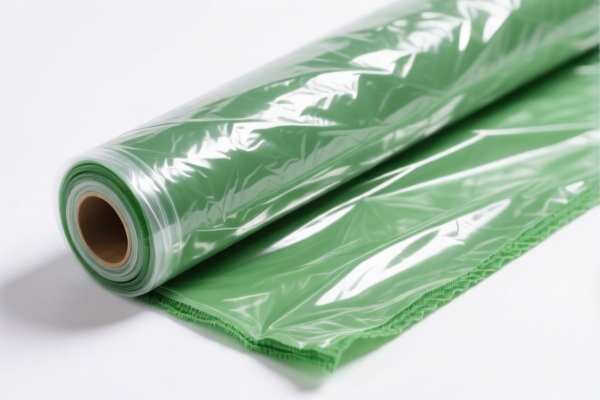

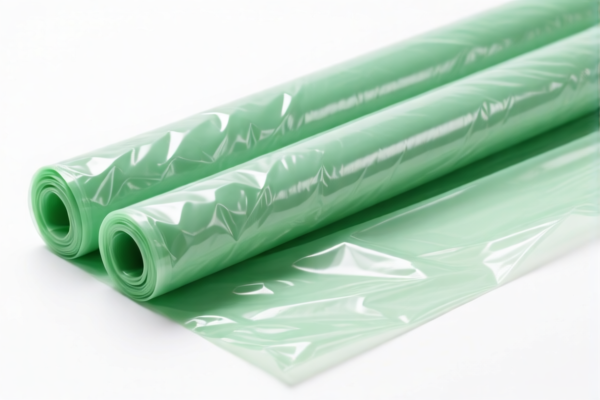

AI Analysis
Here is the comprehensive clearance guide for Acrylic Plastic Agricultural Film, structured in a Wiki style with detailed tax analysis and clearance strategies based on your provided data.
🚜🌿 Acrylic Plastic Agricultural Film
🌐 HS Code Reference & Clearance Guide | 2026 Tariff Analysis | Professional Customs Strategy
📌 Product Definition: What is "Acrylic Plastic Agricultural Film"?
Acrylic Agricultural Film refers to high-performance plastic sheets used primarily in greenhouse cultivation and agriculture to regulate light transmission, retain heat, and resist weathering. Unlike standard polyethylene (PE) or polypropylene (PP) films, Acrylic (PMMA) films offer superior durability, UV resistance, and optical clarity.
In international trade, classification depends heavily on the coating process vs. material composition: * Category A: Coated Films – If the base is a fabric or other material and is coated/impregnated with Acrylic. (Focus on the coating process). * Category B: Pure Acrylic Sheets/Films – If the film is made primarily of Poly(methyl methacrylate) (PMMA) without a specific fabric backing, treated as a plastic sheet. (Focus on the chemical composition). * Category C: Adhesive/Flat Plastic – If the film includes adhesive layers or is classified strictly as a flat plastic product.
⚠️ Critical Distinction:
- Coated/Fabric-based → Goes to Chapter 59 (Textiles coated with plastics).
- Pure Plastic/Sheet → Goes to Chapter 39 (Plastics and articles thereof).
- Classification determines tax rates ranging from 35% to 41% due to US-China trade tariffs.
📦 II. HS Code Classification Matrix (2026 Tariff Authority)
| HS Code | Product Description | Key Classification Logic | Total Tax Rate (US Import) |
|---|---|---|---|
| 5903.90.15.00 | Acrylic Coated Film (Type A) Coated, impregnated, covered, or laminated. |
Chapter 59 Logic: 1. Base material likely fabric/textile. 2. Acrylic is the coating/impregnation agent. 3. Fits "Plastic Coating" features. |
35.0% |
| 5903.90.20.00 | Acrylic Coated Film (Type B) Other plastic-coated textile/paper. |
Chapter 59 Logic: 1. General plastic coating on non-textile base. 2. Fits "Impregnation/Covering" features. 3. Distinct from pure plastic sheets. |
35.0% |
| 3920.51.10.00 | Pure Acrylic Film (PMMA) Non-foam, unreinforced sheets/films. |
Chapter 39 Logic: 1. Material: Pure Poly(methyl methacrylate) (Acrylic). 2. Form: Film/Sheet. 3. Feature: Non-foam, not reinforced. |
41.0% |
| 3920.59.10.00 | Other Acrylic Polymer Films Acrylic polymer sheets/films. |
Chapter 39 Logic: 1. Material: Acrylic Polymer. 2. Feature: Fits general acrylic polymer film definition. 3. Specific subheading for "Other". |
41.0% |
| 3919.90.50.40 | Acrylic Plastic Film (Flat) Self-adhesive or flat plastic shape. |
Chapter 39 Logic: 1. Material: Acrylic (Plastic category). 2. Form: Flat shape (Film). 3. Feature: Fits general plastic flat product. |
40.8% |
🔍 Key Takeaway:
- Chapter 59 (35%) is often lower if the product is a textile base coated with acrylic.
- Chapter 39 (41% / 40.8%) is standard for pure acrylic sheets/films.
- Misclassification Risk: Declaring a pure acrylic sheet as "coated" to save taxes will lead to seizure or penalties.
💰 III. 2026 Tariff Rate Breakdown (Detailed Taxation)
✅ Applicable Market: United States (US)
✅ Origin: China (CN)
✅ Effective Date: Current Trade Policy (2025-2026)
🎯 Scenario 1: Textile/Coated Films (HS 5903.90.15.00 & 5903.90.20.00)
Targeting the 35% Total Rate.
| Tax Component | Rate | Description & Legal Basis |
|---|---|---|
| Base Duty | 0.0% | Standard MFN (Most Favored Nation) rate for Chapter 59. |
| Section 301 Add-on | +25.0% | USITC "Section 301" Tariff: Specific surcharge for Chinese goods in this category. |
| Section 122 (IEEPA) | +10.0% | National Security Tariff: Additional levy on Chinese-origin agricultural/plastic materials. |
| TOTAL RATE | 35.0% | Calculation: $0.0\% + 25.0\% + 10.0\% = 35.0\%$ |
| De Minimis | ❌ | Not Eligible: These goods are subject to high-value thresholds; cannot enter via small parcel exemptions. |
📌 Legal Path:
USITC:5903.90→Section 301: 19 CFR 122→IEEPA: 10% surcharge.
🎯 Scenario 2: Pure Acrylic Films (HS 3920.51.10.00 & 3920.59.10.00)
Targeting the 41% Total Rate (Highest Risk).
| Tax Component | Rate | Description & Legal Basis |
|---|---|---|
| Base Duty | 6.0% | Standard MFN rate for Acrylic sheets (Chapter 39). |
| Section 301 Add-on | +25.0% | USITC "Section 301" Tariff: Aggressive surcharge on Chinese plastics. |
| Section 122 (IEEPA) | +10.0% | National Security Tariff: Applies to polymer films of Chinese origin. |
| TOTAL RATE | 41.0% | Calculation: $6.0\% + 25.0\% + 10.0\% = 41.0\%$ |
| De Minimis | ❌ | Not Eligible: High tariff risk prohibits small parcel entry. |
📌 Note: The 6% base duty combined with 35% in taxes results in the highest financial burden.
🎯 Scenario 3: Flat Plastic Shapes (HS 3919.90.50.40)
Targeting the 40.8% Total Rate.
| Tax Component | Rate | Description & Legal Basis |
|---|---|---|
| Base Duty | 5.8% | Standard MFN rate for flat plastic products (Self-adhesive or general film). |
| Section 301 Add-on | +25.0% | USITC "Section 301" Tariff. |
| Section 122 (IEEPA) | +10.0% | National Security Tariff. |
| TOTAL RATE | 40.8% | Calculation: $5.8\% + 25.0\% + 10.0\% = 40.8\%$ |
| De Minimis | ❌ | Not Eligible. |
🛠️ IV. Clearance实操建议 (Customs Clearance Strategy)
✅ 1. Essential Documentation (Must-Prepare)
| Document | Requirement | Why It Matters |
|---|---|---|
| Technical Data Sheet (TDS) | Mandatory | Must explicitly state: "Material: Acrylic (PMMA)" or "Coating: Acrylic on [Fabric/Paper]". This determines if it's Chapter 59 (35%) or Chapter 39 (41%). |
| Cross-Section Photo | Mandatory | A microscopic or zoomed photo showing layers. Proves if it is a "Coated Fabric" (5903) or a "Solid Plastic Sheet" (3920). |
| Bill of Materials (BOM) | Mandatory | Lists % composition. If Acrylic > 90% → Likely 3920. If Acrylic is a coating layer → Likely 5903. |
| Declaration of Origin | Mandatory | Must declare "Made in China". If not declared, penalties apply under IEEPA. |
| Coating Process Spec | Highly Recommended | Describes how the acrylic was applied (laminated, coated, impregnated). Critical for 5903 classification. |
✅ 2. Declaration Strategy (The "Golden Rule")
🔥 Rule: "Define the Base Material First!"
| Scenario | Correct HS Code | Declaration Name | Risk if Wrong |
|---|---|---|---|
| Fabric + Acrylic Coating | 5903.90.15.00 |
"Acrylic Coated Textile Film for Agriculture" | ❌ High Risk: If declared as 3920, you overpay tax. If declared as 5903 but actually solid plastic → Penalty for False Declaration. |
| Pure Acrylic Sheet (No Fabric) | 3920.51.10.00 |
"Poly(methyl methacrylate) Sheet/Film" | ✅ Safe: Clear material definition prevents "Section 301" confusion. |
| Adhesive Acrylic Tape/Film | 3919.90.50.40 |
"Self-Adhesive Acrylic Plastic Film" | ⚠️ Moderate Risk: Must prove the adhesive function to fit this subheading. |
📌 Pro Tip:
If your product is Acrylic Film on a Polyester Backing, do NOT declare it as3920.51(Pure Acrylic). Declare it as5903.90.15(Coated) to qualify for the 35% rate.
However, ensure the backing is indeed a textile/fabric and not just a plastic carrier.
✅ 3. Special Handling & Pitfalls
| Pitfall | Consequence | Solution |
|---|---|---|
| "Acrylic" vs. "PMMA" Confusion | Customs may reject if the chemical name isn't precise. | Use "Poly(Methyl Methacrylate) (PMMA)" in the declaration description. |
| Missing Coating Layer Proof | If declared as 5903 but no backing exists, duty jumps to 41%. | Always provide a layer diagram showing the base + coating. |
| Ignoring Section 122 | Assuming only 25% tax is applicable. | Always calculate +10% IEEPA surcharge. Total is never just 25%. |
| Wrong Origin Labeling | If origin is not clearly marked "China". | Seizure or forced return under IEEPA. |
🌍 V. Market Comparison & Cost Impact
| Market | Base Duty | 301 (China) | IEEPA (China) | Total Cost | Recommendation |
|---|---|---|---|---|---|
| 🇺🇸 USA | 0-6% | +25% | +10% | 35.0% - 41.0% | High Risk. Must optimize HS Code to 5903 to save 6%. |
| 🇪🇺 EU | ~6-8% | 0% | 0% | ~8-10% | Better Alternative. No Section 301/122. |
| 🇯🇵 Japan | ~5% | 0% | 0% | ~5% | Excellent. Lower tax base. |
| 🇦🇺 Australia | ~5% | 0% | 0% | ~5% | Excellent. No additional surcharges. |
📌 Strategic Insight:
If your profit margin cannot sustain 41% tax, consider diversifying manufacturing to Vietnam, Mexico, or Malaysia to qualify for 0% Section 301 rates.
📌 VI. Common Mistakes & How to Fix Them
❌ Mistake 1: Calling it "Plastic Film" only.
👉 Fix: Be specific: "Acrylic Coated Film" (for 5903) vs. "Acrylic Sheet" (for 3920).
❌ Mistake 2: Ignoring the 10% IEEPA Surcharge.
👉 Fix: Always add 10% to your cost calculation. Many brokers miss this "122 clause" tax.
❌ Mistake 3: Claiming De Minimis (Section 321) for Commercial Shipments.
👉 Fix: Do not apply for small parcel entry. Acrylic agricultural films are commercial goods and 35-41% tax applies regardless of value.
🎯 VII. Conclusion: Smart Clearing for Acrylic Films
🚀 Key Takeaway:
The difference between 35% and 41% depends entirely on whether your film is "Coated" (Chapter 59) or "Solid Plastic" (Chapter 39).Action Plan:
1. Verify Material: Is there a fabric/textile base? If Yes → 5903.90.15 (Save 6%).
2. Declare Chemicals: Use "PMMA" or "Acrylic Polymer".
3. Calculate Total: Always use 35% or 41% (Base + 25% + 10%) in your pricing model.
4. Prepare Proof: Have a cross-section image ready for Customs inspection.💡 Final Advice:
"If you are unsure, choose the higher classification (3920) to avoid penalties, or consult a customs broker for a Binding Ruling before shipping."
✨ Customs Clearance Made Simple.
💼 Precision in Classification = Profit in Your Pocket!
Customer Reviews
About HS Code Classification
The Harmonized System (HS) is an internationally standardized nomenclature developed by the World Customs Organization (WCO) to classify traded products. Over 200 countries use the HS system as the basis for customs tariffs, trade statistics, and import/export regulations.
Each HS code follows a hierarchical structure:
- Chapter (2 digits) — Broad category of goods (e.g., Chapter 84: Machinery and Mechanical Appliances)
- Heading (4 digits) — More specific grouping within the chapter
- Subheading (6 digits) — Internationally standardized breakdown, used by all WCO member countries
- National subdivisions (8-10 digits) — Country-specific extensions for further classification, such as US HTSUS 10-digit codes
Correct HS code classification is essential for smooth customs clearance, accurate duty payment, and compliance with trade regulations. Misclassification can lead to customs delays, overpayment of duties, or penalties.
When importing from CN to US, the applicable tariff rates may include:
- Most-Favored-Nation (MFN) rate — The standard duty rate applied to WTO members
- General rate — Applied to countries without trade agreements
- Trade remedy duties — Additional tariffs such as Section 301 (anti-dumping), Section 232 (national security), or countervailing duties
The information provided on this page is for reference purposes only. For official classification, please consult with your local customs authority or a licensed customs broker.