Acrylic Plastic Decorative Panel
CN → US| HS Code | Tariff Rate | Origin | Destination | Doc |
|---|---|---|---|---|
| 3920515090 | 41.5% | CN | US | Official Doc |
| 3920598000 | 41.5% | CN | US | Official Doc |
| 3921905050 | 39.8% | CN | US | Official Doc |
| 3921904090 | 39.2% | CN | US | Official Doc |
Product Images
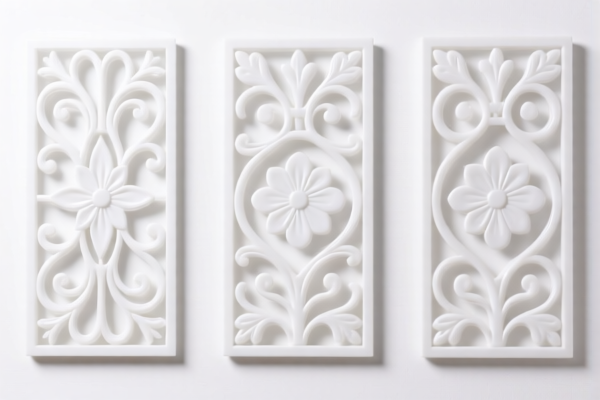
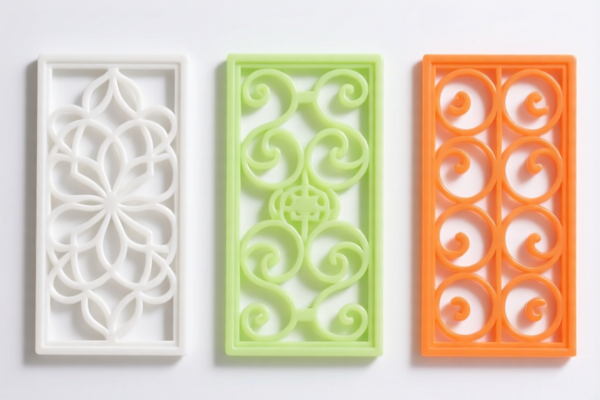
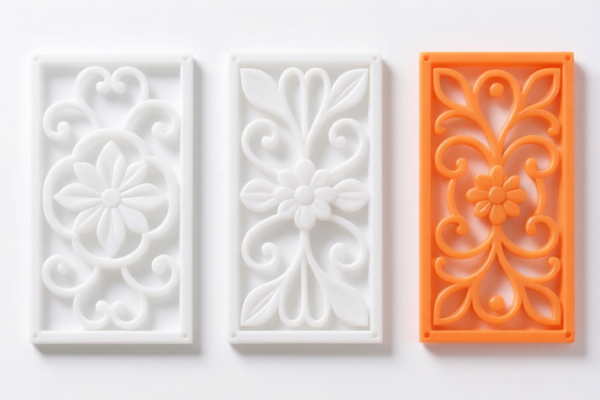
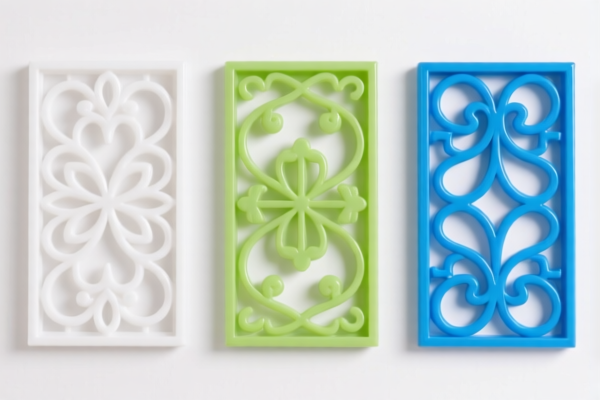
AI Analysis
🏷️ Acrylic Plastic Decorative Panel
🌐 HS Code Reference & Customs Clearance Guide | 2026 Latest Tariff Analysis | Professional Compliance Strategy
📌 I. Product Definition & Classification: Do You Truly Understand "Acrylic Decorative Panels"?
Acrylic plastic decorative panels, typically made of Poly(methyl methacrylate) (PMMA), are rigid or semi-rigid sheets used for interior design, signage, displays, and architectural cladding. In international trade, these products are strictly categorized under Chapter 39 (Plastics and Articles Thereof), specifically targeting non-cellular plates, sheets, and film.
The critical distinction in classification lies in the physical form and processing state: 1. Rigid/Standard Panels: Flat, non-flexible sheets that maintain their shape. These are generally classified under 3920. 2. Flexible/Thin Films: Sheets that are pliable, often used for laminating or wrapping. These may be classified under 3921.
⚠️ Key Differentiator:
- If the panel is rigid, non-reinforced, and not cellular (i.e., standard solid acrylic sheet) → Likely HS Code 3920.
- If the panel is flexible (e.g., thin acrylic film used for decoration) → Likely HS Code 3921.
📦 II. HS Code Classification Details (2026 Latest Tariff Authority Match)
Based on the provided data, here is the precise mapping for "Acrylic Plastic Decorative Panels":
| HS Code | Product Description | Applicable Scenario | Physical Characteristics |
|---|---|---|---|
3920.51.50.90 |
Other plates, sheets, film, foil, and strip of plastics, noncellular and not reinforced, laminated, supported or similarly combined with other materials: Of acrylic polymers: Of poly(methyl methacrylate): Other Other | Standard Rigid Acrylic Sheets (e.g., Plexiglas, Lucite sheets for decoration) | ✅ Rigid, Solid, Non-cellular PMMA |
3920.59.80.00 |
Other plates, sheets, film, foil, and strip of plastics, noncellular and not reinforced, laminated, supported or similarly combined with other materials: Of acrylic polymers: Other: Other: Other | Other Acrylic Polymers (Non-PMMA acrylic variants or specialized non-PMMA acrylic sheets) | ✅ Rigid, Non-PMMA Acrylic or Other Acrylic Types |
3921.90.40.90 |
Other plates, sheets, film, foil and strip, of plastics: Other: Other: Flexible Other | Flexible Acrylic Decorative Films | ✅ Flexible, Pliable Acrylic Film/Sheet |
3921.90.50.50 |
Other plates, sheets, film, foil and strip, of plastics: Other: Other: Other Other | Other Plastic Decorative Panels (Non-acrylic or complex composite plastics) | ❌ Non-Acrylic or Composite Plastic |
🔍 Important Note:
- For standard decorative acrylic panels (commonly PMMA), the primary classification is3920.51.50.90.
- If the product is flexible (e.g., thin rolls of acrylic for wrapping), it falls under3921.90.40.90.
- If the product is made of other plastics (not acrylic) or complex laminates not specified in 3920/3921 details, it may fall under3921.90.50.50.
💰 III. 2026 Latest Tariff Rate Detailed Explanation
✅ Applicable Country: United States (US)
✅ Origin: China (CN)
✅ Effective Date: Current tariff structure applies
🎯 1. 3920.51.50.90 – Rigid PMMA Acrylic Sheets (Most Common for Decorative Panels)
| Item | Content |
|---|---|
| Basic Tariff | 0.0% (ad valorem) |
| Additional Tariff (Section 301) | 0.0% |
| Total Tariff | 0.0% |
| Tax Calculation | CIF Value × 0% = $0 |
| De Minimis Exemption | ❌ Not Applicable (This is an industrial/material import, not a small package) |
| Legal Basis | USITC Harmonized Tariff Schedule (HTS) 3920.51.50.90 |
📌 Explanation:
- PMMA (Acrylic) sheets under heading 3920 enjoy zero basic duty.
- No Section 301 Additional Tariff applies to this specific subheading (unlike many electronics or machinery).
- Total Cost Impact: No extra tariff burden, making it highly competitive.
🎯 2. 3920.59.80.00 – Other Acrylic Polymers (Non-PMMA)
| Item | Content |
|---|---|
| Basic Tariff | 0.0% (ad valorem) |
| Additional Tariff (Section 301) | 0.0% |
| Total Tariff | 0.0% |
| Tax Calculation | CIF Value × 0% = $0 |
| De Minimis Exemption | ❌ Not Applicable |
| Legal Basis | USITC Harmonized Tariff Schedule (HTS) 3920.59.80.00 |
📌 Explanation:
- Even if the acrylic polymer is not PMMA, it still falls under 0% total tax.
- Advantage: No risk of Section 301 penalties for acrylic materials in this category.
🎯 3. 3921.90.40.90 – Flexible Acrylic Sheets/Films
| Item | Content |
|---|---|
| Basic Tariff | 4.2% (ad valorem) |
| Additional Tariff (Section 301) | 0.0% |
| Total Tariff | 4.2% |
| Tax Calculation | CIF Value × 4.2% |
| De Minimis Exemption | ❌ Not Applicable |
| Legal Basis | USITC Harmonized Tariff Schedule (HTS) 3921.90.40.90 |
📌 Explanation:
- Flexible plastic sheets carry a low basic duty of 4.2%.
- No Additional Tariff applies, keeping costs predictable.
- Caution: Ensure the product is truly "flexible" to qualify for this code. Rigid panels misclassified here may face penalties.
🎯 4. 3921.90.50.50 – Other Plastic Sheets (Non-Acrylic or Complex)
| Item | Content |
|---|---|
| Basic Tariff | 4.8% (ad valorem) |
| Additional Tariff (Section 301) | +25.0% |
| Total Tariff | 29.8% |
| Tax Calculation | CIF Value × 29.8% |
| De Minimis Exemption | ❌ Not Applicable |
| Legal Basis | USITC Harmonized Tariff Schedule (HTS) 3921.90.50.50 |
📌 Explanation:
- This code attracts high tariffs (29.8%) due to Section 301 additional duties on certain plastic goods.
- Critical Warning: If your product is acrylic but misclassified as "other plastics," you could face a 29.8% tariff instead of 0%.
- Action: Always verify material composition to avoid misclassification.
🛠️ IV. Customs Clearance Practical Advice (Battle-Tested Pitfall Guide)
✅ 1. Documentation Checklist (Non-Negotiable)
| Document | Must Provide | Description |
|---|---|---|
| ✅ Product Specification Sheet | ✔️ | Material: 100% PMMA? Thickness, Width, Length, Transparency/Color |
| ✅ Material Certificate | ✔️ | Proof of Acrylic (PMMA) composition to qualify for 0% duty |
| ✅ Product Photos | ✔️ | Clear images of the panel, including flexibility test (if applicable) |
| ✅ Commercial Invoice | ✔️ | Clearly state "Acrylic Decorative Panel" or "PMMA Sheet" |
| ✅ Packing List | ✔️ | Weight, dimensions, and number of packages |
| ✅ Country of Origin Certificate | ✔️ | If applicable for preferential treatment (though US-China tariffs apply) |
✅ 2. Classification Tips (Key Mnemonic)
🔥 “Rigid PMMA is 3920, Flexible is 3921, Don’t Mix ‘Other Plastics’ or Pay 29.8%!”
| Scenario | Correct HS Code | Tax Rate | Risk if Misclassified |
|---|---|---|---|
| Rigid PMMA Sheet (Standard Acrylic) | 3920.51.50.90 |
0.0% | High risk of 29.8% if miscoded as "other plastic" |
| Flexible Acrylic Film | 3921.90.40.90 |
4.2% | Low risk, but must prove flexibility |
| Non-Acrylic Plastic Sheet | 3921.90.50.50 |
29.8% | N/A (This is the correct code for non-acrylic) |
| Other Acrylic (Non-PMMA) | 3920.59.80.00 |
0.0% | Low risk, ensure material is acrylic |
📌 Critical Warning:
- Do NOT declare "Acrylic Panel" under3921.90.50.50unless it is not acrylic or is a complex laminate.
- Do NOT declare rigid PMMA under3921codes unless it is explicitly flexible.
- Misclassification Penalty: Up to 29.8% tariff + potential fines for undervaluation/false classification.
✅ 3. Special Case Handling
| Situation | Handling Advice |
|---|---|
| Composite Panels (Acrylic + Metal/Vinyl) | If reinforced/laminated, it may move to 3921. Verify if it’s "supported or similarly combined." If so, use 3921.90.50.50 (29.8%) or 3921.90.40.90 (4.2%) based on flexibility. |
| Printed/Decorated Acrylic | Still classified by material (PMMA). Printing does not change HS Code unless it becomes a printed graphic article (Chapter 49). |
| Sample vs. Bulk | Both are treated as commercial goods. De minimis exemption does not apply to bulk imports. |
| Certifications Required | No special FCC/CE required for pure plastic sheets, but UL Certification may be requested for fire safety in construction. |
🌍 V. Global Market Comparison (2026 Latest)
| Country/Region | Recommended HS Code | Tariff Rate | Notes |
|---|---|---|---|
| 🇺🇸 USA | 3920.51.50.90 |
0.0% | Best for PMMA. Avoid 3921.90.50.50 (29.8%) |
| 🇨🇳 China | 3920.51.50.90 |
5.0% | Basic import duty. No Section 301 |
| 🇪🇺 EU | 3920.51.50.90 |
6.5% | Standard duty. No additional tariffs |
| 🇬🇧 UK | 3920.51.50.90 |
6.5% | Post-Brexit alignment with EU |
| 🇯🇵 Japan | 3920.51.50.90 |
5.0% | Stable tariff structure |
📌 Conclusion:
- The USA offers the best tariff rate (0.0%) for PMMA Acrylic Sheets under3920.51.50.90.
- Risk of High Tariffs: Misclassifying as "other plastic" (3921.90.50.50) leads to 29.8% duty.
- Recommendation: Always specify "Poly(methyl methacrylate)" or "PMMA" in documentation to secure 0% duty.
📌 VI. Common Errors & Pitfall Guide (Lessons Learned)
❌ Error 1: Declaring PMMA sheets as "Plastic Sheets, Other" (3921.90.50.50)
👉 Consequence: 29.8% tariff instead of 0.0% → Massive cost increase!
❌ Error 2: Declaring rigid acrylic as "Flexible Film" (3921.90.40.90)
👉 Consequence: Misclassification risk, potential 4.2% duty + compliance penalties.
❌ Error 3: Using vague description "Decorative Plastic Panel"
👉 Consequence: Customs may classify as "Other Plastic" → 29.8% tariff.
❌ Error 4: Ignoring material composition
👉 Consequence: If the panel is a composite (e.g., acrylic + metal), it may not qualify for 0% duty.
✅ Correct Practice:
"Acrylic Decorative Panel, 100% Poly(methyl methacrylate) (PMMA), Non-cellular, Rigid, Unreinforced, 5mm Thickness, Clear Color, Model XYZ"
🎯 VII. Conclusion: Precision Classification for Cost Savings
🎯 Remember the Mnemonic:
🔹 "PMMA Rigid is 3920, Zero Duty is the Goal!"
🔹 "Flexible Acrylic is 3921, 4.2% is Fine!"
🔹 "Other Plastics? 29.8% Pain! Don’t Fall in the Rain!"
📌 Pro Tip:
- If your product is composite (e.g., acrylic laminated with vinyl), consult a customs broker to determine if it falls under 3921 (4.2% or 29.8%) based on flexibility.
- For pure PMMA sheets, ensure documentation explicitly states "PMMA" or "Poly(methyl methacrylate)" to secure 0% duty.
📣 Immediate Action:
📞 Engage a licensed customs broker + Provide material spec sheet + Apply for Advance Ruling if uncertain
🚀 Let your acrylic panels pass smoothly, save 29.8%, and boost profit margins!
✨ Professional Clearance Starts with Accurate Classification!
💼 Your Every Dollar Matters – Calculate Precisely!
Customer Reviews
About HS Code Classification
The Harmonized System (HS) is an internationally standardized nomenclature developed by the World Customs Organization (WCO) to classify traded products. Over 200 countries use the HS system as the basis for customs tariffs, trade statistics, and import/export regulations.
Each HS code follows a hierarchical structure:
- Chapter (2 digits) — Broad category of goods (e.g., Chapter 84: Machinery and Mechanical Appliances)
- Heading (4 digits) — More specific grouping within the chapter
- Subheading (6 digits) — Internationally standardized breakdown, used by all WCO member countries
- National subdivisions (8-10 digits) — Country-specific extensions for further classification, such as US HTSUS 10-digit codes
Correct HS code classification is essential for smooth customs clearance, accurate duty payment, and compliance with trade regulations. Misclassification can lead to customs delays, overpayment of duties, or penalties.
When importing from CN to US, the applicable tariff rates may include:
- Most-Favored-Nation (MFN) rate — The standard duty rate applied to WTO members
- General rate — Applied to countries without trade agreements
- Trade remedy duties — Additional tariffs such as Section 301 (anti-dumping), Section 232 (national security), or countervailing duties
The information provided on this page is for reference purposes only. For official classification, please consult with your local customs authority or a licensed customs broker.