Acrylic Plastic Display Board
CN → US| HS Code | Tariff Rate | Origin | Destination | Doc |
|---|---|---|---|---|
| 3921905050 | 39.8% | CN | US | Official Doc |
| 3926909989 | 22.8% | CN | US | Official Doc |
| 3920515090 | 41.5% | CN | US | Official Doc |
| 3921190090 | 41.5% | CN | US | Official Doc |
| 3926902500 | 24.0% | CN | US | Official Doc |
| 3920598000 | 41.5% | CN | US | Official Doc |
Product Images
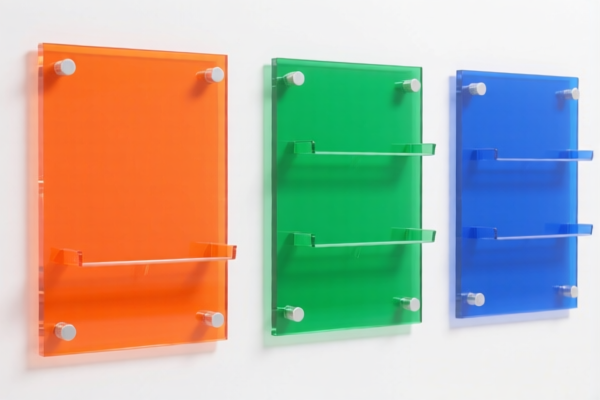
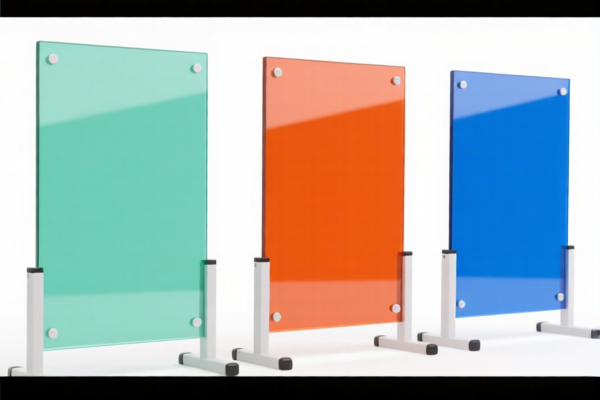
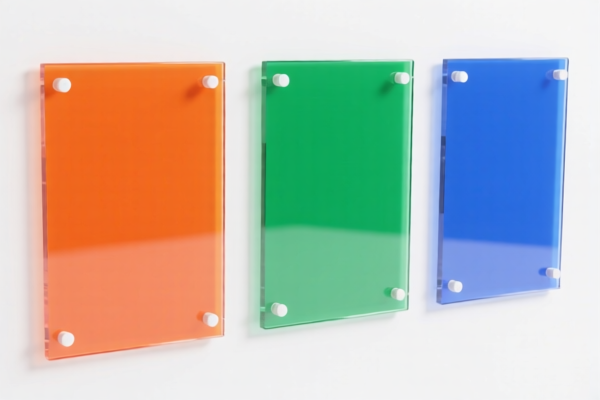
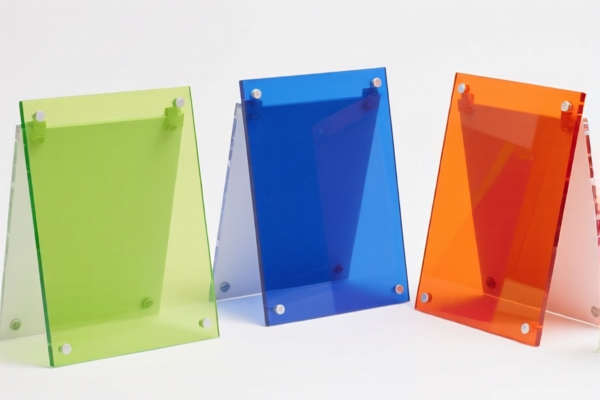
AI Analysis
🖥️ Acrylic Plastic Display Board (PMMA Support Panels)
🌐 HS Code Reference & Customs Clearance Guide | 2024/2025 Latest Tariff Analysis | Professional Clearance Strategy
📌 Part 1: Product Definition & Classification: Do You Really Understand "Acrylic Supports"?
Acrylic Plastic Display Boards, primarily composed of Polymethyl Methacrylate (PMMA), are rigid, transparent, or colored plates used for retail displays, signage, or structural support. In international trade, their classification depends heavily on their specific function, form factor, and physical structure.
There is no single "correct" HS Code. Instead, there are multiple potential classifications based on how the product is described and its specific application. Below are the 5 most common HS Codes associated with this product description and the corresponding tax implications.
⚠️ Key Distinction Points:
- Is it a raw sheet/plate for further processing? → Likely Chapter 3901-3920 (Plastics in primary forms or plates/sheets).
- Is it a finished support component for a specific article? → Likely Chapter 3926 (Other articles of plastics).
- China Origin Alert: All options below include Section 301 Tariffs and Section 122 Tariffs, leading to significantly high total duties.
📦 Part 2: HS Code Classification Details (2024/2025 Latest Tariff Authority对照)
| HS Code | Product Description (from Data) | Application Scenario | Conflict Check |
|---|---|---|---|
3921.90.50.50 |
Acrylic Plastic Support Board, material: Acrylic (Plastic), form: Support Board, falls under the category of plates/sheets. | Rigid acrylic plates used specifically as structural supports. | ✅ No conflict with "plates" definition. |
3926.90.99.89 |
Acrylic Plastic Support Board, material: Acrylic (Plastic), form: Other plastic products, no obvious conflict. | Generic "other" plastic items, used as a catch-all for specialized components. | ✅ No conflict. |
3920.51.50.90 |
Acrylic Plastic Support Board, material: Acrylic Polymer, form: Plate, no flame retardants or other conflicts. | Pure acrylic plates without additional treatments (e.g., flame retardant). | ✅ No conflict with "non-cellular plates". |
3921.19.00.90 |
Acrylic Plastic Support Board, material: Acrylic (Plastic), form: Plate, fits the description of plates/films/foils/bands. | Plates/films/foils not elsewhere specified. | ✅ Fits "plates" category. |
3926.90.25.00 |
Acrylic Plastic Support Board, material: Acrylic (Plastic), form: Other parts of plastic products, no conflict. | Plastic parts for machinery/equipment or furniture. | ✅ No conflict. |
🔍 Critical Reminder:
- If the acrylic board is finished with holes, cutouts, or specific shapes for a display stand, Customs may prefer 3926.90.xx (Articles of plastic) over 3920/3921 (Plates/Sheets).
- If it is a raw sheet simply cut to size, 3920 or 3921 is more appropriate.
- Misclassification Risk: Declaring a complex shaped support as a "plate" (3920) when it is functionally a "part" (3926) can lead to customs audits.
💰 Part 3: 2024/2025 Latest Tariff Rate Breakdown (Including Additional Taxes & Policy Surcharges)
✅ Applicable Country: United States (US)
✅ Origin: China (CN)
✅ Effective Time: Current (Includes ongoing Section 301 and Section 122 tariffs)
🎯 1. 3921.90.50.50 —— Acrylic Plastic Support Board (Plates Category)
| Item | Content |
|---|---|
| Base Tariff | 4.8% |
| Section 301 Additional Tariff | +25.0% |
| Section 122 Tariff | +10.0% |
| Total Tax Rate | 39.8% |
| Tax Calculation | CIF Value × 39.8% |
| De Minimis Exemption | ❌ Not Applicable (Section 301/122 taxes apply regardless of value for most de minimis exceptions) |
| Legal Basis Path | HTS:3921.90.50.50 → Sec301:Footnote 9903.88.01 → Sec122:Footnote 9903.88.02 |
📌 Explanation:
- This code is classified under Chapter 3921 (Other plates/sheets/films/foils/stripes of plastics).
- The 25% Section 301 tariff is mandatory for Chinese-origin plastic articles in this category.
- The 10% Section 122 tariff is an additional levy on certain Chinese imports, often applied to plastics and metal products.
- Total Impact: Nearly 40% of the goods' value is lost to duties. This is a high-cost entry point.
🎯 2. 3926.90.99.89 —— Other Plastic Products (General Category)
| Item | Content |
|---|---|
| Base Tariff | 5.3% |
| Section 301 Additional Tariff | +7.5% |
| Section 122 Tariff | +10.0% |
| Total Tax Rate | 22.8% |
| Tax Calculation | CIF Value × 22.8% |
| De Minimis Exemption | ❌ Not Applicable |
| Legal Basis Path | HTS:3926.90.99.89 → Sec301:Footnote 9903.88.01 → Sec122:Footnote 9903.88.02 |
📌 Note:
- This code is under Chapter 3926 (Other articles of plastics).
- Interestingly, the Section 301 rate here is only 7.5% (not 25%). This is because not all 3926 subheadings carry the full 25% penalty.
- Total Impact: 22.8% is significantly lower than the 39.8% of3921.90.50.50.
- Strategic Insight: If the product can be legitimately classified as "Other plastic articles" rather than "Plates," this could save ~17% in duties. However, Customs must agree that it is not a "plate."
🎯 3. 3920.51.50.90 —— Acrylic Polymer Plates (Non-Cellular)
| Item | Content |
|---|---|
| Base Tariff | 6.5% |
| Section 301 Additional Tariff | +25.0% |
| Section 122 Tariff | +10.0% |
| Total Tax Rate | 41.5% |
| Tax Calculation | CIF Value × 41.5% |
| De Minimis Exemption | ❌ Not Applicable |
| Legal Basis Path | HTS:3920.51.50.90 → Sec301:Footnote 9903.88.01 → Sec122:Footnote 9903.88.02 |
📌 Warning:
- This is for cellular or non-cellular acrylic plates.
- It carries the highest total tax rate (41.5%) among the options.
- Only use this if the product is strictly a flat sheet/plate without any shaping that would classify it as a "part."
🎯 4. 3921.19.00.90 —— Other Plates/Films/Foils/Stripes of Plastics
| Item | Content |
|---|---|
| Base Tariff | 6.5% |
| Section 301 Additional Tariff | +25.0% |
| Section 122 Tariff | +10.0% |
| Total Tax Rate | 41.5% |
| Tax Calculation | CIF Value × 41.5% |
| De Minimis Exemption | ❌ Not Applicable |
| Legal Basis Path | HTS:3921.19.00.90 → Sec301:Footnote 9903.88.01 → Sec122:Footnote 9903.88.02 |
📌 Warning:
- Similar to3920.51.50.90, this code also incurs the full 25% Section 301 tariff.
- Total rate: 41.5%.
- Use only if the product is a plate/film/foil and not a shaped component.
🎯 5. 3926.90.25.00 —— Other Plastic Products (Parts)
| Item | Content |
|---|---|
| Base Tariff | 6.5% |
| Section 301 Additional Tariff | +7.5% |
| Section 122 Tariff | +10.0% |
| Total Tax Rate | 24.0% |
| Tax Calculation | CIF Value × 24.0% |
| De Minimis Exemption | ❌ Not Applicable |
| Legal Basis Path | HTS:3926.90.25.00 → Sec301:Footnote 9903.88.01 → Sec122:Footnote 9903.88.02 |
📌 Note:
- Another 3926 code, but with a slightly higher base rate (6.5% vs 5.3%).
- Total rate: 24.0%.
- Still significantly cheaper than the 3920/3921 "plate" codes.
🛠️ Part 4: Customs Clearance Practical Advice (Real-World Pitfall Guide)
✅ 1. Documentation Checklist (Essential)
| Document | Required | Explanation |
|---|---|---|
| ✅ Product Specification Sheet | ✔️ | Must clearly state material (100% Acrylic/PMMA), dimensions, thickness, and intended use (e.g., "support bracket for retail display"). |
| ✅ Photos | ✔️ | High-res photos showing the shape. If it has holes, bends, or specific cuts, it looks like a "part," not a "plate." |
| ✅ Commercial Invoice | ✔️ | Must accurately describe the product. Avoid vague terms like "Plastic Stuff." Use "Acrylic Support Panel." |
| ✅ Packing List | ✔️ | Weight, dimensions, number of pieces. |
| ✅ Bill of Lading/Air Waybill | ✔️ | Standard shipping document. |
✅ 2. Classification Strategy (Key Tactics)
🔥 “Shape Determines Code, Code Determines Cost!”
| Scenario | Recommended HS Code | Why? |
|---|---|---|
| Flat Sheet, Cut to Size | 3921.90.50.50 or 3920.51.50.90 |
It is still a "plate," even if cut. No complex shaping. |
| Shaped Support (Holes/Bends) | 3926.90.99.89 or 3926.90.25.00 |
Shaped items are "articles" or "parts," not "plates." Lower Section 301 rate (7.5% vs 25%). |
| Thin Film/Foil Acrylic | 3921.19.00.90 |
If thickness is very low, it might be classified as film. |
| Assembly with Other Materials | ⚠️ Caution | If acrylic is combined with metal/wood, the product may no longer be classified as "Plastic." |
✅ 3. Special Considerations
| Situation | Handling Advice |
|---|---|
| De Minimis (Section 321) | ❌ Do Not Rely on De Minimis for Section 301/122. Most Section 301 tariffs apply even to small parcels from China. Check current USCBP rules for de minimis exclusions. |
| Customs Audit | If Customs questions your HS Code, provide engineering drawings to prove the product is a "part" (3926) rather than a "plate" (3920/3921). |
| Origin Marking | Must clearly mark "Made in China" on the product and packaging. |
🌍 Part 5: Global Market Comparison (2024/2025)
| Country/Region | Recommended HS Code | Estimated Duty (China Origin) | Key Requirements | Notes |
|---|---|---|---|---|
| 🇺🇸 USA | 3926.90.99.89 (Best) |
22.8% | IEEPA/Section 301/122 Compliance | Highest risk, highest duty variability. |
| 🇺🇸 USA | 3921.90.50.50 (Worst) |
39.8% | IEEPA/Section 301/122 Compliance | Avoid if possible due to high 25% S301 rate. |
| 🇪🇺 EU | 3926.90.99 |
~6.5% | CE, RoHS, REACH | No Section 301. Standard MFN rate applies. |
| 🇨🇳 China (Export) | 3926.90.99 |
0% (Export) | CCC (if domestic sale) | Export duty is usually 0%. |
| 🇬🇧 UK | 3926.90.99 |
~6.5% | UKCA, EPR | Post-Brexit tariffs mirror EU MFN rates. |
📌 Conclusion:
- The USA is the most challenging market due to Section 301 and Section 122 tariffs.
- Classifying as "Article/Part" (3926) is the most cost-effective strategy for shaped acrylic supports in the US.
- Classifying as "Plate" (3920/3921) incurs the maximum penalty (25% S301).
📌 Part 6: Common Mistakes & Pitfall Guide (Lessons Learned)
❌ Mistake 1: Declaring a shaped support bracket as a "Plastic Plate" (3921)
👉 Consequence: Customs reclassifies it, but if you underpaid, you face penalties + back duties. If overpaid, it's a loss.
👉 Result: Paying 39.8% instead of 22.8%.
❌ Mistake 2: Ignoring Section 122 Tariffs
👉 Consequence: Even if you find a low Section 301 code, the 10% Section 122 tariff applies to almost all Chinese plastics.
👉 Result: Unexpected 10% cost increase.
❌ Mistake 3: Using "De Minimis" to Avoid Tariffs
👉 Consequence: Section 301 and Section 122 tariffs apply to de minimis shipments (under $800) for many HS codes.
👉 Result: Package held, taxes collected, delays.
❌ Mistake 4: Vague Description "Acrylic Board"
👉 Consequence: Customs may assign a highest duty code by default.
👉 Result: Audit, delays, fines.
✅ Correct Approach:
"Acrylic PMMA Support Panel, Cut to Size, with Pre-Drilled Holes, Model XYZ, Made in China"
- HS Code:3926.90.99.89(if shaped)
- Total Duty: 22.8%
🎯 Part 7: Conclusion: Professional Classification, Cost Savings!
🎯 Remember the Mantra:
🔹 "Shape is Key: Parts (3926) save 17% vs Plates (3921)."
🔹 "Section 301: 25% for Plates, 7.5% for Parts."
🔹 "Section 122: Always 10% for China Origin."
📌 Pro Tip:
- Apply for a Binding Ruling from US Customs if the product is complex. This provides legal certainty on the HS Code.
- Consider Supply Chain Diversification: If tariffs are prohibitive, consider sourcing from Vietnam or Thailand (check for circumvention risks).
📣 Immediate Action:
📞 Contact your Freight Forwarder + Provide Product Photos + Confirm HS Code Classification
🚀 Clear Customs Smoothly, Reduce Costs, Increase Profits!
✨ Professional Clearance Starts with Accurate Classification!
💼 Every Percent of Duty Counts!
Customer Reviews
About HS Code Classification
The Harmonized System (HS) is an internationally standardized nomenclature developed by the World Customs Organization (WCO) to classify traded products. Over 200 countries use the HS system as the basis for customs tariffs, trade statistics, and import/export regulations.
Each HS code follows a hierarchical structure:
- Chapter (2 digits) — Broad category of goods (e.g., Chapter 84: Machinery and Mechanical Appliances)
- Heading (4 digits) — More specific grouping within the chapter
- Subheading (6 digits) — Internationally standardized breakdown, used by all WCO member countries
- National subdivisions (8-10 digits) — Country-specific extensions for further classification, such as US HTSUS 10-digit codes
Correct HS code classification is essential for smooth customs clearance, accurate duty payment, and compliance with trade regulations. Misclassification can lead to customs delays, overpayment of duties, or penalties.
When importing from CN to US, the applicable tariff rates may include:
- Most-Favored-Nation (MFN) rate — The standard duty rate applied to WTO members
- General rate — Applied to countries without trade agreements
- Trade remedy duties — Additional tariffs such as Section 301 (anti-dumping), Section 232 (national security), or countervailing duties
The information provided on this page is for reference purposes only. For official classification, please consult with your local customs authority or a licensed customs broker.