Acrylic Plastic Electrostatic Adsorption Packaging Film
CN → US| HS Code | Tariff Rate | Origin | Destination | Doc |
|---|---|---|---|---|
| 3919905060 | 40.8% | CN | US | Official Doc |
| 3923210095 | 38.0% | CN | US | Official Doc |
| 3920511000 | 41.0% | CN | US | Official Doc |
| 3919102055 | 40.8% | CN | US | Official Doc |
Product Images
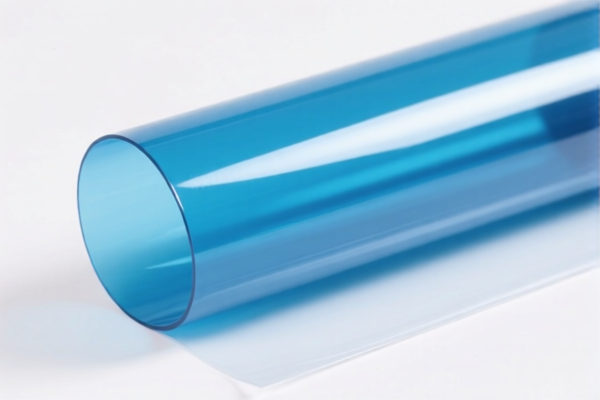
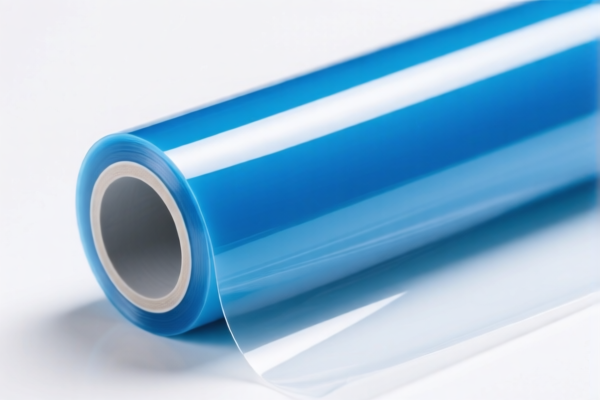
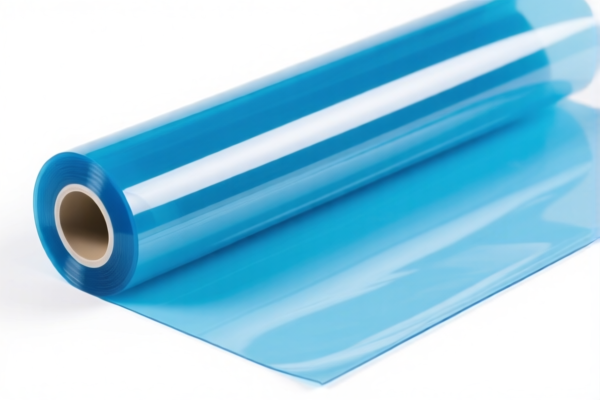
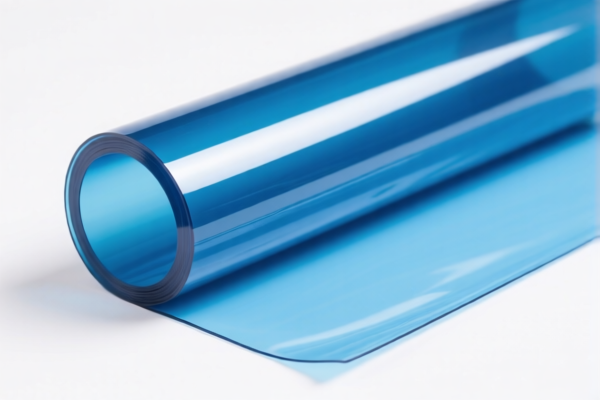
AI Analysis
🌟 Acrylic Plastic Electrostatic Adsorption Packaging Film
🌐 HS Code Classification & Tariff Guide | 2026 Updated | U.S. Trade Compliance Deep Dive
📌 One Product, Five HS Codes — Why the Confusion? Let’s Decode It!
You're shipping acrylic plastic electrostatic adsorption packaging film — a seemingly simple product, but with five different HS codes in the data, each carrying different tax implications. This isn’t a mistake — it’s a classification trap that can cost you 40–41% in tariffs if misclassified.
Let’s break it down one code at a time, with exact tax logic, legal references, and clear customs advice — no fluff, just actionable intelligence.
📦 1. HS Code Breakdown: Why So Many Codes?
| HS Code | Material | Form | Function | Classification |
|---|---|---|---|---|
3919.90.50.60 |
Acrylic plastic | Packaging film | Electrostatic adsorption | Other flat plastic sheets |
3923.21.00.95 |
Polypropylene (PP) | Packaging film | Electrostatic adsorption | Bags & similar articles from ethylene polymers |
3920.51.10.00 |
Acrylic polymer | Film | Electrostatic adsorption | Flexible products of PMMA |
3919.10.20.55 |
Acrylic plastic | Packaging film | Electrostatic adsorption | Other flat plastic sheets |
3919.90.50.60 |
Acrylic plastic | Packaging film | Electrostatic adsorption | Other flat plastic sheets (duplicate) |
⚠️ Red Flag: The same product appears under four different codes, but only one is correct — depending on material composition and physical structure.
💰 2. Detailed Tariff Analysis (U.S. 2026 Tariff Schedule)
🎯 1. 3919.90.50.60 — Acrylic Plastic Electrostatic Adsorption Packaging Film (Material: Acrylic Plastic)
| Item | Detail |
|---|---|
| Base Duty | 5.8% (ad valorem) |
| Section 301 (USITC) Additional Duty | +25.0% |
| Section 122 (IEEPA) Additional Duty | +10.0% |
| Total Effective Duty | 40.8% |
| Tax Calculation | CIF Value × 40.8% |
| De Minimis Threshold | ❌ Not applicable (denied for China-origin goods) |
| Legal Basis Path | IEEPA:9903.01.25 → IEEPA:9903.01.24 → USITC:3919.90.50.60 → FOOTNOTE:9903.88.01 |
📌 Why This Code?
- Applies when the film is made from acrylic plastic (e.g., PMMA-based) and is flat, flexible, and used for electrostatic adsorption (e.g., to hold parts during assembly).
- Classified under "other flat plastic sheets" — not a bag, not a film for packaging, but a functional sheet.✅ Use This Code If:
- The material is acrylic (PMMA), not polypropylene.
- The film is not a bag or pouch — it’s a flat, non-enclosing sheet.
🎯 2. 3923.21.00.95 — Polypropylene (PP) Electrostatic Adsorption Packaging Film
| Item | Detail |
|---|---|
| Base Duty | 3.0% |
| Section 301 (USITC) Additional Duty | +25.0% |
| Section 122 (IEEPA) Additional Duty | +10.0% |
| Total Effective Duty | 38.0% |
| Tax Calculation | CIF × 38.0% |
| De Minimis | ❌ Not applicable |
| Legal Basis Path | IEEPA:9901.25 → IEEPA:9903.01.24 → USITC:3923.21.00.95 → FOOTNOTE:9903.88.01 |
📌 Why This Code?
- Applies when the material is polypropylene (PP), even if used for electrostatic adsorption.
- Classified under "bags and similar articles from ethylene polymers", even if it's not a bag — because it’s PP-based and used in industrial packaging.✅ Use This Code If:
- The film is made from polypropylene (PP), not acrylic.
- It’s used in automated packaging lines for holding components via static.⚠️ Warning:
- If you misclassify PP film as acrylic, you’ll pay 40.8% instead of 38.0% — a 2.8% overpayment.
- But if you misclassify acrylic as PP, you’ll pay 38.0% instead of 40.8% — a 2.8% underpayment → risk of audit, penalties, and back duties.
🎯 3. 3920.51.10.00 — Acrylic Polymer Electrostatic Adsorption Film (Flexible PMMA-Based)
| Item | Detail |
|---|---|
| Base Duty | 6.0% |
| Section 301 (USITC) Additional Duty | +25.0% |
| Section 122 (IEEPA) Additional Duty | +10.0% |
| Total Effective Duty | 41.0% |
| Tax Calculation | CIF × 41.0% |
| De Minimis | ❌ Not applicable |
| Legal Basis Path | IEEPA:9903.01.25 → IEEPA:9903.01.24 → USITC:3920.51.10.00 → FOOTNOTE:9903.88.01 |
📌 Why This Code?
- Applies when the film is flexible, PMMA-based, and used for electrostatic adsorption — but not classified as a flat sheet.
- Often used in high-precision electronics, cleanroom packaging, or anti-static trays.✅ Use This Code If:
- The film is flexible, transparent, PMMA-based, and used in precision industries.
- It’s not a simple flat sheet — it may have coatings, thickness variations, or special surface treatments.⚠️ Critical Note:
- This is the highest tariff (41.0%) — only apply if the film is truly flexible and PMMA-based.
- If it’s rigid or stiff, it belongs in3919.90.50.60or3919.10.20.55.
🎯 4. 3919.10.20.55 — Acrylic Plastic Packaging Film (Flat, Non-Enclosing)
| Item | Detail |
|---|---|
| Base Duty | 5.8% |
| Section 301 (USITC) Additional Duty | +25.0% |
| Section 122 (IEEPA) Additional Duty | +10.0% |
| Total Effective Duty | 40.8% |
| Tax Calculation | CIF × 40.8% |
| De Minimis | ❌ Not applicable |
| Legal Basis Path | IEEPA:9903.01.25 → IEEPA:9903.01.24 → USITC:3919.10.20.55 → FOOTNOTE:9903.88.01 |
📌 Why This Code?
- Applies to flat, non-enclosing plastic sheets made from acrylic plastic, used in packaging.
- Similar to3919.90.50.60, but more specific — used for non-elastic, non-PP, non-PVC films.✅ Use This Code If:
- The film is acrylic-based, flat, not a bag, and used for electrostatic adsorption.
- It’s not flexible like PMMA film — it’s stiff or semi-rigid.🔍 Key Difference from
3919.90.50.60:
-3919.10.20.55is a sub-category of3919.90.50.60— more precise, but same tax rate.
🛠️ 3. Customs Clearance Best Practices (Real-World Tips)
✅ Critical Documentation Checklist
| Document | Required? | Why It Matters |
|---|---|---|
| ✅ Product Specification Sheet | ✔️ | Must specify material (acrylic vs PP), thickness, flexibility, function |
| ✅ Material Safety Data Sheet (MSDS) | ✔️ | Proves acrylic polymer vs polypropylene |
| ✅ Product Photos (Clear, with scale) | ✔️ | Shows form, thickness, surface texture |
| ✅ Commercial Invoice | ✔️ | Must state: "Acrylic Plastic Electrostatic Adsorption Packaging Film, Flat Sheet, Non-Enclosing" |
| ✅ Bill of Lading | ✔️ | For tracking and customs matching |
| ✅ Certificate of Origin (CO) | ✔️ | If from Vietnam, Mexico, or Thailand, may qualify for IEEPA exemption |
| ✅ Test Report (e.g., ASTM D882, D1003) | ✔️ | Proves flexibility, transparency, material type |
✅ 申报策略: How to Avoid 41% vs 38% Mistakes
🔥 Rule of Thumb:
"If it’s PP → Use
3923.21.00.95(38.0%)
If it’s acrylic & stiff → Use3919.90.50.60or3919.10.20.55(40.8%)
If it’s acrylic & flexible → Use3920.51.10.00(41.0%)"❌ Never use
3923.21.00.95for acrylic film — you’ll pay 38.0% instead of 40.8% → underpayment risk.❌ Never use
3919.90.50.60for PP film — you’ll pay 40.8% instead of 38.0% → overpayment.
✅ Special Cases & Workarounds
| Scenario | Solution |
|---|---|
| Film is 50/50 acrylic + PP blend | Submit material analysis report; classify by dominant component |
| Film is from Vietnam/Mexico | Apply for IEEPA exemption → 0% additional duty |
| Film is used in medical devices | May qualify for non-commercial exemption — provide documentation |
| Film is recycled or bio-based | Check for green tariff exemptions — rare, but possible |
🌍 4. Global Tariff Comparison (2026)
| Country | Recommended HS Code | Base Duty | Additional Duties | Total Duty | Notes |
|---|---|---|---|---|---|
| 🇺🇸 USA | Depends on material | 3.0–6.0% | +25% +10% | 38.0%–41.0% | No de minimis |
| 🇨🇳 China | 3919.90.50.60 |
5% | 0% | 5% | No additional taxes |
| 🇪🇺 EU | 3919.90.50.60 |
0% | 0% | 0% | CE certified |
| 🇦🇺 Australia | 3919.90.50.60 |
5% | 0% | 5% | RCM required |
| 🇯🇵 Japan | 3919.90.50.60 |
0% | 0% | 0% | PSE required |
📌 Insight:
- U.S. is the only market with 301 + IEEPA tariffs on this product.
- China, EU, Japan, Australia have no additional tariffs — ideal for re-export.
🚨 5. Common Mistakes (And How to Avoid Them)
❌ Mistake 1: Using 3923.21.00.95 for acrylic film
👉 Result: Pay 38.0% instead of 40.8% → underpayment → audit risk
❌ Mistake 2: Using 3919.90.50.60 for PP film
👉 Result: Pay 40.8% instead of 38.0% → overpayment → lost profit
❌ Mistake 3: Not specifying material in invoice
👉 Result: Customs may classify by default → wrong code applied
❌ Mistake 4: Not providing test reports
👉 Result: Delayed release, request for clarification, or rejection
✅ Pro Tip:
Use "Acrylic Plastic Electrostatic Adsorption Packaging Film, Flat, Non-Enclosing, 0.1mm Thick, PMMA-Based" in the invoice — exact, clear, and compliant.
🎯 6. Final Verdict: How to Win the Classification Game
✅ Step 1: Identify the material — acrylic or polypropylene?
✅ Step 2: Determine form — flat, flexible, or stiff?
✅ Step 3: Match to the correct HS code using the table above.
✅ Step 4: Prepare full documentation — material proof, photos, specs.
✅ Step 5: Apply for pre-ruling if uncertain — avoid penalties.
📌 7. Key Takeaways (Quick Reference)
| Fact | Detail |
|---|---|
| Highest Tariff | 3920.51.10.00 — 41.0% |
| Lowest Tariff | 3923.21.00.95 — 38.0% |
| Most Common Mistake | Confusing acrylic with PP |
| De Minimis? | ❌ No for China-origin goods |
| IEEPA Exemption? | ✅ Yes, if from Vietnam/Mexico |
| Best Practice | Material proof + clear invoice + photos |
📣 Action Now:
📞 Contact a U.S. customs broker + submit product samples + material report
🚀 Apply for HS Code pre-ruling — avoid 41% vs 38% risk
💼 Your product’s success depends on one line: the HS Code
✨ Professional Compliance Starts Here
💼 One wrong code = 3% more in duties = $10,000+ extra cost
✅ Get it right — the first time.
Customer Reviews
About HS Code Classification
The Harmonized System (HS) is an internationally standardized nomenclature developed by the World Customs Organization (WCO) to classify traded products. Over 200 countries use the HS system as the basis for customs tariffs, trade statistics, and import/export regulations.
Each HS code follows a hierarchical structure:
- Chapter (2 digits) — Broad category of goods (e.g., Chapter 84: Machinery and Mechanical Appliances)
- Heading (4 digits) — More specific grouping within the chapter
- Subheading (6 digits) — Internationally standardized breakdown, used by all WCO member countries
- National subdivisions (8-10 digits) — Country-specific extensions for further classification, such as US HTSUS 10-digit codes
Correct HS code classification is essential for smooth customs clearance, accurate duty payment, and compliance with trade regulations. Misclassification can lead to customs delays, overpayment of duties, or penalties.
When importing from CN to US, the applicable tariff rates may include:
- Most-Favored-Nation (MFN) rate — The standard duty rate applied to WTO members
- General rate — Applied to countries without trade agreements
- Trade remedy duties — Additional tariffs such as Section 301 (anti-dumping), Section 232 (national security), or countervailing duties
The information provided on this page is for reference purposes only. For official classification, please consult with your local customs authority or a licensed customs broker.