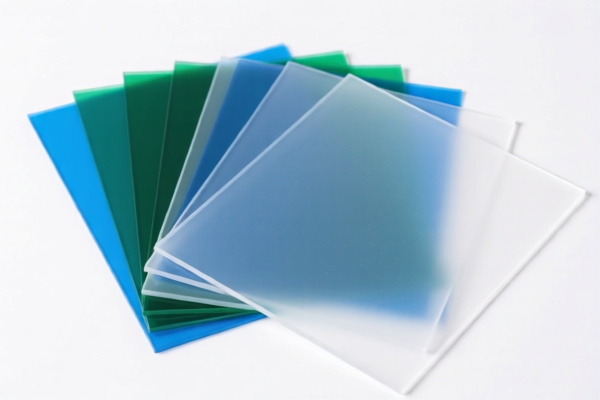
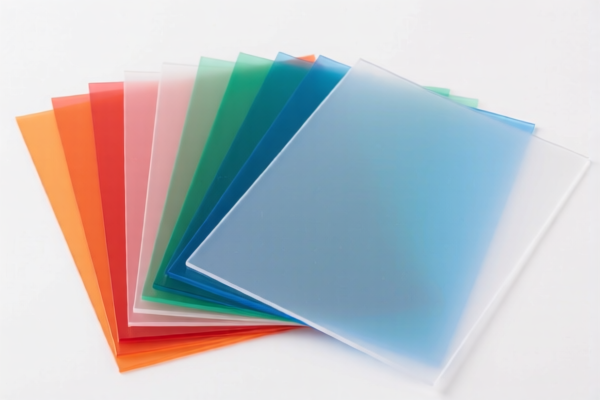
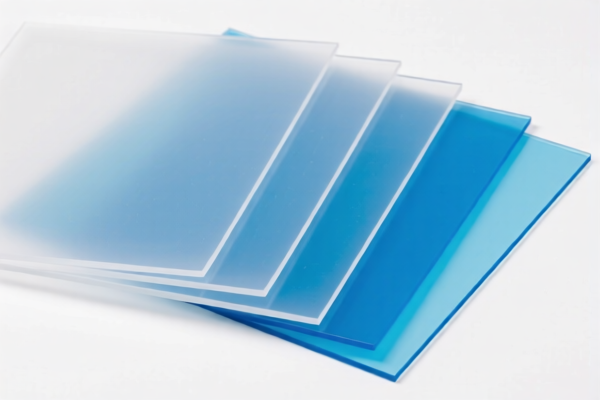
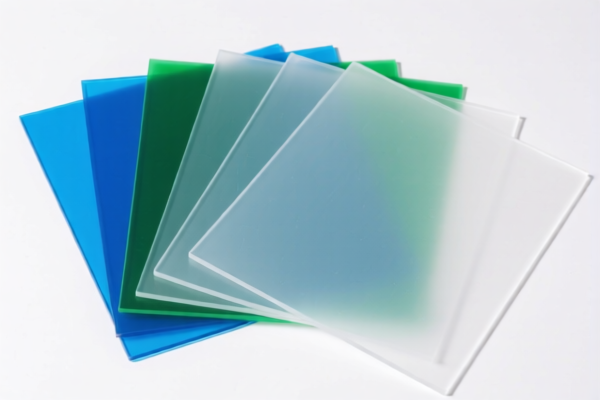
Acrylic Plastic Frosted Sheets
CN → US| HS Code | Tariff Rate | Origin | Destination | Doc |
|---|---|---|---|---|
| 3920515090 | 41.5% | CN | US | Official Doc |
| 3921110000 | 40.3% | CN | US | Official Doc |
| 3920511000 | 41.0% | CN | US | Official Doc |
| 3921190090 | 41.5% | CN | US | Official Doc |
| 3921190090 | 41.5% | CN | US | Official Doc |
Product Images
AI Analysis
🖥️ Acrylic Plastic Frosted Sheets (Acrylic磨砂板)
🌐 HS Code Reference & Customs Clearance Guide | 2026 Latest Tariff Analysis | Professional-Level Strategy
📌 I. Product Definition & Classification: Do You Really Understand "Acrylic Frosted Sheets"?
Acrylic sheets, chemically known as Polymethyl Methacrylate (PMMA), are high-performance transparent plastics. The "frosted" or "matte" finish refers to a surface treatment that diffuses light. In international trade, the classification depends heavily on whether the sheet is plain/unprinted (raw material) or finished/printed (final product).
Raw Acrylic Sheets (Unprocessed/Frosted but not printed):
Generally classified under Chapter 39 (Plastics and Articles Thereof). The key distinction is between:
1. Flat Sheets of Acrylic (3920): Unmodified, non-cellular, non-laminated plates, sheets, film, foil, and strip.
2. Other Plates/Sheets (3921): Modified, cellular, laminated, or simply "other" plastic plates not covered in 3920.
⚠️ Key Distinction Point:
- If the sheet is pure PMMA (acrylic), even if frosted, it is primarily a "plate/sheet of plastic."
- 3920 is typically for plain, unmodified sheets.
- 3921 is often used for sheets that are further processed, laminated, or do not fit the strict definition of 3920 (e.g., certain composite or specialized forms).
- Note: In the provided data, both 3920 and 3921 are listed for acrylic frosted sheets, indicating potential ambiguity based on specific manufacturing processes or US Customs interpretations.
📦 II. HS Code Classification Details (2026 Latest Tariff Authority Match)
Based on the provided data, here are the potential HS Codes for Acrylic Plastic Frosted Sheets:
| HS Code | Product Description | Applicable Scenario | Tax Rate (Total) |
|---|---|---|---|
3920.51.50.90 |
Acrylic frosted board, material: Acrylic polymer, form: Plate | Pure acrylic polymer sheets, frosted finish | 41.5% |
3921.11.00.00 |
Acrylic frosted board, belongs to plastic plate category | General plastic plate category, acrylic material | 40.3% |
3920.51.10.00 |
Acrylic (PMMA), frosted board, form: Plate/Sheet/Film | Plain acrylic sheets, standard classification | 41.0% |
3921.19.00.90 |
Acrylic polymer material, plate form, classified under other categories | Specialized acrylic plates, "other" category | 41.5% |
3921.19.00.90 |
Acrylic plastic support board, material: Plastic, form: Plate | Support structures, acrylic-based plastic plates | 41.5% |
🔍 Key Reminder:
- All listed codes involve Acrylic (PMMA).
- The difference between 3920 and 3921 often lies in the specific manufacturing process or physical structure (e.g., cellular vs. non-cellular, though acrylic is usually non-cellular).
- Tax rates are high due to additional tariffs (Section 301 and IEEPA).
💰 III. 2026 Latest Tariff Rate Detailed Explanation (Including Additional Taxes)
✅ Applicable Country: United States (US)
✅ Origin: China (CN)
✅ Effective Time: 2025/2026 (Current Trade War Context)
The total tax rate for these acrylic sheets is exceptionally high due to the combination of Base Tariff, Section 301 Additional Tariff, and IEEPA 122 Clause Tariff.
🎯 1. General Tariff Structure for Acrylic Sheets (HS 3920/3921)
| Item | Content |
|---|---|
| Base Tariff (MFN) | 5.3% – 6.5% (varies by subheading) |
| Section 301 Additional Tariff | +25.0% (List 3/4 items) |
| IEEPA Clause 122 Tariff | +10.0% (Specific China-related additional duty) |
| Total Tax Rate | 40.3% – 41.5% |
| Tax Calculation | CIF Value × Total Tax Rate |
| De Minimis Exemption | ❌ NOT APPLICABLE (High-value commercial goods are excluded) |
📌 Explanation:
- Base Tariff: Standard Most Favored Nation (MFN) rate for plastic plates.
- Section 301: The Trump-era tariff that remains in place under the Biden administration for Chinese goods. Acrylic sheets are typically subject to the 25% additional duty.
- IEEPA Clause 122: A specific additional tariff provision targeting certain Chinese materials, adding another 10%.
- Total Impact: Importers face a 40%+ duty, significantly impacting profitability.
🛠️ IV. Customs Clearance Practical Advice (实战避坑指南)
✅ 1. Documentation Checklist (Mandatory)
| Document | Required? | Description |
|---|---|---|
| ✅ Commercial Invoice | ✔️ | Must clearly state: "Acrylic Frosted Sheet," Material: PMMA, HS Code, Origin: China. |
| ✅ Packing List | ✔️ | Detail dimensions, weight, and quantity. |
| ✅ Product Specification Sheet | ✔️ | Confirm material is 100% Acrylic (PMMA) and not a composite with other plastics that might change classification. |
| ✅ Certificate of Origin (CO) | ✔️ | Proves Chinese origin (crucial for tariff calculation). |
| ✅ Bill of Lading/Air Waybill | ✔️ | Standard shipping document. |
| ✅ Pre-Shipment Inspection (if applicable) | ✔️ | Some high-value plastic imports may require verification. |
✅ 2. Classification Strategy (Key Mnemonic)
🔥 “Pure Acrylic, Look to 3920; Special Forms, Check 3921; Frosted is Still Plastic, Tariff is High!”
| Scenario | Correct HS Code Approach | Wrong Approach |
|---|---|---|
| Standard Acrylic Frosted Sheet | 3920.51.10.00 or 3920.51.50.90 |
Classify as "Plastic Sheet" (generic) → Risk of penalty |
| Acrylic Sheet with Metal Frame | Separate Classification | Combine into one HS Code → Misclassification |
| Printed/Decorative Acrylic Sheet | May shift to 3921 or 4911 (if printed) | Keep as raw plastic → Underpayment risk |
| Small Samples (<$800) | Still Subject to Duty if commercial intent | Assume De Minimis exemption → Seizure risk |
📌 Note on "Frosted":
The "frosted" finish does not change the fundamental nature of the product from "plastic sheet" to "artwork" or "finished good." It remains a 3920/3921 article unless it is further processed into a specific article of clothing or furniture.
✅ 3. Special Case Handling
| Case | Handling Advice |
|---|---|
| Multi-layer Acrylic | If laminated with other materials, may fall under 3921.19.00.90. Provide lamination details. |
| Acrylic vs. Polycarbonate | Ensure material is PMMA (Acrylic). Polycarbonate has different HS codes (e.g., 3907). Misdeclaration leads to audits. |
| High-Value Shipments | Given the 41.5% tariff, consider duty drawback programs if re-exported. |
| Origin Marking | Must clearly mark "Made in China" on product and packaging. |
🌍 V. Global Market Comparison (2026)
| Country/Region | Recommended HS Code | Tariff Rate | Notes |
|---|---|---|---|
| 🇺🇸 USA | 3920.51.50.90 / 3921.11.00.00 |
40.3% – 41.5% | High additional tariffs (301 + IEEPA) |
| 🇨🇳 China (Export) | N/A | 0% (Export Duty) | China imposes no export duty on acrylic sheets |
| 🇪🇺 EU | 3920.51.00 / 3921.11.00 |
6.5% | Standard EU duty, no Section 301 equivalent |
| 🇨🇦 Canada | 3920.51.00.00 |
5.0% | Lower than US, but subject to CUSMA rules |
| 🇲🇽 Mexico | 3920.51.00.00 |
6.0% | Under USMCA, may be duty-free if originating |
📌 Conclusion:
- USA is the most challenging market for Chinese acrylic sheets due to the 41.5% effective tariff.
- EU and Canada offer significantly lower tariff barriers (~5-7%).
- Supply Chain Strategy: Consider sourcing acrylic sheets from Vietnam, Thailand, or Mexico to mitigate US tariffs (if origin rules are met).
📌 VI. Common Errors & Pitfalls (Blood-Tested Lessons)
❌ Error 1: Classifying frosted acrylic as "Finished Plastic Products" (e.g., 3926.90)
👉 Consequence: Higher scrutiny, potential misclassification penalties. Frosted sheets are still raw materials.
❌ Error 2: Ignoring the IEEPA 10% Clause
👉 Consequence: Underpayment of duty. The 10% is additional to the 25% Section 301 and base duty. Total is ~41.5%, not 25%.
❌ Error 3: Declaring "Plastic Sheet" without specifying "Acrylic/PMMA"
👉 Consequence: Customs may assign a default higher tariff code or request detailed lab tests to determine polymer type.
❌ Error 4: Assuming De Minimis ($800) applies to commercial acrylic shipments
👉 Consequence: CBP often denies de minimis for goods subject to Section 301 duties. Expect duties on every shipment.
✅ Correct Practice:
"Acrylic Frosted Sheets, 5mm Thickness, 100% PMMA, 1200x2400mm, Unprinted, For Industrial Fabrication, Origin: China"
🎯 VII. Conclusion: Professional Declaration, Cost Control, Efficiency!
🎯 Remember Mnemonic:
🔹 "Acrylic is Plastic, HS 39; Frosted doesn’t matter, Tariff is High; 301 + IEEPA, Total 41%; Think Twice Before Shipping!"
🔹 "HS Code is Key, 1% Error, Thousands Lost; Accurate Declaration, Smooth Customs!"
📌 Pro Tip:
- If your acrylic sheets are originating from Vietnam, Thailand, or Mexico (and meet Rules of Origin), you may qualify for lower or zero tariffs under free trade agreements or by avoiding the China-specific penalties.
- Apply for a Binding Ruling from CBP (Customs and Border Protection) if the classification is ambiguous between 3920 and 3921 to avoid future disputes.
📣 Immediate Action:
📞 Contact a Licensed Customs Broker + Provide Material Safety Data Sheet (MSDS) + Apply for Advance Ruling
🚀 Ensure your acrylic sheets, clear customs smoothly, control costs, and maximize profits!
✨ Professional Customs Clearance Starts with Accurate Classification!
💼 Every cent of your cost deserves precise calculation!
Customer Reviews
About HS Code Classification
The Harmonized System (HS) is an internationally standardized nomenclature developed by the World Customs Organization (WCO) to classify traded products. Over 200 countries use the HS system as the basis for customs tariffs, trade statistics, and import/export regulations.
Each HS code follows a hierarchical structure:
- Chapter (2 digits) — Broad category of goods (e.g., Chapter 84: Machinery and Mechanical Appliances)
- Heading (4 digits) — More specific grouping within the chapter
- Subheading (6 digits) — Internationally standardized breakdown, used by all WCO member countries
- National subdivisions (8-10 digits) — Country-specific extensions for further classification, such as US HTSUS 10-digit codes
Correct HS code classification is essential for smooth customs clearance, accurate duty payment, and compliance with trade regulations. Misclassification can lead to customs delays, overpayment of duties, or penalties.
When importing from CN to US, the applicable tariff rates may include:
- Most-Favored-Nation (MFN) rate — The standard duty rate applied to WTO members
- General rate — Applied to countries without trade agreements
- Trade remedy duties — Additional tariffs such as Section 301 (anti-dumping), Section 232 (national security), or countervailing duties
The information provided on this page is for reference purposes only. For official classification, please consult with your local customs authority or a licensed customs broker.