Acrylic Plastic Profile for Lighting
CN → US| HS Code | Tariff Rate | Origin | Destination | Doc |
|---|---|---|---|---|
| 3920598000 | 41.5% | CN | US | Official Doc |
| 3920515090 | 41.5% | CN | US | Official Doc |
| 3916901000 | 41.5% | CN | US | Official Doc |
| 3916905000 | 40.8% | CN | US | Official Doc |
| 9405920000 | 38.7% | CN | US | Official Doc |
| 9405490000 | 38.9% | CN | US | Official Doc |
Product Images
AI Analysis
🌟 Acrylic Plastic Profile for Lighting: The Ultimate HS Code & Clearance Guide (2026 Edition)
🌐 HS Code Reference & Clearance Strategy | 2026 Tariff Decoded | Professional Customs Optimization
📌 Part 1: What Exactly is "Acrylic Plastic Profile"?
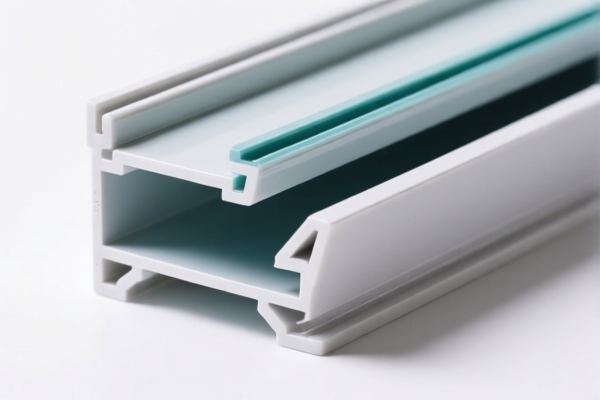
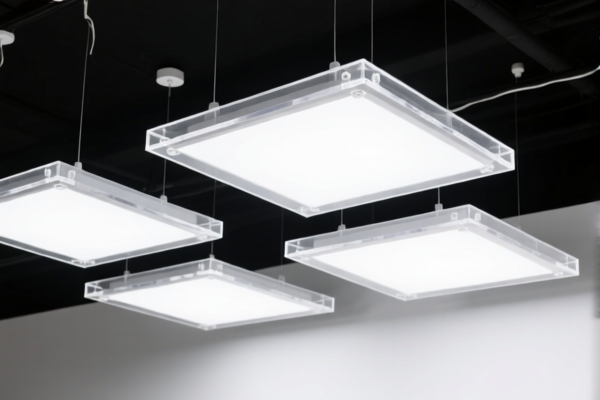
Acrylic Plastic Profiles are rigid, transparent, or translucent shapes (rods, sticks, bars, or custom cross-sections) manufactured from polymethyl methacrylate (PMMA) or other acrylic polymers. In the lighting industry, they serve as the critical "skeleton" and "lens" for luminaires.
In international trade, they fall into a specific dichotomy based on geometry and processing:
- Monofilaments (Rods/Sticks): Cross-sectional dimension > 1mm, used as structural components or diffuser bars.
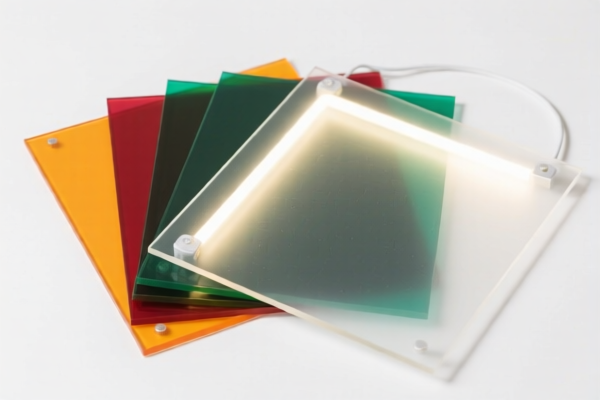
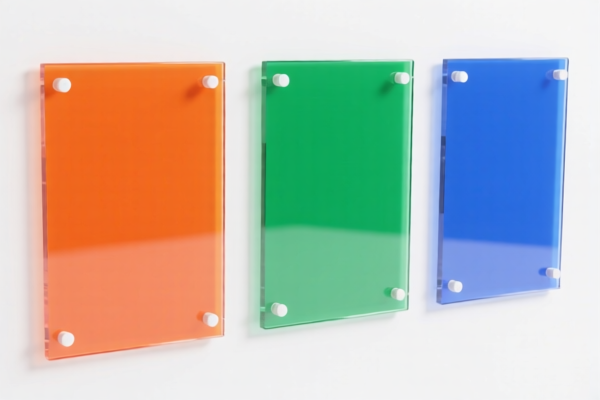
- Sheet/Film/Strip: Non-cellular, flat or rolled sheets used as diffuser panels or lens covers.
- Finished Parts vs. Raw Profiles:
- Raw Profiles: "Not otherwise worked" (cut to length, surface-machined, but not assembled). ➡️ Chapter 39.
- Finished Parts: Assembled into a luminaire or specifically shaped for a light fitting. ➡️ Chapter 94.
⚠️ CRITICAL CLARIFICATION: * If the item is a raw rod, stick, or profile (even if cut to size) → It is a Plastic Product. * If the item is a completed light fixture part or the luminaire itself → It is a Lighting Product. * Mistake Alert: Do not mix raw acrylic rods with finished lamp parts. The tax difference can be 100% or more!
📦 Part 2: Detailed HS Code Classification Matrix (2026 Data)
Based on the provided data, here is the authoritative classification for Acrylic Plastic Profiles for Lighting.
| HS Code | Product Description & Scope | Material Specifics | Typical Lighting Use Case |
|---|---|---|---|
| 3916.90.10.00 | Monofilament, rods, sticks, profiles (>1mm), of Acrylic Polymers (not otherwise worked) | Acrylic Polymers (PMMA) | Raw acrylic rods, profile extrusions, uncut bars for DIY lighting builds. |
| 3916.90.50.00 | Monofilament, rods, sticks, profiles (>1mm), of Other Plastics (not otherwise worked) | Other Plastics (e.g., PC, ABS) | Note: If your material is NOT acrylic, this code applies. |
| 3920.59.80.00 | Plates, sheets, film, foil, strip of Acrylic Polymers (noncellular, not reinforced) | Acrylic Polymers (General) | Acrylic sheets used as diffuser panels, covers, or flat light guides. |
| 3920.51.50.90 | Plates, sheets, film, foil, strip of Poly(methyl methacrylate) (PMMA) | PMMA (Specific) | High-clarity PMMA sheets specifically for premium lighting lenses and housings. |
| 9405.92.00.00 | Parts of Luminaires (plastic parts), illuminated signs, fixed light source fittings | Parts (Assembled/Specific) | Pre-molded acrylic covers, light pipes, or parts that are clearly "finished" for a specific lamp. |
| 9405.49.00.00 | Other Electric Luminaires (Lighting fittings) | Finished Goods | The complete lighting fixture (if the profile is part of the final sold unit). |
🔍 Deep Dive Logic: 1. Raw Material Entry: If you import a rod of acrylic (diameter >1mm) or a stick that hasn't been molded into a specific shape for a lamp, it MUST go to 3916.90.10.00 (Acrylic) or 3920 series (Sheet). 2. Finished Part Entry: If you import a pre-cut, pre-molded, or drilled acrylic piece that is designed solely to fit a specific luminaire (e.g., a "T8 Tube Diffuser"), Customs may classify it under 9405.92.00.00. 3. The "Acrylic" Factor: Code 3916.90.10.00 and 3920.51.50.90 are your "Golden Codes" for 0% Base Tariff if the product is pure Acrylic.
💰 Part 3: 2026 Tariff Rate Deep Analysis (US Import Context)
✅ Target Market: United States (US)
✅ Origin: China (CN)
✅ Effective Date: Current 2026 Trade Data
🎯 Scenario A: Raw Acrylic Profiles/Rods (Code: 3916.90.10.00)
The "Smart Choice" for Raw Materials
| Tax Component | Rate | Logic & Source |
|---|---|---|
| Base Tariff | 0.0% | FREE. Acrylic polymers (PMMA) often qualify for duty-free entry under Section 39. |
| Section 301 Add-on | 0.0% | NOT APPLIED. This code is exempt from the standard 25% USITC tariff. |
| Section 9903 (China) | 0.0% | NOT APPLIED. No additional "China-specific" penalty tax. |
| TOTAL EFFECTIVE RATE | 0.0% | 💎 ZERO DUTY! |
| Legal Path | 3916.90.10.00 → Exempt |
📌 Why this matters: Importing raw acrylic rods as "raw materials" saves you 30.8% compared to importing them as "other plastics" or "parts."
🎯 Scenario B: Raw "Other Plastic" Profiles (Code: 3916.90.50.00)
The "Trap" if Misclassified
| Tax Component | Rate | Logic & Source |
|---|---|---|
| Base Tariff | 5.8% | Standard duty for "other plastics". |
| Section 301 Add-on | 25.0% | Aggressive penalty tax applied to "other plastics" from China. |
| Other Penalties | 0.0% | No additional IEEPA. |
| TOTAL EFFECTIVE RATE | 30.8% | 🚨 HIGH COST! |
| Legal Path | 3916.90.50.00 → 30.8% |
⚠️ Warning: If you declare a PMMA rod as "Other Plastics" instead of "Acrylic," you pay 30.8% immediately. Prove your material is Acrylic!
🎯 Scenario C: Sheets/Films (Code: 3920.51.50.90 & 3920.59.80.00)
The "Sheet" Advantage
| HS Code | Description | Total Tax | Status |
|---|---|---|---|
| 3920.51.50.90 | PMMA Sheets (Specific) | 0.0% | ✅ Best for PMMA |
| 3920.59.80.00 | Other Acrylic Sheets | 0.0% | ✅ Best for Acrylic |
📌 Note: Both Acrylic sheet codes are Duty-Free. This is ideal for importing diffuser panels.
🎯 Scenario D: Finished Parts/Luminaires (Code: 9405.92.00.00 & 9405.49.00.00)
The "Component" Penalty
| HS Code | Description | Total Tax | Status |
|---|---|---|---|
| 9405.92.00.00 | Parts of Luminaires (Plastic) | 28.7% | 🔴 High Risk |
| 9405.49.00.00 | Other Electric Luminaires | 28.9% | 🔴 High Risk |
⚠️ Critical Warning: If the acrylic profile is considered a "part of a luminaire," the tax jumps to ~29%! * 3916.90.10.00 (0%) vs 9405.92.00.00 (28.7%). * Strategy: If the product is a raw profile (cut to length, generic shape), declare it as 3916. If it is a custom-molded cover for a specific lamp model, it may legally be 9405.
🛠️ Part 4: Customs Clearance & Operational Strategy
✅ 1. Documentation Checklist (Mandatory)
| Document | Requirement | Purpose |
|---|---|---|
| Material Certificate (MSDS/Spec) | Must explicitly state "Acrylic" or "PMMA" / "Poly(methyl methacrylate)" | To prove eligibility for 0% tax under 3916.90.10.00. |
| Cross-Sectional Dimension Proof | Technical drawing showing any dimension > 1mm | To qualify as "Monofilament/Rod/Profile" (3916) vs "Film" (3920). |
| Processing Statement | "Surface worked but not otherwise worked" (e.g., cut, sanded, but not molded into a lamp part) | To avoid classification as "Finished Part" (9405). |
| Product Photos | Show raw profile, no assembly, no light source attached | Visual proof of "Raw Material" status. |
| Commercial Invoice | Description: "Acrylic Plastic Profile, Rod, PMMA, Cut to Length" | Clear description prevents "duty evasion" suspicion. |
✅ 2. Declaration Tips (The "Golden Rules")
🔥 Rule #1: Material Matters! * DO declare "Acrylic Polymers" (PMMA) to get 0%. * DON'T declare "Plastic Profile" generally; this might trigger 3916.90.50.00 (30.8%).
🔥 Rule #2: "Worked" vs. "Molded" * Raw Profile: "Extruded, cut to length, sanded" → 3916.90.10.00 (0%). * Finished Part: "Injection molded to fit Lamp Model X, drilled for LEDs" → 9405.92.00.00 (28.7%). * Advice: If you can import raw and mold locally, you save 28.7%.
🔥 Rule #3: Dimensions * If the cross-section is < 1mm, it might be a "Film" (3920). * If > 1mm, it is "Monofilament/Rod" (3916). * Ensure your drawings match the HS Code definition perfectly.
✅ 3. Special Scenarios & Pitfalls
| Scenario | Risk | Solution |
|---|---|---|
| Mixed Shipment | Acrylic rods + PC rods | Separate Shipments. PC rods will be taxed 30.8%. |
| "Part of Luminaire" | A complex acrylic light pipe | Declare as 3916 only if generic. If custom, accept 28.7% tax or redesign to raw material. |
| Mislabeling | Calling "Acrylic" "Plastic" | Customs may audit → 30.8% penalty. |
| Sheet vs. Profile | Flat sheet vs. Rod | Verify cross-section. Sheets (3920) also 0%, but different HS Code. |
🌍 Part 5: Global Market Comparison (2026)
| Region | Recommended HS Code | Total Tax (China Origin) | Notes |
|---|---|---|---|
| 🇺🇸 USA | 3916.90.10.00 | 0.0% | Critical: Must prove PMMA to avoid 30.8%. |
| 🇪🇺 EU | 3916.90 | ~4.5% | Standard duty for plastics; no Section 301. |
| 🇨🇳 China (Import) | 3916.90 | 5.8% | Base duty applies; no Section 301 for imports to China. |
| 🇲🇽 Mexico | 3916.90 | 0.0% | USMCA benefits often apply if rules of origin met. |
📌 Part 6: Common Errors & How to Avoid Them
❌ Error 1: The "Generic Plastic" Trap * Mistake: Invoice says "Plastic Profile" without specifying "Acrylic". * Result: Customs defaults to 3916.90.50.00 (Other Plastics) → 30.8% Tax. * Fix: Always specify "Acrylic (PMMA)" in description and attach spec sheet.
❌ Error 2: The "Finished Part" Trap * Mistake: Importing a complex, pre-molded light guide and declaring it as a "Raw Profile". * Result: Customs reclassifies to 9405.92.00.00 → 28.7% Tax + Fine for misdeclaration. * Fix: Ensure the product is in "unworked" or "surface-worked" state only.
❌ Error 3: Dimension Mismatch * Mistake: Declaring a wire (<1mm) as a rod (>1mm). * Result: Misclassification → 3916.90.10.00 (for rods) vs 3917 (for tubes/flexible). * Fix: Measure cross-section precisely.
🎯 Part 7: Conclusion & Action Plan
🎯 The Bottom Line: For Acrylic Plastic Profiles for Lighting, the 0.0% tariff (3916.90.10.00) is available, but only if: 1. The material is pure Acrylic (PMMA). 2. The cross-section is > 1mm. 3. The product is not a finished part of a luminaire.
🔹 Action Plan: 1. Material Test: Verify PMMA content (100% Acrylic). 2. Drawings: Mark dimensions (>1mm) clearly. 3. Invoice: Write "Acrylic Plastic Profile, Rod, PMMA, Surface Worked, Not Otherwise Worked". 4. Avoid: Do not declare as "Plastic Part" or "Luminaire Part".
🚀 Final Tip: If your product is custom-molded for a specific lamp, do not fight the 28.7% tax; it's the legal rate. But if you can design it as a generic profile, you save $29 on every $100 of goods.
✨ Precision Classification = Maximum Savings!
💼 Don't let "Plastic" become "Tax!"
Customer Reviews
About HS Code Classification
The Harmonized System (HS) is an internationally standardized nomenclature developed by the World Customs Organization (WCO) to classify traded products. Over 200 countries use the HS system as the basis for customs tariffs, trade statistics, and import/export regulations.
Each HS code follows a hierarchical structure:
- Chapter (2 digits) — Broad category of goods (e.g., Chapter 84: Machinery and Mechanical Appliances)
- Heading (4 digits) — More specific grouping within the chapter
- Subheading (6 digits) — Internationally standardized breakdown, used by all WCO member countries
- National subdivisions (8-10 digits) — Country-specific extensions for further classification, such as US HTSUS 10-digit codes
Correct HS code classification is essential for smooth customs clearance, accurate duty payment, and compliance with trade regulations. Misclassification can lead to customs delays, overpayment of duties, or penalties.
When importing from CN to US, the applicable tariff rates may include:
- Most-Favored-Nation (MFN) rate — The standard duty rate applied to WTO members
- General rate — Applied to countries without trade agreements
- Trade remedy duties — Additional tariffs such as Section 301 (anti-dumping), Section 232 (national security), or countervailing duties
The information provided on this page is for reference purposes only. For official classification, please consult with your local customs authority or a licensed customs broker.