Acrylic Plastic Sheet
CN → US| HS Code | Tariff Rate | Origin | Destination | Doc |
|---|---|---|---|---|
| 3921905050 | 39.8% | CN | US | Official Doc |
| 3926909989 | 22.8% | CN | US | Official Doc |
| 3920515090 | 41.5% | CN | US | Official Doc |
| 3921190090 | 41.5% | CN | US | Official Doc |
| 3926902500 | 24.0% | CN | US | Official Doc |
| 3920598000 | 41.5% | CN | US | Official Doc |
Product Images
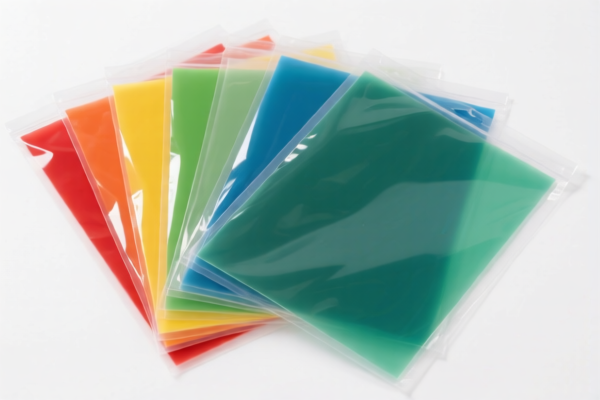
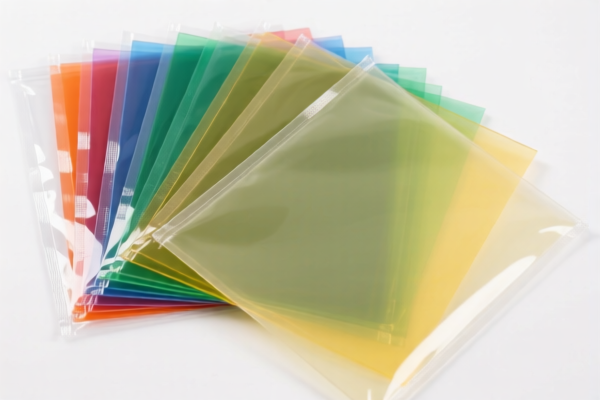
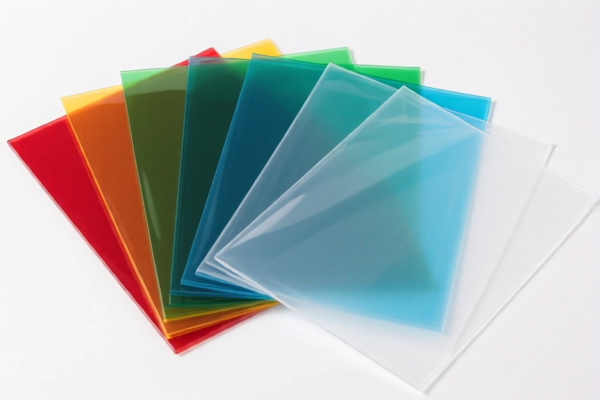
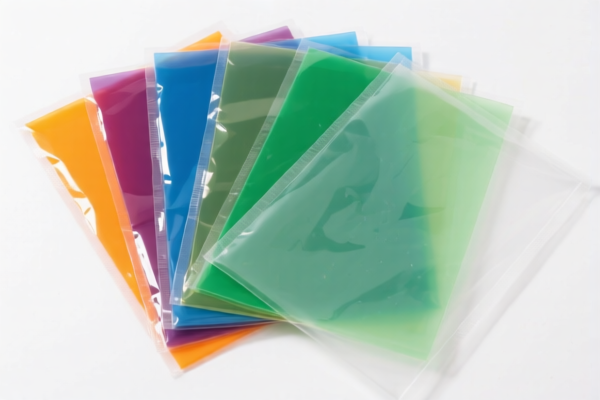
AI Analysis
🧊 Acrylic Plastic Sheet (PMMA)
🌐 HS Code Reference & Customs Clearance Guide | 2026 Latest Tariff Analysis | Professional Entry Strategy
📌 I. Product Definition & Classification: Do You Really Understand "Acrylic"?
Acrylic Plastic Sheets, chemically known as Polymethyl Methacrylate (PMMA), are transparent thermoplastic sheets often used as a lightweight or shatter-resistant alternative to glass. In international trade, the classification depends heavily on two factors: 1. Chemical Composition: Is it generic "plastic" or specifically "Acrylic/PMMA"? 2. Physical Form: Is it a solid "plate/sheet" or a finished "article/part"?
⚠️ Key Distinction Point:
- If the product is a raw or semi-finished sheet/plate (even if cut to size) → It generally falls under Chapter 39, Headings 3920 or 3921.
- If the product is a finished support structure or specific component → It may fall under Headings 3926 (Other articles of plastics).
- Conflict Alert: Misclassifying a sheet as an "article" can lead to significantly different tax rates (e.g., 41.5% vs. 22.8%).
📦 II. HS Code Classification Details (2026 Latest Tariff Authority Comparison)
Based on the provided data for "Acrylic Plastic Support Board/Sheet," here are the valid HS Codes and their logical justifications:
| HS Code | Product Description | Application Scenario | Logical Justification from Data |
|---|---|---|---|
3921.90.50.50 |
Plastic plates, sheets, etc., of other plastics (Generic Acrylic) | Standard acrylic support boards; generic classification where specific polymer isn't the primary differentiator. | "Material: Acrylic (Plastic), Form: Plate" – No material conflict. |
3926.90.99.89 |
Other articles of plastics (Finished Support Parts) | Acrylic supports treated as finished "articles" rather than raw materials/plates. | "Material: Acrylic (Plastic), Form: Other plastic products" – Treated as a manufactured part, not a sheet. |
3920.51.50.90 |
Plates, sheets, film, foil, and strip of acrylic polymers | High-Precision Classification: Specifically for Acrylic Polymers in plate form. | "Material: Acrylic Polymer, Form: Plate" – No flame retardant conflict. Note: Higher base tariff (6.5%). |
3921.19.00.90 |
Plates, sheets, film, foil, and strip of plastics (Non-Acrylic Specific) | Broad category for plastic plates not specified elsewhere. | "Material: Acrylic (Plastic), Form: Plate/Sheet" – Generic plate classification. |
3926.90.25.00 |
Other articles of plastic: Other (Specific Sub-category) | Specific components or parts made of acrylic that don't fit general "sheet" definitions. | "Material: Acrylic (Plastic), Form: Other plastic products/components" – No conflict. |
3920.59.80.00 |
Plates of acrylic polymers (Other) | Acrylic plates that are not foam or reinforced laminated structures. | "Material: Acrylic Polymer, Form: Plate/Sheet" – Non-foam, non-laminated structure. |
🔍 Critical Note:
- 3920.51 and 3920.59 are more specific to "Acrylic Polymers" (PMMA) and often attract higher Base Tariffs (6.5%) compared to generic plastic headings.
- 3921 and 3926 are broader categories. 3926 treats the item as an "article" (finished good), while 3921 treats it as a "plate/sheet" (semi-finished material).
💰 III. 2026 Latest Tariff Rate Breakdown (Including Surcharges & Policy Add-ons)
✅ Applicable Country: United States (US)
✅ Origin: China (CN)
✅ Effective Date: Post-2025 (Current Trade War Context)
🎯 1. High Tariff Group: 3920.51.50.90, 3921.19.00.90, 3920.59.80.00
(Most Specific to Acrylic Plates/Sheets)
| Item | Detail |
|---|---|
| Base Tariff | 6.5% (Ad Valorem) |
| USITC Additional Tariff (Section 301) | +25.0% |
| 122 Clause Tariff | +10.0% |
| Total Effective Tax Rate | 41.5% |
| Tax Calculation | CIF Value × 41.5% |
| De Minimis Exemption | ❌ Not Applicable (High-value industrial goods) |
| Legal Path | Base Tariff 3920/3921 → Section 301 Footnote → 122 Clause Add-on |
📌 Interpretation:
- These codes are classified as specific plastic plates/sheets.
- The Base Tariff is 6.5%, which is higher than the generic plastic base (4.8-5.3%).
- With the 25% Section 301 and 10% 122 Clause, the total burden is 41.5%. This is the standard for "raw" or "semi-finished" acrylic sheets.
🎯 2. Mid/High Tariff Group: 3921.90.50.50
(Generic Plastic Plate)
| Item | Detail |
|---|---|
| Base Tariff | 4.8% |
| USITC Additional Tariff (Section 301) | +25.0% |
| 122 Clause Tariff | +10.0% |
| Total Effective Tax Rate | 39.8% |
| Tax Calculation | CIF Value × 39.8% |
| Legal Path | Base Tariff 3921 → Section 301 → 122 Clause |
📌 Interpretation:
- Slightly lower base tariff (4.8%) than the specific acrylic codes, but the surcharge rates remain identical (35%).
- Total rate is 39.8%. This is often used if the specific "Acrylic Polymer" classification is disputed or if the product is a composite plastic.
🎯 3. Lowest Tariff Group: 3926.90.99.89, 3926.90.25.00
(Treated as "Other Articles/Parts")
| Item | Detail |
|---|---|
| Base Tariff | 5.3% (...89) / 6.5% (...25) |
| USITC Additional Tariff (Section 301) | +7.5% (Note: Different from plate surcharge) |
| 122 Clause Tariff | +10.0% |
| Total Effective Tax Rate | 22.8% (...89) / 24.0% (...25) |
| Tax Calculation | CIF Value × 22.8% - 24.0% |
| Legal Path | Base Tariff 3926 → Section 301 Footnote 9903.68 (Lower rate) → 122 Clause |
📌 Interpretation:
- Crucial Strategy: Classifying as an "Article of Plastic" (3926) rather than a "Plate/Sheet" (3920/3921) significantly reduces the Section 301 Surcharge from 25% to 7.5%.
- Total Rate: 22.8% - 24.0%.
- Risk: Customs may challenge this if the item is clearly a "sheet" not yet shaped into a specific functional part. You must prove it is a "finished support part" rather than a raw material.
🛠️ IV. Customs Clearance Practical Advice (Battle-Tested Guide)
✅ 1. Document Checklist (Non-Negotiable)
| Document | Required | Note |
|---|---|---|
| ✅ Product Specification Sheet | ✔️ | Must clearly state: "Polymethyl Methacrylate (PMMA)" or "Acrylic". |
| ✅ Physical Form Description | ✔️ | Specify if it is "Sheet/Plate" (raw) or "Support/Bracket" (finished part). |
| ✅ HS Code Pre-Ruling | ✔️ | Strongly Recommended. The difference between 41.5% and 22.8% is massive. Get a binding ruling if possible. |
| ✅ Commercial Invoice | ✔️ | Description must match the HS Code logic. Do not write "Acrylic Sheet" if classifying under 3926 (Article). |
| ✅ Packaging List | ✔️ | Indicate if items are bundled with other non-acrylic parts. |
✅ 2. Classification Strategy & Pitfalls
| Situation | Recommended HS Code | Why? |
|---|---|---|
| Raw Acrylic Sheets (Cut to size, no holes/mounts) | 3920.51.50.90 or 3921.90.50.50 |
Correctly classified as "Plates/Sheets". Expect ~40-41% tax. |
| Finished Support Brackets (Drilled, bent, ready to mount) | 3926.90.25.00 |
Classified as "Other Articles". Expect 24% tax. |
| Generic Plastic Plates (Non-specific acrylic) | 3921.19.00.90 |
Generic plate. Expect 41.5% tax. |
| Mixed Containers (Sheets + Finished Parts) | Split Declaration | Do not mix! Declare sheets under 3920/3921 and parts under 3926 to optimize total tax. |
🔥 Golden Rule:
"If it's a sheet, pay ~40%. If it's a finished part, pay ~24%. Prove it's a part!"
✅ 3. Special Handling Cases
| Case | Advice |
|---|---|
| Transshipment via Vietnam/Malaysia | High Risk of Scrutiny. US Customs (CBP) is actively monitoring transshipment of Chinese acrylics. Ensure substantial transformation occurred. |
| OEM Acrylic Supports | Provide customer design drawings to prove it is a "specific article" (3926) rather than a generic sheet. |
| Foam or Laminated Acrylic | NOT covered by 3920.59.80.00. Check other subheadings (e.g., 3920.51 for foam). Incorrect classification leads to penalties. |
🌍 V. Global Market Comparison (2026 Update)
| Region | Recommended HS Code | Approx. Total Tax (China Origin) | Notes |
|---|---|---|---|
| 🇺🇸 USA | 3926.90.25.00 (Optimized) |
24.0% | Use 3926 for lower Section 301 rate. |
| 🇺🇸 USA | 3920.51.50.90 (Raw) |
41.5% | Standard for raw sheets. |
| 🇪🇺 EU | 3920.51.00 |
~6.5% | No Section 301 surcharges. Lower overall cost. |
| 🇨🇳 China | 3920.51.00 |
6.5% - 7% | Import tax only, no punitive tariffs. |
| 🇨🇦 Canada | 3920.51.00 |
~0% - 5% | CUSMA free if originating, else low MFN. |
📌 Conclusion:
The US market is the most expensive for acrylic imports due to the Section 301 and 122 Clause tariffs.
- Strategy: If your product can be considered a "finished support part" (3926), classify under 3926 to save ~17-18% in tariffs.
- If it is undeniably a "sheet," accept the 41.5% cost or explore supply chain alternatives.
📌 VI. Common Mistakes & Blood-Tested Lessons
❌ Mistake 1: Declaring all acrylic items as 3926 to save tax.
👉 Consequence: CBP audits reveal "raw sheets" in boxes. Penalties + Back Taxes + Seizure Risk.
✅ Fix: Only use 3926 if the item is clearly an "article" (drilled, bent, finished).
❌ Mistake 2: Ignoring the 122 Clause (10%).
👉 Consequence: Under-declaration by 10%. Interest + Penalties added.
✅ Fix: Always include 122 Clause in cost calculations for China-origin goods.
❌ Mistake 3: Using generic "Plastic Sheet" description.
👉 Consequence: Customs may classify under the highest duty rate due to ambiguity.
✅ Fix: Specify "Acrylic / PMMA" and "Plate/Sheet" or "Support Article" clearly.
✅ Correct Declaration Example:
"Acrylic Polymethyl Methacrylate (PMMA) Support Brackets, Pre-drilled, Custom-Molded, Model XYZ, Origin: China"
(Leads to3926.90.25.00)"Acrylic Plastic Plates, Polymethyl Methacrylate, Unworked/Partially Worked, Thickness 5mm"
(Leads to3920.51.50.90)
🎯 VII. Conclusion: Precision Classification Saves Money
🎯 Key Takeaway:
🔹 "Sheets are heavy (41.5%), Articles are lighter (24%). Prove it's an article!"
🔹 "122 Clause is non-negotiable (10%). Base Tariff varies (4.8%-6.5%). Section 301 is the killer (7.5%-25%)."
📌 Pro Tip:
If you are importing large volumes, consider Partial Tariff Exclusion requests if your specific HTS is on the exclusion list, or explore Bonded Warehouses to defer tax payments until goods are sold domestically.
📣 Immediate Action:
📞 Consult a Customs Broker: Provide photos and specs.
📄 Request HS Code Pre-Ruling: For shipments over $10,000, this is worth the investment.
🚀 Optimize Supply Chain: If tax is >40%, evaluate if local sourcing or third-country manufacturing (Vietnam/Mexico) is viable.
✨ Professional Clearance Starts with Accurate Classification!
💼 Your Margin Depends on Your HS Code!
Customer Reviews
About HS Code Classification
The Harmonized System (HS) is an internationally standardized nomenclature developed by the World Customs Organization (WCO) to classify traded products. Over 200 countries use the HS system as the basis for customs tariffs, trade statistics, and import/export regulations.
Each HS code follows a hierarchical structure:
- Chapter (2 digits) — Broad category of goods (e.g., Chapter 84: Machinery and Mechanical Appliances)
- Heading (4 digits) — More specific grouping within the chapter
- Subheading (6 digits) — Internationally standardized breakdown, used by all WCO member countries
- National subdivisions (8-10 digits) — Country-specific extensions for further classification, such as US HTSUS 10-digit codes
Correct HS code classification is essential for smooth customs clearance, accurate duty payment, and compliance with trade regulations. Misclassification can lead to customs delays, overpayment of duties, or penalties.
When importing from CN to US, the applicable tariff rates may include:
- Most-Favored-Nation (MFN) rate — The standard duty rate applied to WTO members
- General rate — Applied to countries without trade agreements
- Trade remedy duties — Additional tariffs such as Section 301 (anti-dumping), Section 232 (national security), or countervailing duties
The information provided on this page is for reference purposes only. For official classification, please consult with your local customs authority or a licensed customs broker.