Acrylic Plastic Sun Protection Film
CN → US| HS Code | Tariff Rate | Origin | Destination | Doc |
|---|---|---|---|---|
| 3919905060 | 40.8% | CN | US | Official Doc |
| 3919905040 | 40.8% | CN | US | Official Doc |
Product Images
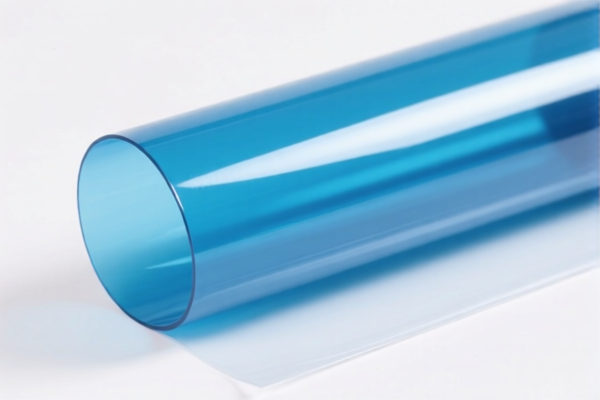
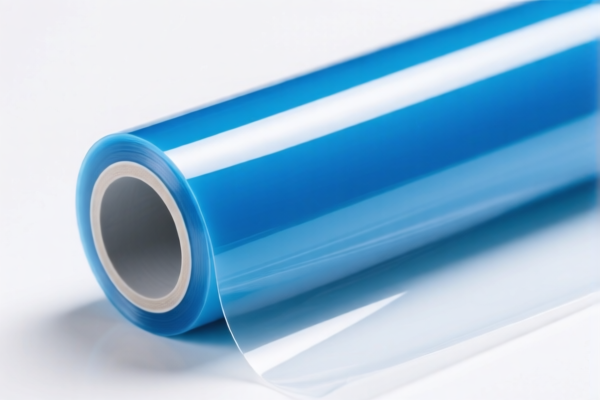
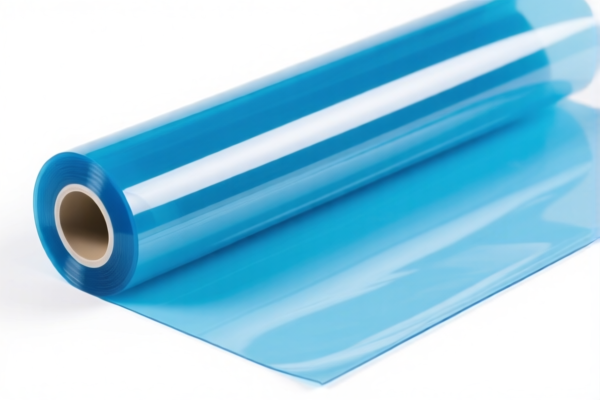
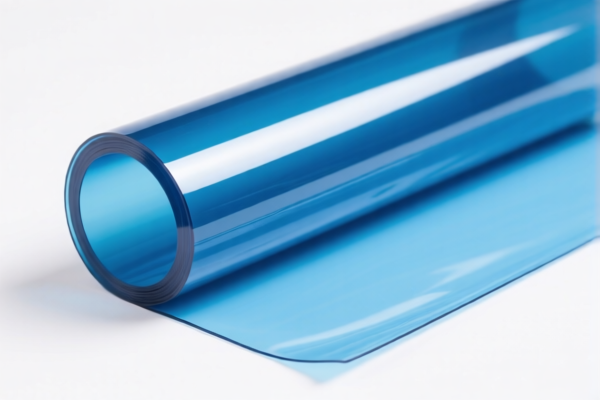
AI Analysis
🛡️ Acrylic Plastic Sun Protection Film
🌐 HS Code Reference & Customs Clearance Guide | 2026 Latest Tariff Analysis | Professional-Level Clearance Strategy
📌 I. Product Definition and Classification: Do You Truly Understand "Acrylic Plastic Sun Protection Film"?
Acrylic Plastic Sun Protection Film is a specialized adhesive plastic product designed to block UV rays, reduce glare, and provide privacy or thermal insulation for windows, vehicles, or architectural glass. In international trade, it falls under Chapter 39 (Plastics and Articles Thereof), specifically Heading 3919 (Self-adhesive plates, sheets, film, foil, tape, strip and other flat shapes, of plastics, whether or not in rolls).
The critical distinction in classification lies in transparency and material composition:
- Transparent Tape/Film (
3919.90.50.40): If the film is primarily transparent (even if tinted but still allows clear vision through it) and functions as a self-adhesive sheet/film. - Other Other (
3919.90.50.60): If the film is opaque, heavily tinted, frosted, or has specific structural properties that do not fit the "transparent" sub-category, or if it is considered a general-purpose adhesive plastic sheet not specified elsewhere.
⚠️ Key Distinction Point:
- If the product is clear or lightly tinted and intended for visual transparency + protection → Often classified as Transparent Tape/Film.
- If the product is opaque, frosted, decorative, or has complex lamination not fitting standard transparent definitions → Classified as Other.
- Crucial Note: Despite the name "Acrylic," if it is a flat, self-adhesive plastic sheet/film, it generally does not fall under acrylic resins (3906) but under self-adhesive plastics (3919).
📦 II. HS Code Classification Details (2026 Latest Tariff Authoritative对照)
| HS Code | Product Description | Application Scenario | Transparency | Tax Rate (China Origin to US) |
|---|---|---|---|---|
3919.90.50.40 |
Self-adhesive plastic film, Transparent Tape | UV protection window film, clear car window tint, transparent architectural film | ✅ Transparent | 0.0% |
3919.90.50.60 |
Self-adhesive plastic film, Other Other | Frosted privacy film, opaque decorative film, heavy-duty opaque protective sheet, non-standard adhesive films | ❌ Not Transparent (or Other) | 0.0% |
🔍 Important Reminder:
- Both codes listed in<DATA>have a total tax of 0.0% for China-origin goods entering the US (as of current data).
- However, misclassification can lead to significant risks. If a "transparent" film is declared as "other," it may trigger additional scrutiny. Conversely, declaring a frosted/opaque film as "transparent" is a customs violation.
- Ensure your product description matches the physical properties precisely.
💰 III. 2026 Latest Tariff Rate Breakdown (Detailed Tax Clauses)
✅ Applicable Country: United States (US)
✅ Origin: China (CN)
✅ Effective Time: Current applicable rates (Check for any new IEEPA or USITC footnotes specific to 2026)
🎯 1. 3919.90.50.40 —— Self-Adhesive Transparent Tape/Film
| Item | Content |
|---|---|
| Base Tariff Rate | 0.0% (ad valorem) |
| Section 301 Tariff (USITC) | 0.0% (Not listed in common high-tariff lists for this specific sub-code, but always verify latest USITC Footnotes) |
| IEEPA Additional Tariff | 0.0% (As per provided <DATA>) |
| Total Tax Rate | 0.0% |
| Tax Calculation | CIF Value × 0% = $0 |
| De Minimis Eligibility | ✅ Yes (if value < $800, though adhesive films may have special rules; consult customs broker) |
| Legal Basis Path | HTSUS:3919.90.50.40 |
📌 Explanation:
- The data provided indicates 0.0% total tax. This is favorable.
- However, always double-check if the film contains any functional coatings that might shift it to Chapter 32 (Resins/Varnishes) or Chapter 70 (Glass), though "plastic film" strongly points to Chapter 39.
🎯 2. 3919.90.50.60 —— Self-Adhesive Plastic Film, Other Other
| Item | Content |
|---|---|
| Base Tariff Rate | 0.0% (ad valorem) |
| Section 301 Tariff (USITC) | 0.0% (As per provided <DATA>) |
| IEEPA Additional Tariff | 0.0% (As per provided <DATA>) |
| Total Tax Rate | 0.0% |
| Tax Calculation | CIF Value × 0% = $0 |
| De Minimis Eligibility | ✅ Yes (subject to standard de minimis rules) |
| Legal Basis Path | HTSUS:3919.90.50.60 |
📌 Explanation:
- Like the transparent code, this code shows 0.0% total tax in the provided data.
- Ensure the product is indeed "other" (non-transparent or non-standard) to justify this code. Mislabeling opaque films as transparent is a common customs error.
🛠️ IV. Customs Clearance Practical Advice (Battle-Tested Pitfall Guide)
✅ 1. Required Documentation Checklist (Non-Negotiable)
| Document | Mandatory? | Explanation |
|---|---|---|
| ✅ Product Specification Sheet | ✔️ | Must detail: Material (Acrylic-based polyester?), Adhesive type, Thickness (mils/mm), UV blocking % (e.g., 99% UV), Tint level, Roll dimensions. |
| ✅ Material Safety Data Sheet (MSDS) | ✔️ | Critical for adhesive products. Shows chemical composition (Acrylic emulsion, solvents, etc.). |
| ✅ Product Photos (Front & Back) | ✔️ | Must clearly show if the film is transparent, tinted, frosted, or opaque. Label the photos. |
| ✅ Commercial Invoice | ✔️ | Must accurately describe the item: "Self-adhesive Acrylic Plastic Sun Protection Film, Roll, [Dimensions], [Transparency Level]." |
| ✅ Packing List | ✔️ | Details weight, number of rolls, and packaging type. |
| ✅ HS Code Pre-Ruling (Optional but Recommended) | ✔️ | If high volume, apply for a binding ruling from CBP to confirm 3919.90.50.40 vs. 3919.90.50.60. |
✅ 2. Declaration Tips (Key Mnemonics)
🔥 "Clear for Transparent, Other for Opaque, Adhesive is Key, Don't Confuse with Glass!"
| Scenario | Correct Declaration | Common Mistake |
|---|---|---|
| Clear Tinted Window Film | 3919.90.50.40 (Transparent) |
Declaring as 7001 (Glass) → Wrong Chapter |
| Frosted/Privacy Film | 3919.90.50.60 (Other) |
Declaring as 3919.90.50.40 → Misclassification |
| Roll of Film | Declare as "Rolls" | Declaring as "Sheets" if sold in rolls → Description mismatch |
| Adhesive Side Exposed | Mention "Self-Adhesive" | Omitting "Self-Adhesive" → Could be seen as plain film (3920) |
✅ 3. Special Case Handling
| Case | Handling Advice |
|---|---|
| Multi-layer Laminated Film | If layers include metalized (e.g., aluminum), ensure it doesn't shift to Chapter 85 or 76. Usually, if plastic is the main material, it stays in 39. |
| Functional Coatings (e.g., Anti-Scratch) | If the coating is primarily plastic-based, stay in 3919. If it's a specialized chemical resin (e.g., urethane), consult a customs expert. |
| Roll Width > 30cm | Self-adhesive films in rolls are classic 3919 items. Width does not change the chapter, but ensure it's not "in the form of finished articles" (which might shift to 3926). |
| Samples vs. Commercial | De minimis ($800) may apply for low-value commercial shipments, but always declare correctly. |
🌍 V. Global Main Market Clearance Comparison (2026 Latest)
| Country/Region | Recommended HS Code | Tariff | Certification | Remarks |
|---|---|---|---|---|
| 🇺🇸 USA | 3919.90.50.40 / 3919.90.50.60 |
0.0% | None Specific | Ensure "Acrylic" is correctly described; avoid chemical classification traps. |
| 🇪🇺 EU | 3919.90.90 (Similar) |
~4.5% | REACH Compliance | Must provide chemical safety data for adhesives. |
| 🇨🇳 China | 3919.90.90.90 |
~5.0% | CCC (if applicable) | Domestic sales may have different tax rates. |
| 🇬🇧 UK | 3919.90.90 |
~4.5% | UKCA Marking | Post-Brexit rules apply; similar to EU but separate documentation. |
📌 Conclusion:
- The US market offers 0% duty for these specific HS codes, making it highly competitive.
- The key risk is not tax, but classification accuracy. Misdeclaring frosted film as transparent can lead to penalties, even if the tax rate is currently the same in this dataset.
📌 VI. Common Errors & Pitfalls (Lessons Learned)
❌ Error 1: Calling it "Window Glass Tint" instead of "Plastic Film"
👉 Consequence: May be misclassified under Chapter 70 (Glass) or 72 (Glassware), leading to different duties and regulations.
Fix: Always use "Plastic Film" or "Self-Adhesive Plastic Sheet" in description.
❌ Error 2: Ignoring "Self-Adhesive" in Description
👉 Consequence: May be classified as plain plastic film (3920), which might have different tariff rates or restrictions.
Fix: Explicitly state "Self-Adhesive" in the commercial invoice and description.
❌ Error 3: Confusing "Acrylic" (Chemical) with "Acrylic-Based Adhesive" (Functional)
👉 Consequence: If the base is polyester (common for window films) but adhesive is acrylic, it’s still plastic film (3919), not acrylic resin (3906).
Fix: Correctly identify the base material (usually PET/Polyester) and the adhesive type (Acrylic). Classify based on the flat shape and self-adhesive nature.
✅ Correct Description Example:
"Self-Adhesive Acrylic-Based Plastic Sun Protection Film, Clear Tint, Roll 1m x 30m, UV Blocking 99%, for Window Use"
🎯 VII. Conclusion: Precise Classification, Smooth Clearance, Maximized Profit!
🎯 Remember the Mantra:
🔹 "Transparent gets 50.40, Other gets 50.60, Both are 0% Duty, But Description is King!"
🔹 "Plastic Film, Self-Adhesive, Chapter 39 is Home, Don't Go to Chapter 70!"
📌 Pro Tip:
If your film has metalized layers (e.g., silver tint), consult a customs broker to ensure it doesn't get classified under Chapter 85 (Electrical) or Chapter 79 (Zinc) or Chapter 76 (Aluminum) due to the metal content, although plastic films with thin metal coatings often remain in 3919.
📣 Immediate Action:
📞 Contact a licensed customs broker
📦 Provide clear photos of the film (roll and sample)
📄 Prepare detailed MSDS and specification sheets
🚀 Ensure accurate HS code classification to avoid delays, even with 0% duty!
✨ Professional Clearance Starts with Accurate Classification!
💼 Your Profit Margin Depends on Getting the Details Right!
Customer Reviews
About HS Code Classification
The Harmonized System (HS) is an internationally standardized nomenclature developed by the World Customs Organization (WCO) to classify traded products. Over 200 countries use the HS system as the basis for customs tariffs, trade statistics, and import/export regulations.
Each HS code follows a hierarchical structure:
- Chapter (2 digits) — Broad category of goods (e.g., Chapter 84: Machinery and Mechanical Appliances)
- Heading (4 digits) — More specific grouping within the chapter
- Subheading (6 digits) — Internationally standardized breakdown, used by all WCO member countries
- National subdivisions (8-10 digits) — Country-specific extensions for further classification, such as US HTSUS 10-digit codes
Correct HS code classification is essential for smooth customs clearance, accurate duty payment, and compliance with trade regulations. Misclassification can lead to customs delays, overpayment of duties, or penalties.
When importing from CN to US, the applicable tariff rates may include:
- Most-Favored-Nation (MFN) rate — The standard duty rate applied to WTO members
- General rate — Applied to countries without trade agreements
- Trade remedy duties — Additional tariffs such as Section 301 (anti-dumping), Section 232 (national security), or countervailing duties
The information provided on this page is for reference purposes only. For official classification, please consult with your local customs authority or a licensed customs broker.