Acrylic Plastic Tray Board
CN → US| HS Code | Tariff Rate | Origin | Destination | Doc |
|---|---|---|---|---|
| 3921905050 | 39.8% | CN | US | Official Doc |
| 3926909989 | 22.8% | CN | US | Official Doc |
| 3920515090 | 41.5% | CN | US | Official Doc |
| 3921190090 | 41.5% | CN | US | Official Doc |
| 3926902500 | 24.0% | CN | US | Official Doc |
| 3920598000 | 41.5% | CN | US | Official Doc |
Product Images
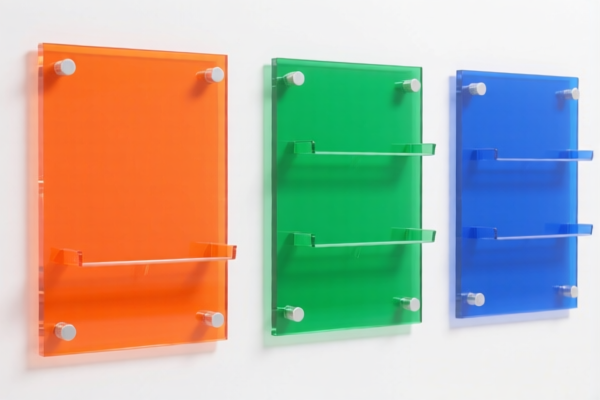
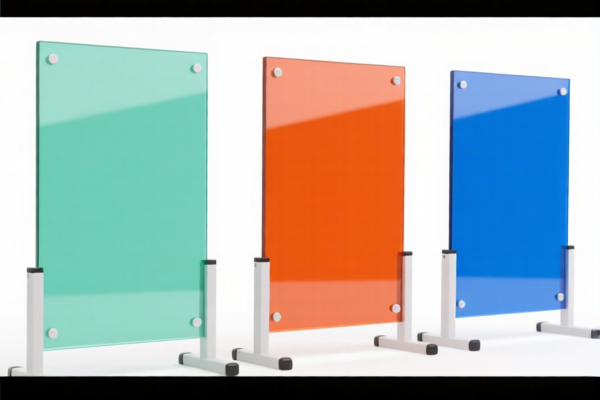
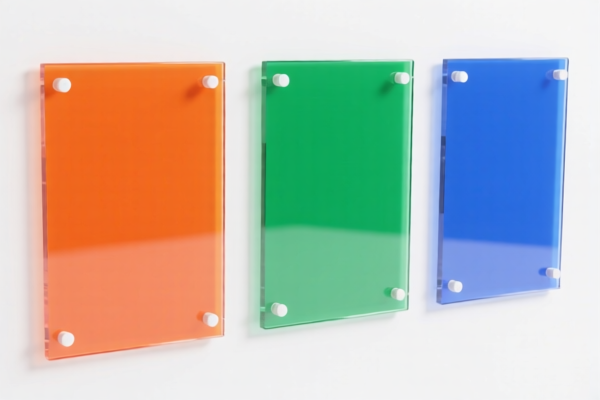
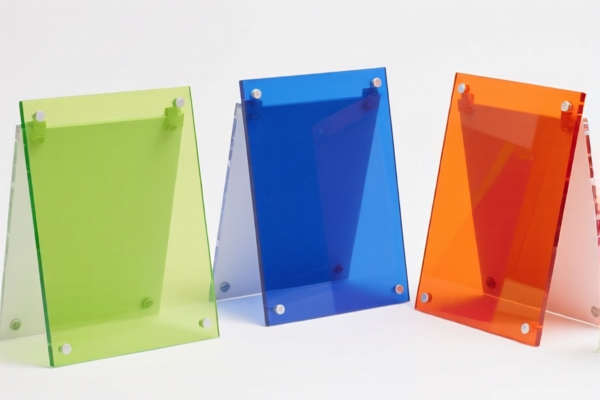
AI Analysis
🧪 Acrylic Plastic Tray Board (Acrylic Plastic Support Board/Panel)
🌐 HS Code Reference & Clearance Guide | 2026 Latest Tariff Analysis | Professional Clearance Strategy
📌 Part I: Product Definition & Classification: Do You Really Know "Acrylic"?
Acrylic Plastic Tray Boards are typically used as structural supports, display panels, or protective covers in industrial and consumer applications. In international trade, the classification depends heavily on whether the product is considered a generic plastic sheet or a specific fabricated plastic article.
Key Distinction Points: - Generic Plastic Sheets/Plates: If the item is primarily a raw or semi-finished flat panel (regardless of shape like "tray" or "board"), it often falls under headings 3920 or 3921. - Fabricated Articles: If the item has a specific function or shape that defines it as a distinct manufactured part (not just a sheet), it may fall under heading 3926.
⚠ critical Critical Distinction Point:
- If it is a flat panel/board used as a substrate or structural component → Likely 3921 (Plastic Plates/Sheets/Film).
- If it is a specific manufactured part/component with a defined function beyond just being a sheet → Likely 3926 (Other Articles of Plastics).
- If it is classified specifically as an Acrylic Polymer plate → Likely 3920.
📦 Part II: Detailed HST Code Classification Matrix (2026 Latest Tariff Authority)
Based on the provided data, here are the five potential classifications for "Acrylic Plastic Tray Board," along with their respective total tax rates.
| # | HS Code | Summary / Classification Rationale | Total Tax Rate | Key Characteristics |
|---|---|---|---|---|
| 1 | 3921.90.50.50 |
Classified as Plastic Board. Material: Acrylic. Form: Support Board. |
39.8% | Focuses on the "Board" form factor under generic plastic boards. |
| 2 | 3926.90.99.89 |
Classified as Other Plastic Articles. Material: Acrylic. Form: Support Board. |
22.8% | Treats it as a specific fabricated article, not just a raw sheet. Lowest Tax Option. |
| 3 | 3920.51.50.90 |
Classified as Acrylic Polymer Board. Material: Acrylic. Form: Board. |
41.5% | Specific to the chemical nature (Acrylic Polymer) in heading 3920. |
| 4 | 3921.19.00.90 |
Classified as Plastic Plates/Sheets/Film/Strip. Material: Acrylic. Form: Board. |
41.5% | Broad category for plastic plates, often attracting higher add-on tariffs. |
| 5 | 3926.90.25.00 |
Classified as Other Plastic Products/Parts. Material: Acrylic. Form: Support Board. |
24.0% | Specific sub-heading for parts/components of other plastic products. |
🔍 Key Insight:
- The highest tax burden (41.5%) applies to classifications under 3920 and 3921.19 due to the specific "122 Section" and higher base rates. - The lowest tax burden (22.8%) applies to 3926.90.99.89, categorized as a generic "Other Plastic Article." - The choice of classification significantly impacts the landed cost, with a difference of nearly 19% between the highest and lowest options.
💰 Part III: 2026 Latest Tariff Rate Breakdown (Including Surcharges)
✅ Applicable Country: United States (US)
✅ Origin: China (CN)
✅ Effective Time: 2025/2026 (Current Trade Policies)
🎯 Scenario A: High-Tax Classifications (3921.90.50.50, 3920.51.50.90, 3921.19.00.90)
These categories attract the maximum additional tariffs.
| Item | Details |
|---|---|
| Base Tariff | 4.8% - 6.5% (ad valorem, varies by specific sub-code) |
| Section 301 Surcharge | +25.0% (Heavy surcharge on Chinese plastic goods) |
| Section 122 Tariff | +10.0% (Specific legislative surcharge) |
| Total Effective Rate | 39.8% – 41.5% |
| Calculation Basis | CIF Value × Total Rate |
| De Minimis Exempt? | ❌ No (De minimis does not apply to these high-tariff categories) |
📌 Explanation:
- The 25% Section 301 tariff is the dominant cost driver here. - The 10% Section 122 tariff adds another layer of cost. - Total Rate ~40%: This is a significant barrier to entry. Importers must carefully justify the classification to avoid this peak rate.
🎯 Scenario B: Low-Tax Classifications (3926.90.99.89, 3926.90.25.00)
These categories are classified as "Other Articles" or "Parts," qualifying for lower surcharges.
| Item | Details |
|---|---|
| Base Tariff | 5.3% - 6.5% |
| Section 301 Surcharge | +7.5% (Reduced surcharge for specific plastic articles) |
| Section 122 Tariff | +10.0% (Still applicable) |
| Total Effective Rate | 22.8% – 24.0% |
| Calculation Basis | CIF Value × Total Rate |
| De Minimis Exempt? | ❌ No (De minimis does not apply) |
📌 Explanation:
- The Section 301 surcharge drops from 25% to 7.5% for these specific "Other Plastic Articles." - Total Rate ~23%: This is nearly half the cost of the high-tax scenarios. - Strategy: Argue for classification under 3926 (Other Articles) rather than 3921/3920 (Plates/Sheets) to save ~18% in duties.
🛠 Part IV: Clearance Practical Advice (Risk Avoidance Guide)
✅ 1. Preparation Checklist (Essential Documents)
| Document | Required | Purpose |
|---|---|---|
| ✅ Product Specification Sheet | ✔ | Defines material (Acrylic/PMMA), thickness, dimensions, and intended use. |
| ✅ Technical Drawings/Blueprints | ✔ | Crucial to prove if it's a "raw sheet" or a "fabricated article/part." |
| ✅ Commercial Invoice | ✔ | Must clearly state "Acrylic Plastic Support Board/Tray" and origin. |
| ✅ Packing List | ✔ | Details quantity, weight, and packaging to verify value. |
| ✅ Third-Party Test Reports | ✔ | Material safety data (MSDS) or compliance certificates (RoHS/REACH) if needed. |
| ✅ Origin Declaration | ✔ | Confirms Chinese origin to apply correct tariffs. |
✅ 2. Declaration Strategy (Key Mantras)
🔥 "Fabricated Part = 3926; Raw Sheet = 3921. Shape Defines Duty!"
| Scenario | Recommended Classification | Why? |
|---|---|---|
| Cut to size, drilled holes, specific shape | 3926.90.99.89 or 3926.90.25.00 |
It's a fabricated part, not a generic sheet. Qualifies for lower 7.5% surcharge. |
| Raw flat sheet/board, minimal processing | 3921.90.50.50 or 3920.51.50.90 |
Treated as a plate/sheet. Attracts 25% surcharge. |
| Tray with specific functional design | 3926.90.25.00 |
Classified as a specific "part" or "other product." |
✅ 3. Special Circumstances Handling
| Situation | Handling Advice |
|---|---|
| Custom-Made Acrylic Tray | Provide design files. Emphasize "custom fabricated article" to support 3926 classification. |
| Acrylic Used as Display Stand | If it's a functional stand, argue for 3926 (Other Articles). If just a board for display, risk 3921. |
| Mixed Shipment | Do not mix "raw sheets" and "fabricated trays" in one declaration line. Separate them for accurate tax calculation. |
| Dispute on Classification | If CBP challenges, provide evidence that the item has "gone beyond the stage of plates/sheets" (e.g., molded, bent, assembled). |
🌍 Part V: Global Market Clearance Comparison (2026 Snapshot)
| Market | Recommended Approach | Tariff Impact | Note |
|---|---|---|---|
| 🇺🇸 USA | Aim for 3926.90.99.89 | 22.8% Total | Avoid 3921 if possible to save 17%+ in surcharges. |
| 🇨🇳 *China (Export Side) | Standard Export | 0% | Focus on US import duties. |
| 🇪🇺 EU | Varies by specific use | 0-6.5% | No Section 301/122 equivalent; focus on standard MFN rates. |
| 🇬🇧 UK | Similar to EU | 0-6.5% | Post-Brexit tariffs align closely with EU for plastics. |
| 🇨🇦 Canada | Check CEPA | 0-5% | Generally lower duties; no major punitive tariffs on acrylics. |
📌 Conclusion:
- The US market is the most sensitive to classification due to Section 301 and 122 tariffs. - Strategy: Push for 3926 (Other Articles of Plastics). The difference in duty (22.8% vs 41.5%) is substantial. - Documentation is Key: Prove it's a "support board" or "tray" with specific utility, not just a "plastic plate."
📌 Part VI: Common Errors & Pitfall Avoidance (Blood & Tears Lessons)
❌ Mistake 1: Classifying a shaped/acrylic tray as a "Plastic Sheet" (3921)
👉 Consequence: You pay 41.5% duty instead of 22.8%. Loss of ~19% profit margin!
❌ Mistake 2: Vague Description: "Plastic Part"
👉 Consequence: CBP may default to the highest duty rate or request additional documentation, causing customs hold.
❌ Mistake 3: Not Distinguishing between "Raw Board" and "Fabricated Tray"
👉 Consequence: If CBP determines it's a raw board, they will reclassify to 3921 and assess back-duties + interest.
❌ Mistake 4: Using "Acrylic" as the sole description
👉 Consequence: "Acrylic" is a material, not a classification. Must specify form (Sheet vs. Article) and function (Support/Tray).
✅ Best Practice:
Use Precise Language:
"Acrylic Plastic Support Board (Fabricated Article), Custom Cut, Model XYZ, Material: PMMA, Use: Industrial Support."
🎯 Part VII: Conclusion: Professional Declaration, Cost Efficiency!
🎯 Remember the Golden Rule:
🔹 "Shaped = 3926 (22.8%); Flat = 3921 (41.5%)."
🔹 "Save 19% by declaring it as an Article, not a Sheet!"
🔹 "HS Code determines tax; Tax determines profit. Choose wisely!"
📌 Pro Tip:
If your product has specific dimensions or functional modifications (drilling, bending, etc.), document them clearly. This supports the 3926 classification.
Consider applying for an Advance Ruling from US CBP if the classification is ambiguous to avoid post-import audits.
📣 Immediate Action:
📞 Consult a licensed customs broker to validate the 3926 vs. 3921 classification.
📄 Ensure your Commercial Invoice explicitly states "Fabricated Plastic Article" rather than "Plastic Sheet."
🚀 Secure your margin: Declare correctly, clear faster, pay less.
✨ Professional Clearance Starts with Precise Classification!
💼 Every percent saved in duty is pure profit!
Customer Reviews
About HS Code Classification
The Harmonized System (HS) is an internationally standardized nomenclature developed by the World Customs Organization (WCO) to classify traded products. Over 200 countries use the HS system as the basis for customs tariffs, trade statistics, and import/export regulations.
Each HS code follows a hierarchical structure:
- Chapter (2 digits) — Broad category of goods (e.g., Chapter 84: Machinery and Mechanical Appliances)
- Heading (4 digits) — More specific grouping within the chapter
- Subheading (6 digits) — Internationally standardized breakdown, used by all WCO member countries
- National subdivisions (8-10 digits) — Country-specific extensions for further classification, such as US HTSUS 10-digit codes
Correct HS code classification is essential for smooth customs clearance, accurate duty payment, and compliance with trade regulations. Misclassification can lead to customs delays, overpayment of duties, or penalties.
When importing from CN to US, the applicable tariff rates may include:
- Most-Favored-Nation (MFN) rate — The standard duty rate applied to WTO members
- General rate — Applied to countries without trade agreements
- Trade remedy duties — Additional tariffs such as Section 301 (anti-dumping), Section 232 (national security), or countervailing duties
The information provided on this page is for reference purposes only. For official classification, please consult with your local customs authority or a licensed customs broker.