Acrylic Polymer Extrusion Grade
CN → US| HS Code | Tariff Rate | Origin | Destination | Doc |
|---|---|---|---|---|
| 3906902000 | 41.3% | CN | US | Official Doc |
| 3208200000 | 38.6% | CN | US | Official Doc |
| 3208900000 | 38.2% | CN | US | Official Doc |
| 3906905000 | 39.2% | CN | US | Official Doc |
| 3901105010 | 41.5% | CN | US | Official Doc |
Product Images
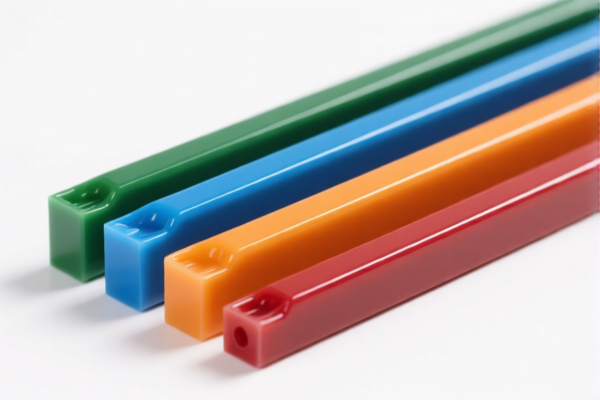
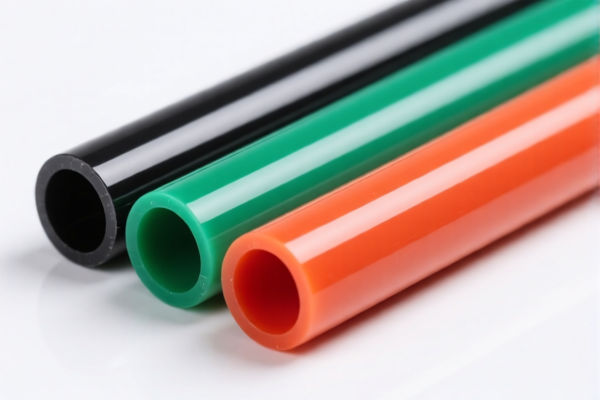
AI Analysis
🧪 Acrylic Polymer - Extrusion Grade: HS Code Classification & US Customs Clearance Guide (2026)
🌐 HS Code Reference & Customs Clearance Strategy | Latest 2026 Tariff Analysis | Professional Entry Tactics
📌 1. Product Definition & Classification: What is "Acrylic Polymer Extrusion Grade"?
Acrylic Polymers (primarily Poly(methyl methacrylate) or PMMA) are synthetic polymers derived from acrylic acid derivatives. In international trade, the classification depends heavily on whether the polymer is in its primary form (raw material) or processed into a specific article (like sheets or tubes).
For "Extrusion Grade", the product is typically a pellet, granule, or powder intended to be melted and formed into final shapes (tubes, rods, profiles, sheets) via an extrusion process. It is not a finished article.
⚠️ Key Distinction:
- If sold as raw pellets/granules → Classified under Chapter 39 (Plastics in primary forms).
- If sold as pre-formed sheets/tubes ready for use → Classified under Chapter 39 (Plastics articles) or Chapter 32 (if painted/varnished as a final coating).
- Note: Based on the provided data, we focus on the raw/primary forms suitable for industrial use.
📦 2. HS Code Classification Details (Based on Provided Data)
According to the <DATA> provided, acrylic polymers are primarily classified under two chapters: 39 (Plastics in primary forms) and 32 (Paints, varnishes, etc., containing acrylic polymers).
| HS Code | Product Description | Tax Rate (Total) | Tax Breakdown | Primary Application |
|---|---|---|---|---|
| 3906.90.20.00 | Acrylic Polymer, Primary Form, for Printing Grade & Similar Applications | 41.3% | Base: 6.3% + Sec 301: 25.0% + IEEPA (Sec 122): 10.0% |
Raw pellets/granules for printing inks, adhesives, or general molding. |
| 3906.90.50.00 | Acrylic Polymer, Primary Form, for Specific Specification Raw Materials | 39.2% | Base: 4.2% + Sec 301: 25.0% + IEEPA (Sec 122): 10.0% |
Raw materials with specific technical specs for extrusion or other industrial forms. |
| 3208.20.00.00 | Acrylic Polymer, Based on Synthetic Polymers, for Paints/Varnishes | 38.6% | Base: 3.6% + Sec 301: 25.0% + IEEPA (Sec 122): 10.0% |
Acrylic resins used as base components for paints, varnishes, or coatings. |
| 3208.90.00.00 | Acrylic Polymer, Other Synthetic Polymer Category, for Various Industrial Uses | 38.2% | Base: 3.2% + Sec 301: 25.0% + IEEPA (Sec 122): 10.0% |
Other acrylic-based industrial coatings or binders not specified elsewhere. |
🔍 Critical Note:
The user input "Acrylic Polymer Extrusion Grade" strongly suggests a primary form (Chapter 39), such as pellets or granules, rather than a paint or varnish (Chapter 32). Therefore, 3906.90.20.00 or 3906.90.50.00 are the most likely classifications.
- 3906.90.20.00 is suitable if the grade is general-purpose or linked to printing/adhesive applications.
- 3906.90.50.00 is suitable if it is a specialized raw material for specific extrusion specifications.
Chapter 32 codes (3208.x) are less likely unless the polymer is already formulated into a liquid coating/paint.
💰 3. 2026 US Tariff Rate Detailed Breakdown
✅ Applicable Country: United States (US)
✅ Origin: China (CN)
✅ Effective Date: Post-November 2025 (Including 2026)
🎯 1. 3906.90.20.00 – Acrylic Polymer, Primary Form (Printing/General Grade)
| Item | Details |
|---|---|
| Base Tariff Rate | 6.3% (Ad Valorem) |
| Section 301 Tariff | +25.0% (USITC Footnote related to China origin) |
| IEEPA / Sec 122 Tariff | +10.0% (Targeting China/Hong Kong products) |
| Total Effective Tax Rate | 41.3% |
| Calculation Basis | CIF Value × 41.3% |
| De Minimis Exemption | ❌ Not Eligible (High tariff rates exclude small packages from de minimis benefits) |
| Legal Authority Path | HTSUS:3906.90.20.00 → USITC:301_25% → IEEPA:122_10% |
📌 Explanation:
- Base 6.3%: Standard Most Favored Nation (MFN) rate for acrylic polymers.
- 25% Sec 301: Additional tariff on Chinese goods under the US-China trade war provisions.
- 10% IEEPA: Additional tariff under the International Emergency Economic Powers Act, specifically targeting Chinese imports.
- Total 41.3%: A very high tariff, significantly impacting cost competitiveness.
🎯 2. 3906.90.50.00 – Acrylic Polymer, Primary Form (Specific Spec)
| Item | Details |
|---|---|
| Base Tariff Rate | 4.2% (Ad Valorem) |
| Section 301 Tariff | +25.0% |
| IEEPA / Sec 122 Tariff | +10.0% |
| Total Effective Tax Rate | 39.2% |
| Calculation Basis | CIF Value × 39.2% |
| De Minimis Exemption | ❌ Not Eligible |
| Legal Authority Path | HTSUS:3906.90.50.00 → USITC:301_25% → IEEPA:122_10% |
📌 Note:
Slightly lower total tax (39.2%) due to a lower base rate (4.2% vs 6.3%), but still extremely high. This code may apply if the extrusion grade is considered a "specific specification raw material."
🎯 3. 3208.20.00.00 & 3208.90.00.00 – Paints/Varnishes & Other Industrial Uses
| Item | Details |
|---|---|
| Base Tariff Rate | 3.6% (3208.20) / 3.2% (3208.90) |
| Section 301 Tariff | +25.0% |
| IEEPA / Sec 122 Tariff | +10.0% |
| Total Effective Tax Rate | 38.6% (3208.20) / 38.2% (3208.90) |
| De Minimis Exemption | ❌ Not Eligible |
📌 Relevance:
These codes apply only if the acrylic polymer is already mixed into a paint, varnish, or coating solution. For "Extrusion Grade" raw pellets, these are incorrect unless the product is explicitly a liquid coating.
🛠️ 4. Customs Clearance Practical Advice
✅ 1. Required Documentation Checklist
| Document | Mandatory? | Explanation |
|---|---|---|
| ✅ Product Specification Sheet | ✔️ | Must clearly state "Extrusion Grade," physical form (pellets/granules), and chemical composition (PMMA/other acrylic). |
| ✅ Certificate of Origin (CO) | ✔️ | Critical for confirming Chinese origin, triggering the 301/IEEPA tariffs. |
| ✅ Commercial Invoice | ✔️ | Must explicitly describe the goods as "Acrylic Polymer, Primary Form" not just "Plastic." |
| ✅ Bill of Lading / Air Waybill | ✔️ | Standard shipping documents. |
| ✅ Safety Data Sheet (SDS) | ✔️ | To confirm no hazardous chemical classification issues. |
| ✅ Third-Party Test Report | ⚠️ Recommended | To prove the product is in "primary form" (pellets) and not a finished article or mixed coating. |
✅ 2. Declaration Tips (Crucial for Avoiding Penalties)
🔥 "Form Matters: Pellets = Chapter 39; Paint = Chapter 32; Finished = Chapter 39/40"
| Scenario | Correct Declaration | Incorrect Declaration | Consequence |
|---|---|---|---|
| Raw Extrusion Pellets | HS 3906.90.20.00 or 3906.90.50.00 |
"Acrylic Resin for Paint" | Misclassification → Audit, Back Taxes, Fines |
| Liquid Acrylic Coating | HS 3208.20.00.00 |
"Plastic Pellets" | Misclassification → Rejection, Delay |
| Finished Acrylic Tubes | HS 3917.31 or 3917.32 (Not in provided data) |
3906.90.x.x |
Misclassification → Higher/Lower Tax Error |
📌 Key Advice:
- Explicitly State "Primary Form": In the commercial invoice, use phrases like "Acrylic Polymer (PMMA) in Primary Form, Extrusion Grade Pellets."
- Do Not Vague Terms: Avoid just saying "Plastic" or "Polymer." Be specific.
- Check for "Printing Grade": If the extrusion grade is also suitable for printing inks,3906.90.20.00may be more appropriate. If it is purely for physical extrusion of shapes,3906.90.50.00might be better. Consult a customs broker for the exact match.
✅ 3. Special Considerations
| Situation | Handling Advice |
|---|---|
| OEM Custom Extrusion Grade | Provide customer orders and technical specs to justify the "specific specification" code (3906.90.50.00). |
| Mixed Container | If importing acrylic pellets with other plastics, ensure each HS Code is clearly itemized. Mixed containers may face higher scrutiny. |
| Value Declaration | Ensure the CIF value includes freight and insurance. The 41.3% tax is calculated on the CIF value, not just the product cost. |
🌍 5. Global Market Comparison (2026)
| Country/Region | Recommended HS Code (Primary Form) | Total Tariff (China Origin) | Notes |
|---|---|---|---|
| 🇺🇸 USA | 3906.90.20.00 / 3906.90.50.00 |
41.3% / 39.2% | High due to Sec 301 + IEEPA. |
| 🇨🇳 China | 3906.90.20.00 / 3906.90.50.00 |
~5-6% (Import) | No Sec 301/IEEPA. |
| 🇪🇺 EU | 3906.90.90 |
~6.5% | No US-style additional tariffs. |
| 🇬🇧 UK | 3906.90.90 |
~6.5% | Post-Brexit, no US tariffs. |
| 🇻🇳 Vietnam | 3906.90.90 |
~5-6% | Potential for lower rates if re-exported to US under USMCA/Vietnam FTA? (Check rules of origin carefully). |
📌 Conclusion:
The US market is exceptionally expensive for Chinese acrylic polymers due to the 41.3% total tariff.
- Cost Impact: For a $100,000 shipment, you will pay ~$41,300 in taxes.
- Strategy: Consider sourcing from non-China origins (e.g., Vietnam, Malaysia) if possible, or negotiate price adjustments with suppliers to absorb the tariff.
📌 6. Common Mistakes & Pitfalls (Blood Lessons)
❌ Mistake 1: Declaring "Acrylic Resin" without specifying "Primary Form"
👉 Consequence: Customs may suspect it is a finished article or coating, leading to delays or incorrect classification.
❌ Mistake 2: Using Chapter 32 (3208.x) for raw pellets
👉 Consequence: If the product is pellets, it must be Chapter 39. Misclassification can lead to back taxes + penalties.
❌ Mistake 3: Ignoring the IEEPA 10% Tariff
👉 Consequence: Underestimating total landed cost. The 10% is mandatory for Chinese-origin acrylic polymers.
✅ Correct Practice:
"Poly(Methyl Methacrylate) (PMMA), Acrylic Polymer, Extrusion Grade, Primary Form (Pellets), HS 3906.90.50.00, Origin: China"
🎯 7. Conclusion: Professional Declaration for Cost Optimization
🎯 Remember the Key Points:
🔹 "Form is Key: Pellets = Ch 39; Paint = Ch 32"
🔹 "Total Tax = Base + 25% (301) + 10% (IEEPA)"
🔹 "China Origin = High Tariff, Plan Ahead!"
📌 Pro Tip:
If you are importing large volumes, consider applying for a Section 301 Exclusion if available (though rare for basic polymers). Otherwise, ensure your Commercial Invoice and Product Specs align perfectly with HS 3906.90.20.00 or 3906.90.50.00 to avoid delays.
📣 Immediate Action:
📞 Contact a licensed US Customs Broker
📄 Provide Product Data Sheet + Invoice + CO
🚀 Pre-clear HS Code to avoid 41.3% surprises!
✨ Accurate Classification = Savings!
💼 Every Dollar Counted in Tariffs is a Dollar Saved in Profit!
Customer Reviews
About HS Code Classification
The Harmonized System (HS) is an internationally standardized nomenclature developed by the World Customs Organization (WCO) to classify traded products. Over 200 countries use the HS system as the basis for customs tariffs, trade statistics, and import/export regulations.
Each HS code follows a hierarchical structure:
- Chapter (2 digits) — Broad category of goods (e.g., Chapter 84: Machinery and Mechanical Appliances)
- Heading (4 digits) — More specific grouping within the chapter
- Subheading (6 digits) — Internationally standardized breakdown, used by all WCO member countries
- National subdivisions (8-10 digits) — Country-specific extensions for further classification, such as US HTSUS 10-digit codes
Correct HS code classification is essential for smooth customs clearance, accurate duty payment, and compliance with trade regulations. Misclassification can lead to customs delays, overpayment of duties, or penalties.
When importing from CN to US, the applicable tariff rates may include:
- Most-Favored-Nation (MFN) rate — The standard duty rate applied to WTO members
- General rate — Applied to countries without trade agreements
- Trade remedy duties — Additional tariffs such as Section 301 (anti-dumping), Section 232 (national security), or countervailing duties
The information provided on this page is for reference purposes only. For official classification, please consult with your local customs authority or a licensed customs broker.