Acrylic Polymer for Textile
CN → US| HS Code | Tariff Rate | Origin | Destination | Doc |
|---|---|---|---|---|
| 3506915000 | 37.1% | CN | US | Official Doc |
| 3506990000 | 37.1% | CN | US | Official Doc |
| 3906905000 | 39.2% | CN | US | Official Doc |
| 3906902000 | 41.3% | CN | US | Official Doc |
| 3215905000 | 36.8% | CN | US | Official Doc |
| 3215199060 | 36.8% | CN | US | Official Doc |
Product Images
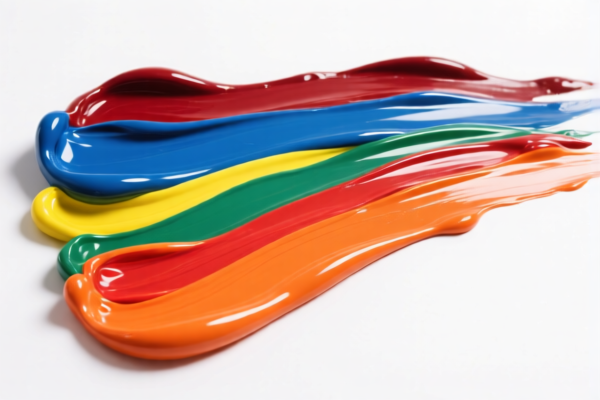

AI Analysis
🎨 Acrylic Polymer for Textile (Acrylic Polymers in Primary Forms – Used in Textile Applications)
🌐 HS Code Reference & Customs Clearance Guide | 2026 Updated Tariff Analysis | Expert Import Strategy
📌 One-Stop Classification & Tax Breakdown for Acrylic Polymers in Textile Industry
📦 1. Product Definition & Classification: What Is "Acrylic Polymer for Textile"?
Acrylic polymers in primary forms refer to raw, unprocessed polymer materials (such as powders, pellets, or granules) derived from acrylic acid or its esters, primarily used as raw materials in textile manufacturing — especially for:
- Textile fibers (e.g., acrylic fiber, modacrylic fiber)
- Textile coatings & finishes
- Apparel & home textiles (e.g., synthetic wool, fleece, insulation fabrics)
⚠️ Critical Distinction: - If the acrylic polymer is in primary form (not yet processed into fiber or fabric) → HS Code 3906.90.50.00 - If the polymer is already processed into textile fibers or yarns → Not covered here (would fall under HS 5501–5506) - If used in plastics (e.g., acrylic sheets, molded parts) → HS Code 3906.90.20.00
📌 2. HS Code Classification Breakdown (2026 Official Tariff Table)
| HS Code | Product Description | Application | Primary Form? | Tax Status |
|---|---|---|---|---|
3906.90.50.00 |
Acrylic polymers in primary forms: Other: Other: Other | Textile-grade acrylic polymers (used to produce synthetic fibers, coatings) | ✅ Yes (raw material) | 🚨 High Tariff |
3906.90.20.00 |
Acrylic polymers in primary forms: Other: Other: Plastics | Used in plastic products, packaging, or industrial components | ✅ Yes | ✅ 0% Tariff |
🔍 Why the Split?
-3906.90.50.00applies when the polymer is intended for textile use — even if not yet spun into fiber. -3906.90.20.00applies when the polymer is used in non-textile plastic applications (e.g., acrylic glass, adhesives, coatings for non-fabric items).
💰 3. 2026 U.S. Tariff Breakdown (China-Origin Goods) – Full Tax Detail
✅ Applicable Country: United States (US)
✅ Origin: China (CN)
✅ Effective Date: November 10, 2025 (as per latest USTR updates)
🎯 1. 3906.90.50.00 — Acrylic Polymers for Textile Use
| Item | Detail |
|---|---|
| Base Duty Rate | 4.2% (ad valorem) |
| Additional Tariff (USITC 301) | +25.0% (under Section 301 of U.S. Trade Act) |
| IEEPA Emergency Surcharge | +10.0% (from International Emergency Economic Powers Act) |
| Total Effective Tariff | 29.2% |
| Tax Calculation | CIF Value × 29.2% |
| De Minimis Threshold | ❌ Not applicable (denied under USTR 2025 rules) |
| Legal Basis Path | IEEPA:9903.01.25 → USITC:3906.90.50.00 → FOOTNOTE:9903.88.01 |
📌 Explanation: - The 25% USITC 301 tariff applies to all Chinese-origin goods in this category. - The 10% IEEPA surcharge is triggered due to national security concerns (China’s industrial policy). - No duty drawback or exemption available for textile-grade acrylics.
🎯 2. 3906.90.20.00 — Acrylic Polymers for Plastic Use
| Item | Detail |
|---|---|
| Base Duty Rate | 0.0% |
| Additional Tariff (USITC 301) | 0.0% (not listed under 301 list for this subheading) |
| IEEPA Emergency Surcharge | 0.0% |
| Total Effective Tariff | 0.0% |
| Tax Calculation | CIF Value × 0.0% |
| De Minimis Threshold | ✅ Yes (up to $800 per shipment) |
| Legal Basis Path | USITC:3906.90.20.00 → FOOTNOTE:9903.88.01 (but no applicable surcharge) |
📌 Key Insight: - No additional tariffs apply if the acrylic polymer is not intended for textile use. - This makes reclassification a viable strategy if the product is used in non-textile plastic applications.
🛠️ 4. Customs Clearance Best Practices (Pro Tips to Avoid Penalties)
✅ 1. Required Documentation (Must-Have)
| Document | Required? | Notes |
|---|---|---|
| ✅ Product Technical Data Sheet | ✔️ | Clearly state intended use (textile vs. plastic) |
| ✅ Certificate of Origin (CO) | ✔️ | If from China, must be Form A or CO for USTR 301 |
| ✅ Material Safety Data Sheet (MSDS) | ✔️ | For chemical compliance (REACH, TSCA) |
| ✅ Commercial Invoice | ✔️ | Must specify HS Code and intended use |
| ✅ Packing List | ✔️ | Show batch numbers, net weight, packaging type |
| ✅ Third-Party Lab Test Report | ✔️ | Confirm polymer composition (e.g., acrylic acid content) |
✅ 2. Smart申报 Strategies (Avoid 29.2% Tariff!)
🔥 “Use Case Defines the Code – Not the Molecule!”
| Scenario | Correct HS Code | Tax | Strategy |
|---|---|---|---|
| Polymer used to make acrylic fiber (e.g., for sweaters, blankets) | 3906.90.50.00 |
29.2% | Accept the tariff or reclassify |
| Polymer used in plastic sheets, lenses, or packaging | 3906.90.20.00 |
0.0% | Reclassify for zero tariff |
| Polymer not yet assigned to use (in transit) | 3906.90.50.00 |
29.2% | Do NOT declare textile use unless confirmed |
📌 Pro Tip:
- If your product can be used in both textile and plastic, declare it under3906.90.20.00if it’s not confirmed for textile use. - Never claim textile use unless you have a binding contract or technical proof.
✅ 3. Special Cases & Risk Mitigation
| Situation | Recommended Action |
|---|---|
| Acrylic polymer imported in bulk (e.g., 20-ton container) | Apply for Advance Ruling (Pre-Approval) to lock in HS Code |
| Customer requests “textile-grade” material | Provide test reports + usage contract to justify 3906.90.50.00 |
| Product is dual-use (textile & plastic) | Do not declare both — choose one primary use |
| Importing via Mexico or Vietnam | Consider transshipment to avoid 301/IEEPA tariffs (if eligible under USMCA or CAFTA) |
🌍 5. Global Market Tariff Comparison (2026)
| Country | Recommended HS Code | Base Duty | 301/IEEPA Surcharge | Total Effective Tariff | Notes |
|---|---|---|---|---|---|
| 🇺🇸 United States | 3906.90.50.00 |
4.2% | +25% +10% | 29.2% | High risk for China-origin |
| 🇨🇳 China | 3906.90.50.00 |
5% | 0% | 5% | No 301/IEEPA tariffs |
| 🇪🇺 European Union | 3906.90.50.00 |
0% (if CE) | 0% | 0% | No additional tariffs |
| 🇦🇺 Australia | 3906.90.50.00 |
5% | 0% | 5% | No 301/IEEPA |
| 🇯🇵 Japan | 3906.90.50.00 |
0% | 0% | 0% | No additional tariffs |
📌 Insight:
- U.S. is the only market with 29.2% tariff on textile-grade acrylic polymers from China. - EU, Japan, Australia, and China offer much lower or zero tariffs.
🚫 6. Common Mistakes & Legal Pitfalls (Avoid These!)
❌ Mistake 1: Declaring 3906.90.50.00 without proof of textile use
👉 Risk: Customs may reclassify and impose back taxes + penalties
❌ Mistake 2: Not distinguishing between textile vs. plastic use
👉 Risk: Paying 29.2% instead of 0% — costly mistake
❌ Mistake 3: Using generic name like “Acrylic Resin” on invoice
👉 Risk: Customs cannot determine use → delayed clearance
❌ Mistake 4: Failing to provide technical documentation
👉 Risk: Detention, destruction, or rejection of goods
✅ Correct Declaration Example:
“Acrylic Polymer (Polyacrylonitrile-based), in primary form, for use in textile fiber production, Batch #XYZ, 1000 kg, Certificate of Origin: China, TSCA Compliant”
✅ 7. Final Recommendation: How to Minimize Tariff Risk
🔥 “Use Case = Tax Code” — Always Align Your Declaration with Intended Purpose
✅ Action Plan:
- Determine primary use: Is it for textile fiber or plastic product?
- If textile: Accept 29.2% tariff (U.S.) or consider non-China origin (e.g., Vietnam, Mexico).
- If plastic: Use
3906.90.20.00→ 0% tariff. - Apply for Advance Ruling if volume > $100k/year.
- Work with a U.S. Customs Broker experienced in chemicals & polymers.
🎯 8. Conclusion: Precision in Classification = Profit Protection
🔹 "One molecule, two uses, three tariffs"
🔹 "Declare the use, not the chemistry"✅ Remember:
-3906.90.50.00→ 29.2% tariff if for textile
-3906.90.20.00→ 0% tariff if for plastic
- The difference is not in the material — it’s in the purpose.
📌 Pro Tip:
If you're importing large volumes, consider establishing a manufacturing facility in Vietnam or Mexico to bypass U.S. 301/IEEPA tariffs — eligible under USMCA/CAFTA.
📣 Act Now:
📞 Contact a specialized customs broker for HS Code pre-ruling
🚀 Optimize your supply chain with non-China sourcing
💼 Turn a 29.2% tariff burden into zero cost — with smart classification
✨ Professional Customs, Precision Tariff, Zero Surprises!
💼 Your polymer’s fate starts with the right HS Code.
Customer Reviews
About HS Code Classification
The Harmonized System (HS) is an internationally standardized nomenclature developed by the World Customs Organization (WCO) to classify traded products. Over 200 countries use the HS system as the basis for customs tariffs, trade statistics, and import/export regulations.
Each HS code follows a hierarchical structure:
- Chapter (2 digits) — Broad category of goods (e.g., Chapter 84: Machinery and Mechanical Appliances)
- Heading (4 digits) — More specific grouping within the chapter
- Subheading (6 digits) — Internationally standardized breakdown, used by all WCO member countries
- National subdivisions (8-10 digits) — Country-specific extensions for further classification, such as US HTSUS 10-digit codes
Correct HS code classification is essential for smooth customs clearance, accurate duty payment, and compliance with trade regulations. Misclassification can lead to customs delays, overpayment of duties, or penalties.
When importing from CN to US, the applicable tariff rates may include:
- Most-Favored-Nation (MFN) rate — The standard duty rate applied to WTO members
- General rate — Applied to countries without trade agreements
- Trade remedy duties — Additional tariffs such as Section 301 (anti-dumping), Section 232 (national security), or countervailing duties
The information provided on this page is for reference purposes only. For official classification, please consult with your local customs authority or a licensed customs broker.