Acrylic Resin Conductive Material
CN → USProduct Images
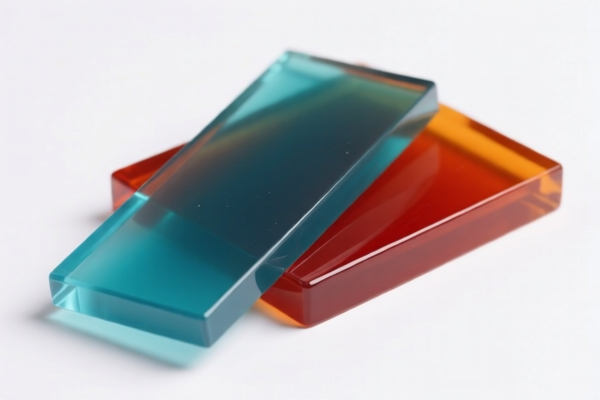
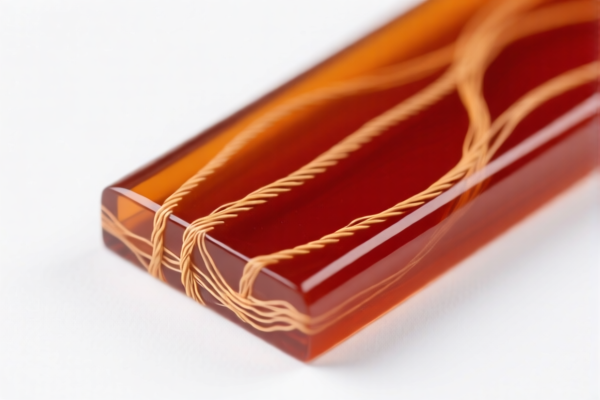
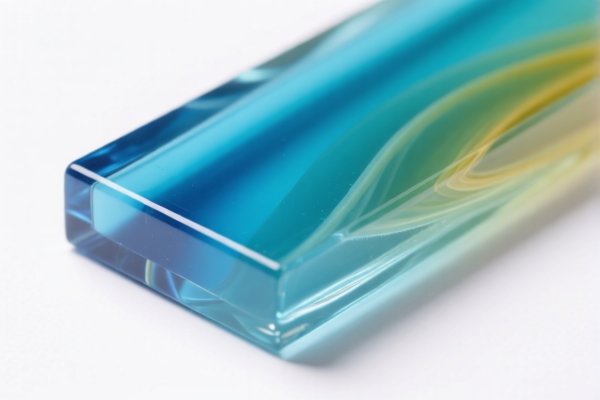

AI Analysis
🎨 Acrylic Resin Conductive Material (导电亚克力树脂材料)
🌐 HS Code Reference & Customs Clearance Guide | 2026 Latest Tariff Analysis | Professional Compliance Strategy
📌 I. Product Definition & Classification: Do You Really Understand "Conductive Acrylic"?
Acrylic Resin Conductive Material is a specialized composite material consisting of an acrylic polymer matrix (PMMA or similar) reinforced or modified with conductive additives such as carbon black, graphite, metal fibers, or conductive polymers. It is used in industries requiring static dissipation, electromagnetic interference (EMI) shielding, or lightweight structural conductivity.
In international trade, it is not classified as a simple plastic sheet or a standalone conductive metal. It is classified as a composite plastic material or conductive plastic compound.
⚠️ Key Distinction:
- If it is a liquid or paste ready for molding/injection → Classified under 3906 (Acrylic Polymers in Primary Forms).
- If it is a solid block, sheet, or pellet (semi-finished) → Still generally 3906, unless significantly altered by non-acrylic components.
- If it is a finished article (e.g., a conductive box, sheet used as a finished component) → May fall under 3926 (Other Articles of Plastics) or 8536 (if functioning as an electrical component).
📦 II. HS Code Classification Details (2026 Latest Tariff Authority Match)
| HS Code | Product Description | Application Scenario | Is It a Primary Form? |
|---|---|---|---|
3906.10.00.00 |
Acrylic polymers in primary forms, whether or not cross-linked (e.g., PMMA) | Raw acrylic resin, including conductive additives mixed into resin before molding | ✅ Yes (Liquid/Powder/Pellet) |
3906.90.00.00 |
Other acrylic polymers in primary forms | Other acrylic resins (e.g., copolymers) in primary forms | ✅ Yes |
3926.90.97.00 |
Other articles of plastics and articles of other materials of heading 3901 to 3914 | Finished conductive acrylic sheets, boxes, or parts (non-electrical specific function) | ❌ No (Finished Article) |
8536.90.00.00 |
Other equipment for switching or protecting electrical circuits | If the material is part of a specific electrical switch housing or EMI shield component | ✅ No (Electrical Part) |
🔍 Critical Note:
- Most common classification:3906.10.00.00for raw conductive acrylic pellets/resin.
- Finished goods: If sold as a "conductive acrylic sheet" for static dissipation, some customs authorities may classify it as3926.90.97.00.
- Do NOT classify under3814(Prepared Paints) or8545(Graphite Electrodes) unless it’s a specific industrial electrode.
💰 III. 2026 Latest Tariff Rate Details (US Market Focus)
✅ Applicable Country: United States (US)
✅ Country of Origin: China (CN)
✅ Effective Date: From November 10, 2025 (including subsequent imports)
🎯 1. 3906.10.00.00 —— Acrylic Polymers in Primary Forms (Conductive Additives Included)
| Item | Details |
|---|---|
| Base Tariff Rate | 5.7% (ad valorem) |
| USITC Supplementary Rate | +25% (under USITC Footnote 9903.88.01) |
| IEEPA Supplementary Rate | +10% (for China/HK products, effective Nov 10, 2025) |
| Total Tariff Rate | 40.7% |
| Tax Calculation | CIF Value × 40.7% |
| De Minimis Eligibility | ❌ Not Eligible (deny_de_minimis) |
| Legal Basis Path | IEEPA:9903.01.25 → IEEPA:9903.01.24 → USITC:3906.10.00.00 → FOOTNOTE:9903.88.01 |
📌 Explanation:
- The 25% USITC tariff applies under Section 301 due to trade tensions.
- The 10% IEEPA tariff is an additional penalty on Chinese-origin goods.
- Total burden: 40.7% — this is a high-cost category. Raw material imports face heavy taxes.
🎯 2. 3926.90.97.00 —— Other Articles of Plastics (Finished Conductive Acrylic Sheets/Parts)
| Item | Details |
|---|---|
| Base Tariff Rate | 5.7% (ad valorem) |
| USITC Supplementary Rate | +25% |
| IEEPA Supplementary Rate | +10% |
| Total Tariff Rate | 40.7% |
| Tax Calculation | CIF Value × 40.7% |
| De Minimis Eligibility | ❌ Not Eligible |
| Legal Basis Path | Same as above |
📌 Note:
- Even if finished as a sheet or part, if it’s still considered a "plastic article," the same high tariffs apply.
- No tariff reduction for being "conductive" or "anti-static."
🛠️ IV. Customs Clearance Practical Advice (Pitfall Avoidance Guide)
✅ 1. Document Checklist (All Required)
| Document | Required? | Description |
|---|---|---|
| ✅ Product Specification Sheet | ✔️ | Must specify: Polymer type (PMMA/Copolymer), Conductive additive type (%), Resistivity (Ω/cm), Physical form (Pellet/Sheet/Liquid) |
| ✅ MSDS (Material Safety Data Sheet) | ✔️ | Required for chemical handling |
| ✅ Third-Party Test Report | ✔️ | Resistivity test, UL94 flammability rating, TGA/DSC analysis |
| ✅ Commercial Invoice | ✔️ | Clearly state: "Acrylic Resin with Conductive Additives, HS Code 3906.10.00.00" |
| ✅ Packing List | ✔️ | Show net/gross weight, package count |
| ✅ Certificate of Origin (CO) | ✔️ | If non-China origin, apply for preferential tariff |
✅ 2. Declaration Tips (Key Mnemonic)
🔥 “Raw Form is 3906, Finished is 3926, Conductive Doesn’t Help, Tariff is 40%!”
| Scenario | Correct Declaration | Wrong Practice |
|---|---|---|
| Acrylic pellets with carbon black | 3906.10.00.00 |
Misdeclare as "Carbon Black" (2803.00.00.00) → Higher tax |
| Conductive acrylic sheet for static dissipation | 3926.90.97.00 |
Misdeclare as "Electrical Part" (8536) → Wrong classification |
| Liquid acrylic resin conductive coating | 3906.10.00.00 |
Misdeclare as "Paint" (3208) → Different tax rate |
| Finished conductive acrylic box | 3926.90.97.00 |
Split into parts → Multiple high taxes |
✅ 3. Special Case Handling
| Situation | Handling Advice |
|---|---|
| OEM Custom Conductive Acrylic | Provide customer design + material composition sheet to avoid "generic" classification disputes |
| High Conductivity (>10^3 Ω) | If it functions as an electrical conductor, consider 8545 (Graphite Electrodes) — but only if specifically designed for electrodes |
| EMI Shielding Sheets | Declare as "Plastic Articles" (3926) with functional description, not "Electrical Equipment" |
| Imported from Vietnam/Mexico | Apply for IEEPA Exemption if origin is proven → Tax drops to 5.7% |
🌍 V. Global Market Comparison (2026 Latest)
| Country/Region | Recommended HS Code | Tariff (China Origin) | Certification Requirement | Notes |
|---|---|---|---|---|
| 🇺🇸 USA | 3906.10.00.00 |
40.7% | TSCA + RoHS | High tariff due to 301 + IEEPA |
| 🇨🇳 China | 3906.10.00.00 |
5.7% | CCC (if electrical) | No additional surcharge |
| 🇪🇺 EU | 3906.10.00.00 |
0% (if GSP) | REACH + RoHS | No additional surcharge |
| 🇦🇺 Australia | 3906.10.00.00 |
5% | RCM | No surcharge |
| 🇯🇵 Japan | 3906.10.00.00 |
0% | PSE | No surcharge |
📌 Conclusion:
- USA is the only market with high surcharges on Chinese-made acrylic conductive materials.
- EU, Japan, and Australia have minimal or no additional tariffs.
- Cost Optimization: Consider sourcing from or manufacturing in Vietnam, Mexico, or Thailand to bypass IEEPA penalties.
📌 VI. Common Errors & Pitfalls (Blood Lessons)
❌ Error 1: Declaring conductive acrylic as "Carbon Black" (2803.00.00.00)
👉 Consequence: Higher tariff (7.5% + 25% = 32.5%), plus misdeclaration fine.
❌ Error 2: Declaring finished conductive sheet as "Electrical Component" (8536)
👉 Consequence: Wrong classification → Delayed clearance, possible seizure.
❌ Error 3: Omitting resistivity data in declaration
👉 Consequence: Customs may reclassify to higher-tax category due to uncertainty.
❌ Error 4: Using "Acrylic Sheet" without specifying "Conductive"
👉 Consequence: Under-declaration risk if actual product is specialized.
✅ Correct Practice:
"Acrylic Polymer Resin (PMMA) with Carbon Black Conductive Additive, Primary Form (Pellets), Resistivity 10^5 Ω·cm, HS Code 3906.10.00.00, TSCA Compliant"
🎯 VII. Conclusion: Professional Declaration, Save Cost, Avoid Risk!
🎯 Remember the Mnemonic:
🔹 "Raw Acrylic is 3906, Finished is 3926, Conductive Doesn’t Change Tariff, 40% is the Price!"
🔹 "HS Code Determines Fate, Tax Difference is Huge, Declaration Error Costs Thousands!"
📌 Pro Tip:
If your conductive acrylic material is originating from Vietnam, Mexico, Thailand, or Malaysia, you can apply for IEEPA Exemption, reducing the tariff to 5.7%.
Recommend applying for an Advance Ruling before shipment to avoid customs disputes.
📣 Take Action Now:
📞 Contact a Professional Customs Broker + Provide Product Specs + Apply for HS Code Advance Ruling
🚀 Let your Conductive Acrylic Material Clear Customs Smoothly, Export Efficiently, and Maximize Profit!
✨ Professional Clearance Starts with Accurate Classification!
💼 Every Cent of Your Cost Deserves Precise Calculation!
Customer Reviews
About HS Code Classification
The Harmonized System (HS) is an internationally standardized nomenclature developed by the World Customs Organization (WCO) to classify traded products. Over 200 countries use the HS system as the basis for customs tariffs, trade statistics, and import/export regulations.
Each HS code follows a hierarchical structure:
- Chapter (2 digits) — Broad category of goods (e.g., Chapter 84: Machinery and Mechanical Appliances)
- Heading (4 digits) — More specific grouping within the chapter
- Subheading (6 digits) — Internationally standardized breakdown, used by all WCO member countries
- National subdivisions (8-10 digits) — Country-specific extensions for further classification, such as US HTSUS 10-digit codes
Correct HS code classification is essential for smooth customs clearance, accurate duty payment, and compliance with trade regulations. Misclassification can lead to customs delays, overpayment of duties, or penalties.
When importing from CN to US, the applicable tariff rates may include:
- Most-Favored-Nation (MFN) rate — The standard duty rate applied to WTO members
- General rate — Applied to countries without trade agreements
- Trade remedy duties — Additional tariffs such as Section 301 (anti-dumping), Section 232 (national security), or countervailing duties
The information provided on this page is for reference purposes only. For official classification, please consult with your local customs authority or a licensed customs broker.