Acrylic Resin Papermaking Material
CN → US| HS Code | Tariff Rate | Origin | Destination | Doc |
|---|---|---|---|---|
| 3920511000 | 41.0% | CN | US | Official Doc |
| 3923900080 | 38.0% | CN | US | Official Doc |
| 3923109000 | 38.0% | CN | US | Official Doc |
| 3920515090 | 41.5% | CN | US | Official Doc |
Product Images
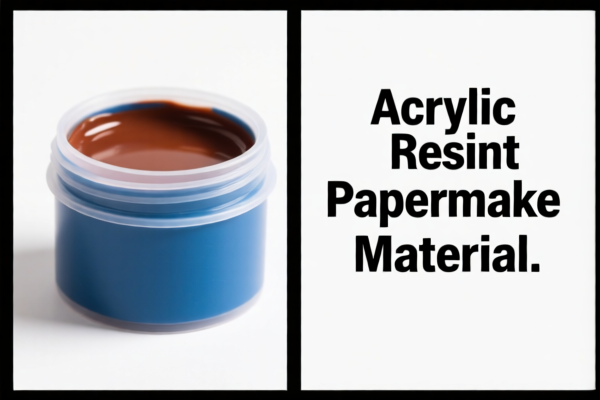
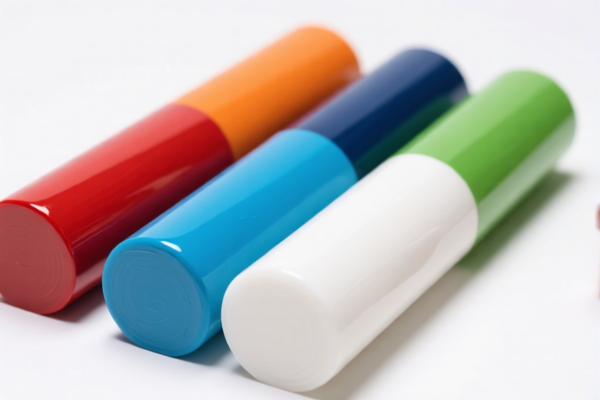
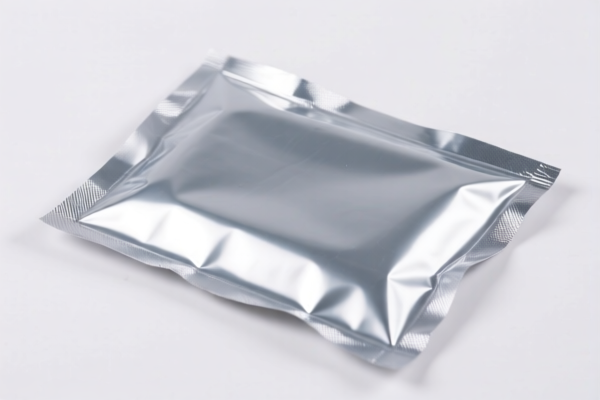

AI Analysis
🏭 Acrylic Resin Papermaking Material (Acrylic Resin Packaging Materials)
🌐 HS Code Reference & Customs Clearance Guide | 2026 Latest Tariff Analysis | Professional Clearance Strategy
📌 I. Product Definition & Classification: Do You Really Understand "Acrylic Resin Packaging"?
Acrylic resin, chemically known as Polymethyl Methacrylate (PMMA), is a transparent thermoplastic often referred to as "organic glass." In international trade, when classified as papermaking or packaging materials, it falls primarily under Chapter 39 (Plastics and Articles Thereof).
Classification depends strictly on the physical form (film/sheet vs. other packaging items) and specific usage:
- Sheets/Films/Plates (PMMA): If the acrylic is in the form of films, sheets, plates, or foils (non-foamed, non-reinforced), it is classified under Heading 3920.
- Packaging Articles (Other): If the acrylic is formed into boxes, containers, or other packaging accessories that do not fit the specific "film/sheet" description, it is classified under Heading 3923 ("Articles for the conveyance or packing of goods").
⚠️ Key Distinction Point:
- If it is a raw sheet/film used for manufacturing or direct packaging → HS Code 3920 Series
- If it is a finished container/box/bag made of plastic/acrylic → HS Code 3923 Series
📦 II. HS Code Classification Details (2026 Latest Tariff Authority Comparison)
| HS Code | Product Description | Applicable Scenario | Form/Type |
|---|---|---|---|
3920.51.10.00 |
Acrylic resin (PMMA) packaging material, non-foamed, non-reinforced | Raw sheets/films for packaging | ✅ Film/Sheet |
3923.90.00.80 |
Acrylic resin packaging articles, other | Finished packaging items (boxes, cases) | ✅ Finished Article |
3923.10.90.00 |
Acrylic resin packaging articles for goods transport | Packing goods for transport (bags/containers) | ✅ Transport Packaging |
3920.51.50.90 |
Acrylic resin (PMMA) sheets/films/plates (other) | Specific sheet/plate variants not covered by .10 | ✅ Sheet/Plate |
🔍 Key Reminder:
- PMMA (Acrylic) is a specific plastic. Ensure the material composition is confirmed as Polymethyl Methacrylate.
- If the material is "other plastics" (not PMMA) but used for packaging, it might fall under different subheadings in 3920 or 3923, but for Acrylic/PMMA, the codes above are the primary references.
- 3923.10 and 3923.90 are often used for finished packaging articles, whereas 3920 is for the plastic material itself (sheets/films).
💰 III. 2026 Latest Tariff Rate Details (Including Surcharges & Policy Add-ons)
✅ Applicable Country: United States (US)
✅ Origin: China (CN)
✅ Effective Time: 2025/2026 (Current Trade War Era)
🎯 1. 3920.51.10.00 —— Acrylic Resin Packaging Material (Sheets/Films)
| Item | Content |
|---|---|
| Base Duty Rate | 6.0% |
| Section 301 Surcharge | +25.0% |
| 122 Article Surcharge | +10.0% |
| Total Tax Rate | 41.0% |
| Tax Calculation | CIF Value × 41.0% |
| De Minimis Eligibility | ❌ Not Eligible (High tariff threshold blocks $800 exemption for commercial shipments) |
| Legal Basis Path | HTSUS:3920.51.10.00 → USITC Footnote 301 → 122 Article Policy |
📌 Explanation:
- Base 6%: Standard MFN (Most Favored Nation) rate for certain plastic sheets.
- 25% (Section 301): Retaliatory tariff on Chinese goods under Trade Act Section 301.
- 10% (122 Article): Additional surcharge based on specific administrative orders or trade policies targeting plastic/packaging materials from China.
- Total 41% is a significant cost factor. Must be factored into landed cost.
🎯 2. 3923.90.00.80 —— Acrylic Resin Packaging Articles (Other)
| Item | Content |
|---|---|
| Base Duty Rate | 3.0% |
| Section 301 Surcharge | +25.0% |
| 122 Article Surcharge | +10.0% |
| Total Tax Rate | 38.0% |
| Tax Calculation | CIF Value × 38.0% |
| De Minimis Eligibility | ❌ Not Eligible |
| Legal Basis Path | HTSUS:3923.90.00.80 → USITC Footnote 301 → 122 Article Policy |
📌 Note:
- Slightly lower base duty (3%) compared to 3920 (6%), but same surcharges.
- Total 38% is still high.
- This code is for finished packaging goods (e.g., acrylic display boxes, storage cases).
🎯 3. 3923.10.90.00 —— Acrylic Resin Transport Packaging
| Item | Content |
|---|---|
| Base Duty Rate | 3.0% |
| Section 301 Surcharge | +25.0% |
| 122 Article Surcharge | +10.0% |
| Total Tax Rate | 38.0% |
| Tax Calculation | CIF Value × 38.0% |
| De Minimis Eligibility | ❌ Not Eligible |
| Legal Basis Path | HTSUS:3923.10.90.00 → USITC Footnote 301 → 122 Article Policy |
📌 Note:
- Applies to packaging articles specifically for transport/conveyance (e.g., large acrylic crates, transport containers).
- Tax rate identical to3923.90.00.80.
🎯 4. 3920.51.50.90 —— Acrylic Resin Sheets/Plates/Films (Other)
| Item | Content |
|---|---|
| Base Duty Rate | 6.5% |
| Section 301 Surcharge | +25.0% |
| 122 Article Surcharge | +10.0% |
| Total Tax Rate | 41.5% |
| Tax Calculation | CIF Value × 41.5% |
| De Minimis Eligibility | ❌ Not Eligible |
| Legal Basis Path | HTSUS:3920.51.50.90 → USITC Footnote 301 → 122 Article Policy |
📌 Note:
- Highest total rate at 41.5%.
- Covers acrylic sheets/plates that do not fit the specific description of3920.51.10.00.
- Use only if3920.51.10.00is not applicable due to specific physical characteristics.
🛠️ IV. Customs Clearance Practical Advice (Real-World Pitfall Avoidance)
✅ 1. Documentation Checklist (Essential)
| Document | Required | Explanation |
|---|---|---|
| ✅ Product Specification Sheet | ✔️ | Must explicitly state: "Acrylic Resin / PMMA", "Non-foamed", "Non-reinforced". |
| ✅ Material Safety Data Sheet (MSDS) | ✔️ | To confirm chemical composition (PMMA). |
| ✅ Commercial Invoice | ✔️ | Must clearly describe the item (e.g., "Acrylic Sheets" vs. "Acrylic Display Box"). |
| ✅ Packing List | ✔️ | Details weight, dimensions, and quantity. |
| ✅ Certificate of Origin (CO) | ✔️ | To prove origin (China). Note: No preferential tariff under current US-China trade status. |
| ✅ Photos of Product | ✔️ | Show form factor (Sheet vs. Finished Box) to justify HS Code choice. |
✅ 2. Declaration Tips (Key Mantra)
🔥 “Form Determines Code: Sheets go to 3920, Boxes go to 3923!”
| Scenario | Correct HS Code | Consequence of Error |
|---|---|---|
| Acrylic Sheets/Films | 3920.51.10.00 or 3920.51.50.90 |
If misdeclared as packaging articles → Potential penalty for misclassification. |
| Acrylic Display Boxes/Cases | 3923.90.00.80 |
If misdeclared as sheets → Customs may reject or reclassify. |
| Acrylic Transport Crates | 3923.10.90.00 |
Ensure it is for "transport/packing of goods." |
| Foamed Acrylic | NOT Listed Here | Foamed plastics fall under 3921. Do not use 3920 codes! |
✅ 3. Special Handling for "Papermaking Material"
⚠️ Clarification: The term "Papermaking Material" in the user input might be a mistranslation or specific industry jargon. In HS Code terms: - If it is used to make paper (e.g., sizing agents, chemicals) → It would fall under Chapter 35 or 38 (Chemicals), NOT Chapter 39. - If it is used as packaging paper/plastic substitute (i.e., the acrylic is the packaging material) → Then Chapter 39 applies as listed above. - Assumption for this guide: The data provided (
3920,3923) clearly indicates Plastic/Acrylic Packaging Materials, not chemical papermaking additives. Ensure you are not misclassifying chemical additives as plastic sheets.
🌍 V. Global Market Comparison (2026)
| Country/Region | Recommended HS Code | Tariff (China Origin) | Notes |
|---|---|---|---|
| 🇺🇸 United States | 3920.51.10.00 / 3923.90.00.80 |
38% - 41.5% | High surcharges (301 + 122 Article). Critical Cost Driver. |
| 🇨🇳 China | 3920.51.10.00 / 3923.90.00.80 |
~5% - 6% | Standard import duty for Chinese materials. |
| 🇪🇺 European Union | 3920.51.10 / 3923.90 |
~6.5% | No Section 301 surcharges. Lower total cost. |
| 🇬🇧 United Kingdom | 3920.51.10 / 3923.90 |
~6.5% | Post-Brexit, generally aligned with EU duties. |
📌 Conclusion:
- US Market is the most expensive due to political tariffs.
- EU/UK/China markets are significantly more favorable.
- Strategy: If shipping to the US, consider value-added processing elsewhere or supplier diversification to mitigate 38-41% tariff impact.
📌 VI. Common Mistakes & Pitfall Guide (Lessons Learned)
❌ Mistake 1: Declaring Foamed Acrylic under 3920.51.10.00
👉 Result: Customs will reject; foamed plastics belong in 3921. Tax rate may differ, but penalty for misclassification is severe.
❌ Mistake 2: Calling it "Paper Material" when it is "Acrylic Sheets"
👉 Result: Confusion between Chapter 35/38 (Chemicals) and Chapter 39 (Plastics). Always specify "Acrylic/PMMA Sheets".
❌ Mistake 3: Ignoring 122 Article Surcharge
👉 Result: Underpaying taxes. The 10% surcharge is mandatory for many Chinese plastic imports to the US. Total cost calculation must include 41%+.
❌ Mistake 4: Confusing Sheets with Finished Boxes
👉 Result: Misclassification. 3920 is for raw material form; 3923 is for article form. Use correct HS to avoid delays.
✅ Correct Approach:
"Acrylic (PMMA) Sheets, Non-foamed, Non-reinforced, for Packaging" → 3920.51.10.00
"Acrylic Display Box, for Retail Packaging" → 3923.90.00.80
🎯 VII. Conclusion: Professional Declaration, Save Money, Smooth Clearance!
🎯 Remember the Mantra:
🔹 "Sheets = 3920 (41%), Boxes = 3923 (38%)!"
🔹 "301 + 122 Article = Mandatory Surcharges!"
🔹 "Foamed = 3921, NOT 3920!"
📌 Pro Tip:
- Always request a Pre-Ruling (Advance Ruling) from US Customs and Border Protection (CBP) if the form is ambiguous.
- For US imports, factor in 41% total tax into your pricing model.
- Ensure all documents explicitly state "PMMA" to avoid classification disputes with "Other Plastics."
📣 Immediate Action:
📞 Consult your customs broker with product photos and specs.
🚀 Accurate HS Code classification is the key to controlling landed costs in the current trade environment.
✨ Professional Customs Clearance Starts with Accurate Classification!
💼 Every percent of tax saved is pure profit!
Customer Reviews
About HS Code Classification
The Harmonized System (HS) is an internationally standardized nomenclature developed by the World Customs Organization (WCO) to classify traded products. Over 200 countries use the HS system as the basis for customs tariffs, trade statistics, and import/export regulations.
Each HS code follows a hierarchical structure:
- Chapter (2 digits) — Broad category of goods (e.g., Chapter 84: Machinery and Mechanical Appliances)
- Heading (4 digits) — More specific grouping within the chapter
- Subheading (6 digits) — Internationally standardized breakdown, used by all WCO member countries
- National subdivisions (8-10 digits) — Country-specific extensions for further classification, such as US HTSUS 10-digit codes
Correct HS code classification is essential for smooth customs clearance, accurate duty payment, and compliance with trade regulations. Misclassification can lead to customs delays, overpayment of duties, or penalties.
When importing from CN to US, the applicable tariff rates may include:
- Most-Favored-Nation (MFN) rate — The standard duty rate applied to WTO members
- General rate — Applied to countries without trade agreements
- Trade remedy duties — Additional tariffs such as Section 301 (anti-dumping), Section 232 (national security), or countervailing duties
The information provided on this page is for reference purposes only. For official classification, please consult with your local customs authority or a licensed customs broker.