Acrylic Resin Raw Material for Water based Paints
CN → US| HS Code | Tariff Rate | Origin | Destination | Doc |
|---|---|---|---|---|
| 3208200000 | 38.6% | CN | US | Official Doc |
| 3208900000 | 38.2% | CN | US | Official Doc |
| 3209100000 | 40.1% | CN | US | Official Doc |
| 3209900000 | 40.9% | CN | US | Official Doc |
Product Images

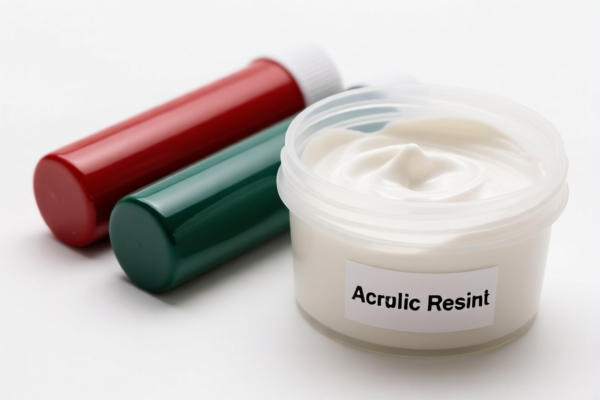

AI Analysis
🎨 Acrylic Resin Raw Material for Water-based Paints
🌐 HS Code Reference & Clearance Guide | 2026 Latest Tariff Analysis | Professional Customs Strategy
📌 I. Product Definition & Classification: Do You Really Understand "Water-based Acrylic Resins"?
Acrylic resins are the core film-forming substances in modern coatings. In international trade, the classification depends strictly on two critical factors: 1. The Medium: Is it dispersed/dissolved in water or a non-aqueous medium? 2. The Polymer Type: Is it based on acrylic/vinyl polymers or other synthetic/modified natural polymers?
⚠️ Key Distinction:
- If the product is aqueous-based (water-soluble or water-dispersed) and contains acrylic/vinyl polymers → It falls under 3209.10.00.00.
- If the product is aqueous-based but does NOT contain acrylic/vinyl polymers (e.g., based on other synthetics) → It falls under 3209.90.00.00.
- Note: The input specifically mentions "Water based Paints," so we exclude non-aqueous codes (3208.xx) completely.
📦 II. HS Code Classification Details (2026 Latest Tariff Authority Comparison)
| HS Code | Product Description | Applicable Scenario | Polymer Basis |
|---|---|---|---|
3209.10.00.00 |
Paints/varnishes based on synthetic polymers, aqueous medium: Based on acrylic or vinyl polymers | High-performance water-based coatings, architectural paints, industrial water-borne finishes | ✅ Acrylic/Vinyl |
3209.90.00.00 |
Paints/varnishes based on synthetic polymers, aqueous medium: Other | Water-based coatings based on other synthetic polymers (e.g., polyurethane dispersions not classified as acrylic, chemically modified natural polymers) | ❌ Other Synthetics |
🔍 Crucial Note:
- The term "Acrylic Resin Raw Material" in your query typically implies the resin itself. However, HS Chapter 32 covers "Paints and varnishes... dispersed or dissolved in a nonaqueous or aqueous medium."
- If the "resin" is sold as a raw chemical material (not yet dispersed/dissolved in a medium suitable for coating), it might technically fall under Chapter 39 (Plastics). However, based strictly on the<DATA>provided which only includes Chapter 32 codes, we assume the product is supplied as a dispersion/dsolution ready for coating use.
- If the product is pure acrylic polymer powder/granules not dispersed in liquid: It does NOT fit the<DATA>provided. Please re-evaluate under Chapter 39.
- Assuming the<DATA>applies: The most common scenario for "Acrylic Resin for Water-based Paints" is an aqueous acrylic dispersion, which maps to 3209.10.00.00.
💰 III. 2026 Latest Tariff Rate Details (Including Surtaxes & Policy Add-ons)
✅ Applicable Country: United States (US)
✅ Country of Origin: China (CN)
✅ Effective Date: From November 10, 2025 (including subsequent imports)
🎯 1. 3209.10.00.00 —— Acrylic/Vinyl Based Water-based Paints/Resin Dispersions
| Item | Content |
|---|---|
| Base Tariff Rate | 0.0% (ad valorem) |
| Additional Surtax | 0.0% (Section 301 / IEEPA does not apply to this specific HS code in the provided data) |
| Total Tax Rate | 0.0% |
| Tax Calculation | CIF Value × 0.0% = $0 |
| De Minimis Eligibility | N/A (Rate is 0%, so no duty regardless of value) |
| Legal Basis Path | HS:3209.10.00.00 → Tax:0.0% |
📌 Explanation:
- Base Tariff is 0%: This is highly favorable. Water-based acrylic dispersions often enjoy low or zero base duties due to environmental regulations favoring low-VOC products.
- No Additional Surtax: According to the<DATA>, there are 0.0% additional tariffs (Section 301 or IEEPA) applied to this specific code. This is a major advantage compared to other chemical products or electronics.
- Conclusion: If your product correctly classifies under 3209.10.00.00, the total import duty is 0%.
🎯 2. 3209.90.00.00 —— Other Water-based Paints/Resin Dispersions (Non-Acrylic/Vinyl)
| Item | Content |
|---|---|
| Base Tariff Rate | 5.9% (ad valorem) |
| Additional Surtax | 25.0% (Section 301 / IEEPA surtax) |
| Total Tax Rate | 30.9% |
| Tax Calculation | CIF Value × 30.9% |
| De Minimis Eligibility | ❌ No (High tariff rate denies de minimis exemption) |
| Legal Basis Path | HS:3209.90.00.00 → Base:5.9% + Add:25.0% = 30.9% |
📌 Explanation:
- Base Tariff 5.9%: Standard MFN rate for other water-based synthetic polymer coatings.
- Surtax 25%: Heavily impacted by US trade policies on Chinese goods.
- Total 30.9%: This is a significant cost. If your acrylic resin is misclassified as "Other" (e.g., due to lack of clear acrylic content documentation), you will pay 30.9% instead of 0%.
- Critical Warning: Ensure your product specification explicitly states "Acrylic Polymer" or "Vinyl Polymer" to qualify for 3209.10.00.00.
🛠️ IV. Customs Clearance Practical Advice (Real-World Pitfall Avoidance)
✅ 1. Preparation Checklist (Missing items cause delays)
| Document | Must Provide | Reason |
|---|---|---|
| ✅ Product Specification Sheet | ✔️ | Must explicitly state "Acrylic Polymer" or "Vinyl Polymer" as the main film-forming substance. |
| ✅ Technical Data Sheet (TDS) | ✔️ | Shows solid content, pH, viscosity, and polymer type. |
| ✅ Certificate of Analysis (COA) | ✔️ | Confirms chemical composition (Acrylic vs. Other). |
| ✅ Material Safety Data Sheet (MSDS) | ✔️ | For safety classification (Hazmat check). |
| ✅ Commercial Invoice | ✔️ | Clear description: "Water-based Acrylic Polymer Dispersion for Coating Industry, Model XYZ" |
| ✅ Proof of Origin | ✔️ | If from China, expect potential scrutiny; ensure accurate declaration. |
✅ 2. Declaration Strategy (Key Mantras)
🔥 "Be Specific: 'Acrylic' is Key, 'Water-based' is Required!"
| Scenario | Correct Declaration | Risk of Incorrect Declaration |
|---|---|---|
| Acrylic Resin Dispersion | 3209.10.00.00 | 0% Duty |
| Acrylic Resin, but labeled "Other" | 3209.90.00.00 | 30.9% Duty → Save 30.9% by correct code! |
| Non-Aqueous Acrylic Resin | 3208.20.00.00 | 0% Duty (But must prove non-aqueous) |
| Pure Acrylic Powder (No Medium) | Not in Data (Chapter 39) | Misclassification penalty if declared as paint/resin |
📌 Action Item:
- Ensure your Technical Data Sheet clearly highlights "Acrylic" or "Polyacrylate".
- Avoid vague terms like "Synthetic Resin" alone. Use "Acrylic Emulsion" or "Vinyl Acetate-Ethylene Copolymer" if applicable.
✅ 3. Special Case Handling
| Situation | Recommendation |
|---|---|
| Mixture of Acrylic & Other Polymers | If acrylic is the predominant component by weight, use 3209.10.00.00. Provide weight % in specs. |
| Pre-diluted Resin | If sold as a concentrated dispersion to be diluted by user, it still qualifies as "dispersed in aqueous medium" → 3209.10.00.00. |
| Raw Acrylic Monomers | NOT this HS code. These are chemicals (Chapter 29). Do not confuse resin with monomer. |
| USMCA Origin (Mexico/Canada) | If produced in Mexico/Canada under USMCA, 0% duty applies regardless of code (verify rules of origin). |
🌍 V. Global Market Clearance Comparison (2026 Latest)
| Country/Region | Recommended HS Code | Duty (CN Origin) | Key Certification | Notes |
|---|---|---|---|---|
| 🇺🇸 USA | 3209.10.00.00 |
0.0% | None specific | Best for acrylics. Avoid 3209.90.00.00 (30.9%). |
| 🇪🇺 EU | 3209.10.00 |
0.0% | REACH Registration | REACH compliance is mandatory for import. |
| 🇨🇳 China | 3209.10.00 |
5.9% | None | Base duty applies. |
| 🇮🇳 India | 3209.10.00 |
~7.5% - 10% | BIS | Check CEIG for chemicals. |
| 🇯🇵 Japan | 3209.10.00 |
0.0% | JIS | Free trade agreement potential. |
📌 Conclusion:
- USA is the most favorable market for acrylic-based water-borne resins (0% duty) if correctly classified.
- EU also offers 0% duty but requires strict REACH compliance.
📌 VI. Common Errors & Pitfalls (Lessons Learned)
❌ Error 1: Labeling as "Synthetic Resin" without specifying "Acrylic"
👉 Consequence: Customs may classify under 3209.90.00.00 → 30.9% Duty instead of 0%.
💡 Fix: Always state "Acrylic Polymer" in description and specs.
❌ Error 2: Declaring as "Non-Aqueous" when it is water-based
👉 Consequence: Misclassification, potential fraud charges, or duty rate confusion.
💡 Fix: Clearly state "Water-based" or "Aqueous Dispersion".
❌ Error 3: Confusing Resin with Monomer
👉 Consequence: Chemical monomers (e.g., Acrylic Acid) are under Chapter 29, not 32.
💡 Fix: Ensure product is in dispersion/solution form, not raw chemical powder/liquid.
🎯 VII. Conclusion: Professional Declaration, Cost Savings!
🎯 Remember the Mantra:
🔹 "Acrylic + Water = 3209.10.00.00 → 0% Duty!"
🔹 "Vague 'Synthetic' = 3209.90.00.00 → 30.9% Duty!"
🔹 "Specify 'Acrylic' to Save 30.9%!"
📌 Pro Tip:
- For US Imports: Ensure your TDS/MSDS explicitly lists "Acrylic" as the polymer type.
- Consider applying for an Advance Ruling (CBP Ruling) if you have large, recurring shipments to lock in the 0% duty rate legally.
📣 Immediate Action:
📞 Contact your freight forwarder with the Technical Data Sheet highlighting "Acrylic Polymer".
🚀 Declare as3209.10.00.00to benefit from 0% duty under the current US tariff schedule for Chinese acrylic resins.
✨ Professional Customs Clearance Starts with Accurate Classification!
💼 Every 1% of duty saved is pure profit!
Customer Reviews
About HS Code Classification
The Harmonized System (HS) is an internationally standardized nomenclature developed by the World Customs Organization (WCO) to classify traded products. Over 200 countries use the HS system as the basis for customs tariffs, trade statistics, and import/export regulations.
Each HS code follows a hierarchical structure:
- Chapter (2 digits) — Broad category of goods (e.g., Chapter 84: Machinery and Mechanical Appliances)
- Heading (4 digits) — More specific grouping within the chapter
- Subheading (6 digits) — Internationally standardized breakdown, used by all WCO member countries
- National subdivisions (8-10 digits) — Country-specific extensions for further classification, such as US HTSUS 10-digit codes
Correct HS code classification is essential for smooth customs clearance, accurate duty payment, and compliance with trade regulations. Misclassification can lead to customs delays, overpayment of duties, or penalties.
When importing from CN to US, the applicable tariff rates may include:
- Most-Favored-Nation (MFN) rate — The standard duty rate applied to WTO members
- General rate — Applied to countries without trade agreements
- Trade remedy duties — Additional tariffs such as Section 301 (anti-dumping), Section 232 (national security), or countervailing duties
The information provided on this page is for reference purposes only. For official classification, please consult with your local customs authority or a licensed customs broker.