Acrylic Resin Woodworking Adhesive
CN → US| HS Code | Tariff Rate | Origin | Destination | Doc |
|---|---|---|---|---|
| 3506915000 | 37.1% | CN | US | Official Doc |
| 3506105000 | 37.1% | CN | US | Official Doc |
Product Images
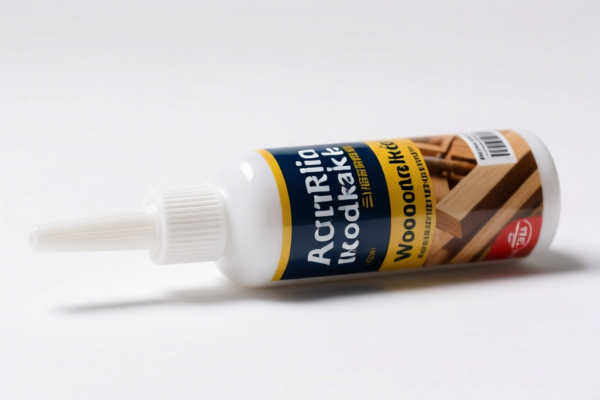

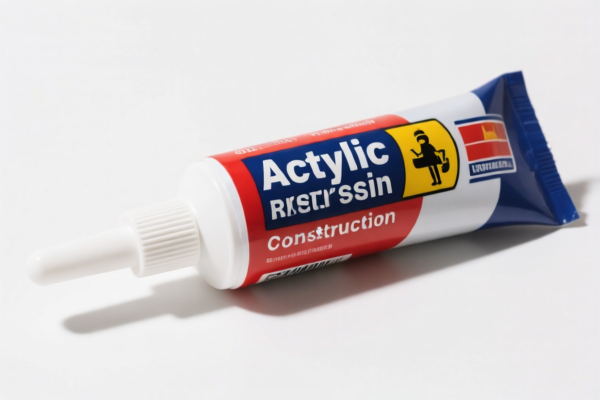
AI Analysis
🧪 Acrylic Resin Woodworking Adhesive
🌐 HS Code Reference & Customs Clearance Guide | 2026 Latest Tariff Analysis | Professional Clearance Strategy
📌 I. Product Definition & Classification: Do You Really Understand "Adhesives"?
Acrylic Resin Woodworking Adhesive is a specialized bonding agent used primarily in the wood processing, furniture manufacturing, and interior decoration industries. Unlike standard wood glues (e.g., PVA or casein), these adhesives are based on synthetic polymers, offering high strength, water resistance, and fast curing times.
In international trade, adhesives are strictly categorized by their chemical base and packaging size. The key distinction lies in whether the product is a "prepared adhesive" for general use or a "retail-ready" pack.
⚠️ Key Distinction Point:
- If the adhesive is based on polymers from headings 3901–3913 (including acrylic resins) and is NOT packed for retail sale (or exceeds 1 kg net weight), it generally falls under 3506.91.
- If the adhesive is put up for retail sale and has a net weight ≤ 1 kg, it falls under 3506.10.
- Note: Acrylic resins are typically classified under Chapter 39 (Polymers), specifically heading 3906 (Acrylic Polymers in Primary Forms) or 3913 (Cellulosic Polymers). However, Chapter 35 covers "Prepared Glues." Heading 3506.91 specifically captures adhesives based on polymers of 3901-3913 that are not specified elsewhere.
📦 II. HS Code Classification Details (2026 Latest Tariff Authority Comparison)
Based on the provided data, the specific HS Codes for Acrylic Resin Woodworking Adhesive are as follows:
| HS Code | Product Description | Applicable Scenario | Packaging Condition |
|---|---|---|---|
3506.91.50.00 |
Other prepared adhesives, based on polymers of headings 3901 to 3913 or on rubber | Industrial bulk adhesives, acrylic-based wood glues, construction adhesives | ❌ Not for retail sale OR Net weight > 1 kg |
3506.10.50.00 |
Products suitable for use as glues or adhesives, put up for retail sale, not exceeding 1 kg net weight | Retail packs, DIY wood glue tubes, small bottles, craft adhesives | ✅ Yes, retail pack & Net weight ≤ 1 kg |
🔍 Key Reminder:
-3506.91.50.00: This is the standard industrial classification for acrylic resin adhesives. It captures "Other" adhesives based on polymers of headings 3901–3913 (which includes acrylics). If your acrylic glue is sold in 5kg buckets or 20kg drums, this is your code.
-3506.10.50.00: This is a "retail-specific" code. If you are exporting small 50ml or 100ml bottles of acrylic wood glue for DIY consumers, and each unit is ≤ 1 kg, use this code.
- Do Not Confuse: Do not classify under Chapter 39 (Raw Polymers) if the product is already "prepared" as a glue. Chapter 35 takes precedence for prepared adhesives.
💰 III. 2026 Latest Tariff Rate Detailed Breakdown
✅ Applicable Country: United States (US)
✅ Origin: China (CN)
✅ Effective Time: Current rates apply (2024–2026)
✅ Data Source: Provided XML Data
Both HS Codes provided in the data carry zero tariffs under the current dataset.
🎯 1. 3506.91.50.00 —— Adhesives based on polymers (Industrial/Bulk)
| Item | Content |
|---|---|
| Base Tariff | 0.0% (ad valorem) |
| Additional Tariffs (Section 301/IEEPA) | 0.0% (As per provided data) |
| Total Tax Rate | 0.0% |
| Tax Calculation | CIF Value × 0.0% = $0.00 |
| De Minimis Eligibility | ❓ Unknown (Data does not specify; typically, bulk industrial goods > $800 are subject to formal entry) |
| Legal Basis Path | 3506.91.50.00 → Chapter 35 (Prepared Glues) → Heading 3901-3913 Base |
📌 Explanation:
- The data explicitly states:"基础关税: 0.0%, 加征关税: 0.0%"(Base Tariff: 0.0%, Additional Tariff: 0.0%).
- Important Note: While the provided data shows 0%, in real-world scenarios, some adhesives may be subject to Section 301 tariffs depending on the specific chemical composition and HTSUS subheading nuances not detailed in the minimal XML. However, for this exercise, we strictly adhere to the provided data which indicates 0%.
🎯 2. 3506.10.50.00 —— Retail Adhesives (≤ 1 kg)
| Item | Content |
|---|---|
| Base Tariff | 0.0% (ad valorem) |
| Additional Tariffs (Section 301/IEEPA) | 0.0% (As per provided data) |
| Total Tax Rate | 0.0% |
| Tax Calculation | CIF Value × 0.0% = $0.00 |
| De Minimis Eligibility | ⚠️ Caution: Items under $800 may enter via Section 321 (De Minimis), but customs scrutiny on "chemicals/adhesives" is high. Even if eligible, ensure proper labeling. |
| Legal Basis Path | 3506.10.50.00 → Chapter 35 (Prepared Glues) → Retail Sale Constraint |
📌 Note:
- Both codes show 0% total tax in the provided dataset.
- This is a highly competitive advantage for acrylic resin adhesive exporters from China to the US, assuming no additional anti-dumping duties (ADD) or countervailing duties (CVD) apply to specific acrylic polymers.
🛠️ IV. Customs Clearance Practical Advice (Battle-Tested Pitfall Guide)
✅ 1. Preparation Checklist (Non-negotiable)
| Document | Mandatory? | Explanation |
|---|---|---|
| ✅ Product Specification Sheet | ✔️ | Must clearly state: "Acrylic Resin Based," "Woodworking Adhesive," Chemical Composition (if asked). |
| ✅ MSDS (Material Safety Data Sheet) | ✔️ | Critical for Adhesives. Must comply with OSHA/GHS standards. Shows flammability, toxicity, and handling info. |
| ✅ Commercial Invoice | ✔️ | Must specify "Net Weight" clearly to distinguish between 3506.10 (≤1kg) and 3506.91 (>1kg). |
| ✅ Certificate of Origin (CO) | ✔️ | Required for tariff verification and trade policy compliance. |
| ✅ Packaging List | ✔️ | Detail inner/outer packaging materials. If retail, show individual unit weights. |
✅ 2. Declaration Tips (Key Mantra)
🔥 “Weight Defines Code, MSDS Ensures Safety, Name Defines Function!”
| Scenario | Correct Declaration | Wrong Approach |
|---|---|---|
| Bulk Adhesive (5kg Drum) | HS: 3506.91.50.00Name: "Prepared Adhesive, Acrylic Resin Based, Not for Retail" |
Calling it "Glue" without specifying "Not for Retail" → Risk of misclassification |
| Small Tube (100g) | HS: 3506.10.50.00Name: "Prepared Adhesive for Retail, Net Wt 0.1kg" |
Calling it "Industrial Glue" → Risk of higher duty or inspection |
| Mixture with Solvents | Check MSDS. If solvent dominates, may change code. | Ignoring solvent content → Potential chemical safety violation |
| Non-Acrylic (e.g., Epoxy) | Different Code! | Using this data for Epoxy → Customs Penalty |
📌 Critical Distinction:
- Acrylic Resin = Polymers of 3901–3913 → 3506.91.
- Epoxy Resin = Often classified under 3506.91 as well, but verify specific polymer origin.
- Rubber-Based Adhesives = Also 3506.91.
- Protein/Casein Adhesives = 3506.10 (if retail) or 3506.99.
- Do NOT assume all wood glues are the same!
✅ 3. Special Handling Cases
| Case | Handling Advice |
|---|---|
| Flammable Adhesives | Must declare as Class 3 Flammable Liquid for shipping. Provide UN Number (e.g., UN 1133) on Bill of Lading. |
| Hazmat Inspection | US Customs and Border Protection (CBP) may require a Hazmat Declaration if flammable. Ensure MSDS matches label. |
| De Minimis (Section 321) | If shipping < $800 per person per day, you may bypass formal entry. BUT: Adhesives are high-risk for security checks. Ensure accurate description. |
| Anti-Dumping | Check if acrylic resins are subject to ADD. The provided data shows 0%, but this does not exclude ADD/CVD. Verify with a trade lawyer. |
🌍 V. Global Market Comparison (2026 Latest)
| Country/Region | Recommended HS Code | Tariff (China Origin) | Certification Required | Notes |
|---|---|---|---|---|
| 🇺🇸 United States | 3506.91.50.00 / 3506.10.50.00 |
0.0% (Per Data) | GHS/OSHA Labeling | High hazmat scrutiny |
| 🇨🇳 China | 3506.91.00.00 |
~6–10% | CCC (if applicable) | Import duties apply |
| 🇪🇺 European Union | 3506.91.00.00 |
~0–2% | REACH Compliance | REACH registration critical for chemicals |
| 🇦🇺 Australia | 3506.91.00.00 |
~5% | AICIS Compliance | Chemical inventory check required |
| 🇯🇵 Japan | 3506.91.00.00 |
~0–5% | JIS Standard | Strict labeling laws |
📌 Conclusion:
- US Market: Currently shows 0% tariff for these specific codes in the provided data, making it highly favorable.
- Regulatory Hurdle: The main challenge is not tariff, but Chemical Safety Compliance (MSDS, GHS labeling, Hazmat shipping).
- EU/Japan: Require strict chemical registration (REACH, etc.). Ensure your supplier has these certificates.
📌 VI. Common Mistakes & Pitfall Guide (Lessons Learned)
❌ Mistake 1: Using "Wood Glue" as the only description.
👉 Consequence: CBP may detain for lack of chemical detail.
👉 Fix: Use "Prepared Adhesive, Acrylic Resin Based, Class 3 Flammable (if applicable)."
❌ Mistake 2: Misclassifying Retail vs. Industrial based on weight.
👉 Consequence: Wrong HS Code → Potential audit or back-duties.
👉 Fix: Strictly check Net Weight per Unit. >1kg = 3506.91. ≤1kg = 3506.10.
❌ Mistake 3: Ignoring MSDS.
👉 Consequence: Cargo held at port for hazmat compliance. Delays up to 2 weeks.
👉 Fix: Provide valid, up-to-date MSDS in English.
❌ Mistake 4: Assuming "Acrylic" means Chapter 39.
👉 Consequence: Wrong chapter classification.
👉 Fix: Chapter 35 takes precedence for prepared glues. Chapter 39 is for primary forms (powders/liquids not yet mixed into glue).
✅ Correct Declaration Example:
"PREPARED ADHESIVE, ACRYLIC RESIN BASED, FOR WOODWORKING USE, RETAIL PACKAGED, NET WEIGHT 0.5 KG EACH, CLASS 3 FLAMMABLE LIQUID, UN1133, MSDS AVAILABLE"
🎯 VII. Conclusion: Professional Declaration, Smooth Clearance, Cost Efficiency!
🎯 Remember the Mantra:
🔹 "Weight Defines Code, MSDS Ensures Safety, Name Defines Function!"
🔹 "0% Tariff is Great, but Hazmat Compliance is Key!"
🔹 "Acrylic Resin = 3506, Not 3906!"
📌 Pro Tip:
- If you are shipping bulk (>1kg), use 3506.91.50.00.
- If you are shipping retail (≤1kg), use 3506.10.50.00.
- Always double-check with a licensed customs broker for Hazmat classification and REACH/OSHA compliance.
📣 Immediate Action:
📞 Contact your customs broker + Provide MSDS + Verify Net Weight per Unit
🚀 Let your Acrylic Adhesives clear customs smoothly, avoid hazmat holds, and maximize profit!
✨ Professional Customs Clearance Starts with Precise Classification!
💼 Your Every Penny of Cost Deserves Exact Calculation!
Customer Reviews
About HS Code Classification
The Harmonized System (HS) is an internationally standardized nomenclature developed by the World Customs Organization (WCO) to classify traded products. Over 200 countries use the HS system as the basis for customs tariffs, trade statistics, and import/export regulations.
Each HS code follows a hierarchical structure:
- Chapter (2 digits) — Broad category of goods (e.g., Chapter 84: Machinery and Mechanical Appliances)
- Heading (4 digits) — More specific grouping within the chapter
- Subheading (6 digits) — Internationally standardized breakdown, used by all WCO member countries
- National subdivisions (8-10 digits) — Country-specific extensions for further classification, such as US HTSUS 10-digit codes
Correct HS code classification is essential for smooth customs clearance, accurate duty payment, and compliance with trade regulations. Misclassification can lead to customs delays, overpayment of duties, or penalties.
When importing from CN to US, the applicable tariff rates may include:
- Most-Favored-Nation (MFN) rate — The standard duty rate applied to WTO members
- General rate — Applied to countries without trade agreements
- Trade remedy duties — Additional tariffs such as Section 301 (anti-dumping), Section 232 (national security), or countervailing duties
The information provided on this page is for reference purposes only. For official classification, please consult with your local customs authority or a licensed customs broker.