Acrylic Resistor Conductive Material
CN → US| HS Code | Tariff Rate | Origin | Destination | Doc |
|---|---|---|---|---|
| 8533290000 | 35.0% | CN | US | Official Doc |
| 8533100060 | 35.0% | CN | US | Official Doc |
| 3907610010 | 41.5% | CN | US | Official Doc |
| 3907690010 | 41.5% | CN | US | Official Doc |
Product Images
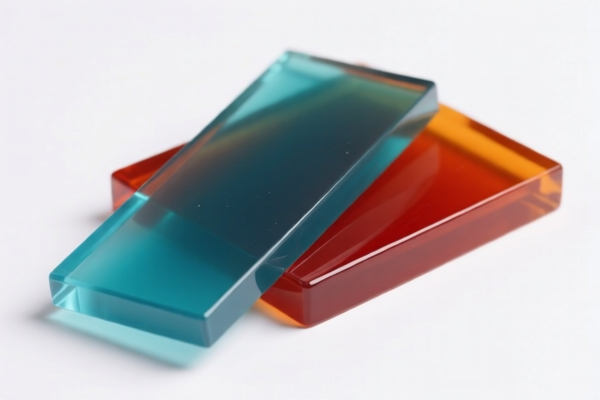

AI Analysis
⚡ Acrylic Resistor Conductive Material: HS Code & Tax Breakdown
🌐 HS Code Reference & Customs Clearance Guide | 2026 Latest Tariff Analysis | Professional Level Customs Strategy
📌 I. Product Definition & Classification: Are You Misidentifying Your Product?
The input "Acrylic Resistor Conductive Material" is a mixed description that combines two distinct electronic components: 1. Electrical Resistors (Fixed): Components that limit current flow. 2. Acrylic Polymers: Raw materials (plastics/chemicals) used in insulation, casing, or as part of the resistor manufacturing process, but not the resistor itself.
In international trade, these two are strictly separated. You cannot classify a finished resistor as "acrylic polymer," nor can you classify raw acrylic as a "resistor." The classification depends entirely on whether you are shipping the finished component or the raw material.
⚠️ Key Distinction:
- If it is a finished electrical resistor (used to control current) → It falls under Chapter 85 (Electrical Machinery/Equipment).
- If it is raw acrylic plastic (in primary forms like sheets, granules, or liquids) → It falls under Chapter 39 (Plastics and Articles Thereof).
- "Conductive Material": Resistors are resistive, not conductive (in the sense of wires). If it’s a conductive acrylic composite, it might still be considered a resin/plastic unless it’s a finalized circuit component.
📦 II. HS Code Classification Details (2026 Latest Tariff Authority Comparison)
Based on the provided , here are the specific classifications for the products mentioned. Note that the data includes both Resistors and Acrylic Polymers.
| HS Code | Product Description | Scenario | Is it a Resistor? | Is it Raw Acrylic? |
|---|---|---|---|---|
8533.29.00.00 |
Other fixed resistors (other than heating resistors); parts thereof | Finished electronic component | ✅ Yes | ❌ No |
8533.10.00.60 |
Fixed carbon resistors, composition or film types; Carbon composition | Finished electronic component | ✅ Yes | ❌ No |
3907.61.00.10 |
Acrylic polymers in primary forms; Other; Viscosity 78–88 ml/g | Raw plastic material | ❌ No | ✅ Yes |
3907.69.00.10 |
Acrylic polymers in primary forms; Other; Viscosity 70–78 ml/g | Raw plastic material | ❌ No | ✅ Yes |
🔍 Critical Reminder:
- Resistors (8533.xx) are finished electrical parts. They have specific resistance values and terminals.
- Acrylic Polymers (3907.xx) are raw materials. They are defined by chemical properties (viscosity number) and physical form.
- Do not mix them: Shipping a resistor as "acrylic polymer" will lead to customs rejection, fines, or delays.
💰 III. 2026 Latest Tariff Rate Detail (Including Surtaxes, Policy Surcharges)
✅ Applicable Country: United States (US)
✅ Origin: China (CN)
✅ Effective Date: Current tariffs apply (25% Section 301 surtax remains in force)
🎯 1. 8533.29.00.00 — Other Fixed Resistors
| Item | Content |
|---|---|
| Base Tariff Rate | 0% (ad valorem) |
| Section 301 Surtax | +25% (Additional duty for Chinese origin) |
| Total Tax Rate | 25.0% |
| Tax Calculation | CIF Value × 25% |
| De Minimis Exemption | ❌ Not Applicable (Section 301 duties apply regardless of value) |
| Legal Basis | HTSUS 8533.29.00.00 + Section 301 List 3/4 (depending on final ruling) |
📌 Explanation:
- The base tariff for most fixed resistors is 0% under the Harmonized Tariff Schedule of the United States (HTSUS).
- However, due to Section 301 of the Trade Act of 1974, an additional 25% tariff is levied on goods originating from China.
- Total Effective Duty: 25%. This is a significant cost factor for electronic component imports.
🎯 2. 8533.10.00.60 — Carbon Composition Resistors
| Item | Content |
|---|---|
| Base Tariff Rate | 0% (ad valorem) |
| Section 301 Surtax | +25% (Additional duty for Chinese origin) |
| Total Tax Rate | 25.0% |
| Tax Calculation | CIF Value × 25% |
| De Minimis Exemption | ❌ Not Applicable |
| Legal Basis | HTSUS 8533.10.00.60 + Section 301 List 3/4 |
📌 Note:
- Like other resistors, carbon composition resistors benefit from a 0% base rate but are subject to the 25% surtax.
- Even though "carbon" sounds like a raw material, in HTSUS, these are classified as electrical components, not plastics or carbon raw materials.
🎯 3. 3907.61.00.10 — Acrylic Polymers (Viscosity 78–88 ml/g)
| Item | Content |
|---|---|
| Base Tariff Rate | 6.5% (ad valorem) |
| Section 301 Surtax | +25% (Additional duty for Chinese origin) |
| Total Tax Rate | 31.5% |
| Tax Calculation | CIF Value × 31.5% |
| De Minimis Exemption | ❌ Not Applicable |
| Legal Basis | HTSUS 3907.61.00.10 + Section 301 List 3/4 |
📌 Explanation:
- Acrylic polymers are subject to a 6.5% base tariff.
- The 25% surtax is added, resulting in a total of 31.5%.
- This classification is specific to primary forms (e.g., pellets, powders, liquids) with a viscosity number between 78 and 88 ml/g.
- Strict Specification Required: You must provide technical data sheets proving the viscosity number. Misclassification can lead to severe penalties.
🎯 4. 3907.69.00.10 — Acrylic Polymers (Viscosity 70–78 ml/g)
| Item | Content |
|---|---|
| Base Tariff Rate | 6.5% (ad valorem) |
| Section 301 Surtax | +25% (Additional duty for Chinese origin) |
| Total Tax Rate | 31.5% |
| Tax Calculation | CIF Value × 31.5% |
| De Minimis Exemption | ❌ Not Applicable |
| Legal Basis | HTSUS 3907.69.00.10 + Section 301 List 3/4 |
📌 Note:
- Similar to the above, but for acrylic polymers with a viscosity number between 70 and less than 78 ml/g.
- The tariff rate is identical (31.5%), but the HS Code is different.
- Critical: Accurate viscosity testing is required for customs declaration. Incorrect viscosity data may result in classification errors and audits.
🛠️ IV. Customs Clearance Practical Advice (Practical Pitfall Avoidance Guide)
✅ 1. Preparation Checklist (All documents required)
| Document | Required | Description |
|---|---|---|
| ✅ Product Specification Sheet | ✔️ | Must detail: For resistors → Resistance value, tolerance, power rating. For acrylic → Viscosity number, chemical composition, physical form. |
| ✅ Technical Data Sheet | ✔️ | Essential for Acrylic: Must include Viscosity Number (ml/g) to determine correct HS Code (3907.61 vs 3907.69). |
| ✅ Product Photos | ✔️ | Clear images of the product, labeling, and packaging. For resistors, show terminal leads. For acrylic, show form (granules/sheets). |
| ✅ Commercial Invoice | ✔️ | Clearly state the exact product name. Avoid vague terms like "resistor material" if it’s a finished resistor. |
| ✅ Certificate of Origin (CO) | ✔️ | Required for origin verification and potential duty drawbacks or exemptions (if applicable). |
| ✅ Packing List | ✔️ | Detailed weight, dimensions, and quantity. |
✅ 2. Declaration Tips (Key Mantra)
🔥 "Resistors are Electrical, Acrylic is Plastic. Visco-sity decides the polymer. 25% surtax is universal for China!"
| Scenario | Correct Declaration | Error to Avoid |
|---|---|---|
| Finished Resistor | 8533.29.00.00 or 8533.10.00.60 |
Declaring as "Plastic Part" → 31.5% + risk of seizure |
| Raw Acrylic Pellets | 3907.61.00.10 or 3907.69.00.10 |
Declaring as "Resistor" → 25% + classification error |
| Acrylic Case for Resistor | Depends on intent. Usually 3926.90 (Plastic articles) |
Mixing with resistor HS Code → Confusion and audit |
| Viscosity < 70 ml/g | Check other 3907 subheadings |
Forcing into 3907.6x → Wrong HS Code |
✅ 3. Special Case Handling
| Case | Handling Advice |
|---|---|
| OEM Resistors | Provide the customer’s drawing and specification. Ensure the description matches the HS Code (e.g., "Fixed Carbon Resistor" not just "Resistor"). |
| Acrylic with Fillers | If the acrylic contains conductive fillers, it may still be classified as plastic (3907) unless it is a finalized circuit board/component. Consult with a customs broker if it’s a "conductive plastic sheet." |
| Mixed Shipments | Do not mix resistors and acrylic polymers in one line item. Declare separately to avoid misclassification of either. |
| Viscosity Testing | For acrylic imports, ensure the lab test report for viscosity is recent and recognized by US customs standards. |
🌍 V. Global Market Customs Comparison (2026 Latest)
| Country/Region | Recommended HS Code | Tariff (China Origin) | Certification Requirement | Notes |
|---|---|---|---|---|
| 🇺🇸 USA | 8533.xx (Resistors)3907.xx (Acrylic) |
25% (Resistors) 31.5% (Acrylic) |
None specific for basic components | High surtax. Strict HS Code precision required. |
| 🇨🇳 China | 8533.xx3907.xx |
0–6.5% | None | Low base tariffs. |
| 🇪🇺 EU | 8533.xx3907.xx |
0–6.5% | CE, RoHS, REACH | No Section 301 equivalent. Lower total duty than US. |
| 🇬🇧 UK | 8533.xx3907.xx |
0–6.5% | UKCA, RoHS | Post-Brexit tariffs. Similar to EU. |
| 🇯🇵 Japan | 8533.xx3907.xx |
0–4% | PSE (if electrical) | Low tariffs. Strong preference for precise documentation. |
📌 Conclusion:
- USA is the most expensive market due to Section 301 surtaxes (25% on resistors, 25% on acrylic).
- EU/UK/JP offer significantly lower duties, making them more attractive if supply chain flexibility allows.
- Acrylic viscosity is a unique technical parameter that must be accurately reported in the US.
📌 VI. Common Errors & Pitfall Guide (Lessons Learned)
❌ Error 1: Classifying a finished resistor as "Plastic Part"
👉 Consequence: Incorrect HS Code (3926 vs 8533). Even if tariff is similar, it triggers regulatory reviews for electrical safety.
❌ Error 2: Omitting Viscosity Data for Acrylic
👉 Consequence: Customs cannot determine if it’s 3907.61 or 3907.69. Shipment held for additional documentation → Delays.
❌ Error 3: Assuming "Conductive Material" means it’s a Resistor
👉 Consequence: If it’s raw conductive acrylic resin, it’s plastic (3907), not a resistor (8533). Misclassification leads to penalties.
❌ Error 4: Ignoring the 25% Surtax
👉 Consequence: Budgeting for 0% tariff when actual cost is 25% or 31.5%. Profit margin erosion.
✅ Correct Approach:
"Electrical Resistor, Fixed, Carbon Composition, 1/4W, 10kΩ, Model XYZ"
OR
"Acrylic Polymer, Primary Form, Viscosity 80 ml/g, Virgin Material"
🎯 VII. Conclusion: Precision in Classification Saves Money
🎯 Remember:
🔹 "Resistors = 8533, Acrylic = 3907. Don’t mix them!"
🔹 "Viscosity decides the Acrylic HS Code. 70–78 vs 78–88 matters!"
🔹 "25% Surtax is mandatory for China origin in the US. Plan your pricing!"
📌 Tips:
- If you are importing custom-designed conductive acrylic sheets for circuit applications, consult a customs broker to see if they qualify as printed circuit boards (8534) or plastics (3907).
- For acrylic polymers, always include a laboratory test report with the customs declaration.
- For resistors, ensure the power rating and resistance value are clearly stated on the invoice.
📣 Immediate Action:
📞 Contact a licensed customs broker in the US.
📄 Provide product specs (viscosity for acrylic, electrical specs for resistors).
🚀 Get a Binding Ruling from US CBP to ensure correct HS Code classification and avoid penalties.
✨ Professional Customs Clearance Starts with Accurate Classification!
💼 Your Cost Efficiency Depends on Correct HS Codes!
Customer Reviews
About HS Code Classification
The Harmonized System (HS) is an internationally standardized nomenclature developed by the World Customs Organization (WCO) to classify traded products. Over 200 countries use the HS system as the basis for customs tariffs, trade statistics, and import/export regulations.
Each HS code follows a hierarchical structure:
- Chapter (2 digits) — Broad category of goods (e.g., Chapter 84: Machinery and Mechanical Appliances)
- Heading (4 digits) — More specific grouping within the chapter
- Subheading (6 digits) — Internationally standardized breakdown, used by all WCO member countries
- National subdivisions (8-10 digits) — Country-specific extensions for further classification, such as US HTSUS 10-digit codes
Correct HS code classification is essential for smooth customs clearance, accurate duty payment, and compliance with trade regulations. Misclassification can lead to customs delays, overpayment of duties, or penalties.
When importing from CN to US, the applicable tariff rates may include:
- Most-Favored-Nation (MFN) rate — The standard duty rate applied to WTO members
- General rate — Applied to countries without trade agreements
- Trade remedy duties — Additional tariffs such as Section 301 (anti-dumping), Section 232 (national security), or countervailing duties
The information provided on this page is for reference purposes only. For official classification, please consult with your local customs authority or a licensed customs broker.