Acrylic Sheets for Building
CN → US| HS Code | Tariff Rate | Origin | Destination | Doc |
|---|---|---|---|---|
| 3921110000 | 40.3% | CN | US | Official Doc |
| 3921190090 | 41.5% | CN | US | Official Doc |
| 3920515050 | 41.5% | CN | US | Official Doc |
| 3907690010 | 41.5% | CN | US | Official Doc |
| 3920515090 | 41.5% | CN | US | Official Doc |
Product Images

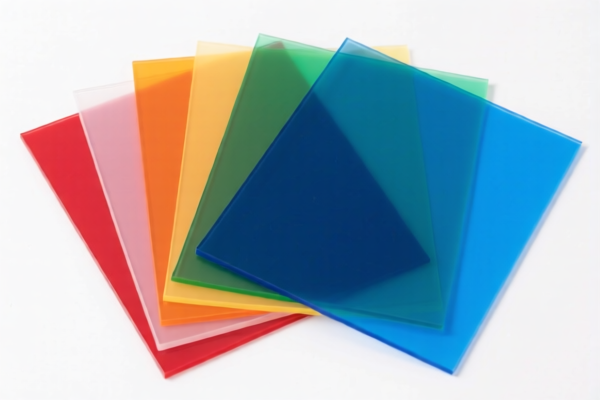
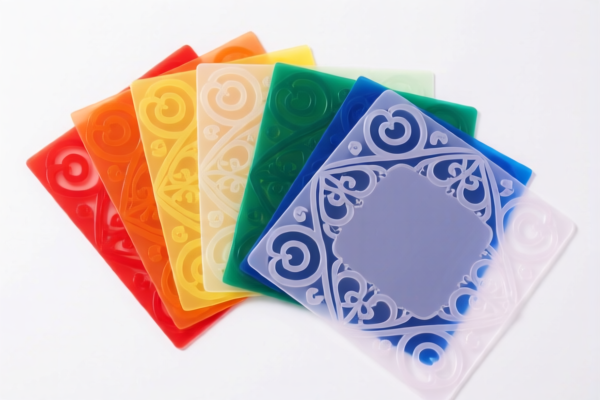
AI Analysis
🏗️ Acrylic Sheets for Building (Polymethyl Methacrylate - PMMA)
🌐 HS Code Classification & Duty Strategy | 2026 Tariff Deep Dive | Professional Customs Clearance
📌 I. Product Definition & Classification: What is "Acrylic Sheet"?
Acrylic Sheets (often known by the brand name Plexiglass or Perspex) are transparent thermoplastic materials derived from Polymethyl Methacrylate (PMMA). In the context of construction and building, they serve as: * High-transparency glass alternatives for windows, skylights, and facades. * Lighting fixtures (diffusers) for architectural lighting. * Structural panels for greenhouses, noise barriers, and partitions.
⚠️ Key Distinction for Classification:
While chemically an acrylic polymer, the form factor (Sheets) and application (Building) dictate the HS Code.
- If categorized strictly by material composition (Chemical Polymer): It often falls under 3907.
- If categorized by final shape/structure (Rigid Sheets/Foils): It falls under 3920 or 3921.
- Crucial Note for US Customs: The specific chemical composition and whether it is "unworked" vs. "worked" can shift the code significantly, impacting the duty rate.
📦 II. HS Code Classification Breakdown (2026 Authority Reference)
Based on the specific data provided for Acrylic Sheets used in building, here are the applicable HS Codes and their specific logic:
| HS Code | Product Description (Summary) | Morphology & Material Logic | Key Characteristics |
|---|---|---|---|
| 3921.11.00.00 | Acrylic (PMMA) Sheets | Polymer, Sheet Form, Other Plastic Sheets | Fits "Other" plastics category; rigid structure. |
| 3921.19.00.90 | Acrylic Sheets | Plastic Material, Sheet/Film/Foil, Other Plastics | General classification for other plastic sheets not specified elsewhere. |
| 3920.51.50.50 | Acrylic (Methyl Methacrylate) | Sheets, Building Application, Non-flexible | Specifically targets rigid building sheets of PMMA. |
| 3907.69.00.10 | Acrylic Polymer (Raw/Intermediate) | Acrylic Polymer, Primary/Semi-finished Form | Treats sheets as "Primary" or semi-finished acrylic products. |
| 3920.51.50.90 | PMMA Sheets (Non-Flame Retardant) | Acrylic Polymer, Sheets, No Flame Retardant | Explicitly excludes flame-retardant variants; focuses on pure PMMA. |
🔍 Critical Logic for Customs Officers:
- 3920/3921 Codes: Focus on the shape (Sheets, Plates, Foils) of plastics not elsewhere specified.
- 3907 Code: Focuses on the chemical substance (Polymers) in primary forms.
- Building Context: Codes ending in .50 often highlight the building application or specific chemical subtype (Methyl Methacrylate).
💰 III. 2026 Tariff Rate Breakdown (USA Import from China)
✅ Applicable Region: United States (US)
✅ Origin: China (CN)
✅ Effective Date: Current Trade War Measures (Section 301 + 122)
Universal Duty Structure for All Listed HS Codes: All Acrylic Sheet imports from China listed above share an identical "Total Tax" calculation due to the specific trade penalty clauses applied.
🎯 Detailed Tax Composition (Applicable to 3921.11, 3921.19, 3920.51, 3907.69)
| Tax Component | Rate | Description & Legal Basis |
|---|---|---|
| Basic Tariff | 5.3% - 6.5% | Standard Most-Favored-Nation (MFN) rate depending on the specific sub-category. |
| "Section 301" Additional Duty | +25.0% | Trade remedy duty imposed by the U.S. Trade Representative (USTR) on Chinese goods. |
| "Section 122" Tariff | +10.0% | 122 Tariff (Specific Section 122 measure) targeting specific polymer/plastic imports from China. |
| 🚨 TOTAL DUTY RATE | 40.3% - 41.5% | High-Risk Category |
📊 Breakdown by Specific Code:
3921.11.00.00(PMMA Sheets - "Other Plastics")- Base: 5.3% | Add-on 301: 25% | Add-on 122: 10% = 40.3%
3921.19.00.90(Acrylic - "Other Plastics")- Base: 6.5% | Add-on 301: 25% | Add-on 122: 10% = 41.5%
3920.51.50.50(Acrylic Sheets - Building Use)- Base: 6.5% | Add-on 301: 25% | Add-on 122: 10% = 41.5%
3907.69.00.10(Acrylic Polymer - Primary Form)- Base: 6.5% | Add-on 301: 25% | Add-on 122: 10% = 41.5%
3920.51.50.90(PMMA - Non-Flame Retardant)- Base: 6.5% | Add-on 301: 25% | Add-on 122: 10% = 41.5%
📌 Explanation of "Section 122":
The 122 Tariff (10%) is a specific punitive measure often applied to plastic sheets and sheets of plastic. Combined with the standard 25% Section 301 tariff, the total hit is massive. There is NO de minimis exemption for these specific codes.
🛠️ IV. Customs Clearance Practical Strategy (Real-World Pitfall Avoidance)
✅ 1. Document Preparation Checklist (Non-Negotiable)
| Document | Requirement | Why It Matters |
|---|---|---|
| Technical Data Sheet | Mandatory | Must explicitly state "Polymethyl Methacrylate (PMMA)" and Thickness. |
| Product Photos | Mandatory | Must show the sheet form, edges, and lack of flame retardant labels (if claiming 3920.51.50.90). |
| Commercial Invoice | Mandatory | Description must be "Acrylic Sheets, PMMA, for Building/Architectural Use". |
| Certificate of Origin | Mandatory | To verify Origin = China (if Origin is Vietnam/Mexico, 10% penalty may be waived). |
| Structure Diagram | Optional but Recommended | To prove it is a "Sheet" (3920/3921) vs. a "Molded Part" (3926). |
✅ 2. Classification Strategy & "Golden Rules"
🔥 Rule #1: Avoid "3907" if you have "Sheets"
If the product is a finished sheet ready for cutting/glazing, 3920/3921 is usually more accurate than 3907 (which is for primary forms like pellets or raw slabs). However, if declared as 3907.69.00.10, the 41.5% duty still applies.🔥 Rule #2: Check for Flame Retardancy
If your Acrylic sheets contain flame retardants, 3920.51.50.90 (Non-Flame Retardant) is WRONG. You must declare the specific variant, or face penalties for false declaration.🔥 Rule #3: The "Building" Trap
Do not just write "Plastic Sheets". Specify "Acrylic Sheets for Building/Facade" to align with 3920.51.50.50. Vague descriptions lead to classification errors and audits.
✅ 3. Strategic Recommendations to Reduce Cost
| Strategy | Action | Potential Outcome |
|---|---|---|
| Origin Shifting | Import sheets from Vietnam, Thailand, or Mexico. | Potential Elimination of 10% "122 Tariff" (Verify via Ruling). |
| Pre-Ruling | Apply for an US Customs Advance Ruling before shipment. | Certifies the HS Code, preventing surprise 41.5% audits. |
| Product Modification | If possible, import as raw pellets (3907)? | NO - This is usually cheaper only if you mold them inside the US. Importing finished sheets incurs high duty. |
| De Minimis Review | DO NOT use Section 321 (De Minimis < $800) for bulk commercial imports. | Risk: High seizure rate for bulk plastic imports via courier. |
🌍 V. Global Market Comparison (2026 Snapshot)
| Region | Recommended HS Code | Total Duty (China Origin) | Key Requirement |
|---|---|---|---|
| 🇺🇸 USA | 3920.51.50.50 / 3921.11.00.00 | 40.3% - 41.5% | Strict Section 122 + 301 enforcement. |
| 🇪🇺 EU | 3920.51.00 | 0% - 10% | CE Certification + Carbon Tax (CBAM) potential. |
| 🇯🇵 Japan | 3920.51.00 | 0% - 5% | JIS Standard compliance. |
| 🇨🇦 Canada | 3920.51.00 | 0% | Free Trade (CUSMA) if rules of origin met. |
📌 Conclusion: The USA market is the most expensive for Chinese Acrylic Sheets due to the dual-layer penalty (Section 301 + Section 122). If you are shipping to the US, re-evaluate your supply chain.
📌 VI. Common Mistakes & "Blood Test" (Lessons Learned)
❌ Mistake 1: Declaring as "Plastic Sheets" without specifying "Acrylic/PMMA".
👉 Consequence: Customs may classify under a higher penalty category or demand a chemical analysis, causing weeks of delay.
❌ Mistake 2: Declaring as "Glass" (HS 70.03).
👉 Consequence: False Declaration. Acrylic is plastic. If caught, you face 4x the duty as a penalty.
❌ Mistake 3: Assuming "Building" implies a lower tax.
👉 Consequence: The 122 Tariff specifically targets these materials regardless of end-use. No "Building" exemption exists.
✅ Correct Declaration Example:
"Acrylic Sheets (Polymethyl Methacrylate), PMMA, Thickness 3mm, Non-Flame Retardant, Clear, for Architectural Glazing, Model A-200."
🎯 VII. Final Verdict: The "Acrylic Sheet" Clearance Roadmap
🎯 The Reality:
Importing Acrylic Sheets for building from China to the USA is a high-cost operation. The combined 40.3% - 41.5% duty rate effectively eats into profit margins.
Action Plan:
1. Verify Origin: Can you source from a non-Section 122 country? (e.g., Vietnam).
2. Get a Ruling: File a formal HS Code Ruling with US Customs for 3920.51.50.50.
3. Precise Description: Ensure your invoice matches the HS Code description exactly (PMMA, Sheet, Non-Flame Retardant).
4. Budget for Duty: Do not calculate profit without including the ~41% tax.
💼 Final Advice:
"Acrylic is Plastic. China is Taxed. Building is Not Exempted."
Plan your logistics before shipping to avoid cash flow shocks.
✨ Professional Customs Clearance = Precision + Strategy.
💰 Your margins depend on your HS Code accuracy!
Customer Reviews
About HS Code Classification
The Harmonized System (HS) is an internationally standardized nomenclature developed by the World Customs Organization (WCO) to classify traded products. Over 200 countries use the HS system as the basis for customs tariffs, trade statistics, and import/export regulations.
Each HS code follows a hierarchical structure:
- Chapter (2 digits) — Broad category of goods (e.g., Chapter 84: Machinery and Mechanical Appliances)
- Heading (4 digits) — More specific grouping within the chapter
- Subheading (6 digits) — Internationally standardized breakdown, used by all WCO member countries
- National subdivisions (8-10 digits) — Country-specific extensions for further classification, such as US HTSUS 10-digit codes
Correct HS code classification is essential for smooth customs clearance, accurate duty payment, and compliance with trade regulations. Misclassification can lead to customs delays, overpayment of duties, or penalties.
When importing from CN to US, the applicable tariff rates may include:
- Most-Favored-Nation (MFN) rate — The standard duty rate applied to WTO members
- General rate — Applied to countries without trade agreements
- Trade remedy duties — Additional tariffs such as Section 301 (anti-dumping), Section 232 (national security), or countervailing duties
The information provided on this page is for reference purposes only. For official classification, please consult with your local customs authority or a licensed customs broker.