Acrylic Sign
CN → US| HS Code | Tariff Rate | Origin | Destination | Doc |
|---|---|---|---|---|
| 3926909989 | 22.8% | CN | US | Official Doc |
| 3926904000 | 12.8% | CN | US | Official Doc |
| 9405920000 | 38.7% | CN | US | Official Doc |
Product Images
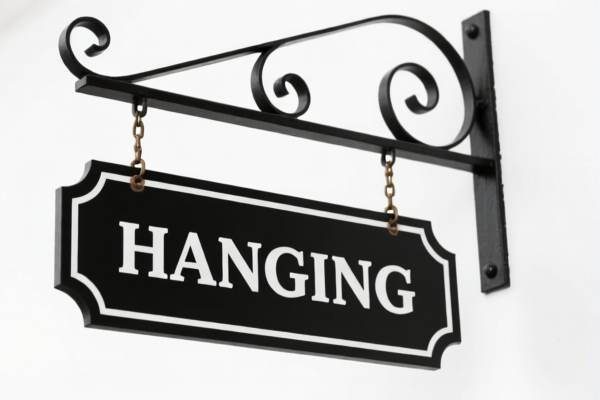
AI Analysis
🏷️ Acrylic Sign Materials (亚克力标牌材料)
🌐 HS Code Reference & Customs Clearance Guide | 2026 Latest Tariff Analysis | Professional Compliance Strategy
📌 I. Product Definition & Classification: Do You Really Know "Acrylic Signs"?
Acrylic signs (PMMA - Polymethyl Methacrylate) are widely used in commercial advertising, interior decoration, and industrial labeling due to their transparency, weather resistance, and ease of processing. In international trade, the classification depends heavily on the specific state of the material (raw sheet vs. processed component) and its intended final use (general plastic good vs. lighting fixture component).
⚠️ Key Distinction Point:
- If it is a raw plastic sheet/plate not further worked into a specific appliance → Classified under Chapter 39 (Plastics).
- If it is a part of a lighting fixture (e.g., a diffuser or illuminated sign housing) → Classified under Chapter 94 (Furniture/Lighting).
📦 II. HS Code Classification Details (2026 Latest Tariff Authority Comparison)
| HS Code | Product Description | Application Scenario | Tax Implication |
|---|---|---|---|
3926.90.99.89 |
Other articles of plastics (Not specified elsewhere) | General acrylic sheets, blanks, or unworked materials for signage. | 22.8% |
3926.90.40.00 |
Other articles of plastics (Fits Ch. 3901-3914 characteristics) | Specific plastic components fitting Chapter 39-41 material properties. | 12.8% |
9405.92.00.00 |
Parts of lighting fittings (Lighting signs/nameplates raw form) | Acrylic materials specifically intended for illuminated signs/lighting fixtures. | 38.7% |
🔍 Key Reminder:
- Misclassifying a "lighting component" as a "general plastic article" can lead to severe penalties due to the high ad valorem duty (25%) associated with Chapter 94.
- Conversely, over-classifying a general sign as a "lighting part" increases costs unnecessarily.
- Evidence is key: Providing photos of the final assembly or technical specs showing integration with LED/light sources is crucial for Chapter 94 classification.
💰 III. 2026 Latest Tariff Rate Breakdown (Including Surtaxes & Policy Add-ons)
✅ Applicable Country: United States (US)
✅ Origin: China (CN)
✅ Effective Date: From 2025/2026 imports (subject to ongoing trade policies)
🎯 1. 3926.90.99.89 —— Other Plastic Articles (General)
| Item | Detail |
|---|---|
| Base Duty | 5.3% |
| Section 301 Surtax | +7.5% (Standard USITC footnote) |
| Section 122 Duty | +10% (Specific policy add-on) |
| Total Rate | 22.8% |
| Calculation | CIF Value × 22.8% |
| De Minimis Eligibility | ❌ No (Generally denied for Section 301 goods) |
| Legal Path | USITC:3926.90.99.89 → SECTION:301 → SECTION:122 |
📌 Explanation:
- This is the standard classification for "general purpose" acrylics.
- While cheaper than lighting fixtures, it still carries significant Section 301 burdens.
- Ensure the product is not explicitly designed as a light diffuser, which would trigger Chapter 94 rates.
🎯 2. 3926.90.40.00 —— Plastic Articles (Specific Material Characteristics)
| Item | Detail |
|---|---|
| Base Duty | 2.8% |
| Section 301 Surtax | 0.0% (Exempt or lower bracket in this specific subheading) |
| Section 122 Duty | +10% |
| Total Rate | 12.8% |
| Calculation | CIF Value × 12.8% |
| De Minimis Eligibility | ❌ No |
| Legal Path | USITC:3926.90.40.00 → SECTION:122 |
📌 Critical Note:
- This is the most cost-effective option for pure plastic materials.
- Risk: Customs may challenge this if the product does not strictly fit the "3901-3914 chapter material characteristics."
- Strategy: Provide Material Safety Data Sheets (MSDS) and chemical composition proofs to justify this classification over3926.90.99.89.
🎯 3. 9405.92.00.00 —— Parts of Lighting Fittings
| Item | Detail |
|---|---|
| Base Duty | 3.7% |
| Section 301 Surtax | +25.0% (High tariff bracket for lighting parts) |
| Section 122 Duty | +10% |
| Total Rate | 38.7% |
| Calculation | CIF Value × 38.7% |
| De Minimis Eligibility | ❌ No |
| Legal Path | USITC:9405.92.00.00 → SECTION:301 (High Footnote) → SECTION:122 |
📌 Warning:
- This is the most expensive classification.
- Why so high? The 25% Section 301 surtax on lighting parts is punitive.
- When to use ONLY: When the acrylic sign is already integrated with lighting electronics, power supplies, or is marketed specifically as an "illuminated sign component" rather than a raw material.
- Avoidance: If you are exporting plain acrylic sheets/signs without light sources, do not use this code.
🛠️ IV. Customs Clearance Practical Advice (Pitfall Avoidance Guide)
✅ 1. Document Checklist (Non-negotiable)
| Document | Required? | Purpose |
|---|---|---|
| ✅ Product Specification Sheet | ✔️ | Clearly states: "Acrylic Sheet/Sign," dimensions, thickness, no electronic components. |
| ✅ Technical Data Sheet (TDS) | ✔️ | Proves material composition (PMMA) to support 3926.90.40.00 or 3926.90.99.89. |
| ✅ Product Photos | ✔️ | Must show NO LEDs, wires, or power adapters if claiming Chapter 39. |
| ✅ Commercial Invoice | ✔️ | Description must be precise: e.g., "PMMA Acrylic Sign Material, Unilluminated." |
| ✅ Bill of Lading | ✔️ | Consistent with invoice and packaging. |
✅ 2. Declaration Strategy (Key Mantra)
🔥 "Pure Plastic = Ch 39, Lit Component = Ch 94. Name it Right, Pay it Right!"
| Scenario | Correct HS Code | Error Consequence |
|---|---|---|
| Unlit Acrylic Sign/Sheet | 3926.90.40.00 (12.8%) |
If misclassified as 9405... → Pay 38.7% (Overpayment) |
| Unlit Acrylic Sign/Sheet | 3926.90.99.89 (22.8%) |
If misclassified as 3926.90.40.00 without proof → Penalty/Back Taxes |
| Illuminated Sign Component | 9405.92.00.00 (38.7%) |
If misclassified as 39... → High Penalty + Smuggling Risk |
| Acrylic Sign with Stand | 3926... or 9405... |
Do NOT split the stand as metal (73...) if it's integral. |
✅ 3. Special Case Handling
| Situation | Recommendation |
|---|---|
| Mixed Shipment (Lighted + Unlit) | Split the shipment. Declare lit parts under 9405.92.00.00 and unlit parts under Chapter 39. Never mix codes in one line item if values differ significantly. |
| OEM Custom Signs | Provide design files showing if LEDs are included. If LEDs are shipped separately, declare them as 8539 (Lamps) and acrylic as 3926. |
| "Signage" vs. "Decor" | If the item is purely decorative (no text, no illumination), it leans towards 3926. If it has text/logos for business identification, ensure the "plastic" nature is emphasized in the description. |
🌍 V. Global Market Clearance Comparison (2026 Latest)
| Country/Region | Recommended HS Code | Total Tariff | Certification | Note |
|---|---|---|---|---|
| 🇺🇸 USA | 3926.90.40.00 |
12.8% | No special certs | Lowest duty for pure acrylic. Avoid 9405. |
| 🇨🇳 China (Import) | 3926.90.99.99 |
~5-10% | CCC (if applicable) | General plastic article. |
| 🇪🇺 EU | 3926.90.97 |
5.6% | CE (if electrical) | No Section 301 equivalent, but VAT applies. |
| 🇬🇧 UK | 3926.90.90 |
5.5% | UKCA | Post-Brexit tariffs similar to EU. |
📌 Conclusion:
- The US market is the most complex due to the 25% Section 301 surtax on lighting parts (9405).
- For pure acrylic signs, Chapter 39 is mandatory to minimize costs.
- Documentation must prove the absence of lighting components to avoid the 38.7% rate.
📌 VI. Common Errors & Pitfalls (Lessons Learned)
❌ Error 1: Declaring an illuminated acrylic sign as "Plastic Sign" (3926)
👉 Consequence: Customs detects LED integration during inspection. Back taxes + Penalties. The rate jumps from 12.8% to 38.7%.
❌ Error 2: Declaring plain acrylic sheets as "Parts of Lighting Fittings" (9405)
👉 Consequence: You pay 25.9% more in duties unnecessarily. No justification for Chapter 94.
❌ Error 3: Using vague descriptions like "Acrylic Display"
👉 Consequence: Customs may classify it under the highest duty rate (3926.90.99.89 or worse) due to ambiguity.
👉 Fix: Use specific terms: "PMMA Acrylic Sheet, Unworked, For Signage."
❌ Error 4: Splitting the shipment incorrectly
👉 Consequence: If a lit sign is split into "Acrylic" and "LED," the LED part may be duty-free or low-duty, but the acrylic part might still be scrutinized.
👉 Fix: Declare the complete unit as a lighting fitting if it contains light sources.
✅ Correct Declaration Example:
"PMMA Acrylic Sign Material, Clear, 10mm Thickness, Unilluminated, No Electrical Components. Model: AS-100C."
🎯 VII. Conclusion: Precision Classification Saves Money!
🎯 Remember the Mantra:
🔹 "No Lights = Ch 39 (12.8-22.8%), Lights = Ch 94 (38.7%). Don't Get Caught in the Middle!"
🔹 "Prove It's Plastic: Provide TDS & Photos. Avoid the Lighting Trap!"
📌 Pro Tip:
If your acrylic signs are shipped separately from their LED power supplies/drivers, declare the acrylic as 3926.90.40.00 and the electronics as 8504.40 (Converters/Rectifiers). This separation strategy can significantly reduce the effective duty rate on the acrylic component.
📣 Immediate Action:
📞 Consult your customs broker with product photos and technical specs.
🚀 Ensure your invoice description explicitly states "UNILLUMINATED" or "NO LIGHTING COMPONENTS" if claiming Chapter 39.
💼 Correct HS Code = Correct Duty = Happy Customs!
Customer Reviews
About HS Code Classification
The Harmonized System (HS) is an internationally standardized nomenclature developed by the World Customs Organization (WCO) to classify traded products. Over 200 countries use the HS system as the basis for customs tariffs, trade statistics, and import/export regulations.
Each HS code follows a hierarchical structure:
- Chapter (2 digits) — Broad category of goods (e.g., Chapter 84: Machinery and Mechanical Appliances)
- Heading (4 digits) — More specific grouping within the chapter
- Subheading (6 digits) — Internationally standardized breakdown, used by all WCO member countries
- National subdivisions (8-10 digits) — Country-specific extensions for further classification, such as US HTSUS 10-digit codes
Correct HS code classification is essential for smooth customs clearance, accurate duty payment, and compliance with trade regulations. Misclassification can lead to customs delays, overpayment of duties, or penalties.
When importing from CN to US, the applicable tariff rates may include:
- Most-Favored-Nation (MFN) rate — The standard duty rate applied to WTO members
- General rate — Applied to countries without trade agreements
- Trade remedy duties — Additional tariffs such as Section 301 (anti-dumping), Section 232 (national security), or countervailing duties
The information provided on this page is for reference purposes only. For official classification, please consult with your local customs authority or a licensed customs broker.