Acrylic Static Adsorption Film
CN → US| HS Code | Tariff Rate | Origin | Destination | Doc |
|---|---|---|---|---|
| 3921905050 | 39.8% | CN | US | Official Doc |
| 3921904010 | 39.2% | CN | US | Official Doc |
| 3919102055 | 40.8% | CN | US | Official Doc |
| 3919905060 | 40.8% | CN | US | Official Doc |
Product Images
AI Analysis
🎞️ Acrylic Static Adsorption Film (Plastic Films & Strips)
🌐 HS Code Reference & Customs Clearance Guide | 2026 Latest Tariff Analysis | Professional Customs Strategy
📌 I. Product Definition & Classification: What is "Static Adsorption Film"?
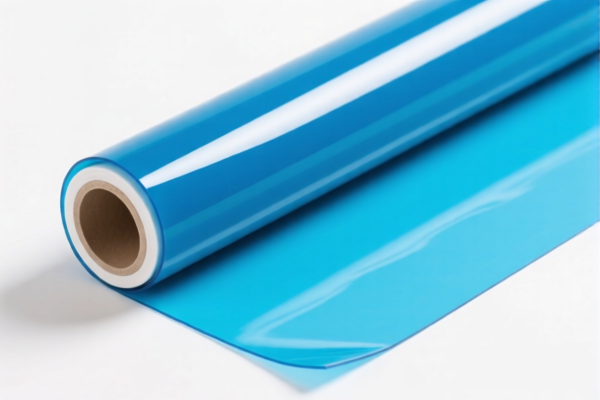
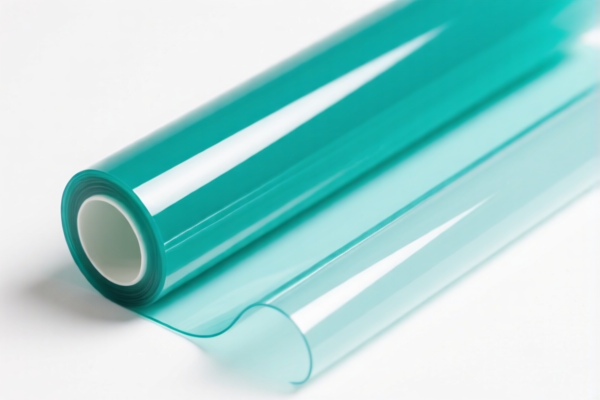
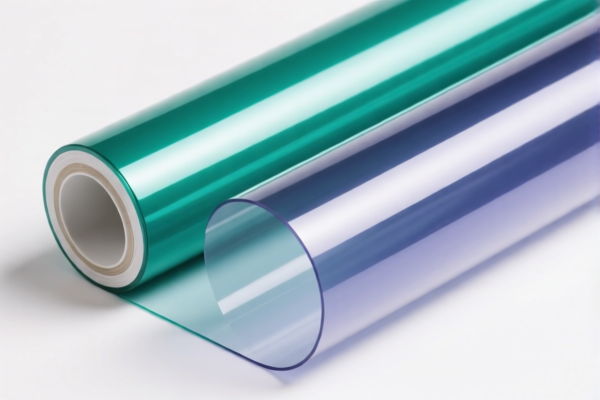
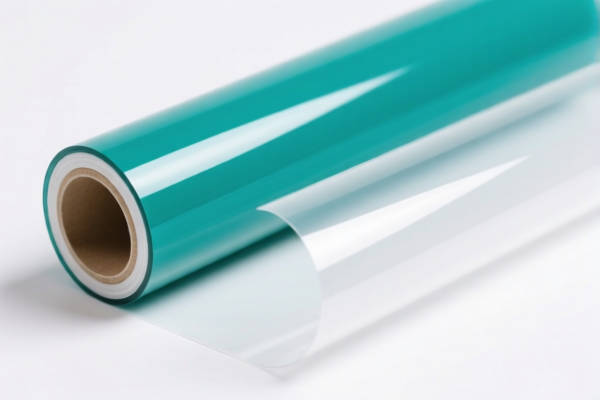
Acrylic Static Adsorption Film is a transparent plastic sheeting designed to adhere to smooth surfaces (glass, metal, mirrors) via static electricity rather than adhesive glue. It is widely used in window decorations, privacy films, and signage.
In international trade, it is classified under Chapter 39 (Plastics and Articles Thereof). However, the specific HS Code depends heavily on its physical form (roll width, flexibility) and composition (whether reinforced with paper).
⚠️ Key Classification Distinctions: * Self-Adhesive Tapes/Films (<20cm wide): If the product is in rolls not exceeding 20 cm in width, it is often misclassified. It may fall under 3919.10.20.55 (Self-adhesive tapes/strips). Note: While called "static," if it has any backing or specific roll structure matching this definition, this code applies. * Self-Adhesive Films (Other): If wider than 20cm or in sheets/other forms, it falls under 3919.90.50.60. * Other Plastic Sheets/Films: If it is a pure plastic film without self-adhesive properties (pure static cling) and not flexible-reinforced with paper, it falls under 3921.90.50.50. * Flexible Reinforced with Paper: If the film has a paper backing or reinforcement, it falls under 3921.90.40.10.
📦 II. HS Code Classification Details (2026 Latest Tariff Authority)
| HS Code | Product Description | Application Scenario | Tax Details (Base + Surtax) |
|---|---|---|---|
3921.90.50.50 |
Other plates, sheets, film, foil and strip, of plastics: Other: Other Other | Pure acrylic static cling film (no paper backing), general window/privacy film | Base: 4.8% Surtax: 25.0% Total: 29.8% |
3921.90.40.10 |
Other plates, sheets, film, foil and strip, of plastics: Other: Other: Flexible Reinforced with paper | Static film with paper backing/reinforcement for easier installation | Base: 4.2% Surtax: 25.0% Total: 29.2% |
3919.10.20.55 |
Self-adhesive plates, sheets, film... In rolls of a width not exceeding 20 cm: Other Other: Other | Narrow roll static film (≤20cm), often sold for DIY crafts or trim | Base: 0.0% Surtax: 0.0% Total: 0.0% |
3919.90.50.60 |
Self-adhesive plates, sheets, film... Other: Other Other | Wide roll static film (>20cm) or sheet forms with self-adhesive characteristics | Base: 0.0% Surtax: 0.0% Total: 0.0% |
🔍 Critical Clarification: * "Static" vs. "Self-Adhesive": Customs often scrutinize whether "static adsorption" constitutes "self-adhesive." If the film relies purely on static cling, it is typically 3921. If it has a pressure-sensitive backing (even if marketed as static for easy removal), it may be classified as 3919. * Width Matters: For 3919 codes, the 20cm width limit is decisive. Rolls ≤20cm go to
3919.10.20.55(0% tax). Rolls >20cm go to3919.90.50.60(0% tax). Note: Both 3919 codes currently show 0% total tax in this dataset. * Paper Reinforcement: If your static film includes a paper layer (for rigidity), it must be classified under 3921.90.40.10, incurring a 29.2% total tax. Do not declare this as pure plastic to avoid penalties.
💰 III. 2026 Latest Tariff Rate Breakdown
✅ Applicable Country: United States (US)
✅ Origin: China (CN)
✅ Effective Date: Post-2025 Tariff Structures
🎯 1. 3921.90.50.50 — Pure Plastic Film (Non-Paper, Non-Self-Adhesive Classification)
| Item | Content |
|---|---|
| Base Tariff | 4.8% |
| Section 301 Surtax | +25.0% |
| Total Tax Rate | 29.8% |
| Tax Calculation | CIF Value × 29.8% |
| De Minimis Exemption | ❌ Not Eligible (Deny De Minimis for Section 301 goods) |
| Legal Basis | HTSUS 3921.90.50.50 + Section 301 Footnote |
📌 Explanation:
This is the standard rate for general acrylic plastic films. The 29.8% total duty is significant. Importers must budget for this high cost unless they can prove the product fits into the 0% categories below.
🎯 2. 3921.90.40.10 — Flexible Reinforced with Paper
| Item | Content |
|---|---|
| Base Tariff | 4.2% |
| Section 301 Surtax | +25.0% |
| Total Tax Rate | 29.2% |
| Tax Calculation | CIF Value × 29.2% |
| De Minimis Exemption | ❌ Not Eligible |
| Legal Basis | HTSUS 3921.90.40.10 + Section 301 Footnote |
📌 Note:
Slightly cheaper than pure plastic film (29.2% vs 29.8%) due to a lower base rate (4.2% vs 4.8%), but still subject to the full 25% surtax.
🎯 3. 3919.10.20.55 — Self-Adhesive Film, Rolls ≤20cm
| Item | Content |
|---|---|
| Base Tariff | 0.0% |
| Section 301 Surtax | 0.0% |
| Total Tax Rate | 0.0% |
| Tax Calculation | $0 |
| De Minimis Exemption | N/A (No tax) |
| Legal Basis | HTSUS 3919.10.20.55 |
📌 Opportunity:
If the static film is sold in narrow rolls (≤20cm), it may qualify for 0% tax. This is a major cost-saving avenue. Ensure packaging and product dimensions strictly comply with the width limit.
🎯 4. 3919.90.50.60 — Self-Adhesive Film, Other
| Item | Content |
|---|---|
| Base Tariff | 0.0% |
| Section 301 Surtax | 0.0% |
| Total Tax Rate | 0.0% |
| Tax Calculation | $0 |
| De Minimis Exemption | N/A (No tax) |
| Legal Basis | HTSUS 3919.90.50.60 |
📌 Opportunity:
Even wide rolls or sheets classified under this specific "Other" subheading for self-adhesive plastics currently show 0% total tax in this dataset. This suggests that if the product is deemed "self-adhesive" (even if static-cling is the primary feature), it may bypass the high Section 301 surtax applied to "Other Plastic Plates/Sheets" (3921).
🛠️ IV. Customs Clearance Practical Advice (Avoid Pitfalls)
✅ 1. Documentation Checklist (Must-Have)
| Document | Mandatory | Notes |
|---|---|---|
| ✅ Product Specification Sheet | ✔️ | Clearly state: "Static Cling," "No Adhesive," "Material: Acrylic/PVC." |
| ✅ Photos of Roll Width | ✔️ | Proof that rolls are ≤20cm if claiming 3919.10.20.55. |
| ✅ Bill of Lading / Commercial Invoice | ✔️ | Description must match HS code. Avoid vague terms like "Plastic Sheet." |
| ✅ Certificate of Origin | ✔️ | Required for origin verification. |
| ✅ Composition Statement | ✔️ | Declare if paper backing exists. Hiding paper backing leads to misclassification penalties. |
✅ 2. Declaration Strategy (Key Mnemonic)
🔥 "Width Checks for 3919, Paper Triggers 3921, Static Pure is 3921 Too!"
| Scenario | Correct HS Code | Risk of Wrong Code |
|---|---|---|
| Roll ≤20cm, Static/Self-Adhesive | 3919.10.20.55 (0%) |
Misdeclaring as 3921 → 29.8% tax |
| Roll >20cm, Self-Adhesive Style | 3919.90.50.60 (0%) |
Misdeclaring as 3921 → 29.8% tax |
| Pure Static, No Paper, Any Width | 3921.90.50.50 (29.8%) |
No low-tax option. Must pay full rate. |
| Static Film with Paper Backing | 3921.90.40.10 (29.2%) |
Misdeclaring as 3919 → Penalty + Back Tax |
✅ 3. Special Considerations
| Situation | Handling Advice |
|---|---|
| OEM Custom Sizes | Ensure width is measured correctly. If ≤20cm, emphasize "Narrow Roll" in invoice. |
| "Static" vs. "Adhesive" | If the product has a light adhesive layer to help it stick, customs may classify it as 3919. This is beneficial (0% tax). Document this nuance. |
| Paper-Backed Products | Never declare as pure plastic. The presence of paper changes the heading. Declare as 3921.90.40.10. |
| Pre-Cutting (Sheets) | If pre-cut into sheets, it may fall under 3921 or 3919 depending on adhesive nature. Check product form. |
🌍 V. Global Market Comparison (2026)
| Country/Region | Recommended HS Code | Tariff | Certification | Remarks |
|---|---|---|---|---|
| 🇺🇸 USA | 3919.90.50.60 |
0.0% | None | Best option for self-adhesive style. Avoid 3921 if possible. |
| 🇨🇳 China | 3921.90.50.50 |
~6.5% | RoHS | Lower impact, but focus on US export. |
| 🇪🇺 EU | 3920.90.90 |
0-6.5% | CE | Different classification system. |
| 🇬🇧 UK | 3921.90.00 |
0% | UKCA | Post-Brexit rules. |
| 🇦🇺 Australia | 3921.90.10 |
5% | RCM | General plastic film rate. |
📌 Conclusion:
The US market offers a 0% tariff path if the product is classified as self-adhesive (3919). The key is proving it fits the "self-adhesive" definition or narrow roll criteria. Pure static films (3921) are heavily taxed.
📌 VI. Common Errors & Pitfalls (Lessons Learned)
❌ Error 1: Declaring paper-backed film as "Pure Acrylic Film"
👉 Consequence: Customs audits reveal paper content. Back taxes of 29.2% + fines.
❌ Error 2: Declaring wide rolls (>20cm) as 3919.10.20.55
👉 Consequence: Width measurement fails. Reclassified to 3921 → 29.8% tax + delay.
❌ Error 3: Using "Static Film" without specifying "Self-Adhesive" nature
👉 Consequence: Customs defaults to "Other Plastic Sheets" (3921) → 29.8% tax.
👉 Fix: Highlight "Self-Adhesive" or "Pressure-Sensitive" properties if applicable.
❌ Error 4: Ignoring the 20cm width rule
👉 Consequence: Misclassification penalty.
👉 Fix: Provide caliper/measurement records for roll widths.
✅ Correct Declaration Example:
"Acrylic Static Cling Film, Self-Adhesive Property, Roll Width 15cm, No Paper Backing, Model XYZ, for Window Decoration" →
3919.10.20.55(0% Tax)
🎯 VII. Conclusion: Strategic Classification for Cost Savings
🎯 Remember the Strategy:
🔹 "Narrow Rolls (≤20cm) = 0% Tax"
🔹 "Self-Adhesive Style = 0% Tax"
🔹 "Pure Plastic or Paper-Backed = ~29.5% Tax"🔹 "HS Code Determines Profit Margin, 0% vs 29% is a Huge Difference!"
📌 Pro Tip:
If your static film is purely static (no adhesive) and wide (>20cm), the 29.8% tax is unavoidable under current 3921 rules. Consider re-engineering the product to include a light adhesive backing or selling in narrow rolls to qualify for 0% tariffs.
Request an Advance Ruling (Pre-classification) from US Customs to secure the 0% rate if your product fits 3919.
📣 Immediate Action:
📞 Contact your customs broker to verify roll width and adhesive nature.
📝 Provide product photos and spec sheets highlighting "Self-Adhesive" or "Narrow Roll" features.
🚀 Optimize your HS Code to save 29.8% in tariffs!
✨ Professional Customs Clearance Starts with Precise Classification!
💼 Every Cent Saved in Tariffs is Pure Profit!
Customer Reviews
About HS Code Classification
The Harmonized System (HS) is an internationally standardized nomenclature developed by the World Customs Organization (WCO) to classify traded products. Over 200 countries use the HS system as the basis for customs tariffs, trade statistics, and import/export regulations.
Each HS code follows a hierarchical structure:
- Chapter (2 digits) — Broad category of goods (e.g., Chapter 84: Machinery and Mechanical Appliances)
- Heading (4 digits) — More specific grouping within the chapter
- Subheading (6 digits) — Internationally standardized breakdown, used by all WCO member countries
- National subdivisions (8-10 digits) — Country-specific extensions for further classification, such as US HTSUS 10-digit codes
Correct HS code classification is essential for smooth customs clearance, accurate duty payment, and compliance with trade regulations. Misclassification can lead to customs delays, overpayment of duties, or penalties.
When importing from CN to US, the applicable tariff rates may include:
- Most-Favored-Nation (MFN) rate — The standard duty rate applied to WTO members
- General rate — Applied to countries without trade agreements
- Trade remedy duties — Additional tariffs such as Section 301 (anti-dumping), Section 232 (national security), or countervailing duties
The information provided on this page is for reference purposes only. For official classification, please consult with your local customs authority or a licensed customs broker.