Acrylic Synthetic Short Fiber Woven Agricultural Shade Net
CN → US| HS Code | Tariff Rate | Origin | Destination | Doc |
|---|---|---|---|---|
| 5911203000 | 35.0% | CN | US | Official Doc |
| 5911900080 | 38.8% | CN | US | Official Doc |
| 6305390000 | 25.9% | CN | US | Official Doc |
| 5608192090 | 40.0% | CN | US | Official Doc |
Product Images
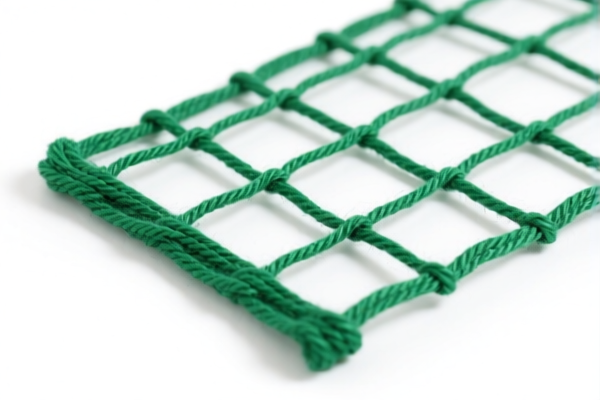
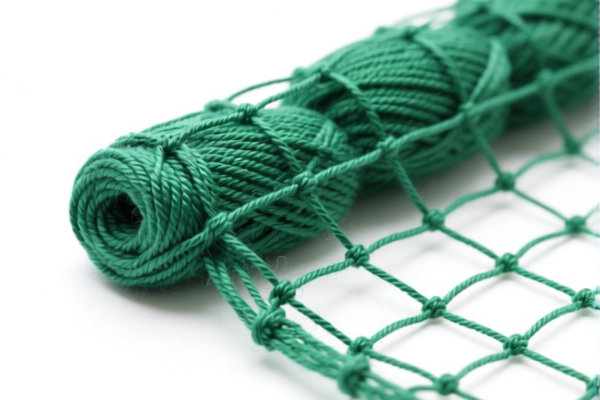
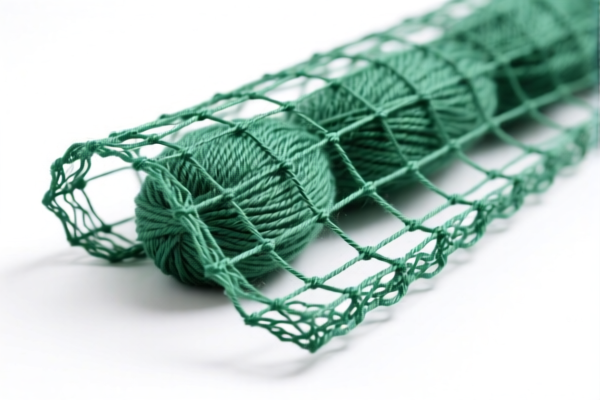
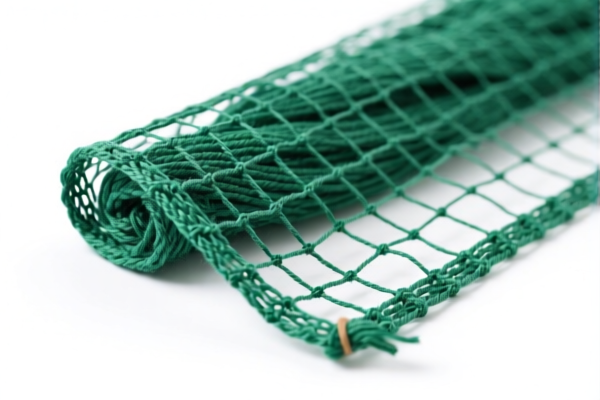
AI Analysis
🌿 Acrylic Synthetic Short Fiber Woven Agricultural Shade Net
🌐 HS Code Reference & Customs Clearance Guide | 2026 Latest Tariff Analysis | Strategic Classification for US Import
📌 I. Product Definition & Classification: What Exactly Is This "Shade Net"?
This product is a specialized textile material used primarily in agriculture for shading crops, protecting livestock, or dust control. In international trade, the classification hinges on three critical factors:
1. Material Composition: Acrylic synthetic short fibers (人造纺织材料/合成纤维).
2. Structure: Woven fabric/bagging material (编织布).
3. Primary Use: Technical/Industrial vs. Packaging/Covering.
⚠️ Key Distinction Logic:
- Is it classified as a Technical Textile (Chapter 59)? → Higher tax burden due to specific US trade remedies (Section 301 + IEEPA).
- Is it classified as a Packaging/Covering item (Chapter 63)? → Potentially lower base duty, but still subject to additional tariffs.
- Is it classified as a Net (Chapter 56)? → Often carries the highest base duty in this set.
📦 II. HS Code Classification Details (Based on Provided Data)
| HS Code | Product Description | Primary Classification Logic | Tax Burden Level |
|---|---|---|---|
5911.20.30.00 |
Acrylic Woven Fabric for Agricultural Shading | Classified under Chapter 59: Textile fabrics impregnated, coated, covered or laminated with textile materials; Technical/Industrial use. | 🔴 High (35.0%) |
5911.90.00.80 |
Acrylic Woven Fabric (Other Technical Textiles) | Classified under Chapter 59: Other technical/industrial textile products. | 🔴 Very High (38.8%) |
6305.39.00.00 |
Acrylic Woven Net/Bags (Agricultural Covering) | Classified under Chapter 63: Made-up clothing/accessories; Sacks and bags for packaging/multiple use. | 🟡 Medium (25.9%) |
5608.19.20.90 |
Knitted/Crocheted or Woven Nets (Other) | Classified under Chapter 56: Wadding, felt, etc.; Nets of twine, rope, cordage, or textiles. | 🔴 Highest (40.0%) |
🔍 Critical Note:
- The same physical product can result in different HS codes depending on how you describe its primary function and structure in the commercial invoice.
- Chapter 59 items are often scrutinized more heavily for "Technical Textile" definitions.
- Chapter 63 is typically the "safe harbor" for general-purpose agricultural shading nets if they are considered "sacks/bags" or "covers."
💰 III. 2026 Latest Tariff Rate Breakdown (Detailed Tax Clauses)
✅ Applicable Market: United States (US)
✅ Origin: China (CN)
✅ Effective Date: Current trade policies apply (Section 301 + IEEPA 122 Clause)
🎯 1. HS Code 5911.20.30.00 – Technical Textile (Agricultural Use)
| Item | Detail |
|---|---|
| Base Duty (MFN) | 0.0% |
| Section 301 Additional Duty | +25.0% |
| IEEPA / 122 Clause Duty | +10.0% |
| Total Effective Rate | 35.0% |
| Calculation | CIF Value × 35% |
| De Minimis Exemption | ❌ Not Applicable (Deny de minimis for Section 301 goods) |
| Legal Basis | USITC:5911.20.30.00 → Footnote:301.01.25 → IEEPA:122.10 |
📌 Interpretation:
- Despite a 0% base duty, the 35% total rate makes this expensive.
- The 25% comes from the standard Section 301 list for textiles.
- The 10% is a specific surcharge (often linked to Section 122 or other emergency powers) applied to Chinese-origin goods.
🎯 2. HS Code 5911.90.00.80 – Other Technical Textiles
| Item | Detail |
|---|---|
| Base Duty (MFN) | 3.8% |
| Section 301 Additional Duty | +25.0% |
| IEEPA / 122 Clause Duty | +10.0% |
| Total Effective Rate | 38.8% |
| Calculation | CIF Value × 38.8% |
| De Minimis Exemption | ❌ Not Applicable |
| Legal Basis | USITC:5911.90.00.80 → Footnote:301.01.25 → IEEPA:122.10 |
📌 Interpretation:
- This is the most expensive option in Chapter 59 due to the 3.8% base duty adding to the surcharges.
- Avoid this code unless the product has specific industrial filtration or non-agricultural technical properties.
🎯 3. HS Code 6305.39.00.00 – Sacks/Bags (Packaging/Covering)
| Item | Detail |
|---|---|
| Base Duty (MFN) | 8.4% |
| Section 301 Additional Duty | +7.5% |
| IEEPA / 122 Clause Duty | +10.0% |
| Total Effective Rate | 25.9% |
| Calculation | CIF Value × 25.9% |
| De Minimis Exemption | ❌ Not Applicable (High value threshold may apply, but generally taxable) |
| Legal Basis | USITC:6305.39.00.00 → Footnote:301.07.5 → IEEPA:122.10 |
📌 Interpretation:
- This is the most cost-effective classification for standard agricultural shade nets.
- The Section 301 rate is only 7.5% (not 25%) for this specific subheading in some lists, or the base 8.4% + 7.5% + 10% sums to 25.9%.
- Strategic Advantage: Saves ~10% vs. Chapter 59 codes.
- Condition: Must be clearly described as a "Bag," "Sack," or "Cover" for agricultural use, not as "technical fabric."
🎯 4. HS Code 5608.19.20.90 – Woven Nets
| Item | Detail |
|---|---|
| Base Duty (MFN) | 5.0% |
| Section 301 Additional Duty | +25.0% |
| IEEPA / 122 Clause Duty | +10.0% |
| Total Effective Rate | 40.0% |
| Calculation | CIF Value × 40.0% |
| De Minimis Exemption | ❌ Not Applicable |
| Legal Basis | USITC:5608.19.20.90 → Footnote:301.01.25 → IEEPA:122.10 |
📌 Interpretation:
- Highest Total Tax (40%).
- Although it seems like the most "accurate" physical description (it is a net), the tariff structure penalizes it heavily.
- Only use if the product is explicitly a "twine net" for fishing/industrial catching, not just a shading cloth.
🛠️ IV. Customs Clearance Practical Advice (Real-World Pitfall Guide)
✅ 1. Recommended Strategy: Aim for 6305.39.00.00
Why?
- Cost Savings: 25.9% vs. 35-40% for other codes.
- Justification: Agricultural shade nets are widely used as "covers" or "sacks" in horticulture. They are often sold in rolls but function as temporary covering structures.
How to Justify?
- Invoice Description: Do NOT use "Woven Fabric" or "Technical Textile."
- Use Terms Like:
"Agricultural Shade Cover, Acrylic Woven Material, Used for Crop Protection, Sold in Rolls/Sheets"
"Shade Cloth for Greenhouses, Classed as Made-up Covering"
Avoid These Terms:
❌ "Technical Fabric"
❌ "Industrial Weave"
❌ "Non-woven Textile" (if it is actually woven)
✅ 2. Documentation Checklist
| Document | Requirement | Purpose |
|---|---|---|
| Commercial Invoice | Must clearly state HS Code 6305.39.00.00 |
Primary basis for customs valuation |
| Product Photos | Show the mesh structure, edges, and any brand labels | Prove it is a "net/cover," not a raw fabric roll for further manufacturing |
| Usage Declaration | "For agricultural shading, not for industrial filtration" | Prevent misclassification into Chapter 59 (Technical Textiles) |
| Material Composition Certificate | Confirm 100% Acrylic Synthetic Short Fiber | Verify eligibility for the specific subheading |
| Packaging List | Show if sold in rolls, folded, or packed as "bags" | Supports the "Sack/Bag" or "Cover" narrative |
✅ 3. Special Scenarios & Risk Mitigation
| Scenario | Risk | Mitigation Strategy |
|---|---|---|
| Product is very thick/heavy | Customs may classify as 5911 (Technical Fabric) |
Provide thickness/weight specs; argue it is a "cover" not a "fabric lining" |
| Product has special coating | Risk of 5903 or 5911 |
Disclose coating type; if it's just UV stabilizer, argue it doesn't change the "cover" function |
| Importing in large rolls | High scrutiny | Clearly label contents as "Shade Netting" not "Acrylic Textile Roll" |
| OEM/White Label | No specific brand proof | Ensure the design is generic "agricultural use" to fit 6305 |
🌍 V. Global Market Comparison (2026 Context)
| Market | Recommended HS Code | Est. Total Tax | Key Certification |
|---|---|---|---|
| 🇺🇸 USA | 6305.39.00.00 |
25.9% | None specific, but ensure accurate description |
| 🇨🇳 China | 6305.39.00.00 |
~10-15% | CCC (if applicable), Standard Quality |
| 🇪🇺 EU | 6305.39.00.00 |
0-12% | CE (if applicable), REACH Compliance |
| 🇯🇵 Japan | 6305.39.00.00 |
10-15% | JIS Standard |
📌 Conclusion:
- The USA is the most challenging market due to Section 301 and IEEPA tariffs.
- Classification is the #1 cost-saving lever. Choosing6305over5911saves 10-15% on the CIF value.
📌 VI. Common Mistakes & Pitfalls (Blood Lessons)
❌ Mistake 1: Declaring as "Acrylic Fabric" (HS 5911)
👉 Result: 35-38.8% tax. You lose ~10% profit margin unnecessarily.
👉 Fix: Describe as "Agricultural Cover/Net."
❌ Mistake 2: Declaring as "Fishing Net" (HS 5608)
👉 Result: 40% tax. Highest burden.
👉 Fix: Do not use "fishing" terminology unless it is actually for catching fish.
❌ Mistake 3: Ignoring the IEEPA 10% Surcharge
👉 Result: Surprise bills at customs.
👉 Fix: Always budget for Base + Section 301 + 10% IEEPA.
❌ Mistake 4: Using "Non-woven" when it is "Woven"
👉 Result: Misdeclaration penalties.
👉 Fix: Ensure the invoice matches the physical structure (Woven vs. Non-woven).
✅ Correct Declaration Example:
"Agricultural Shade Net, Acrylic Woven, 100% Synthetic, Used for Greenhouse Covering, HS Code 6305.39.00.00"
🎯 VII. Conclusion: Strategic Sourcing Advice
🎯 Key Takeaway:
"Classify as Cover, Not Fabric. Save 10%, Avoid Trouble."
- Best HS Code:
6305.39.00.00(25.9% Total Tax) - Worst HS Code:
5608.19.20.90(40.0% Total Tax) - Neutral HS Code:
5911.20.30.00(35.0% Total Tax)
📌 Pro Tip:
Before shipping, request an Advance Ruling (Provisional Classification) from US CBP if the shipment value is high. Submit photos and product specs to confirm that 6305.39.00.00 is accepted for your specific shade net design.
📣 Immediate Action Plan:
1. Update Invoice Description: Change "Fabric" to "Agricultural Shade Cover/Net."
2. Verify Structure: Ensure the product is clearly a "net" or "woven cover."
3. Calculate Landed Cost: Use 25.9% for budgeting, not 35-40%.
4. Consult Broker: Confirm with your US customs broker that 6305.39.00.00 is the preferred entry for your specific item.
✨ Smart Classification = Higher Margins
💼 Don't let tariff codes eat your profit!
Customer Reviews
About HS Code Classification
The Harmonized System (HS) is an internationally standardized nomenclature developed by the World Customs Organization (WCO) to classify traded products. Over 200 countries use the HS system as the basis for customs tariffs, trade statistics, and import/export regulations.
Each HS code follows a hierarchical structure:
- Chapter (2 digits) — Broad category of goods (e.g., Chapter 84: Machinery and Mechanical Appliances)
- Heading (4 digits) — More specific grouping within the chapter
- Subheading (6 digits) — Internationally standardized breakdown, used by all WCO member countries
- National subdivisions (8-10 digits) — Country-specific extensions for further classification, such as US HTSUS 10-digit codes
Correct HS code classification is essential for smooth customs clearance, accurate duty payment, and compliance with trade regulations. Misclassification can lead to customs delays, overpayment of duties, or penalties.
When importing from CN to US, the applicable tariff rates may include:
- Most-Favored-Nation (MFN) rate — The standard duty rate applied to WTO members
- General rate — Applied to countries without trade agreements
- Trade remedy duties — Additional tariffs such as Section 301 (anti-dumping), Section 232 (national security), or countervailing duties
The information provided on this page is for reference purposes only. For official classification, please consult with your local customs authority or a licensed customs broker.