Acrylic Thin Sheet
CN → US| HS Code | Tariff Rate | Origin | Destination | Doc |
|---|---|---|---|---|
| 3926904000 | 12.8% | CN | US | Official Doc |
| 3920511000 | 41.0% | CN | US | Official Doc |
| 3920515090 | 41.5% | CN | US | Official Doc |
| 9403708015 | 10.0% | CN | US | Official Doc |
| 9403708031 | 35.0% | CN | US | Official Doc |
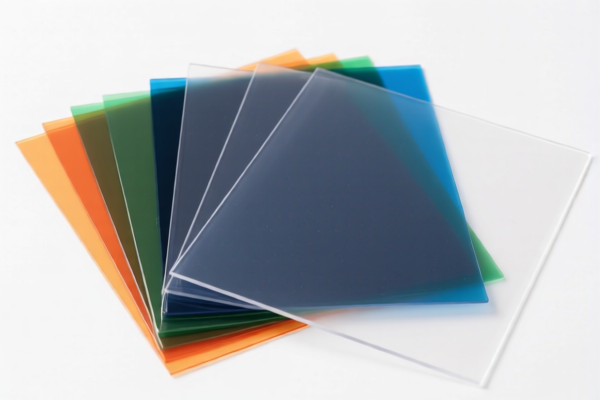
Product Images



AI Analysis
🎨 Acrylic Thin Sheet (Poly(methyl methacrylate) Sheet)
🌐 HS Code Reference & Customs Clearance Guide | 2026 Updated Tariff Analysis | Expert-Level Import Strategy
📌 One, Product Definition & Classification: What Exactly Is “Acrylic Thin Sheet”?
Acrylic thin sheet — chemically known as poly(methyl methacrylate) or PMMA — is a transparent thermoplastic widely used in signage, displays, furniture, lighting, and industrial applications. Despite its glass-like clarity, it's not glass, but a plastic with excellent impact resistance, UV stability, and ease of fabrication.
⚠️ Key Classification Principle:
- If the product is in thin sheet form, non-foamed, not reinforced, and not used as a structural component in furniture, it falls under plastics (Chapter 39).
- If it's used as a component in furniture, it may be classified under furniture parts (Chapter 94).
- Do NOT confuse it with glass — even if it looks like glass, it’s not classified under glass (e.g., 7007 or 7008).
📦 Two, HS Code Classification Details (2026 Official Tariff Match)
| HS Code | Product Description | Applicable Use Case | Key Characteristics |
|---|---|---|---|
3926.90.40.00 |
Acrylic (PMMA), thin sheet, non-foamed, not reinforced, classified as other plastic products | General industrial, signage, display, packaging, non-furniture uses | ✅ Thin sheet form ✅ Non-foamed ✅ Not reinforced ✅ Not part of furniture |
3920.51.10.00 |
Acrylic (PMMA), thin sheet, non-foamed, not reinforced, classified under “other sheets, plates, film, etc.” | Industrial components, architectural panels, custom-cut parts | ✅ PMMA material ✅ Sheet shape ✅ No reinforcement ✅ Not for furniture |
3920.51.50.90 |
Acrylic (PMMA), thin sheet, non-foamed, not reinforced, classified under “other” category | Custom or non-standard acrylic sheets, special-purpose uses | ✅ Same material & form ✅ Falls under “other” due to lack of specific subheading |
9403.70.80.15 |
Plastic thin sheet used as furniture component (e.g., table top, panel, door), classified under plastic furniture parts | Acrylic tabletops, cabinet panels, display cases, shelving | ✅ Used in furniture ✅ Plastic sheet ✅ Functional part of furniture |
9403.70.80.31 |
Plastic thin sheet used as furniture component, but not in standard furniture type | Custom or non-standard furniture parts, artistic installations | ✅ Same as above ✅ Not standard furniture ✅ Higher risk of scrutiny |
🔍 Critical Insight:
- The same acrylic sheet can be classified under 2 different HS codes depending on intended use.
- Use in furniture = Chapter 94 → Higher tariff.
- General use (signage, display, industrial) = Chapter 39 → Lower tariff.
💰 Three, 2026 Updated Tariff Breakdown (Including附加 Taxes & Legal Basis)
✅ Applicable Country: United States (US)
✅ Origin: China (CN)
✅ Effective Date: November 10, 2025 (and ongoing)
✅ Taxation Framework: Base Tariff + Section 301 (USITC) + IEEPA (Emergency Economic Powers Act)
🎯 1. 3926.90.40.00 — Acrylic Thin Sheet (General Use)
| Item | Detail |
|---|---|
| Base Tariff | 2.8% (ad valorem) |
| Section 301 (USITC) Additional Duty | 0% (not listed under 301 List 3) |
| IEEPA (International Emergency Economic Powers Act) Duty | 10% (applies to China-origin goods) |
| Total Effective Tariff | 12.8% |
| Tax Calculation | CIF Value × 12.8% |
| De Minimis Exemption? | ✅ Yes (if value ≤ $800, no duty applies) |
| Legal Basis Path | IEEPA:9903.01.25 → IEEPA:9903.01.24 → 3926.90.40.00 |
📌 Explanation:
- This code applies to acrylic sheets used outside of furniture (e.g., signage, display stands, industrial parts).
- No Section 301 tariff because it’s not on the 301 list (List 3).
- Only IEEPA 10% applies — the main cost driver.
🎯 2. 3920.51.10.00 — Acrylic Thin Sheet (Non-Foamed, Non-Reinforced Sheet)
| Item | Detail |
|---|---|
| Base Tariff | 6.0% |
| Section 301 (USITC) Additional Duty | 25.0% (listed under 301 List 3) |
| IEEPA Duty | 10% (China-origin goods) |
| Total Effective Tariff | 41.0% |
| Tax Calculation | CIF × 41.0% |
| De Minimis Exemption? | ❌ No (exceeds threshold) |
| Legal Basis Path | IEEPA:9903.01.25 → IEEPA:9903.01.24 → USITC:3920.51.10.00 → FOOTNOTE:9903.88.01 |
📌 Explanation:
- This code is highly sensitive — it’s on Section 301 List 3 (China tariffs).
- 25% + 10% = 35% in additional duties — very high.
- No de minimis — even small shipments are fully taxed.
🎯 3. 3920.51.50.90 — Acrylic Thin Sheet (Other Category)
| Item | Detail |
|---|---|
| Base Tariff | 6.5% |
| Section 301 (USITC) Additional Duty | 25.0% |
| IEEPA Duty | 10% |
| Total Effective Tariff | 41.5% |
| Tax Calculation | CIF × 41.5% |
| De Minimis Exemption? | ❌ No |
| Legal Basis Path | IEEPA:9903.01.25 → IEEPA:9903.01.24 → USITC:3920.51.50.90 → FOOTNOTE:9903.88.01 |
📌 Explanation:
- This is a catch-all code for acrylic sheets not fitting other subheadings.
- Still subject to 25% Section 301 + 10% IEEPA.
- Slightly higher base rate (6.5%) → 41.5% total.
🎯 4. 9403.70.80.15 — Acrylic Sheet as Furniture Component
| Item | Detail |
|---|---|
| Base Tariff | 0.0% |
| Section 301 (USITC) Additional Duty | 0% (not on 301 List) |
| IEEPA Duty | 10% (China-origin) |
| Total Effective Tariff | 10.0% |
| Tax Calculation | CIF × 10.0% |
| De Minimis Exemption? | ✅ Yes (if ≤ $800) |
| Legal Basis Path | IEEPA:9903.01.25 → IEEPA:9903.01.24 → 9403.70.80.15 |
📌 Explanation:
- Best option if used in furniture — only 10% IEEPA applies.
- No Section 301 — because furniture is not on the 301 list.
- Lowest total tariff among all options — ideal for furniture applications.
🎯 5. 9403.70.80.31 — Acrylic Sheet as Non-Standard Furniture Part
| Item | Detail |
|---|---|
| Base Tariff | 0.0% |
| Section 301 (USITC) Additional Duty | 25.0% (listed under 301 List 3) |
| IEEPA Duty | 10% |
| Total Effective Tariff | 35.0% |
| Tax Calculation | CIF × 35.0% |
| De Minimis Exemption? | ❌ No |
| Legal Basis Path | IEEPA:9903.01.25 → IEEPA:9903.01.24 → USITC:9403.70.80.31 → FOOTNOTE:9903.88.01 |
📌 Explanation:
- Highest risk — classified as non-standard furniture part → subject to 25% Section 301.
- Even if used in furniture, if it’s custom or artistic, this code applies.
- Avoid if possible — 35% is extremely high.
🛠️ Four, Customs Clearance Best Practices (Pro Tips to Avoid Penalties)
✅ 1. Required Documentation (Must-Have Checklist)
| Document | Required? | Purpose |
|---|---|---|
| ✅ Product Specifications | ✔️ | Include thickness, size, color, surface finish, material (PMMA) |
| ✅ Technical Drawings / Cut Sheets | ✔️ | Prove intended use (e.g., furniture vs. display) |
| ✅ High-Resolution Product Photos | ✔️ | Show shape, mounting, use case |
| ✅ Commercial Invoice | ✔️ | Must clearly state "Acrylic Thin Sheet" or "PMMA Sheet" |
| ✅ Bill of Lading / Packing List | ✔️ | Show quantity, weight, packaging |
| ✅ Certificate of Origin (CO) | ✔️ | Required for tariff eligibility |
| ✅ Test Report (RoHS, UL, etc.) | ✔️ | Optional but recommended for compliance |
✅ 2.申报技巧(Key Rules to Remember)
🔥 “Use Defines Tax: Furniture = Lower Tariff, General Use = Higher Risk”
| Scenario | Correct HS Code | Wrong Code | Risk |
|---|---|---|---|
| Acrylic sheet used in signage | 3926.90.40.00 |
9403.70.80.15 |
Underpaying → Audit risk |
| Acrylic tabletop or cabinet panel | 9403.70.80.15 |
3920.51.10.00 |
Overpaying → 41% vs 10% |
| Custom artistic acrylic panel | 9403.70.80.31 |
3920.51.50.90 |
Higher tariff (35% vs 41.5%) |
| Small shipment (<$800) | 3926.90.40.00 |
3920.51.10.00 |
De minimis applies → avoid 41% |
✅ 3. Special Cases & Risk Mitigation
| Situation | Recommended Action |
|---|---|
| Acrylic sheet used in both furniture and signage | Split shipment or declare intended use clearly — avoid ambiguity |
| Custom-cut acrylic for art installations | Use 9403.70.80.31 only if no standard use; otherwise, use 3920.51.50.90 |
| Acrylic sheet with logo printing | Still classified by form and use, not by printing |
| Acrylic sheet with edge beveling or drilling | Still falls under same HS code — use determines classification |
🌍 Five, Global Market Comparison (2026)
| Country | Recommended HS Code | Tariff | Certification | Notes |
|---|---|---|---|---|
| 🇺🇸 USA | 3926.90.40.00 or 9403.70.80.15 |
10%–41.5% | FCC, RoHS | High risk if misclassified |
| 🇨🇳 China | 3920.51.10.00 |
6% | CCC | No 301/IEEPA |
| 🇪🇺 EU | 3920.51.10.00 |
0% (if CE) | CE, RoHS | No extra tariffs |
| 🇦🇺 Australia | 3920.51.10.00 |
5% | RCM | No 301/IEEPA |
| 🇯🇵 Japan | 3920.51.10.00 |
0% | PSE | No extra duties |
📌 Conclusion:
- USA is the most complex market — HS code choice = tariff difference of 31.5%.
- Furniture use = lower tariff — leverage this!
- Avoid3920.51.10.00and3920.51.50.90for small shipments — use de minimis with3926.90.40.00.
📌 Six, Common Mistakes & How to Avoid Them
❌ Mistake 1: Using 3920.51.10.00 for furniture
👉 Result: 41% tariff instead of 10% → cost over 300% higher
❌ Mistake 2: Declaring furniture use but using 3926.90.40.00
👉 Result: Underpaid duties → penalties, audits, delays
❌ Mistake 3: Not providing proof of use (e.g., photos, drawings)
👉 Result: Customs may reclassify → higher tariff, detention
❌ Mistake 4: Using “acrylic sheet” as generic term without specifying use
👉 Result: Ambiguous declaration → risk of reclassification
✅ Correct Approach:
“Acrylic Thin Sheet (PMMA), 3mm × 1200mm × 800mm, used as furniture tabletop, not for signage or industrial use, Model XYZ, with mounting holes, photos attached.”
🎯 Seven, Final Verdict: Smart Classification = Big Savings
🎯 Key Takeaway:
🔹 If used in furniture → use
9403.70.80.15→ only 10%
🔹 If used in signage/industrial → use3926.90.40.00→ 12.8%
🔹 Avoid3920.51.10.00and3920.51.50.90unless absolutely necessary
🔹 Small shipments (<$800) can use de minimis with3926.90.40.00→ no duty!
📌 Pro Tip:
📞 Apply for an Advance Ruling (Pre-Clearance) from U.S. Customs before shipment — lock in the HS code and avoid disputes.
📣 Act Now:
🚀 Contact a licensed customs broker + provide product photos + request HS Code pre-ruling
💼 Ensure your declaration matches your actual use — accuracy saves thousands
✨ Professional Customs Starts with Precise Classification!
💼 Your profit margin depends on the right HS code. Choose wisely.
Customer Reviews
About HS Code Classification
The Harmonized System (HS) is an internationally standardized nomenclature developed by the World Customs Organization (WCO) to classify traded products. Over 200 countries use the HS system as the basis for customs tariffs, trade statistics, and import/export regulations.
Each HS code follows a hierarchical structure:
- Chapter (2 digits) — Broad category of goods (e.g., Chapter 84: Machinery and Mechanical Appliances)
- Heading (4 digits) — More specific grouping within the chapter
- Subheading (6 digits) — Internationally standardized breakdown, used by all WCO member countries
- National subdivisions (8-10 digits) — Country-specific extensions for further classification, such as US HTSUS 10-digit codes
Correct HS code classification is essential for smooth customs clearance, accurate duty payment, and compliance with trade regulations. Misclassification can lead to customs delays, overpayment of duties, or penalties.
When importing from CN to US, the applicable tariff rates may include:
- Most-Favored-Nation (MFN) rate — The standard duty rate applied to WTO members
- General rate — Applied to countries without trade agreements
- Trade remedy duties — Additional tariffs such as Section 301 (anti-dumping), Section 232 (national security), or countervailing duties
The information provided on this page is for reference purposes only. For official classification, please consult with your local customs authority or a licensed customs broker.