Acrylic Tissue Box
CN → US| HS Code | Tariff Rate | Origin | Destination | Doc |
|---|---|---|---|---|
| 3923900080 | 38.0% | CN | US | Official Doc |
| 3923109000 | 38.0% | CN | US | Official Doc |
| 3924104000 | 13.4% | CN | US | Official Doc |
| 3926904000 | 12.8% | CN | US | Official Doc |
| 3924905650 | 20.9% | CN | US | Official Doc |
Product Images

AI Analysis
📦 Acrylic Tissue Box (Plastic Storage & Packaging)
🌐 HS Code Reference & Customs Clearance Guide | 2026 Latest Tariff Analysis | Professional Strategy for US Imports
📌 I. Product Definition & Classification: What Exactly Is an "Acrylic Tissue Box"?
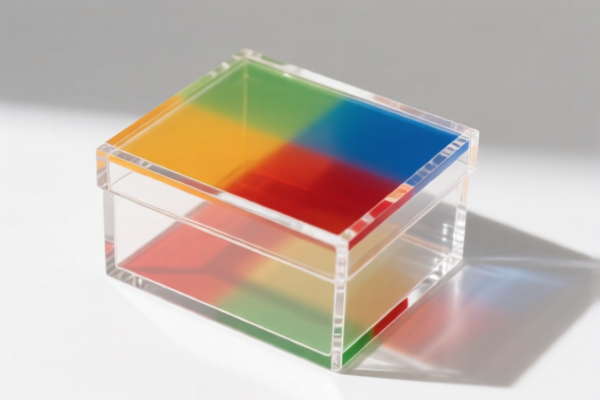
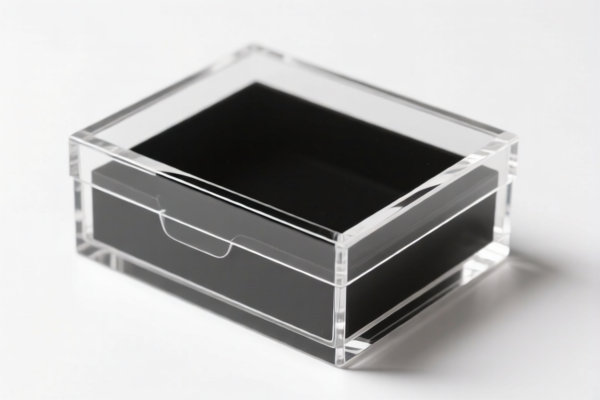
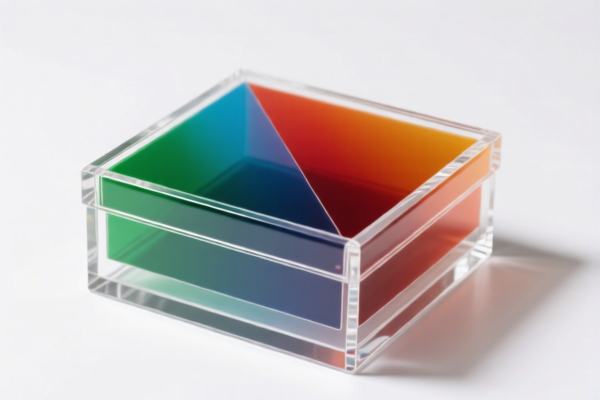
An Acrylic Tissue Box is typically a transparent, rigid plastic container designed to hold facial tissues, often used in bathrooms, offices, or homes for aesthetic storage. In international trade, its classification depends heavily on its primary function and design:
- As Packaging: If it is sold primarily to contain and protect the tissue pack (e.g., a clear sleeve or rigid box where the tissue is the main product and the box is disposable/minor), it may be classified under packaging goods.
- As Household/Storage Item: If it is a durable, reusable container sold as a standalone home decor or storage item (not just for the tissue pack), it is classified under household/plastic articles.
- As Other Plastic Goods: If it does not fit standard packaging or household categories (e.g., specialized industrial storage), it falls under miscellaneous plastic articles.
⚠️ Key Classification Divergence:
- If viewed as "Packaging for Transport/Packaging" → HS Codes 3923.90 or 3923.10 apply (Higher Tariffs).
- If viewed as "Household/Homeware" → HS Code 3924.10 or 3924.90 apply (Lower Tariffs).
- If viewed as "Miscellaneous Plastic Article" → HS Code 3926.90 applies (Lowest Tariff).
📊 II. HS Code Classification Details (2026 Latest Tariff Matrix)
Based on the provided data, here are the five possible HS Codes for an Acrylic Tissue Box, ranked by tariff impact:
| HS Code | Product Description | Functional Classification | Estimated Total Tax (US/China) |
|---|---|---|---|
3923.90.00.80 |
Plastic goods for transport or packaging (Box) | Packaging/Transport | 38.0% |
3923.10.90.00 |
Plastic packaging articles (Other) | Packaging | 38.0% |
3924.90.56.50 |
Other plastic household/homeware articles | Household Storage | 20.9% |
3924.10.40.00 |
Plastic tableware, kitchenware, domestic articles | Household/Home Decor | 13.4% |
3926.90.40.00 |
Other plastic articles | Miscellaneous Plastic | 12.8% |
🔍 Critical Insight:
- The lowest tariff (12.8%) applies if classified as a generic plastic article (3926.90.40.00).
- The highest tariff (38.0%) applies if classified as packaging (3923.*).
- Strategic Shift: If the box is sold as a reusable home accessory (e.g., "Bathroom Tissue Holder"), argue for3924or3926categories to save ~25% in tariffs.
💰 III. Detailed Tariff Breakdown (US Market / China Origin)
✅ Applicable Country: United States (US)
✅ Origin: China (CN)
✅ Effective Date: Post-2025 Trade Policy (Including Section 301 & IEEPA)
🎯 1. High-Tariff Category: Packaging Goods (3923.90.00.80 & 3923.10.90.00)
| Item | Details |
|---|---|
| Base Tariff | 3.0% (Most Favored Nation Rate) |
| Section 301 / Retaliatory | 25.0% (Additional Duty on Chinese Goods) |
| Section 122 / IEEPA | 10.0% (Specific Trade Remedies) |
| Total Effective Rate | 38.0% |
| De Minimis Eligibility | ❌ Not Eligible (Section 321 de minimis usually excluded for goods under these specific enforcement actions or high-risk categories) |
| Legal Basis | HTSUS 3923 + USITC Footnotes + IEEPA Orders |
📌 Explanation:
- If CBP (Customs and Border Protection) determines the acrylic box is primarily packaging for the tissue paper, it falls under Chapter 39, Heading 3923.
- These codes attract the full 25% Section 301 tariff + 10% IEEPA/Section 122 tariff.
- Result: High cost, high risk. Avoid this classification if possible.
🎯 2. Medium-Tariff Category: Household/Storage (3924.90.56.50)
| Item | Details |
|---|---|
| Base Tariff | 3.4% |
| Section 301 / Retaliatory | 7.5% (Reduced rate for certain household goods in some contexts, or specific footnote application) |
| Section 122 / IEEPA | 10.0% |
| Total Effective Rate | 20.9% |
| De Minimis Eligibility | ❌ Not Eligible |
| Legal Basis | HTSUS 3924 + USITC Footnotes |
📌 Explanation:
- Classified as "Other plastic household articles."
- Lower than packaging, but still significant due to the 10% IEEPA tariff.
🎯 3. Low-Tariff Category: Home Decor / Generic Plastic (3924.10.40.00 & 3926.90.40.00)
A. 3924.10.40.00 – Plastic Tableware/Homeware
| Item | Details |
|---|---|
| Base Tariff | 3.4% |
| Section 301 / Retaliatory | 0.0% (Potentially exempt or lower rate for certain homeware) |
| Section 122 / IEEPA | 10.0% |
| Total Effective Rate | 13.4% |
| De Minimis Eligibility | ❌ Not Eligible |
B. 3926.90.40.00 – Other Plastic Articles
| Item | Details |
|---|---|
| Base Tariff | 2.8% |
| Section 301 / Retaliatory | 0.0% (Often not subject to 301 if not specifically listed, or minimal impact) |
| Section 122 / IEEPA | 10.0% |
| Total Effective Rate | 12.8% |
| De Minimis Eligibility | ❌ Not Eligible |
📌 Explanation:
-3924.10.40.00: Argue the box is a "bathroom accessory" or "decorative homeware," not packaging.
-3926.90.40.00: Argue it is a generic "plastic container" for storage. This often has the lowest base duty (2.8%) and no additional Section 301 tariff (only 10% IEEPA).
- Savings: Up to 25.2% compared to the packaging classification.
🛠️ IV. Customs Clearance Strategy & Best Practices
✅ 1. Documentation Checklist (Mandatory)
| Document | Requirement | Notes |
|---|---|---|
| Commercial Invoice | ✔️ | Must clearly state: "Acrylic Tissue Holder/Box, Non-Disposable, For Decorative/Home Use" |
| Product Photos | ✔️ | High-res images showing the box without tissues inside, highlighting its rigid, reusable nature. |
| Product Specification | ✔️ | Material: PMMA (Acrylic); Use: Storage/Homeware; Not for single-use transport. |
| Proof of Design | ✔️ | If OEM, provide design files showing it is a finished home good, not a packaging sleeve. |
| Origin Certificate | ✔️ | Required for US customs; confirm Country of Origin: China. |
✅ 2. Classification Strategy (How to Lower Tariffs)
🔥 Golden Rule: "It's a Home Good, Not Packaging!"
| Scenario | Recommended HS Code | Why? |
|---|---|---|
| Sold as a standalone "Bathroom Tissue Holder" | 3924.10.40.00 (13.4%) or 3926.90.40.00 (12.8%) |
It is a durable, reusable item. CBP is more likely to accept "homeware" if marketed as decor. |
| Sold as a "Clear Sleeve" for Tissue Packs | 3923.90.00.80 (38.0%) |
Clearly packaging. Avoid if possible. |
| Sold as a "Storage Container" for Cotton Swabs/Tissues | 3926.90.40.00 (12.8%) |
Generic plastic article. Lowest duty. |
💡 Pro Tip:
- Do not use the word "Packaging" in your invoice description. Use "Holder," "Dispenser," "Container," or "Box" (for storage).
- Emphasize reusability and durability in product descriptions.
✅ 3. Common Pitfalls & Risks
❌ Mistake 1: Labeling the product as "Acrylic Tissue Packaging"
👉 Risk: CBP will classify under 3923 → 38% Tax.
✅ Fix: Use "Acrylic Tissue Holder" or "Bathroom Accessory."
❌ Mistake 2: Ignoring Section 122 / IEEPA Tariffs
👉 Risk: All above HS codes include a 10% IEEPA tariff.
✅ Fix: Factor this 10% into your pricing model. It is not optional.
❌ Mistake 3: Assuming De Minimis ($800) Applies
👉 Risk: De Minimis does NOT apply to goods subject to Section 301 or specific IEEPA actions for Chinese origin in many cases, or CBP may scrutinize shipments.
✅ Fix: Plan for formal entry and full duty payment.
🌍 V. Global Market Comparison (2026)
| Market | Recommended HS Code | Est. Total Tax | Key Requirement |
|---|---|---|---|
| 🇺🇸 USA | 3926.90.40.00 |
12.8% | Avoid "Packaging" classification |
| 🇬🇧 UK | 3926.90.90 |
~2.8% + VAT | Post-Brexit rules may differ |
| 🇪🇺 EU | 3926.90.97 |
~4.5% + VAT | CE Marking not required for plastic, but safety standards apply |
| 🇨🇦 Canada | 3926.90.90 |
~5.25% + GST | Similar to US but lower duties |
📌 Conclusion:
The USA is the most challenging market due to Section 301 + IEEPA tariffs. Classification strategy is critical to save ~25% in duties.
📌 VI. Final Verdict & Action Plan
- Rebrand the Product: Sell it as a "Bathroom Tissue Holder" or "Decorative Acrylic Box", not "Packaging."
- Select HS Code: Aim for
3926.90.40.00(12.8%) or3924.10.40.00(13.4%).
Why? It avoids the 25% Section 301 tariff applied to packaging (3923).
Note: Always verify with a licensed customs broker, as CBP discretion applies. - Prepare Documentation: Ensure invoices say "Homeware/Storage," not "Packaging."
- Budget for IEEPA: Include the 10% IEEPA tariff in all cost calculations.
🎯 Remember:
"Packaging = 38% | Homeware = 13%"
A difference of 25% in tax can make or break your profit margin. Choose wisely!
✨ Professional Clearance, Start with Precise Classification!
💼 Your Bottom Line Depends on Your HS Code!
Customer Reviews
About HS Code Classification
The Harmonized System (HS) is an internationally standardized nomenclature developed by the World Customs Organization (WCO) to classify traded products. Over 200 countries use the HS system as the basis for customs tariffs, trade statistics, and import/export regulations.
Each HS code follows a hierarchical structure:
- Chapter (2 digits) — Broad category of goods (e.g., Chapter 84: Machinery and Mechanical Appliances)
- Heading (4 digits) — More specific grouping within the chapter
- Subheading (6 digits) — Internationally standardized breakdown, used by all WCO member countries
- National subdivisions (8-10 digits) — Country-specific extensions for further classification, such as US HTSUS 10-digit codes
Correct HS code classification is essential for smooth customs clearance, accurate duty payment, and compliance with trade regulations. Misclassification can lead to customs delays, overpayment of duties, or penalties.
When importing from CN to US, the applicable tariff rates may include:
- Most-Favored-Nation (MFN) rate — The standard duty rate applied to WTO members
- General rate — Applied to countries without trade agreements
- Trade remedy duties — Additional tariffs such as Section 301 (anti-dumping), Section 232 (national security), or countervailing duties
The information provided on this page is for reference purposes only. For official classification, please consult with your local customs authority or a licensed customs broker.