Acrylic Transparent Plastic Sheet
CN → US| HS Code | Tariff Rate | Origin | Destination | Doc |
|---|---|---|---|---|
| 3906902000 | 41.3% | CN | US | Official Doc |
| 3920511000 | 41.0% | CN | US | Official Doc |
| 3906100000 | 41.3% | CN | US | Official Doc |
| 3921110000 | 40.3% | CN | US | Official Doc |
| 3921190090 | 41.5% | CN | US | Official Doc |
Product Images
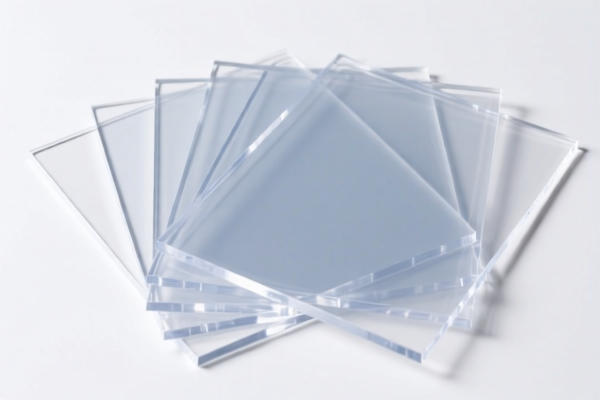
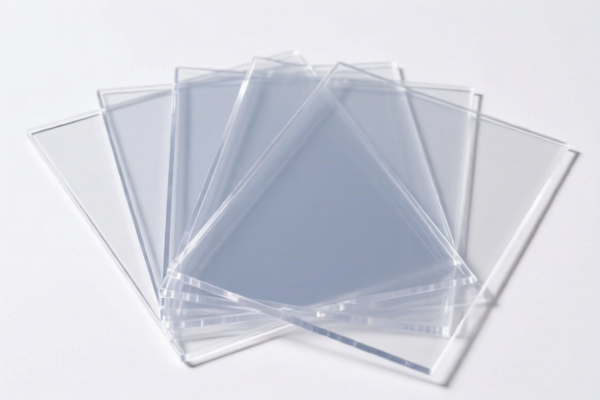
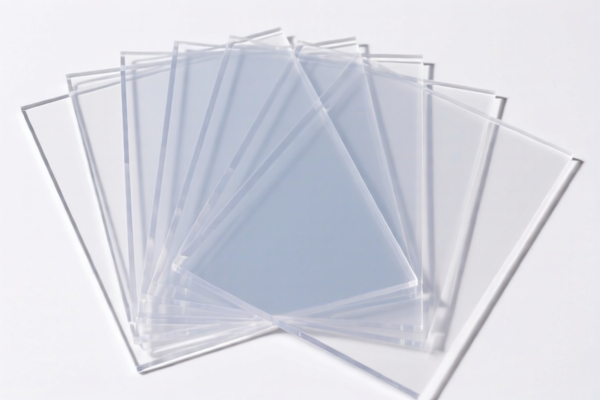
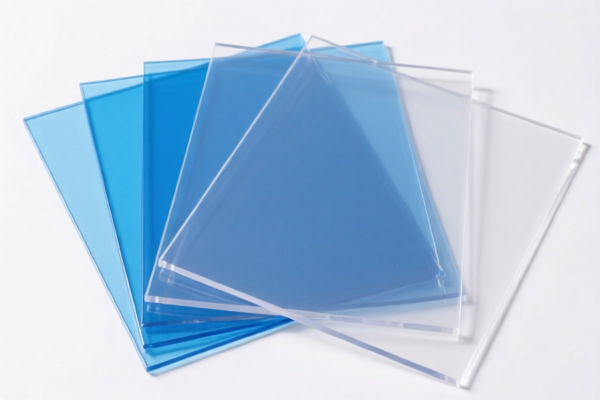
AI Analysis
🧊 Acrylic Transparent Plastic Sheet (PMMA)
🌐 HS Code Reference & Customs Clearance Guide | 2026 Latest Tariff Analysis | Professional Entry Strategy
📌 I. Product Definition & Classification: Do You Really Understand "Acrylic"?
Acrylic, chemically known as Polymethyl Methacrylate (PMMA), is a transparent thermoplastic. In international trade, its classification depends strictly on its physical state (primary vs. manufactured) and specific shape (plate, sheet, film).
Two Main Categories: 1. Primary Forms / Semi-finished (Pre-polymerized blocks/blocks): Raw PMMA blocks or rough slabs before final cutting/polishing. 2. Manufactured Plates/Sheets (Finished Plates): Cut-to-size, polished edges, ready for installation or fabrication.
⚠️ Key Distinction Point:
- If it is a raw polymer block or semi-finished slab not yet shaped into a final product plate → Classified under Chapter 39 (Primary Forms) like3906or3906.10.
- If it is a finished plate/sheet (cut, polished, specific dimensions) → Classified under Chapter 39 (Manufactured Plates/Sheets) like3920or3921.
📦 II. HS Code Classification Details (2026 Latest Tariff Authority Comparison)
Based on the provided data, here are the possible HS Codes and their specific rationales:
| HS Code | Product Description | Summary/Rationale for Classification |
|---|---|---|
3906.90.20.00 |
Acrylic (PMMA) Polymer, Semi-finished Form | "Acrylic (PMMA) belongs to acrylic polymer material; 'plate' belongs to primary/semi-finished form." |
3920.51.10.00 |
Acrylic (PMMA) Plates, Sheets, Films | "Acrylic is Polymethyl Methacrylate; 'plate' falls under the category of plates, sheets, films, foils, and strips." |
3906.10.00.00 |
Acrylic (PMMA) Primary Form | "Acrylic is Polymethyl Methacrylate; 'plate' belongs to semi-finished form in primary state." |
3921.11.00.00 |
Other Plates, Sheets, Films of Plastics | "Acrylic belongs to polymers, plate form matches characteristics of other plastic plates, sheets, films, foils, and strips." |
3921.19.00.90 |
Other Plastic Plates, Sheets, Films | "Acrylic belongs to plastic material; plate matches plate, sheet, film, foil, and strip forms, classified under other plastic categories." |
🔍 Focus Reminder:
-3906Series: Focuses on the polymer nature in primary/semi-finished states (e.g., large blocks before cutting).
-3920/3921Series: Focuses on the product form (plates/sheets) that are manufactured (cut, finished).
- Accuracy Tip: If the acrylic is sold as a "raw block" for further processing, use3906. If it is a "finished sheet" ready for use, use3920or3921. Misclassification leads to significant tax differences.
💰 III. 2026 Latest Tariff Rate Details (Including Additional Taxes & Policy Surcharges)
✅ Applicable Country: United States (US)
✅ Origin: China (CN)
✅ Effective Date: Current regulations apply (Section 301 & IEEPA surcharges active)
🎯 1. 3906.90.20.00 & 3906.10.00.00 —— Acrylic Polymer (Primary/Semi-finished)
| Item | Content |
|---|---|
| Base Tariff | 6.3% (for 3906.90.20.00) / 6.3% (for 3906.10.00.00) |
| Section 301 Surcharge | +25.0% |
| 122 Clause Surcharge | +10.0% |
| Total Tax Rate | 41.3% |
| Tax Calculation | CIF Value × 41.3% |
| De Minimis Exemption | ❌ Not Eligible (High-value polymer imports subject to full duty) |
| Legal Basis Path | Base Tariff: 6.3% → Section 301: 25% → 122 Clause: 10% |
📌 Explanation:
- "Base Tariff 6.3%": Standard MFN rate for acrylic polymers in primary forms.
- "Section 301 Surcharge 25%": Imposed on Chinese-made plastics to protect US manufacturing.
- "122 Clause 10%": Additional surcharge under specific trade provisions (e.g., countervailing or specific trade remedy clauses).
- Total 41.3%: A very high import cost. Requires precise documentation of "primary form" vs. "manufactured" to avoid overpayment or underpayment penalties.
🎯 2. 3920.51.10.00 —— Acrylic Plates, Sheets (Manufactured)
| Item | Content |
|---|---|
| Base Tariff | 6.0% |
| Section 301 Surcharge | +25.0% |
| 122 Clause Surcharge | +10.0% |
| Total Tax Rate | 41.0% |
| Tax Calculation | CIF Value × 41.0% |
| De Minimis Exemption | ❌ Not Eligible |
| Legal Basis Path | Base Tariff: 6.0% → Section 301: 25% → 122 Clause: 10% |
📌 Note:
- Slightly lower base tariff (6.0%) compared to primary forms (3906), but total rate is still ~41%.
- Applicable when acrylic is cut/sheeted but not further processed into finished goods (e.g., lenses, signs).
🎯 3. 3921.11.00.00 —— Other Plastic Plates/Sheets (Acrylic)
| Item | Content |
|---|---|
| Base Tariff | 5.3% |
| Section 301 Surcharge | +25.0% |
| 122 Clause Surcharge | +10.0% |
| Total Tax Rate | 40.3% |
| Tax Calculation | CIF Value × 40.3% |
| De Minimis Exemption | ❌ Not Eligible |
| Legal Basis Path | Base Tariff: 5.3% → Section 301: 25% → 122 Clause: 10% |
📌 Optimization Tip:
- Lowest Total Rate (40.3%) among the listed codes.
- Use this code if the acrylic sheet fits "other plastic plates" criteria (e.g., specific thickness, finish, or application not covered by3920.51).
- Caution: Must ensure it does not fall under3920.51(which is specific to certain acrylic sheets). Misclassification can lead to audits.
🎯 4. 3921.19.00.90 —— Other Plastic Plates, Sheets (Miscellaneous)
| Item | Content |
|---|---|
| Base Tariff | 6.5% |
| Section 301 Surcharge | +25.0% |
| 122 Clause Surcharge | +10.0% |
| Total Tax Rate | 41.5% |
| Tax Calculation | CIF Value × 41.5% |
| De Minimis Exemption | ❌ Not Eligible |
| Legal Basis Path | Base Tariff: 6.5% → Section 301: 25% → 122 Clause: 10% |
📌 Warning:
- Highest Total Rate (41.5%).
- Used for acrylic plates that do not fit specific subcategories.
- Avoid unless no other code applies, as it increases cost by 0.2-1.2% compared to other options.
🛠️ IV. Customs Clearance Practical Advice (Pitfall Avoidance Guide)
✅ 1. Required Documentation Checklist (No Exceptions)
| Document | Must Provide | Explanation |
|---|---|---|
| ✅ Product Specification Sheet | ✔️ | Includes material (PMMA), thickness, dimensions, transparency, UV resistance. |
| ✅ Certificate of Origin (CO) | ✔️ | Proves Chinese origin; critical for applying surcharges correctly. |
| ✅ Commercial Invoice | ✔️ | Must clearly state "Acrylic Sheet (PMMA)" and HS Code. |
| ✅ Packing List | ✔️ | Details weight, dimensions, and number of packages. |
| ✅ Bill of Lading (B/L) | ✔️ | Standard shipping document. |
| ✅ Test Report (Optional but Recommended) | ✔️ | ISO/RoHS compliance to prove material safety. |
✅ 2. Declaration Tips (Key Mantra)
🔥 “Material First, Form Second, Code Precision Saves Money!”
| Situation | Correct Declaration | Wrong Approach |
|---|---|---|
| Raw PMMA Blocks | 3906.10.00.00 or 3906.90.20.00 |
Declare as "Plastic Sheet" → Risk of audit |
| Finished Acrylic Sheets | 3920.51.10.00 or 3921.11.00.00 |
Declare as "Polymer" → May face higher scrutiny |
| Mixed Sizes | List each size separately if different HS codes apply | Bulk declare "Acrylic" → Leads to incorrect duty assessment |
| Transparent vs. Colored | Specify "Transparent" in description | Omit color/transparency → May be misclassified |
✅ 3. Special Scenarios Handling
| Scenario | Handling Advice |
|---|---|
| OEM Custom Sheets | Provide customer PO and design specs to confirm "primary" vs. "manufactured" status. |
| Large Format Sheets | If oversized, ensure packaging details match HS code requirements (e.g., "plates" vs. "sheets"). |
| Hybrid Products (Acrylic + Frame) | Declare separately; acrylic part under 3920/3921, frame under metal/plastic code. |
| Return/Replacement Goods | Submit proof of original export to avoid double taxation. |
🌍 V. Global Market Clearance Comparison (2026 Latest)
| Country/Region | Recommended HS Code | Tariff Rate | Certification Requirements | Notes |
|---|---|---|---|---|
| 🇺🇸 USA | 3921.11.00.00 |
40.3% | None specific (but CO required) | Highest costs due to 301 + 122 clauses |
| 🇨🇳 China | 3920.51.10.00 |
~6-7% | CCC (if applicable) | No additional surcharges |
| 🇪🇺 EU | 3920.51.10.00 |
~6.5% | REACH Compliance | No Section 301 surcharge |
| 🇬🇧 UK | 3920.51.10.00 |
~6.5% | UKCA Marking | Post-Brexit rules apply |
| 🇯🇵 Japan | 3920.51.10.00 |
~6.0% | JIS Certification | Low base tariff, no surcharges |
📌 Conclusion:
- USA is the most expensive market due to layered surcharges (Total ~40-41%).
- EU/UK/Japan offer significantly lower duties (~6-7%).
- Strategy: Consider sourcing from non-China origins (e.g., Vietnam, Thailand) for US-bound acrylic sheets to avoid surcharges, if feasible.
📌 VI. Common Mistakes & Pitfall Guide (Lessons Learned)
❌ Mistake 1: Declaring "Plastic Sheet" without specifying "Acrylic/PMMA"
👉 Consequence: Customs may assign a generic, higher duty code → Overpayment + Delay.
❌ Mistake 2: Confusing "Primary Form" (3906) with "Manufactured Plate" (3920)
👉 Consequence: Misclassification → Audits, Penalties, or Rejection.
❌ Mistake 3: Ignoring Section 301 & 122 Clauses
👉 Consequence: Underpaying duties → Back Taxes + Interest.
❌ Mistake 4: Using "Acrylic" as a generic term without HS Code specificity
👉 Consequence: Customs cannot determine exact rate → Manual Review, 3-5 Day Delay.
✅ Correct Practice:
"Transparent Acrylic Sheet, PMMA, 5mm Thick, Polished Edges, HS Code 3921.11.00.00, Made in China"
🎯 VII. Conclusion: Precision Classification, Cost Optimization!
🎯 Remember the Mantra:
🔹 "Primary vs. Finished: Choose Wisely!"
🔹 "3906 for Blocks, 3920/3921 for Sheets!"
🔹 "USA Tax ~40%, Avoid Surcharge by Origin Shift!"
📌 Pro Tip:
- If your acrylic sheets are imported from Vietnam, Malaysia, or Thailand, you avoid Section 301 and 122 surcharges.
- Result: Tariff drops to ~6-7% (Base Rate Only).
- Action: Apply for Pre-Ruling (Advance Ruling) from US CBP to confirm the correct HS Code for your specific product specifications.
📣 Immediate Action:
📞 Contact a Licensed Customs Broker
📄 Submit Product Photos & Specs
🚀 Apply for HS Code Pre-Ruling
✨ Professional Clearance Starts with Accurate Classification!
💼 Every 0.1% of Duty Matters – Optimize Your Supply Chain Today!
Customer Reviews
About HS Code Classification
The Harmonized System (HS) is an internationally standardized nomenclature developed by the World Customs Organization (WCO) to classify traded products. Over 200 countries use the HS system as the basis for customs tariffs, trade statistics, and import/export regulations.
Each HS code follows a hierarchical structure:
- Chapter (2 digits) — Broad category of goods (e.g., Chapter 84: Machinery and Mechanical Appliances)
- Heading (4 digits) — More specific grouping within the chapter
- Subheading (6 digits) — Internationally standardized breakdown, used by all WCO member countries
- National subdivisions (8-10 digits) — Country-specific extensions for further classification, such as US HTSUS 10-digit codes
Correct HS code classification is essential for smooth customs clearance, accurate duty payment, and compliance with trade regulations. Misclassification can lead to customs delays, overpayment of duties, or penalties.
When importing from CN to US, the applicable tariff rates may include:
- Most-Favored-Nation (MFN) rate — The standard duty rate applied to WTO members
- General rate — Applied to countries without trade agreements
- Trade remedy duties — Additional tariffs such as Section 301 (anti-dumping), Section 232 (national security), or countervailing duties
The information provided on this page is for reference purposes only. For official classification, please consult with your local customs authority or a licensed customs broker.