Acrylic Transparent Sheets (Lead containing)
CN → US| HS Code | Tariff Rate | Origin | Destination | Doc |
|---|---|---|---|---|
| 3926909400 | 35.0% | CN | US | Official Doc |
| 3920515050 | 41.5% | CN | US | Official Doc |
| 3926909989 | 22.8% | CN | US | Official Doc |
| 3920594000 | 35.0% | CN | US | Official Doc |
Product Images
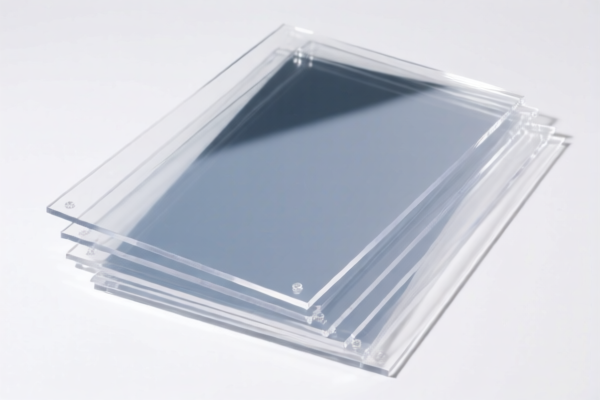
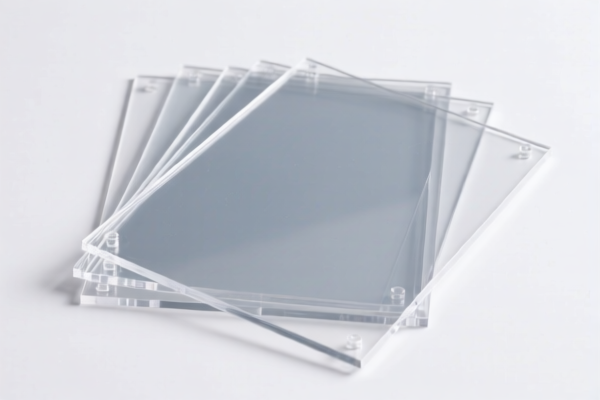
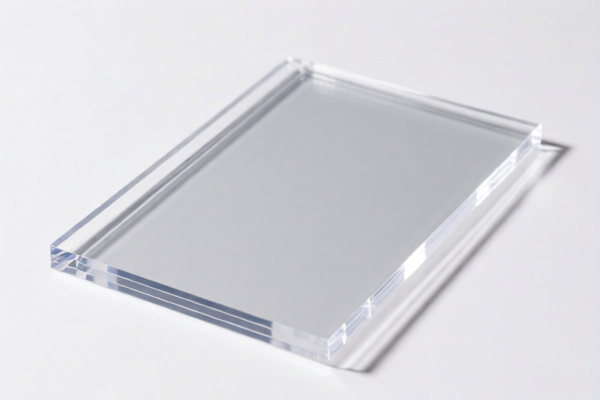
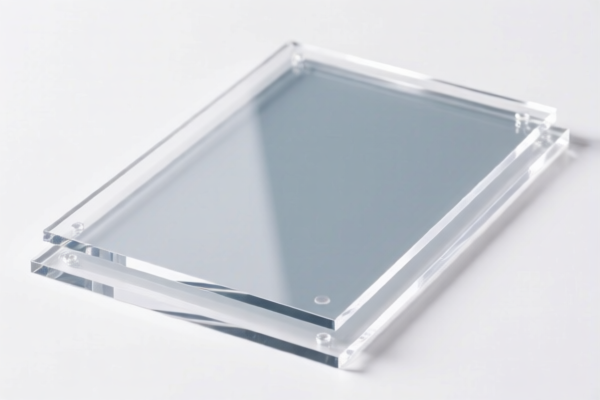
AI Analysis
🖥️ Acrylic Transparent Sheets (Lead Containing)
🌐 HS Code Reference & Customs Clearance Guide | 2026 Latest Tariff Analysis | Professional Clearance Strategy
📌 I. Product Definition & Classification: Do You Really Understand "Lead-Containing Acrylic"?
"Acrylic Transparent Sheets with High Lead Content" refer to rigid plastic sheets made from acrylic (polymethyl methacrylate, PMMA) or similar plastic materials within Chapters 3901–3914. The key distinguishing feature is the high lead content, which triggers specific regulatory scrutiny and higher tariff rates under current US trade policies (Section 301 and IEEPA).
In international trade, these sheets are categorized based on their form (flexible vs. rigid/non-flexible) and specific plastic composition. The presence of lead does not change the base plastic classification but significantly impacts the additional tariffs applied.
⚠️ Key Distinction Points:
- If the sheet is non-flexible (rigid board/plank) and specifically noted for high lead content → Consider 3920.51 or 3920.59.
- If the sheet is considered a thin plastic sheet/plate generally used for fabrication, signage, or display, and fits the "Other Plastic Articles" category → Consider 3926.90.
- Critical Note: Misclassifying between "Plastics Articles" (3920) and "Other Plastic Articles" (3926) can lead to significant duty differences due to the interplay with Section 301 tariffs.
📦 II. HS Code Classification Details (2026 Latest Tariff Authority Comparison)
| HS Code | Product Description | Application Scenario | Key Classification Logic |
|---|---|---|---|
3926.90.94.00 |
Transparent acrylic sheets with high lead content; plastic material & thin sheet form. | Signage, display fixtures, industrial transparent components. | Fits the classification explanation: "Plastic transparent sheets with lead content ≥ 30%". |
3920.51.50.50 |
High-lead-content transparent acrylic material; rigid board form, non-flexible. | Construction panels, rigid structural acrylic sheets. | Classified under non-flexible plastic boards (Ch 3920). |
3926.90.99.89 |
Acrylic sheets (Plastics Ch 3901-3914); sheet form, fits "Other" category definition. | General-purpose acrylic sheets where specific lead-thin-sheet rules don't strictly apply or for "Other" bucket. | Standard "Other plastic articles" bucket for plastic sheets. |
3920.59.40.00 |
"High Lead Content" + "Transparent" + "Acrylic Sheet"; matches material, form, and lead content features. | Commercial acrylic sheets meeting specific high-lead descriptors. | Matches the exact product name keywords and physical characteristics. |
🔍 Important Reminder:
- 3920 Series refers to non-formable plastic plates, sheets, film, foil, and strip. If your product is a rigid, non-flexible board, this series is primary.
- 3926 Series refers to other articles of plastics. If the sheet is considered a finished good or a specific "thin sheet" not falling strictly under 3920's rigid board definition, this series is used.
- Lead Content: While lead content doesn't change the HS Code itself in most cases, it is the trigger for the specific "122 Clause" (Section 301) tariff adjustments in this specific dataset.
💰 III. 2026 Latest Tariff Rate Breakdown (Including Additional Taxes, Policy Surcharges)
✅ Applicable Country: United States (US)
✅ Country of Origin: China (CN)
✅ Effective Time: Current (2025-2026 Period)
🎯 1. 3926.90.94.00 —— Transparent Acrylic Sheets (High Lead Content, Thin Sheet Form)
| Item | Content |
|---|---|
| Basic Tariff | 0.0% |
| Section 301 Surcharge | +25.0% |
| 122 Clause Tariff | +10.0% |
| Total Tax Rate | 35.0% |
| Tax Calculation | CIF Value × 35% |
| De Minimis Exemption | ❌ Not Eligible (High tariff items typically excluded from de minimis benefits in strategic sectors) |
| Legal Basis Path | USITC:3926.90.94.00 → Section 301: 25% → 122 Clause: 10% |
📌 Explanation:
- This code is specifically aligned with the classification explanation for "Plastic transparent sheets with lead content ≥ 30%".
- The 35% total rate is driven entirely by the additional surcharges, as the base duty is 0%.
- Risk: High scrutiny on lead content verification. Ensure MSDS/COA clearly states lead percentage.
🎯 2. 3920.51.50.50 —— High-Lead Acrylic Boards (Non-Flexible)
| Item | Content |
|---|---|
| Basic Tariff | 6.5% |
| Section 301 Surcharge | +25.0% |
| 122 Clause Tariff | +10.0% |
| Total Tax Rate | 41.5% |
| Tax Calculation | CIF Value × 41.5% |
| De Minimis Exemption | ❌ Not Eligible |
| Legal Basis Path | USITC:3920.51.50.50 → Section 301: 25% → 122 Clause: 10% |
📌 Explanation:
- This is the highest tariff rate in the dataset.
- It applies because the base duty for non-flexible acrylic boards (3920.51) is 6.5%.
- Strategy: Only use this HS Code if the product is strictly a rigid, non-flexible board. If it can be classified as a "thin sheet" under 3926, consider alternative codes to potentially lower costs (see below).
🎯 3. 3926.90.99.89 —— Other Plastic Articles (Acrylic Sheets)
| Item | Content |
|---|---|
| Basic Tariff | 5.3% |
| Section 301 Surcharge | +7.5% |
| 122 Clause Tariff | +10.0% |
| Total Tax Rate | 22.8% |
| Tax Calculation | CIF Value × 22.8% |
| De Minimis Exemption | ❌ Not Eligible |
| Legal Basis Path | USITC:3926.90.99.89 → Section 301: 7.5% → 122 Clause: 10% |
📌 Explanation:
- This is the most cost-effective option in the dataset.
- The base duty is 5.3%, and the Section 301 surcharge is lower (7.5% vs. 25%).
- Strategy: If your product qualifies as a "Plastic Sheet/Plate" under Chapter 3926 rather than a rigid board under 3920, choose this code to save ~12-19% in duties.
- Condition: Must fit the "Other" definition and not strictly fall under the high-lead thin sheet rules of 3926.90.94.00 if those are deemed more specific.
🎯 4. 3920.59.40.00 —— High Lead Content Transparent Acrylic Sheets
| Item | Content |
|---|---|
| Basic Tariff | 0.0% |
| Section 301 Surcharge | +25.0% |
| 122 Clause Tariff | +10.0% |
| Total Tax Rate | 35.0% |
| Tax Calculation | CIF Value × 35.0% |
| De Minimis Exemption | ❌ Not Eligible |
| Legal Basis Path | USITC:3920.59.40.00 → Section 301: 25% → 122 Clause: 10% |
📌 Explanation:
- Matches the product name keywords exactly: "High Lead Content", "Transparent", "Acrylic Sheet".
- Base duty is 0%, but the 25% Section 301 surcharge applies, bringing the total to 35%.
- Risk: Customs may challenge this if the product is deemed a "rigid board" (3920.51) rather than a general sheet (3920.59).
🛠️ IV. Customs Clearance Practical Advice (Battle-Tested Pitfall Avoidance Guide)
✅ 1. Preparation Checklist (No Exceptions)
| Material | Mandatory? | Description |
|---|---|---|
| ✅ Product Specification Sheet | ✔️ | Must include dimensions, thickness, transparency level, and Lead Content Percentage. |
| ✅ Material Safety Data Sheet (MSDS) | ✔️ | Critical for verifying lead content. Must be issued by a recognized third-party lab. |
| ✅ Product Photos | ✔️ | Clear images showing the sheet's flexibility (or lack thereof), edges, and packaging. |
| ✅ Commercial Invoice | ✔️ | Must explicitly state "Acrylic Transparent Sheets, Lead-Containing". Do not use generic terms like "Plastic Sheet". |
| ✅ Certificate of Origin (CO) | ✔️ | Essential for confirming China origin (triggers Section 301). |
| ✅ Packing List | ✔️ | Detail weight, volume, and piece count. Ensure consistency with Invoice. |
✅ 2. Declaration Tips (Key Mnemonics)
🔥 "Lead Content Must Be Declared, Form Determines Code, 3926 Saves Money, 3920 Costs More!"
| Situation | Correct Declaration | Wrong Practice |
|---|---|---|
| Rigid, Non-Flexible Board | 3920.51.50.50 (41.5%) |
Misdeclaring as 3926.90 → Risk of penalty & back-dated duties. |
| General Acrylic Sheet (Can be bent) | 3926.90.99.89 (22.8%) |
Misdeclaring as 3920 → Paying 41.5% instead of 22.8%. |
| High Lead >30% Thin Sheet | 3926.90.94.00 (35.0%) |
Hiding lead content → Seizure & Fines. |
| Exact Keyword Match | 3920.59.40.00 (35.0%) |
Vague description "Plastic Sheet" → Customs assessment delay. |
✅ 3. Special Cases Handling
| Situation | Handling Advice |
|---|---|
| OEM Custom Sheets | Provide customer order + design specs. Proving "Lead Content" is key. |
| Mixed Shipments | If shipment contains both high-lead and normal acrylic, split the declaration. Do not combine. |
| Lead Content Verification | Ensure the MSDS matches the invoice. Discrepancies cause holds. |
| Section 301 Exclusions | Check if the specific HS Code has an exclusion list update for 2026. (Currently, most plastic sheets are included). |
🌍 V. Global Market Clearance Comparison (2026 Latest)
| Country/Region | Recommended HS Code | Tariff (China Origin) | Certification Requirements | Notes |
|---|---|---|---|---|
| 🇺🇸 USA | 3926.90.99.89 |
22.8% | None specific for plastic, but lead info required | Lowest tariff option if form allows. |
| 🇺🇸 USA | 3920.51.50.50 |
41.5% | None specific for plastic, but lead info required | Highest tariff, rigid board only. |
| 🇨🇳 China | 3926.90.99.89 |
5% | None | No additional Section 301 or 122 Clause. |
| 🇪🇺 EU | 3920.51.00 |
6.5% | REACH (Lead restrictions apply) | Lead content may trigger REACH scrutiny. |
| 🇯🇵 Japan | 3920.51.00 |
8% | JIS Standards | Check for lead content limits in consumer goods. |
📌 Conclusion:
- USA is the most complex market due to layered tariffs (Base + Section 301 + 122 Clause).
- China Origin always triggers the additional 25% (or 7.5%) and 10% surcharges.
- Optimization: If the product form allows,3926.90.99.89is the optimal choice for US clearance (22.8% vs. 35-41.5%).
📌 VI. Common Errors & Pitfall Guide (Lessons Learned)
❌ Error 1: Declaring "High Lead" content but failing to provide MSDS
👉 Consequence: Customs lab testing → 2-4 weeks delay + storage fees.
❌ Error 2: Using 3920.51 for a sheet that can be slightly bent
👉 Consequence: Overpayment of 18.7% extra duty (41.5% vs 22.8%).
❌ Error 3: Vague description "Acrylic Sheet"
👉 Consequence: Customs assigns highest possible rate or requests additional info → Delay.
❌ Error 4: Ignoring the "122 Clause" (10%)
👉 Consequence: Under-declaration of taxes → Back-dated bills + Penalties.
✅ Correct Practice:
"Acrylic Transparent Sheets, High Lead Content (>30%), Rigid/Non-Rigid, PMMA Material, Model XYZ, MSDS Attached"
🎯 VII. Conclusion: Professional Declaration, Save Costs, Avoid Risks!
🎯 Remember the Mnemonic:
🔹 "Form Matters: Rigid = 3920 (High Tax), Sheet = 3926 (Lower Tax)."
🔹 "Lead Content = 10% Extra Always. Section 301 = 25% or 7.5%."
🔹 "Total Tax: 22.8% (Best), 35.0% (Mid), 41.5% (Worst)."
📌 Tip:
- Always request a Pre-Ruling (Advance Ruling) from US Customs if the product form is borderline between flexible and rigid.
- Ensure your MSDS is updated and explicitly states the lead percentage.
📣 Take Action Now:
📞 Contact a licensed customs broker + Provide Product Photos + Verify Lead Content via Lab Test
🚀 Optimize Your HS Code, Reduce Duty Burden, Clear US Customs Smoothly!
✨ Professional Clearance Starts with Accurate Classification!
💼 Every Dollar Saved on Duty is Pure Profit!
Customer Reviews
About HS Code Classification
The Harmonized System (HS) is an internationally standardized nomenclature developed by the World Customs Organization (WCO) to classify traded products. Over 200 countries use the HS system as the basis for customs tariffs, trade statistics, and import/export regulations.
Each HS code follows a hierarchical structure:
- Chapter (2 digits) — Broad category of goods (e.g., Chapter 84: Machinery and Mechanical Appliances)
- Heading (4 digits) — More specific grouping within the chapter
- Subheading (6 digits) — Internationally standardized breakdown, used by all WCO member countries
- National subdivisions (8-10 digits) — Country-specific extensions for further classification, such as US HTSUS 10-digit codes
Correct HS code classification is essential for smooth customs clearance, accurate duty payment, and compliance with trade regulations. Misclassification can lead to customs delays, overpayment of duties, or penalties.
When importing from CN to US, the applicable tariff rates may include:
- Most-Favored-Nation (MFN) rate — The standard duty rate applied to WTO members
- General rate — Applied to countries without trade agreements
- Trade remedy duties — Additional tariffs such as Section 301 (anti-dumping), Section 232 (national security), or countervailing duties
The information provided on this page is for reference purposes only. For official classification, please consult with your local customs authority or a licensed customs broker.