Acrylic Transparent Sheets Lead Containing
CN → US| HS Code | Tariff Rate | Origin | Destination | Doc |
|---|---|---|---|---|
| 3906100000 | 41.3% | CN | US | Official Doc |
| 3921110000 | 40.3% | CN | US | Official Doc |
| 3921190090 | 41.5% | CN | US | Official Doc |
| 3920515090 | 41.5% | CN | US | Official Doc |
| 3906902000 | 41.3% | CN | US | Official Doc |
Product Images
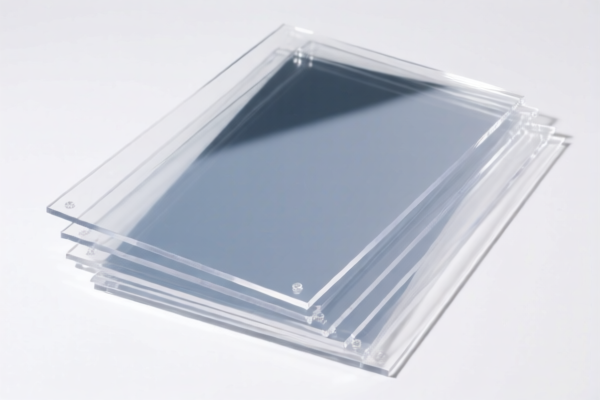
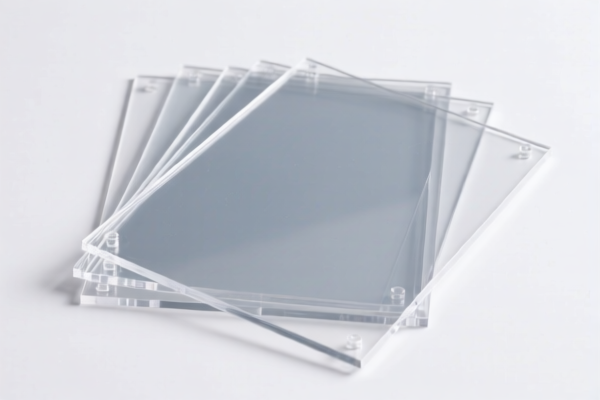
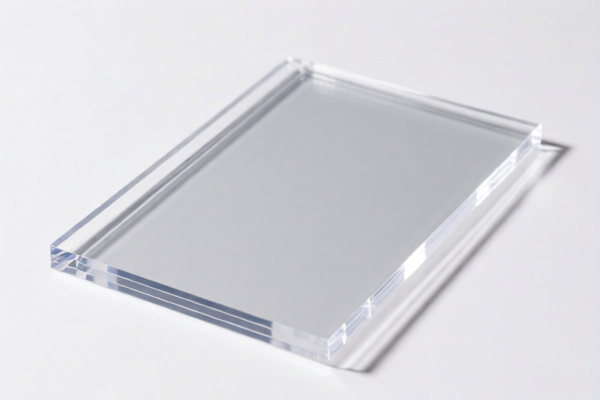
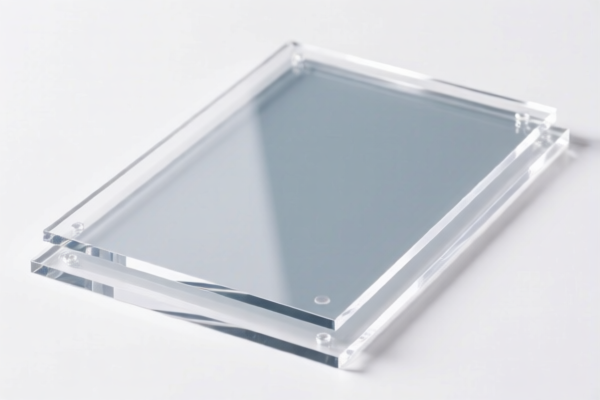
AI Analysis
Based on the provided data (<DATA>), here is the analysis for Acrylic Transparent Sheets (Poly Methyl Methacrylate - PMMA).
Note on "Lead Containing": The provided JSON data does not contain any HS Codes specifically for "lead-containing" products. In international trade, lead is typically a regulated heavy metal in plastics (RoHS/REACH compliance) rather than a defining characteristic for HS classification of acrylic sheets. Therefore, the classification below focuses on the Acrylic (PMMA) aspect, which is the primary commodity. If the product contains lead pigments, it may face additional environmental compliance hurdles, but the HS Code remains based on the plastic material itself.
📦 Acrylic Transparent Sheets (PMMA) – HS Code & Taxation Guide
🌐 2026 Trade Compliance | US Import Data Analysis | Strategic Classification
⚠️ Critical Clarification: "Lead-Containing" vs. Material Composition
The term "lead containing" in your query likely refers to: 1. Misconception: Acrylic (PMMA) is an organic polymer. It does not naturally contain lead. 2. Regulatory Concern: If "lead-containing" refers to additives, pigments, or stabilizers, this triggers environmental compliance (EPA, CPSC, REACH) rather than changing the HS Code. 3. Classification Basis: Customs classification is driven by the base material (PMMA), not trace additives. The HS Codes below are strictly for PMMA sheets/boards.
📊 Part 1: HS Code Classification Analysis (Strictly from <DATA>)
The provided data lists 5 specific HS Codes for PMMA products. We will map the "Acrylic Transparent Sheets" to the most appropriate codes based on physical form (plate, sheet, film) and state (primary form vs. finished product).
| HS Code | Summary from Data | Classification Logic for "Acrylic Sheets" |
|---|---|---|
| 3906.10.00.00 | Acrylic (PMMA) plates, primary form semi-finished | ✅ Best Match for Raw/Unworked Sheets: If the sheets are raw PMMA blocks or plates in their "primary form" (semi-finished, not yet cut to final consumer shape), this is the most accurate code for bulk acrylic material. |
| 3921.11.00.00 | Other plastic plates, sheets, film, foil, tape; containing PMMA | ✅ Best Match for Standard Sheets: If the sheets are finished or semi-finished plates/sheets (not just "primary form" blocks), this is the standard code for PMMA sheets. "Containing PMMA" covers pure or blended acrylic sheets. |
| 3921.19.00.90 | Plates, sheets, film, foil, tape of other plastics; non-porous | ⚠️ Secondary Match: Use if the sheet is not purely PMMA but contains other plastics, or if it doesn't fit 3921.11. However, for pure acrylic, 3921.11.00.00 is preferred. |
| 3920.51.50.90 | PMMA plates, sheets, film, foil | ✅ Specific PMMA Code: This code explicitly targets PMMA plates/sheets. It is often used for non-cellular, non-foamed PMMA sheets (transparent or colored). This is a very strong candidate for transparent acrylic sheets. |
| 3906.90.20.00 | Acrylic polymers, other, primary/semi-finished plates | ⚠️ Fallback for Non-Standard Primary Forms: If the product is an acrylic polymer plate in primary form but doesn't fit the strict definition of 3906.10.00.00 (e.g., specific chemical variants), this code applies. |
🎯 Recommended HS Code Selection
-
For Raw/Acrylic Blocks or Unfinished Plates (Primary Form):
👉 3906.10.00.00
Why? The data explicitly states "primary form semi-finished." Ideal for bulk manufacturing inputs. -
For Finished/Pre-Cut Transparent Acrylic Sheets:
👉 3921.11.00.00 OR 3920.51.50.90
Why?- 3921.11.00.00: Broad category for plastic sheets/plates containing PMMA.
- 3920.51.50.90: More specific to PMMA plates/sheets. Use if customs requires explicit PMMA identification.
Recommendation: 3921.11.00.00 is commonly used for general acrylic sheets unless specific national notes dictate 3920.51.
💰 Part 2: Taxation Details (From <DATA>)
All 5 HS Codes in the data share a similar tax structure, indicating a consistent policy for PMMA imports from the specified origin (likely China, given the "122条款" reference).
📌 Common Tax Breakdown (Applies to All Listed HS Codes)
| Tax Component | Rate | Source / Note |
|---|---|---|
| Base Tariff (MFN) | 5.3% – 6.5% | Varies slightly by HS Code (e.g., 3906.10 is 6.3%, 3921.11 is 5.3%). |
| Section 301 Tariff | 25.0% | "加征关税" (Additional Tariff). Standard for Chinese goods under US Trade Act Section 301. |
| 122 Clause Tariff | 10.0% | "122条款关税". Refers to specific US import regulations (often related to anti-dumping or countervailing duties, or specific trade agreements). |
| Total Effective Tax | 40.3% – 41.5% | Sum of all above. |
🔍 Detailed Tax Explanation
1. Base Tariff (6.3% / 5.3% / 6.5%)
- This is the standard Most-Favored-Nation (MFN) tariff rate applied to most trading partners.
- Example: For3921.11.00.00, the base rate is 5.3%. For3906.10.00.00, it is 6.3%.2. Section 301 Additional Tariff (25.0%)
- This is a significant penalty tariff imposed on goods of Chinese origin under the US Trade Act Section 301.
- Impact: Adds 25% to the CIF value, regardless of the base rate.3. 122 Clause Tariff (10.0%)
- The data explicitly mentions "122条款" (Clause 122). In US-China trade context, this often refers to retaliatory tariffs or specific anti-dumping/countervailing duty (AD/CVD) orders.
- Impact: Adds a flat 10% on top of other tariffs.
💸 Total Tax Calculation Example
For 3921.11.00.00 (Standard Acrylic Sheet): - CIF Value: $10,000 - Base Tariff: $10,000 × 5.3% = $530 - Section 301 Tariff: $10,000 × 25.0% = $2,500 - 122 Clause Tariff: $10,000 × 10.0% = $1,000 - Total Tax: $4,030 (40.3%)
For 3906.10.00.00 (Primary Form PMMA): - CIF Value: $10,000 - Base Tariff: $10,000 × 6.3% = $630 - Section 301 Tariff: $10,000 × 25.0% = $2,500 - 122 Clause Tariff: $10,000 × 10.0% = $1,000 - Total Tax: $4,130 (41.3%)
🛠️ Part 3: Customs Clearance & Compliance Advice
✅ 1. Addressing "Lead-Containing" Compliance
- Risk: Acrylic sheets containing lead (e.g., as a pigment or stabilizer) may violate EPA and CPSC regulations (e.g., Lead Contamination Prevention Act).
- Action:
- Provide a Material Safety Data Sheet (MSDS) or Test Report proving lead content is below regulatory limits (e.g., <0.01% for children’s products, <0.06% for general plastics in some contexts).
- If lead content exceeds limits, the product may be refused entry regardless of HS Code.
- Do not misdeclare as "lead-free" if it contains lead.
✅ 2. Correct HS Code Declaration
- Primary Form vs. Finished Sheet:
- If you are importing bulk PMMA plates for further cutting: Use 3906.10.00.00.
- If you are importing pre-cut transparent sheets for display/signage: Use 3921.11.00.00 or 3920.51.50.90.
- Why It Matters: Misclassification can lead to penalties, audits, or shipment delays. The difference between 3906 and 3921 is subtle but critical for customs valuation.
✅ 3. Documentation Requirements
| Document | Purpose |
|---|---|
| Commercial Invoice | Must clearly state "PMMA Acrylic Sheets" and HS Code. |
| Packing List | Detail dimensions, weight, and quantity. |
| MSDS / Test Report | Crucial for "lead-containing" query. Proves compliance with environmental standards. |
| Bill of Lading | Standard shipping document. |
| Certificate of Origin | Required to confirm origin for Section 301 tariff application. |
✅ 4. Cost Optimization Tips
- Review 122 Clause: Confirm if the "122 Clause" tariff is still active. Some tariffs are excluded or phased out.
- Consider HTS Subheadings: If your sheets are cellular (foamed) PMMA, they may fall under different codes (not listed in data), which might have lower tariffs. Ensure your sheets are solid/transparent as implied.
- Bonded Warehouses: If importing for processing, consider using bonded facilities to defer duty payments until the goods are sold or processed.
📌 Summary & Action Plan
- Select HS Code:
- Use 3921.11.00.00 for standard transparent acrylic sheets.
- Use 3906.10.00.00 for raw/primary form PMMA plates.
- Prepare Tax Budget:
- Expect ~40.3% – 41.5% total tax burden (Base + 301 + 122).
- Compliance Check:
- Immediately provide test reports for "lead content" to avoid EPA/CPSC seizures.
- If lead content is high, consider non-US origin sourcing if possible, or seek exemptions.
- Document Accuracy:
- Ensure invoices match the selected HS Code precisely. Discrepancies will trigger audits.
🚀 Pro Tip: If your acrylic sheets are imported for manufacturing (further processing), explore FTZ (Foreign Trade Zone) benefits to defer or reduce duty costs.
Disclaimer: This analysis is based strictly on the provided <DATA> and general customs principles. Always consult a licensed customs broker for final classification and compliance, especially regarding "lead-containing" materials which are subject to strict environmental regulations.
Customer Reviews
About HS Code Classification
The Harmonized System (HS) is an internationally standardized nomenclature developed by the World Customs Organization (WCO) to classify traded products. Over 200 countries use the HS system as the basis for customs tariffs, trade statistics, and import/export regulations.
Each HS code follows a hierarchical structure:
- Chapter (2 digits) — Broad category of goods (e.g., Chapter 84: Machinery and Mechanical Appliances)
- Heading (4 digits) — More specific grouping within the chapter
- Subheading (6 digits) — Internationally standardized breakdown, used by all WCO member countries
- National subdivisions (8-10 digits) — Country-specific extensions for further classification, such as US HTSUS 10-digit codes
Correct HS code classification is essential for smooth customs clearance, accurate duty payment, and compliance with trade regulations. Misclassification can lead to customs delays, overpayment of duties, or penalties.
When importing from CN to US, the applicable tariff rates may include:
- Most-Favored-Nation (MFN) rate — The standard duty rate applied to WTO members
- General rate — Applied to countries without trade agreements
- Trade remedy duties — Additional tariffs such as Section 301 (anti-dumping), Section 232 (national security), or countervailing duties
The information provided on this page is for reference purposes only. For official classification, please consult with your local customs authority or a licensed customs broker.