Acrylic Woven Plain Fabric
CN → US| HS Code | Tariff Rate | Origin | Destination | Doc |
|---|---|---|---|---|
| 5512210010 | 47.0% | CN | US | Official Doc |
| 5512290090 | 47.0% | CN | US | Official Doc |
Product Images
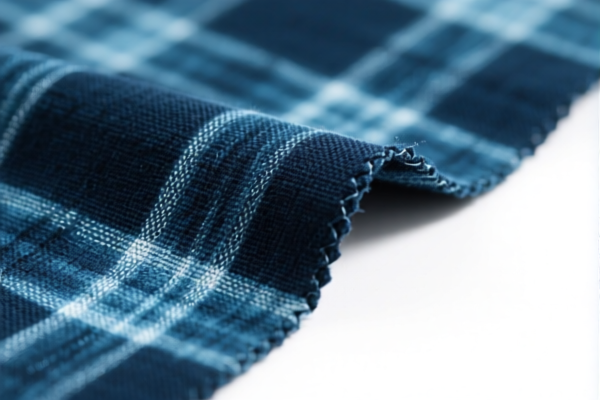
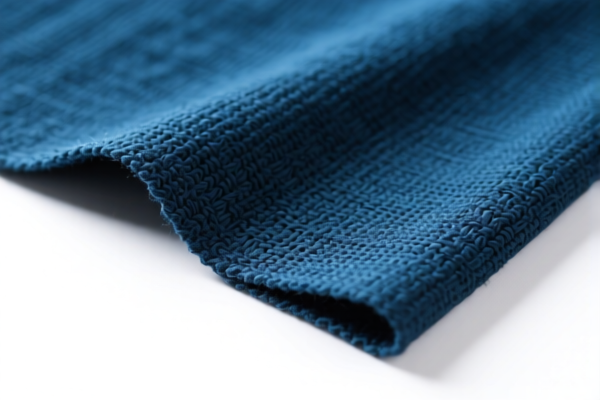
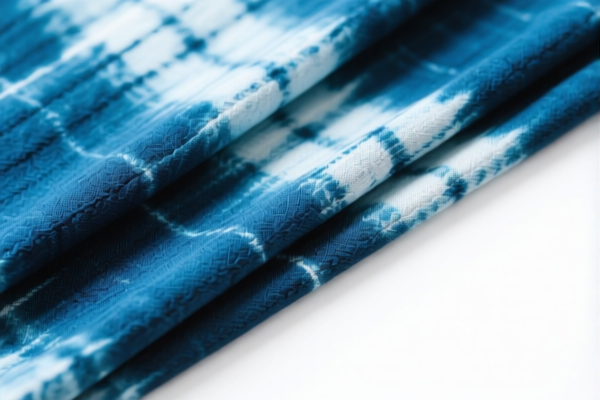
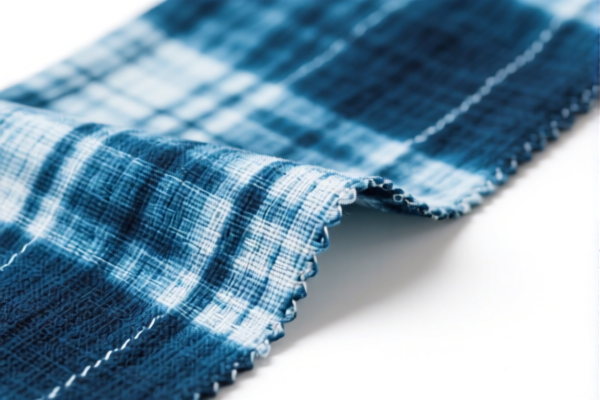
AI Analysis
🧶 Acrylic Woven Plain Fabric (Synthetic Staple Fibers)
🌐 HS Code Reference & Customs Clearance Guide | 2026 Latest Tariff Analysis | Professional-Level Clearance Strategy
📌 I. Product Definition & Classification: What Exactly is "Acrylic Woven Plain Fabric"?
Acrylic Woven Plain Fabric refers to textiles made from synthetic staple fibers, where the weight of acrylic or modacrylic fibers constitutes 85% or more of the total fabric weight. The term "Plain" (or "Poplin/Broadcloth") indicates a simple plain weave structure, the most common and basic weaving pattern where warp and weft threads alternate in a 1/1 pattern.
In international trade, these fabrics are strictly categorized under Chapter 55 (Man-made Staple Fibres) because they are made from staple fibers (short fibers spun into yarn), not filaments (continuous long fibers like polyester filament).
⚠️ Key Distinction Point:
- Material Composition: Must contain ≥85% acrylic or modacrylic staple fibers by weight. If it contains other synthetic fibers (like polyester) but acrylic is <85%, it falls under different subheadings (e.g., 5512.19).
- Weave Type: "Plain" corresponds to specific trade names like Poplin or Broadcloth. Other weaves (like Twill or Satin) fall under "Other."
- Processing State: Unbleached, Bleached, Dyed, or Printed fabrics have different classifications. The provided data specifically covers Unbleached/Bleached.
📦 II. HS Code Classification Details (2026 Latest Tariff Authority对照)
Based on the provided data, two primary HS Codes apply depending on the specific finish/type within the "Acrylic ≥85%" category.
| HS Code | Product Description | Specific Characteristics | Tax Rate (Total) |
|---|---|---|---|
| 5512.21.00.10 | Woven fabrics of synthetic staple fibers, containing ≥85% synthetic staple fibers: Containing ≥85% acrylic or modacrylic staple fibers: Unbleached or bleached Poplin or broadcloth | - Weave: Poplin or Broadcloth (Plain weave) - Treatment: Unbleached or Bleached - Fiber: ≥85% Acrylic/Modacrylic |
0.0% |
| 5512.29.00.90 | Woven fabrics of synthetic staple fibers, containing ≥85% synthetic staple fibers: Containing ≥85% acrylic or modacrylic staple fibers: Other: Other | - Weave: NOT Poplin/Broadcloth (e.g., Twill, Satin, Leno, etc.) - OR Treatment: Dyed, Printed, etc. (if not explicitly unbleached/bleached plain) - Fiber: ≥85% Acrylic/Modacrylic |
0.0% |
🔍 Critical Analysis:
- Why 5512.21.00.10? If your fabric is a standard plain weave (often called Poplin or Broadcloth in trade terms) and is either unbleached or bleached, it gets this specific code.
- Why 5512.29.00.90? If the fabric is dyed, printed, or has a different weave structure (not plain/poplin/broadcloth), it falls into the "Other" category.
- Zero Tariff Benefit: Both codes listed have a 0.0% total tax rate (Base + Additional). This is highly advantageous for importers.
💰 III. 2026 Latest Tariff Rate Details (Detailed Breakdown)
✅ Applicable Country: United States (US)
✅ Origin: China (CN)
✅ Effective Time: Current Tariff Schedule
🎯 1. 5512.21.00.10 —— Unbleached/Bleached Poplin/Broadcloth (Acrylic ≥85%)
| Item | Content |
|---|---|
| Base Tariff Rate | 0.0% |
| Section 301 / USITC Additional Tariff | 0.0% |
| IEEPA Additional Tariff | 0.0% |
| Total Tax Rate | 0.0% |
| Tax Calculation | CIF Value × 0.0% = $0 |
| De Minimis Eligibility | ✅ Yes (If value < $800, generally eligible, but subject to CBP discretion on textile rules) |
| Legal Authority | HTSUS:5512.21.00.10 |
📌 Explanation:
- Acrylic fabrics often have favorable treatment compared to high-tech synthetics or cottons subject to higher duties.
- No Section 301 or IEEPA tariffs apply to this specific subheading in the provided data. This is a low-risk, low-cost import category.
🎯 2. 5512.29.00.90 —— Other Acrylic Woven Fabrics (Acrylic ≥85%)
| Item | Content |
|---|---|
| Base Tariff Rate | 0.0% |
| Section 301 / USITC Additional Tariff | 0.0% |
| IEEPA Additional Tariff | 0.0% |
| Total Tax Rate | 0.0% |
| Tax Calculation | CIF Value × 0.0% = $0 |
| De Minimis Eligibility | ✅ Yes (Subject to CBP discretion) |
| Legal Authority | HTSUS:5512.29.00.90 |
📌 Explanation:
- Even if the fabric is dyed, printed, or has a non-plain weave, it still enjoys 0% duty under the current data.
- Caution: While the tax is 0%, non-tariff barriers (like FDA regulations for dye safety, or specific textile marking laws) still apply.
🛠️ IV. Customs Clearance Practical Advice (Combat-Ready Pitfall Guide)
✅ 1. Required Documentation Checklist (Non-negotiable)
| Document | Must Provide | Explanation |
|---|---|---|
| ✅ Fabric Swatch / Sample | ✔️ | CBP may request a physical sample to verify fiber content (acrylic %) and weave type (plain vs. twill). |
| ✅ Fiber Content Statement | ✔️ | Must explicitly state: "100% Acrylic" or "≥85% Acrylic." Misdeclaration can lead to severe penalties. |
| ✅ Weave Structure Description | ✔️ | Specify "Plain Weave," "Poplin," or "Broadcloth" if claiming 5512.21.00.10. |
| ✅ Processing Description | ✔️ | Clearly state: "Unbleached," "Bleached," "Dyed," or "Printed." This determines the subheading. |
| ✅ Commercial Invoice | ✔️ | Must include: "Woven Fabric of Synthetic Staple Fibers, Acrylic ≥85%." |
| ✅ Packing List | ✔️ | Detail weight (kg/lbs) and volume (cbm) for accurate duty calculation (even if 0%). |
| ✅ Country of Origin Certificate | ✔️ | Crucial for proving origin, especially if claiming de minimis or preferential treatment elsewhere. |
✅ 2. Declaration Tips (Key Mantra)
🔥 "Fiber % First, Weave Second, Treatment Third!"
| Scenario | Correct Declaration | Wrong Practice |
|---|---|---|
| Plain Weave, Bleached | "Bleached Poplin, Acrylic 100%" → 5512.21.00.10 |
Calling it "General Fabric" → Risk of misclassification |
| Dyed, Plain Weave | "Dyed Plain Weave, Acrylic 95%" → 5512.29.00.90 (as 'Other') |
Claiming 5512.21.00.10 (only for unbleached/bleached) |
| Twill Weave | "Twill, Acrylic 100%" → 5512.29.00.90 |
Claiming 5512.21.00.10 (only for Poplin/Broadcloth) |
| Fiber <85% Acrylic | Check other subheadings (e.g., 5512.19) | Assuming it falls under 5512.2x |
✅ 3. Special Case Handling
| Scenario | Handling Advice |
|---|---|
| Mixed Fibers (e.g., 80% Acrylic, 20% Polyester) | Does NOT qualify for 5512.2x. Must be classified under 5512.19 (Other synthetic staple fibers). Check tax rates for that code. |
| Filament vs. Staple | If the acrylic is filament (continuous), it falls under Chapter 54, not 55. Verify if it's spun yarn (staple) or filament yarn. |
| Sample vs. Bulk | For samples < $800, de minimis (Section 321) may apply, but ensure accurate HS code to avoid future audits on bulk shipments. |
| Dye Safety | Acrylic dyes may contain harmful substances. Ensure compliance with CPSIA (if for children) or general chemical safety standards. |
🌍 V. Global Market Clearance Comparison (2026 Latest)
| Country/Region | Recommended HS Code | Tariff | Certification Requirements | Notes |
|---|---|---|---|---|
| 🇺🇸 USA | 5512.21.00.10 / 5512.29.00.90 |
0.0% | CPSIA (if applicable), General Compliance | No additional tariffs. High compliance on fiber accuracy. |
| 🇨🇳 China | 5512.21.00.10 / 5512.29.00.90 |
Varies | CCC (if for specific uses) | Import duties may apply based on trade agreements. |
| 🇪🇺 EU | 5512.21.00 / 5512.29.00 |
0% - 6% | REACH (Chemical Safety) | ACrylic is subject to REACH restrictions. Must provide SVHC declaration. |
| 🇬🇧 UK | 5512.21.00 / 5512.29.00 |
0% - 6% | UKCA / Post-Brexit Rules | Similar to EU. Check post-Brexit tariff schedules. |
| 🇦🇺 Australia | 5512.21.00 / 5512.29.00 |
5% | Ozone Protection & Chemical Safety | Standard 5% duty unless FTA applies. |
📌 Conclusion:
- USA offers 0% duty, making it the most cost-effective destination for these goods.
- EU/UK require REACH/UKCA compliance for acrylic dyes and fibers. Ensure suppliers provide REACH SVHC declarations.
- China may have different import duties depending on the trade agreement (e.g., RCEP if applicable, but acrylic is often sensitive).
📌 VI. Common Mistakes & Pitfall Guide (Blood & Tears Lessons)
❌ Mistake 1: Declaring "Polyester Acrylic Blend" as 100% Acrylic
👉 Consequence: CBP reclassifies to a higher-duty code (e.g., 5512.19) + penalties.
Fix: Provide lab test reports confirming ≥85% Acrylic.
❌ Mistake 2: Calling "Dyed Fabric" "Unbleached" to get 5512.21.00.10
👉 Consequence: Misclassification. While tax is 0% in both, it sets a bad precedent for future audits.
Fix: Accurately describe treatment. If dyed, use 5512.29.00.90.
❌ Mistake 3: Confusing Staple vs. Filament
👉 Consequence: Wrong Chapter (54 vs. 55). Chapter 54 often has different duty rates.
Fix: Confirm yarn type. Staple = spun yarn (like wool). Filament = continuous (like nylon filament).
❌ Mistake 4: Ignoring Chemical Compliance (REACH/CPSIA)
👉 Consequence: Shipment detained for chemical safety violations, even if duty is 0%.
Fix: Ensure supplier provides safety data sheets (SDS) and compliance certificates.
✅ Correct Practice:
"Woven Fabric, Plain Weave (Poplin), Unbleached, 100% Acrylic Staple Fiber, Grade A, Roll #1234, Weight 500kg"
🎯 VII. Conclusion: Precision in Classification, Zero Cost Advantage!
🎯 Remember the Mantra:
🔹 "Acrylic ≥85% is Key, Plain Weave = Poplin/Broadcloth, Unbleached/Bleached = 5512.21, Otherwise = 5512.29, Tax = 0%!"
🔹 "Fiber content dictates the chapter, weave dictates the subheading, treatment refines the code!"
📌 Pro Tip:
- For acrylic fabrics, ensure your supplier provides a fiber composition test report from an accredited lab (e.g., Intertek, SGS) to prove ≥85% acrylic.
- If you are shipping to the EU, ensure your supplier is REACH compliant for all dyes and auxiliaries used.
- USA: Leverage the 0% tariff to maximize margins, but maintain strict documentation to avoid random CBP audits.
📣 Immediate Action:
📞 Contact your freight forwarder with the exact HS Code (5512.21.00.10 or 5512.29.00.90) and fiber composition report.
🚀 Clear customs smoothly, pay $0 duty, and boost your profit margin!
✨ Professional Clearance Starts with Accurate Classification!
💼 Every percentage point of fiber content counts!
Customer Reviews
About HS Code Classification
The Harmonized System (HS) is an internationally standardized nomenclature developed by the World Customs Organization (WCO) to classify traded products. Over 200 countries use the HS system as the basis for customs tariffs, trade statistics, and import/export regulations.
Each HS code follows a hierarchical structure:
- Chapter (2 digits) — Broad category of goods (e.g., Chapter 84: Machinery and Mechanical Appliances)
- Heading (4 digits) — More specific grouping within the chapter
- Subheading (6 digits) — Internationally standardized breakdown, used by all WCO member countries
- National subdivisions (8-10 digits) — Country-specific extensions for further classification, such as US HTSUS 10-digit codes
Correct HS code classification is essential for smooth customs clearance, accurate duty payment, and compliance with trade regulations. Misclassification can lead to customs delays, overpayment of duties, or penalties.
When importing from CN to US, the applicable tariff rates may include:
- Most-Favored-Nation (MFN) rate — The standard duty rate applied to WTO members
- General rate — Applied to countries without trade agreements
- Trade remedy duties — Additional tariffs such as Section 301 (anti-dumping), Section 232 (national security), or countervailing duties
The information provided on this page is for reference purposes only. For official classification, please consult with your local customs authority or a licensed customs broker.