Activated Carbon Air Filter
CN → US| HS Code | Tariff Rate | Origin | Destination | Doc |
|---|---|---|---|---|
| 3802100050 | 39.8% | CN | US | Official Doc |
| 3802100010 | 39.8% | CN | US | Official Doc |
| 8421290065 | 35.0% | CN | US | Official Doc |
| 8421390190 | 35.0% | CN | US | Official Doc |
| 3802100050 | 39.8% | CN | US | Official Doc |
Product Images

AI Analysis
🌬️ Activated Carbon Air Filter (活性炭空气滤芯)
🌐 HS Code Reference & Customs Clearance Guide | 2026 Latest Tariff Analysis | Professional Clearance Strategy
📌 I. Product Definition & Classification: Do You Really Understand "Activated Carbon Air Filters"?
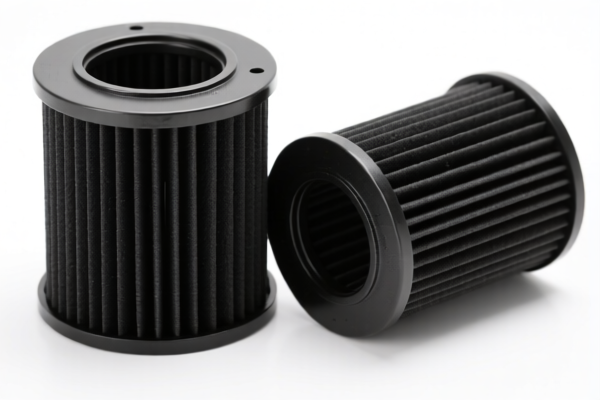
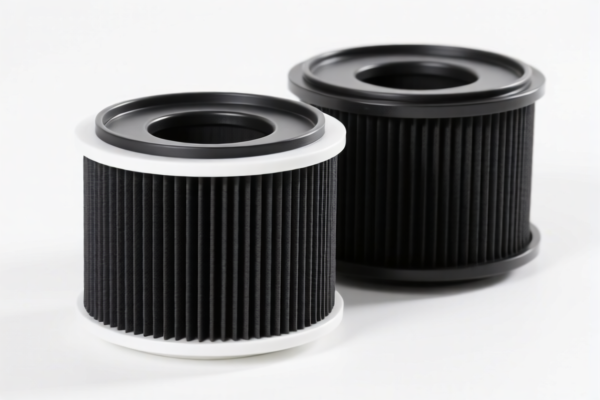
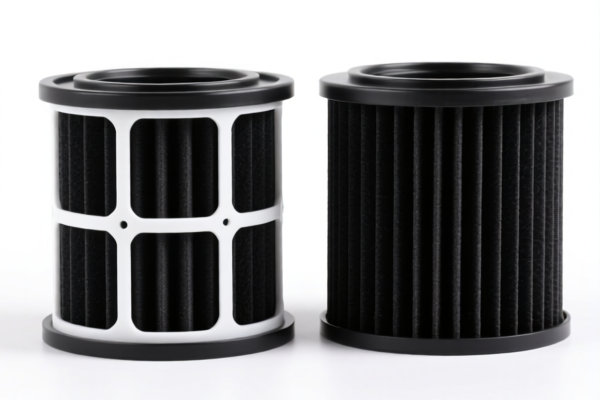
Activated Carbon Air Filters are critical components in air purification systems, industrial ventilation, and HVAC units. They primarily function by adsorbing volatile organic compounds (VOCs), odors, and harmful gases. In international trade, classification depends heavily on the form (raw material vs. finished part) and the integration (standalone item vs. part of a filtration machine).
There are two main classification paths based on the provided data:
1. Carbon Material Class (HS 3802): If the product is viewed as a processed carbon material (e.g., pellets, granules, fibers, or simple cartridges not integrated into a specific machine housing), it falls under Chapter 38. This is often the case for bulk filters or raw carbon shapes.
2. Filtration Equipment Parts Class (HS 8421): If the product is specifically designed as a core component for a liquid or gas filtration device (e.g., a pre-packaged filter cartridge for a specific purifier or industrial scrubber), it may fall under Chapter 84 as a part of a machine.
⚠️ Key Distinction Point:
- If it is loose carbon, carbon fiber mats, or simple cartridge forms treated as chemical products → HS 3802
- If it is a functional assembly specifically identified as a part of a gas/liquid filter machine → HS 8421
📦 2. HS Code Classification Details (2026 Latest Tariff Authority Comparison)
| HS Code | Product Description | Application Scenario | Tax Profile |
|---|---|---|---|
3802.10.00.50 |
Other Activated Carbon Products (Includes Carbon Fiber & Non-Coconut/Coal Forms) | Air purification carbon fiber, non-standard carbon shapes, derived carbon products | 39.8% Total Tax |
3802.10.00.10 |
Activated Carbon Cartridges (Coal/Wood Based) | Finished form filters based on coal or wood carbon | 39.8% Total Tax |
8421.29.00.65 |
Parts of Gas/Liquid Filtration Devices (Core Components) | Activated carbon filter as the core part of a purification system | 35.0% Total Tax |
8421.39.01.90 |
Other Gas/Liquid Filtration/Cleaning Machinery Parts | Filters for general gas/liquid purification, unlisted categories | 35.0% Total Tax |
🔍 Focus Reminder:
- HS 3802 items are taxed higher (39.8%) due to the inclusion of a 4.8% Base Tariff.
- HS 8421 items benefit from a 0.0% Base Tariff, resulting in a lower total burden (35.0%).
- The classification determines not just the rate, but the legal justification for customs declaration.
💰 3. 2026 Latest Tariff Rate Breakdown (Including Surcharge & Policy Add-ons)
✅ Applicable Country: United States (US)
✅ Origin: China (CN)
✅ Effective Time: From November 10, 2025 (and subsequent imports)
🎯 1. 3802.10.00.50 & 3802.10.00.10 —— Activated Carbon Products (Material Class)
| Item | Content |
|---|---|
| Base Tariff | 4.8% (ad valorem) |
| Section 301 Surcharge | +25.0% (From USITC Footnote 9903.88.01) |
| Section 122 Tariff | +10.0% (Specific provision for certain carbon products) |
| IEEPA Surcharge | Included in the above or applied separately depending on specific ruling; however, the Total Tax listed in data is 39.8%. (Note: 4.8% + 25% + 10% = 39.8%) |
| Total Tax Rate | 39.8% |
| Calculation Basis | CIF Value × 39.8% |
| De Minimis Exemption | ❌ Not Applicable (High tariff goods are generally excluded from $800 de minimis relief) |
| Legal Path | USITC:3802.10.00.10 → SECTION_301:9903.88.01 → SECTION_122:10% |
📌 Explanation:
- The 4.8% Base Tariff applies because these are classified as "Other Activated Carbon" rather than pure raw carbon.
- The 25% Section 301 Tariff is the standard punitive tariff on Chinese goods.
- The 10% Section 122 Tariff is a specific additional levy on certain carbon-based industrial products.
- Total Cost Impact: You pay nearly 40% on top of the product cost. This is a high-cost category.
🎯 2. 8421.29.00.65 & 8421.39.01.90 —— Filtration Machine Parts (Functional Class)
| Item | Content |
|---|---|
| Base Tariff | 0.0% |
| Section 301 Surcharge | +25.0% |
| Section 122 Tariff | +10.0% |
| Total Tax Rate | 35.0% |
| Calculation Basis | CIF Value × 35.0% |
| De Minimis Exemption | ❌ Not Applicable |
| Legal Path | USITC:8421.29.00.65 → SECTION_301:9903.88.01 → SECTION_122:10% |
📌 Explanation:
- The 0.0% Base Tariff is the key advantage here. These are classified as parts of machinery, which often enjoy lower base duties.
- The 35% Total Tax is 4.8% lower than the HS 3802 classification.
- While still high due to Section 301 and 122, this is the optimal classification if the product can be legally justified as a "part of a filtration machine."
🛠️ 4. Customs Clearance Practical Advice (Real-World Pitfall Guide)
✅ 1. Documentation Checklist (Essential)
| Document | Required | Description |
|---|---|---|
| ✅ Product Spec Sheet | ✔️ | Must detail adsorption capacity, carbon type (wood/coal/bamboo), and dimensions. |
| ✅ Usage Declaration | ✔️ | Explicitly state: "Used as a replaceable filter cartridge for [Specific Machine Model]" to support HS 8421. |
| ✅ Product Photos | ✔️ | Show the filter in its housing or as a standalone unit clearly labeled. |
| ✅ Composition Analysis | ✔️ | Confirm carbon content and binder materials to rule out pure chemical classification if desired. |
| ✅ Commercial Invoice | ✔️ | Clear description: "Activated Carbon Filter Cartridge for Air Purifier" vs. "Activated Carbon Pellets." |
| ✅ Packing List | ✔️ | Ensure no loose carbon is mixed with filter units unless declared separately. |
✅ 2. Declaration Strategy (Key Mantra)
🔥 “Function over Material: Claim it as a Part, Not a Product!”
| Scenario | Correct Declaration | Wrong Practice |
|---|---|---|
| Standalone Filter for a Purifier | 8421.29.00.65 |
Misdeclare as 3802.10.00.50 → +4.8% Extra Cost |
| Raw Carbon Fiber Roll | 3802.10.00.50 |
Cannot be HS 8421 if not a finished part |
| Bulk Carbon Granules | 3802.10.00.50 |
Always Chemical/Material Class |
| Integrated Filter Housing + Carbon | 8421.29.00.65 |
Better to declare as whole machine part if possible |
✅ 3. Special Handling
| Situation | Recommendation |
|---|---|
| OEM Custom Filters | Provide the original equipment manufacturer’s bill of materials showing the filter is a replacement part. |
| Mixed Shipments | Do not mix raw carbon (HS 3802) with finished filters (HS 8421) in one line item. Separate them. |
| Carbon Type Specifics | If the carbon is specifically "coconut shell" or "coal," ensure the description matches the HS 3802.10 subheadings if that route is chosen. |
| Pre-Baked/Impregnated Carbon | May fall under HS 3802.90 or 3802.10 depending on chemical treatment. Verify if "impregnated" changes the classification. |
🌍 5. Global Market Customs Comparison (2026 Update)
| Country/Region | Recommended HS Code | Tariff (CN Origin) | Certification | Notes |
|---|---|---|---|---|
| 🇺🇸 USA | 8421.29.00.65 |
35.0% | None specific | Avoid 3802 if possible (39.8%) |
| 🇨🇳 China | 3802.10.00.50 |
~5-10% | CCC (if applicable) | Import duty differs; focus on export |
| 🇪🇺 EU | 8421.29.00 |
0% | REACH (Chemical) | EU has strict REACH compliance for carbon |
| 🇬🇧 UK | 8421.29.00 |
0% | UKCA | Post-BREXIT rules apply |
| 🇨🇦 Canada | 8421.29.00 |
0% | Health Canada | Carbon filters may be regulated as medical if air purifying |
📌 Conclusion:
- USA is the critical market for tariff optimization. The 5% difference between HS 3802 and HS 8421 adds up significantly on large volumes.
- EU/UK focus more on REACH/Chemical compliance than high tariffs.
📌 6. Common Errors & Pitfall Guide (Lessons Learned)
❌ Error 1: Declaring a "Filter Cartridge" as "Activated Carbon Material"
👉 Consequence: Paying 39.8% instead of 35.0%. Overpayment of ~14% on the tax portion.
❌ Error 2: Using vague terms like "Carbon Stuff" on the Invoice
👉 Consequence: Customs delay, potential audit, and forced reclassification to the highest tax bracket.
❌ Error 3: Ignoring Section 122 Tariff
👉 Consequence: Underestimating landed cost. Many importers forget the 10% Section 122 charge on carbon products.
❌ Error 4: Claiming "De Minimis" for small shipments
👉 Consequence: Rejected. Goods with >25% Section 301 tariffs are excluded from the $800 de minimis exemption.
✅ Correct Approach:
“Replaceable Activated Carbon Filter Cartridge for Model XYZ Air Purifier, Core Filtration Component, Not Raw Carbon”
🎯 7. Conclusion: Precision Classification Saves Money!
🎯 Remember the Mantra:
🔹 “Function First: It’s a Machine Part, Not a Lump of Coal!”
🔹 “8421 is the Gold: 35% vs 39.8%, every cent counts!”
🔹 “Section 122 is Real: Don’t forget the extra 10% on carbon!”
📌 Pro Tip:
If you are importing large volumes, consider applying for an HS Code Advance Ruling from US Customs and Border Protection (CBP). This legally binds the classification to HS 8421 if your product description supports it, protecting you from future disputes.
📣 Immediate Action:
📞 Consult a licensed customs broker with your product photos and spec sheets.
🚀 Optimize your supply chain by declaring HS 8421 where legally permissible.
💡 Save 4.8% on base tariff. That’s pure profit.
✨ Professional Clearance Starts with Accurate Classification!
💼 Your Cost Efficiency Depends on the First Line of Your Declaration.
Customer Reviews
About HS Code Classification
The Harmonized System (HS) is an internationally standardized nomenclature developed by the World Customs Organization (WCO) to classify traded products. Over 200 countries use the HS system as the basis for customs tariffs, trade statistics, and import/export regulations.
Each HS code follows a hierarchical structure:
- Chapter (2 digits) — Broad category of goods (e.g., Chapter 84: Machinery and Mechanical Appliances)
- Heading (4 digits) — More specific grouping within the chapter
- Subheading (6 digits) — Internationally standardized breakdown, used by all WCO member countries
- National subdivisions (8-10 digits) — Country-specific extensions for further classification, such as US HTSUS 10-digit codes
Correct HS code classification is essential for smooth customs clearance, accurate duty payment, and compliance with trade regulations. Misclassification can lead to customs delays, overpayment of duties, or penalties.
When importing from CN to US, the applicable tariff rates may include:
- Most-Favored-Nation (MFN) rate — The standard duty rate applied to WTO members
- General rate — Applied to countries without trade agreements
- Trade remedy duties — Additional tariffs such as Section 301 (anti-dumping), Section 232 (national security), or countervailing duties
The information provided on this page is for reference purposes only. For official classification, please consult with your local customs authority or a licensed customs broker.