Activated Carbon Decolorizing Carbon
CN → US| HS Code | Tariff Rate | Origin | Destination | Doc |
|---|---|---|---|---|
| 3802100050 | 39.8% | CN | US | Official Doc |
| 3802100010 | 39.8% | CN | US | Official Doc |
| 2803000010 | 35.0% | CN | US | Official Doc |
| 2803000050 | 35.0% | CN | US | Official Doc |
| 3802100020 | 39.8% | CN | US | Official Doc |
Product Images
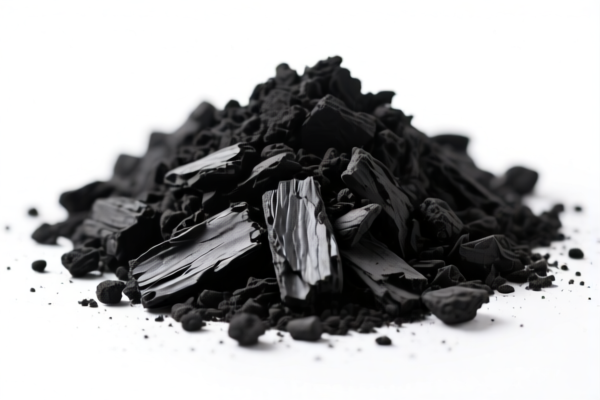
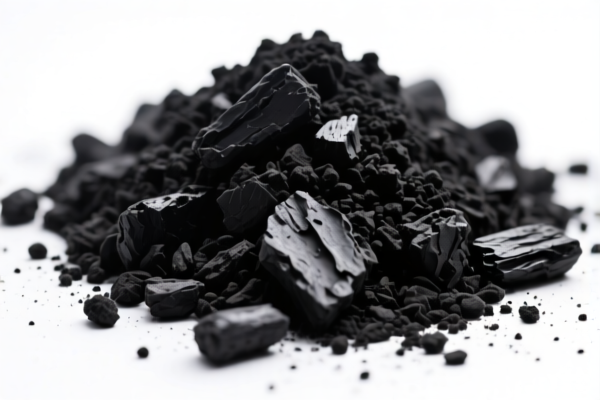

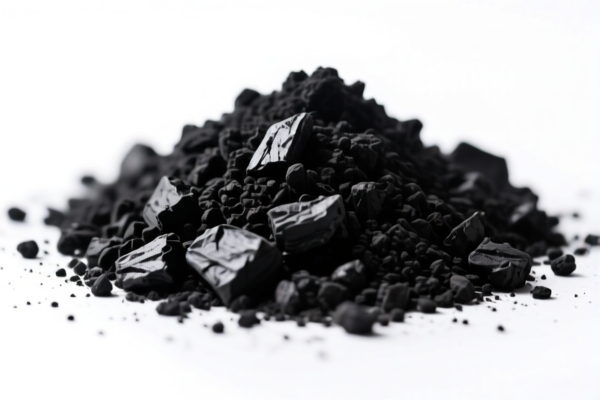
AI Analysis
🌑 Activated Carbon: Decolorizing & Refining Grades (Industrial Grade)
🌐 HS Code Reference & Customs Clearance Guide | 2026 Latest Tariff Analysis | Professional Entry Strategy for US Imports
📌 I. Product Definition & Classification: What Exactly is "Decolorizing Activated Carbon"?
Activated Carbon for Decolorizing and Refining is a porous, adsorbent carbon material primarily used in the industrial purification of liquids and gases. It is crucial in industries such as food & beverage (sugar, oils), pharmaceuticals, chemicals, and wastewater treatment.
In international trade, the classification hinges on two main factors:
1. Composition: Is it processed organic carbon (Section 38) or basic elemental carbon (Section 28)?
2. Form: Is it in granular/powder form for liquid processing, or formed into bricks/blocks for specific industrial applications?
⚠️ Key Distinction Point:
- If the carbon is processed (e.g., chemical treatment, activation, specific pore structure development) and classified under chemical products → HS 3802.10.
- If the carbon is considered a basic element (black carbon, soot, or unprocessed carbon black analogs) → HS 2803.00.
- Note: Customs authorities often scrutinize the "degree of processing." Highly activated, functionalized carbon usually falls under 3802, while basic carbon forms may fall under 2803.
📦 II. HS Code Classification Details (2026 Latest Tariff Authority Mapping)
Based on the provided data, here are the valid HS Codes and their specific descriptions:
| HS Code | Product Description | Application/Context | Classification Logic |
|--------|--------------------------|-----------------------------|
| 3802.10.00.50 | Activated Carbon for Decolorizing & Refining (Industrial) | General industrial decolorization,符合其他活性炭类目 (Fits other AC categories) | Processed Chemical Product: High surface area, activated. |
| 3802.10.00.10 | Activated Carbon for Decolorizing & Refining | Specific form of activation for refining processes | Processed Chemical Product: Core category for functional AC. |
| 2803.00.00.10 | Activated Carbon for Decolorizing/Refining (Carbon Form) | Categorized as "Carbon Black" or similar elemental carbon forms | Basic Element: Treated as a basic form of carbon rather than a complex chemical preparation. |
| 2803.00.00.50 | Activated Carbon for Decolorizing/Refining (Other Carbon Forms) | Other forms of elemental carbon not specified above | Basic Element: Broad category for non-specific elemental carbon. |
| 3802.10.00.20 | Activated Carbon Bricks (Industrial Decolorizing) | Brick/block form for specific industrial filtration/decolorization units | Processed Chemical Product: Specific form (brick) under AC category. |
🔍 Critical Reminder:
- The difference between 3802 (4.8% base duty) and 2803 (0% base duty) is significant for base duty calculation, but both are subject to the same additional tariffs in the current US-China trade environment.
- Do not mix forms: "Bricks" have a specific code (3802.10.00.20), while granular/powder for general decolorizing usually falls under.10or.50.
💰 III. 2026 Latest Tariff Rate Breakdown (Including Surtaxes & Policy Add-ons)
✅ Applicable Country: United States (US)
✅ Country of Origin: China (CN)
✅ Effective Date: Ongoing (Current enforcement includes Section 301 & IEEPA measures)
🎯 1. For HS Codes under Chapter 38 (3802.10.00.10, 3802.10.00.20, 3802.10.00.50)
These codes are classified as "Chemical Products".
| Item | Detail |
|---|---|
| Base Duty Rate | 4.8% (Standard MFN Rate for Chapter 38) |
| Section 301 Surtax | +25.0% (USITC Footnote 9903.88.01 / Section 301 List 4B) |
| IEEPA Add-on Tariff | +10% (Executive Order under International Emergency Economic Powers Act for Chinese goods) |
| Total Effective Rate | 39.8% |
| Tax Calculation | CIF Value × 39.8% |
| De Minimis Eligibility | ❌ No (Subject to high tariffs, likely deny de minimis exemption depending on current enforcement thresholds) |
| Legal Authority Path | USITC:3802.10 → Section301:Footnote9903.88.01 → IEEPA:9903.01.25 |
📌 Explanation:
- The 4.8% is the standard duty for activated carbon.
- The 25% is the heavy penalty for Chinese manufacturing under Section 301.
- The 10% is an additional layer of tariff under IEEPA.
- Total: 39.8%. This is a high-cost item for importers.
🎯 2. For HS Codes under Chapter 28 (2803.00.00.10, 2803.00.00.50)
These codes are classified as "Elements & Compounds" (Carbon).
| Item | Detail |
|---|---|
| Base Duty Rate | 0.0% (Free entry for basic carbon forms in many contexts) |
| Section 301 Surtax | +25.0% (USITC Footnote 9903.88.01 / Section 301 List 4B) |
| IEEPA Add-on Tariff | +10% (Executive Order under IEEPA for Chinese goods) |
| Total Effective Rate | 35.0% |
| Tax Calculation | CIF Value × 35.0% |
| De Minimis Eligibility | ❌ No (Same restrictions apply) |
| Legal Authority Path | USITC:2803.00 → Section301:Footnote9903.88.01 → IEEPA:9903.01.25 |
📌 Explanation:
- While the base duty is 0%, the additional tariffs (25% + 10%) remain unchanged.
- Total: 35.0%.
- Strategic Note: This is 4.8% cheaper than the Chapter 38 classification. However, misclassifying a highly processed activated carbon as "basic carbon" (Chapter 28) can lead to customs audits, penalties, and back-taxes if the processing level is deemed sufficient for Chapter 38.
🛠️ IV. Customs Clearance Practical Advice (Battle-Tested Pitfall Avoidance)
✅ 1. Required Documentation Checklist
| Document | Mandatory? | Details |
|---|---|---|
| ✅ Product Specification Sheet | ✔️ | Must detail pore size, iodine number, moisture content, and ash content. Proves "Activated" status. |
| ✅ Certificate of Origin | ✔️ | Essential to confirm CN origin (triggers tariffs). |
| ✅ Commercial Invoice | ✔️ | Clearly state: "Activated Carbon, Decolorizing Grade, Not for Human Consumption" (if applicable). |
| ✅ Packing List | ✔️ | Detail weight/volume. |
| ✅ HS Code Pre-Ruling (Optional but Recommended) | ✔️ | If uncertain between 3802 and 2803, apply for an Advance Ruling from CBP. |
| ✅ Safety Data Sheet (SDS) | ✔️ | For hazardous material handling (though AC is generally non-hazardous, it’s required for shipping). |
✅ 2. Classification Strategy & Keyword Optimization
🔥 "Be Specific, Avoid Ambiguity, Match the Process"
| Scenario | Recommended HS Code | Why? | Risk if Misclassified |
|---|---|---|---|
| Granular/Powder for Sugar/Wine Refining | 3802.10.00.10 |
Clearly fits "Decolorizing/Refining" chemical product. | High risk of being flagged if claimed as 2803 without proof of "basic" form. |
| Carbon Bricks/Blocks for Industrial Filters | 3802.10.00.20 |
Specific form ("Bricks") matches subheading. | If declared as generic "carbon," might face valuation scrutiny. |
| Basic Carbon Black/Soot-like Material | 2803.00.00.10 |
Only if it is essentially unprocessed carbon pigment/black. | High Audit Risk: CBP may reclassify to 3802 + retroactive taxes if activation is evident. |
| Other Carbon Forms (Not specified) | 2803.00.00.50 |
Catch-all for Chapter 28 carbon. | Same as above; ensure it truly lacks chemical processing features. |
✅ 3. Cost Optimization Tips
- Verify Processing Level: If your product is truly just "carbonized" and not chemically "activated" (high surface area), you might argue for Chapter 28 (35% total duty). However, most "Decolorizing Activated Carbon" is highly activated and legally belongs in Chapter 38 (39.8%). Do not guess this without expert lab data.
- Third-Country Transshipment: If sourced from China, consider if a minimal transformation in a third country (e.g., Vietnam, Mexico) can change the Origin. Warning: Simple repacking or bagging does not change origin. Substantial transformation (e.g., chemical activation) is required.
- Duty Drawback: If you export goods made with this carbon, explore Duty Drawback programs to recover the 39.8% paid on inputs.
🌍 V. Global Market Comparison (2026 Context)
| Market | Recommended HS Code | Base Duty | Additional Surtax (CN) | Total Effective Duty | Notes |
|---|---|---|---|---|---|
| 🇺🇸 USA | 3802.10.00.10 |
4.8% | +35% (25% Sec 301 + 10% IEEPA) | 39.8% | High barrier. Section 301 is permanent unless revoked. |
| 🇺🇸 USA | 2803.00.00.10 |
0.0% | +35% (25% Sec 301 + 10% IEEPA) | 35.0% | Only if legally defensible as "basic carbon." |
| 🇪🇺 EU | 3802.10 |
~6.5% | 0% (No Section 301) | ~6.5% | No IEEPA equivalent. Much cheaper for EU importers. |
| 🇨🇳 China | 3802.10 |
~6.5% | 0% (Retaliatory tariffs vary) | ~6.5% | Domestic trade. |
| 🇯🇵 Japan | 3802.10 |
~7.5% | 0% | ~7.5% | No surtaxes on Chinese AC. |
📌 Conclusion:
- USA is the most expensive market for Chinese Activated Carbon due to the combination of Section 301 and IEEPA.
- Margin Erosion: The 4% difference between Chapter 28 and 38 is negligible compared to the administrative risk. Recommendation: Use3802.10.00.10or3802.10.00.50for standard decolorizing carbon.
📌 VI. Common Errors & Pitfalls (Lessons Learned)
❌ Error 1: Declaring "Activated Carbon" as "Charcoal" or "Biochar" to avoid tariffs.
👉 Consequence: CBP knows the difference. Biochar has different agricultural regulations. Rejection & Penalty.
❌ Error 2: Claiming HS 2803 for high-grade activated carbon to save 4.8%.
👉 Consequence: CBP requests iodine number/adsorption tests. If it fails the "basic carbon" threshold, you owe back taxes + interest. Risk > Reward.
❌ Error 3: Ignoring the IEEPA 10% add-on.
👉 Consequence: Many brokers only quote 25%. The total is 35% or 39.8%. Under-budgeting leads to cash flow issues.
❌ Error 4: Incorrect Description on Invoice.
👉 Consequence: If you write "Generic Carbon," customs cannot assess proper duty. Delays & Holds.
✅ Correct Description Example:
"Activated Carbon, Granular, Decolorizing Grade, Iodine Number >900mg/g, for Industrial Refining, Not for Human Consumption, Made in China."
🎯 VII. Conclusion: Professional Entry for Maximum Efficiency
🎯 Key Takeaways:
🔹 Standard Decolorizing AC = HS 3802.10 → 39.8% Total Duty.
🔹 Brick Form AC = HS 3802.10.00.20 → 39.8% Total Duty.
🔹 Chapter 28 (35%) is risky unless you have proof of "basic carbon" status.
🔹 No De Minimis Exemption for these goods from China.
📌 Pro Tip:
If your volume is high, consider Duty Mitigation or Special Trade Programs. Engage a licensed customs broker to file for Trade Advisory Board recommendations if specific exemptions apply to your industry (e.g., environmental remediation equipment components).
📣 Immediate Action Plan:
1. Test Your Product: Get a lab report on Iodine Number and Ash Content.
2. Consult Broker: Confirm if your product fits 3802.10.00.10 or .50.
3. Budget for 39.8%: Do not underquote for US imports.
4. Document Everything: Keep SDS, Specs, and Invoices ready for CBP audit.
✨ Precision in Classification Saves Dollars in Duty!
💼 Don't let tariff complexity stop your trade. Optimize your HS Code today!
Customer Reviews
About HS Code Classification
The Harmonized System (HS) is an internationally standardized nomenclature developed by the World Customs Organization (WCO) to classify traded products. Over 200 countries use the HS system as the basis for customs tariffs, trade statistics, and import/export regulations.
Each HS code follows a hierarchical structure:
- Chapter (2 digits) — Broad category of goods (e.g., Chapter 84: Machinery and Mechanical Appliances)
- Heading (4 digits) — More specific grouping within the chapter
- Subheading (6 digits) — Internationally standardized breakdown, used by all WCO member countries
- National subdivisions (8-10 digits) — Country-specific extensions for further classification, such as US HTSUS 10-digit codes
Correct HS code classification is essential for smooth customs clearance, accurate duty payment, and compliance with trade regulations. Misclassification can lead to customs delays, overpayment of duties, or penalties.
When importing from CN to US, the applicable tariff rates may include:
- Most-Favored-Nation (MFN) rate — The standard duty rate applied to WTO members
- General rate — Applied to countries without trade agreements
- Trade remedy duties — Additional tariffs such as Section 301 (anti-dumping), Section 232 (national security), or countervailing duties
The information provided on this page is for reference purposes only. For official classification, please consult with your local customs authority or a licensed customs broker.