Activated Carbon Fiber Filter
CN → US| HS Code | Tariff Rate | Origin | Destination | Doc |
|---|---|---|---|---|
| 3802100050 | 39.8% | CN | US | Official Doc |
| 3802100010 | 39.8% | CN | US | Official Doc |
| 8421290065 | 35.0% | CN | US | Official Doc |
| 8421390190 | 35.0% | CN | US | Official Doc |
| 3802100050 | 39.8% | CN | US | Official Doc |
Product Images
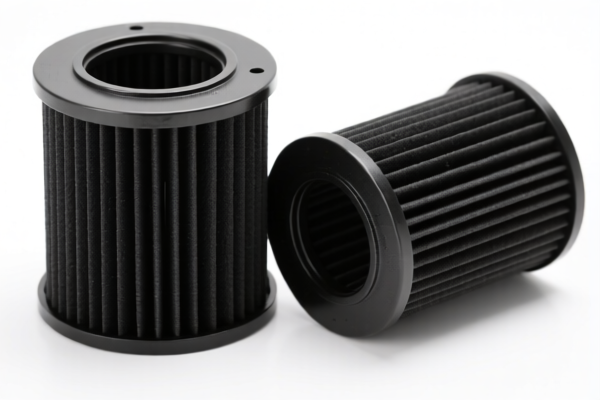
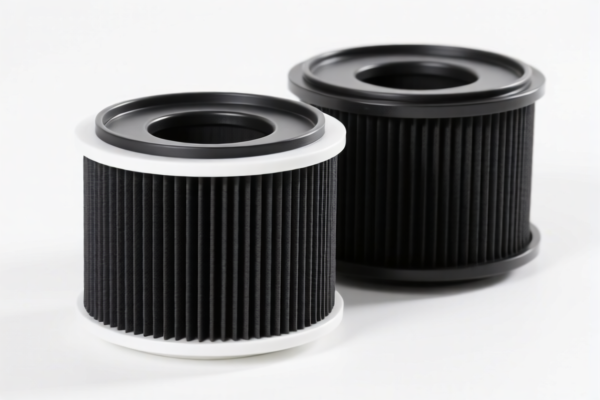
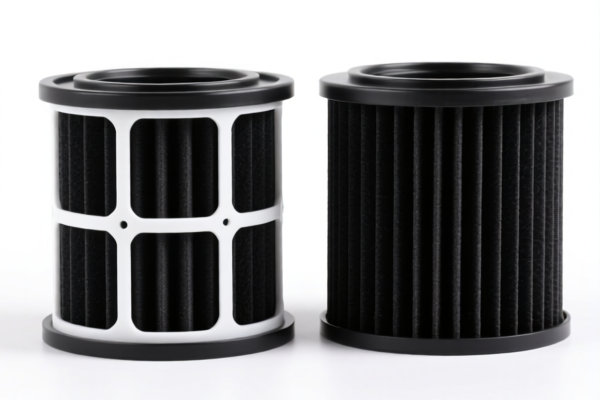

AI Analysis
🌿 Activated Carbon Fiber Filter (ACFF)
🌐 HS Code Reference & Customs Clearance Guide | 2026 Latest Tariff Analysis | Professional Entry Strategy
📌 I. Product Definition & Classification: What Exactly is an "Activated Carbon Fiber Filter"?
Activated Carbon Fiber Filter (ACFF) is a high-performance filtration material used for purifying gases and liquids. It differs from traditional granular or pellet activated carbon by using carbon fibers as the raw material, offering faster adsorption kinetics, higher mechanical strength, and lower resistance.
In international trade, classification depends heavily on whether it is treated as: 1. The Material Itself: The activated carbon fiber fabric/non-woven material (HS 3802). 2. The Functional Unit: A finished filter cartridge or core component integrated into a machine (HS 8421).
⚠️ Critical Distinction:
- If sold as "fabric," "roll," or "loose fiber" without being shaped into a specific functional housing → Classify under 3802.10 (Activated Carbon Products).
- If sold as a "cartridge," "core," or "insert" designed specifically for installation into a filtration machine → Classify under 8421.29 / 8421.39 (Filtration/Purification Machinery Parts).
📦 II. HS Code Classification Details (2026 Latest Tariff Authority Comparison)
Based on the provided data, here are the four primary classification paths. Note that Source: USA is implied by the "122 Clause" and "Section 301" references in the tax details.
| HS Code | Product Description | Application Scenario | Classification Logic |
|---|---|---|---|
3802.10.00.50 |
Activated Carbon Products, Other | Activated carbon fiber filters viewed as material. | Focuses on the chemical composition (Activated Carbon). Summary: "Classified as other types of activated carbon products; material matches code attributes." |
3802.10.00.10 |
Activated Carbon Products, Other (Coal/Wood based) | Activated carbon filters viewed as finished carbon goods. | Focuses on the manufacturing form (Coal/Wood based finished carbon). Summary: "Finished form based on coal or wood; material and use match." |
8421.29.00.65 |
Liquid Filtration/Purification Machines, Other | Filter cartridges/cylinders for liquid purification. | Focuses on the function as a core component of liquid filtration systems. Summary: "Core component of liquid/gas filtration devices; classified under other liquid filtration machines." |
8421.39.01.90 |
Gas Filtration/Purification Machines, Other | Filter cartridges/cylinders for air/gas purification. | Focuses on the function as a core component of gas purification systems. Summary: "Used for gas/liquid filtration/purification; classified under other gas filtration equipment." |
🔍 Key Takeaway:
- Material Approach (3802): Higher base duty (4.8%) but potentially simpler if the product is raw fiber or generic filter media.
- Functional Approach (8421): Lower base duty (0.0%) but requires proving it is a "part of a machine" or a "filter unit" rather than just raw material.
- Both paths incur identical Surcharge Taxes.
💰 III. 2026 Latest Tariff Rate Breakdown (Including Surcharges)
✅ Applicable Country: United States (US)
✅ Origin: China (CN)
✅ Effective Time: Current (Includes Section 301 & Section 122 penalties)
🎯 1. 3802.10.00.50 & 3802.10.00.10 — Activated Carbon Products
| Item | Content |
|---|---|
| Base Tariff | 4.8% (Ad Valorem) |
| Section 301 Surcharge | +25.0% (USITC Footnote 9903.88.01) |
| Section 122 Penalty | +10.0% (Trade Facilitation and Trade Enforcement Act) |
| Total Tax Rate | 39.8% |
| Tax Calculation | CIF Value × 39.8% |
| De Minimis Exemption? | ❌ No (Cannot use $800 de minimis threshold) |
| Legal Basis Path | Base Tariff: 3802.10 → USITC: Section 301 (25%) → Section 122 (10%) |
📌 Explanation:
- These codes treat the filter as a chemical/commodity product (activated carbon).
- The 39.8% rate is heavy due to the叠加 (stacking) of the 25% Section 301 tariff and the 10% Section 122 penalty.
- Risk: If US Customs views the product as a "part of a machine" instead of raw carbon, you may be underpaid duties and face audits.
🎯 2. 8421.29.00.65 & 8421.39.01.90 — Filtration Machinery Parts
| Item | Content |
|---|---|
| Base Tariff | 0.0% (Ad Valorem) |
| Section 301 Surcharge | +25.0% (USITC Footnote 9903.88.01) |
| Section 122 Penalty | +10.0% (Trade Facilitation and Trade Enforcement Act) |
| Total Tax Rate | 35.0% |
| Tax Calculation | CIF Value × 35.0% |
| De Minimis Exemption? | ❌ No (Cannot use $800 de minimis threshold) |
| Legal Basis Path | Base Tariff: 8421.xxxx → USITC: Section 301 (25%) → Section 122 (10%) |
📌 Explanation:
- These codes treat the filter as a functional component of a filtration system.
- The 35.0% rate is 4.8% lower than the 3802 codes because the base duty is 0%.
- Advantage: This is the cheapest legal pathway if you can justify the product as a "filter cartridge" or "machinery part."
- Requirement: You must demonstrate that the item is specifically designed for use in filtration machinery (e.g., show installation diagrams, compatibility with specific purifiers).
🛠️ IV. Customs Clearance Practical Advice (Battle-Tested Pitfall Guide)
✅ 1. Preparation Checklist (Mandatory)
| Document | Required | Notes |
|---|---|---|
| ✅ Product Specification Sheet | ✔️ | Must specify: Material (Carbon Fiber Type), Dimensions, Adsorption Capacity (CCl4/IBU), Flow Rate. |
| ✅ Diagram of Use | ✔️ | Crucial for 8421 codes. Show how it fits into a larger machine. |
| ✅ Product Photos | ✔️ | Clear shots of the filter shape, labeling, and packaging. |
| ✅ Commercial Invoice | ✔️ | Description must match HS Code logic. If 8421, say "Filter Cartridge for Air Purifier." If 3802, say "Activated Carbon Fiber Fabric." |
| ✅ Certificate of Origin | ✔️ | Required to confirm China origin for Section 301/122 calculation. |
✅ 2. Declaration Strategy (Key Mantras)
🔥 "Shape Defines Function, Function Defines Code!"
| Scenario | Correct Declaration | Wrong Practice | Result |
|---|---|---|---|
| Raw Carbon Fiber Rolls | 3802.10.00.50 |
Claiming it's a "Filter Part" | Customs may reject as non-filtration item |
| Cylindrical Filter Cartridge | 8421.29.00.65 (Liquid) or 8421.39.01.90 (Gas) |
Calling it "Activated Carbon" (3802) | Overpay 4.8% unnecessarily |
| Loose Granules/Powder | 3802.10.00.10 |
Calling it a "Filter" | Misclassification, potential fines |
| Filter + Housing Assembly | 8421.29.00.65 |
Splitting into "Filter" + "Plastic Housing" | High complexity, risk of higher total tax |
✅ 3. Special Circumstances Handling
| Situation | Handling Advice |
|---|---|
| Custom-Made Filter Shapes | Provide engineering drawings. If it doesn't fit a standard machine, 3802 is safer. |
| Mixed Materials (Carbon + Mesh) | If carbon is the main functional element, still likely 3802 or 8421. Avoid vague descriptions like "Cleaning Part." |
| Samples for R&D | If value <$800, check if de minimis applies. However, with China origin, Section 301/122 usually voids de minimis. Plan for tax. |
| Re-export from Third Country | If shipped from Vietnam/Malaysia but Chinese origin, still subject to Chinese tariffs unless significant transformation occurred. |
🌍 V. Global Market Comparison (2026 Overview)
| Country/Region | Recommended HS Code | Est. Tariff (China Origin) | Key Certifications | Notes |
|---|---|---|---|---|
| 🇺🇸 USA | 8421.29.00.65 / 3802.10.00.50 |
35.0% / 39.8% | None specific, but FDA/FCC if medical/consumer electronics | High barrier due to 301/122. |
| 🇨🇳 China | 3802.10 / 8421.29 |
~0% - 5% | CCC (if electric appliance), ISO | Domestic trade is low cost. |
| 🇪🇺 EU | 3802.10 / 8421.29 |
0% - 4% | CE, REACH | No Section 301. Much easier entry. |
| 🇬🇧 UK | 3802.10 / 8421.29 |
0% - 4% | UKCA | Post-Brexit rules similar to EU. |
| 🇦🇺 Australia | 3802.10 / 8421.29 |
5% | ACMA (if electronic) | Moderate tariff. |
📌 Conclusion:
- The USA is the most expensive market for Activated Carbon Fiber Filters due to the stacking of Section 301 and Section 122 tariffs.
- European Union and Asia offer significantly lower barriers.
- Strategy: For US market, try to classify under 8421 to save 4.8% on the base duty. Provide strong evidence that it is a "filter unit," not raw carbon.
📌 VI. Common Mistakes & Pitfall Guide (Blood & Tears)
❌ Mistake 1: Declaring as "Activated Carbon" (3802) when it is a finished "Filter Cartridge" (8421)
👉 Consequence: You pay 39.8% instead of 35.0%. Unnecessary loss of profit.
👉 Fix: Emphasize "Filter Cartridge" and "Filtration Function" in documents.
❌ Mistake 2: Declaring as "Filter Part" (8421) when it is raw "Carbon Fiber Fabric" (3802)
👉 Consequence: Customs may classify it as 3802, but if they believe it's 8421, you might face penalties for undervaluation or misdeclaration. Also, 8421 requires strict proof of machinery integration.
👉 Fix: If it's just fabric/roll, stick to 3802. Do not overcomplicate.
❌ Mistake 3: Ignoring the Section 122 (10%) Penalty
👉 Consequence: Many brokers miss this. It applies to all goods from China under current trade enforcement acts.
👉 Fix: Ensure your tariff calculator includes the extra 10%.
❌ Mistake 4: Vague Description "Carbon Filter"
👉 Consequence: Customs examiners may choose the higher tax code or demand additional data.
👉 Fix: Use precise terms: "Cylindrical Activated Carbon Fiber Filter Cartridge for Water Purifier, Model XYZ."
✅ Correct Practice:
"ACFF Filter Cartridge, 10-inch, for Residential Water Filtration System, Made of Activated Carbon Fiber, Model: AC-100"
→ Supports 8421.29.00.65 (Liquid Filtration).
🎯 VII. Conclusion: Precision Classification, Cost Optimization!
🎯 Remember the Mantra:
🔹 "Cartridge = 8421 (35%) | Raw Carbon = 3802 (39.8%)"
🔹 "Section 301 + 122 = Non-Negotiable for China Origin"
🔹 "Prove Function, Save 4.8%"
📌 Pro Tip:
If your company has US-based assembly or uses non-Chinese raw fibers (e.g., from Japan), you may be eligible for lower or zero Section 301 duties. Investigate supply chain diversification if volume is high.
Consider applying for a Binding Ruling (Pre-Decision) from CBP to lock in the 8421 classification and avoid post-clearance audits.
📣 Immediate Action:
📞 Consult a licensed customs broker + Provide Product Photos + Request HS Code Pre-Ruling for US Entry.
🚀 Clear Customs Smoothly, Maximize Margins, Expand Globally!
✨ Professional Clearance Starts with Accurate Classification!
💼 Every Percent of Duty Saved is Pure Profit!
Customer Reviews
About HS Code Classification
The Harmonized System (HS) is an internationally standardized nomenclature developed by the World Customs Organization (WCO) to classify traded products. Over 200 countries use the HS system as the basis for customs tariffs, trade statistics, and import/export regulations.
Each HS code follows a hierarchical structure:
- Chapter (2 digits) — Broad category of goods (e.g., Chapter 84: Machinery and Mechanical Appliances)
- Heading (4 digits) — More specific grouping within the chapter
- Subheading (6 digits) — Internationally standardized breakdown, used by all WCO member countries
- National subdivisions (8-10 digits) — Country-specific extensions for further classification, such as US HTSUS 10-digit codes
Correct HS code classification is essential for smooth customs clearance, accurate duty payment, and compliance with trade regulations. Misclassification can lead to customs delays, overpayment of duties, or penalties.
When importing from CN to US, the applicable tariff rates may include:
- Most-Favored-Nation (MFN) rate — The standard duty rate applied to WTO members
- General rate — Applied to countries without trade agreements
- Trade remedy duties — Additional tariffs such as Section 301 (anti-dumping), Section 232 (national security), or countervailing duties
The information provided on this page is for reference purposes only. For official classification, please consult with your local customs authority or a licensed customs broker.