Activated Carbon Filter
CN → US| HS Code | Tariff Rate | Origin | Destination | Doc |
|---|---|---|---|---|
| 3802100050 | 39.8% | CN | US | Official Doc |
| 3802100010 | 39.8% | CN | US | Official Doc |
| 8421290065 | 35.0% | CN | US | Official Doc |
| 8421390190 | 35.0% | CN | US | Official Doc |
| 3802100050 | 39.8% | CN | US | Official Doc |
Product Images
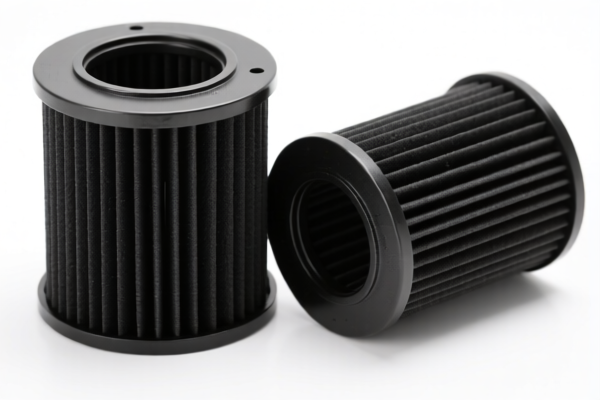
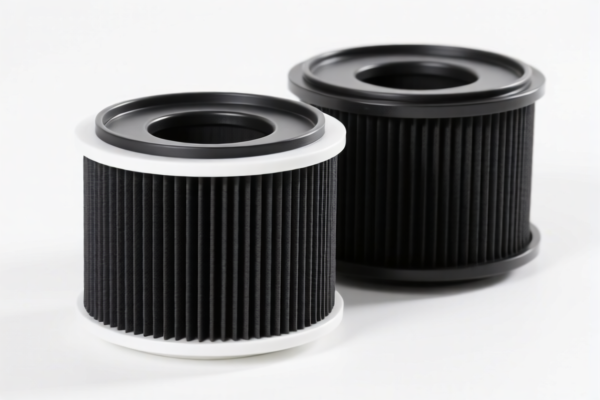
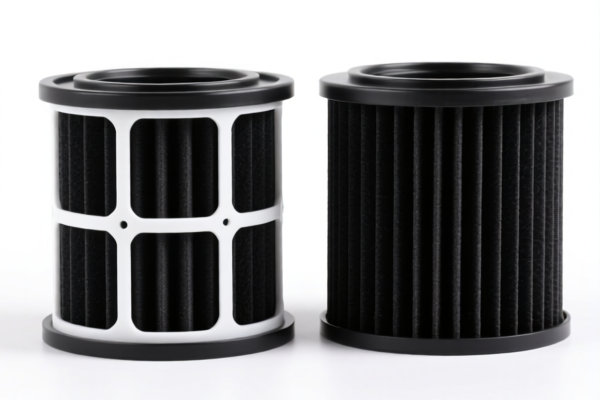

AI Analysis
🌊 Activated Carbon Filters (ACF)
🌐 HS Code Reference & Customs Clearance Guide | 2026 Latest Tariff Analysis | Professional-Level Clearance Strategy
📌 I. Product Definition & Classification: What Exactly is an "Activated Carbon Filter"?
Activated Carbon Filters are filtration devices that utilize the porous structure and adsorption capacity of activated carbon to remove impurities, odors, and contaminants from liquids or gases. In international trade, the classification depends heavily on whether the product is viewed as a material substance or a mechanical apparatus.
1. Material/Component View (HS Chapter 38):
If the product is primarily classified based on its material nature (activated carbon articles), it falls under Chapter 38. This often applies to bulk carbon materials or specific carbon-based components not integrated into a complex mechanical housing.
* HS Code 3802.10.00.50: For Activated Carbon Filters or Disinfecters based on the material properties of activated carbon articles.
* HS Code 3802.10.00.10: For Activated Carbon Filters classified by common application forms and material attributes.
2. Mechanical/Apparatus View (HS Chapter 84):
If the product is a functional filter unit designed to filter liquids or gases, it is often classified as part of a filtration machine or apparatus.
* HS Code 8421.29.00.65: For Activated Carbon Filters functioning as the core component of liquid or gas filtration devices.
* HS Code 8421.39.01.90: For Activated Carbon Filters classified as "Other" filtering equipment not explicitly listed elsewhere, often for gas or liquid filtration systems.
⚠️ Key Distinction Point:
- If the item is described primarily by its chemical/material composition (e.g., carbon blocks, granules in simple housing) → Consider 3802.10.
- If the item is described as a functional machine part or complex filtration unit → Consider 8421.29 or 8421.39.
- Note: The tax burden varies significantly between these categories.
📦 II. HS Code Classification Details (2026 Latest Tariff Authority对照)
| HS Code | Product Description | Application Scenario | Primary Basis |
|---|---|---|---|
3802.10.00.50 |
Activated Carbon Filter/Disinfecter | Based on material nature of activated carbon articles | Material Property |
3802.10.00.10 |
Activated Carbon Filter | Based on common form and material attributes | Material Property |
8421.29.00.65 |
Activated Carbon Filter (Liquid/Gas) | Core component of filtration devices | Mechanical Function |
8421.39.01.90 |
Activated Carbon Filter (Other) | Unlisted filtering equipment for liquids/gases | Mechanical Function |
🔍 Important Reminder:
- Chapter 38 (3802) classifications generally carry a higher base tariff (4.8%) compared to Chapter 84 (8421) (0.0%).
- However, both categories are subject to significant additional tariffs (see below).
- Misclassification between "Material" and "Machine Part" can lead to customs audits and penalties.
💰 III. 2026 Latest Tariff Rate Breakdown (Including Additional Taxes)
✅ Applicable Country: United States (US)
✅ Origin: China (CN)
✅ Effective Date: From Nov 10, 2025 (and subsequent imports)
🎯 1. 3802.10.00.50 & 3802.10.00.10 —— Activated Carbon Filters (Material Based)
| Item | Detail |
|---|---|
| Base Tariff | 4.8% (Ad valorem) |
| Section 301 Additional Tariff | +25.0% |
| IEEPA Additional Tariff (Section 122/9903) | +10.0% |
| Total Effective Tax Rate | 39.8% |
| Tax Calculation | CIF Value × 39.8% |
| De Minimis Exemption | ❌ Not Eligible (Deny de minimis) |
| Legal Basis Path | USITC:3802.10.00.50/10 → Section 301: 25% → IEEPA: 10% |
📌 Explanation:
- The 4.8% base rate applies to activated carbon articles.
- The 25% Section 301 tariff is standard for many Chinese industrial goods.
- The 10% IEEPA tariff applies specifically to goods from China/Hong Kong under emergency powers.
- Total: 39.8%. This is a high-cost classification due to the higher base rate.
🎯 2. 8421.29.00.65 & 8421.39.01.90 —— Activated Carbon Filters (Machine/Part Based)
| Item | Detail |
|---|---|
| Base Tariff | 0.0% (Ad valorem) |
| Section 301 Additional Tariff | +25.0% |
| IEEPA Additional Tariff (Section 122/9903) | +10.0% |
| Total Effective Tax Rate | 35.0% |
| Tax Calculation | CIF Value × 35.0% |
| De Minimis Exemption | ❌ Not Eligible (Deny de minimis) |
| Legal Basis Path | USITC:8421.29.00.65/39 → Section 301: 25% → IEEPA: 10% |
📌 Explanation:
- The 0.0% base rate makes this classification more attractive than Chapter 38.
- However, the additional tariffs (25% + 10%) remain the same.
- Total: 35.0%. This is 4.8% lower than the Chapter 38 classification.
- Strategic Insight: If your product fits the definition of a "filtering apparatus part" (8421), it may be cheaper to classify here than as a "material article" (3802), provided the description supports it.
🛠️ IV. Customs Clearance Practical Advice (Field Risk Avoidance Guide)
✅ 1. Documentation Checklist (Missing Items Will Cause Delays)
| Document | Required? | Notes |
|---|---|---|
| ✅ Product Specifications | ✔️ | Must detail pore size, carbon type, flow rate, dimensions. |
| ✅ Technical Data Sheet | ✔️ | Clarify if it is a "standalone filter" or part of a "system". |
| ✅ Product Photos | ✔️ | Show external housing, connections, and internal structure if possible. |
| ✅ Commercial Invoice | ✔️ | Must clearly state "Activated Carbon Filter for [Liquid/Gas] Filtration". |
| ✅ Packing List | ✔️ | Itemize components if sold as a kit (e.g., housing + carbon block). |
| ✅ Certificate of Origin | ✔️ | Essential for applying additional tariffs correctly. |
✅ 2. Declaration Strategy (Key Mantras)
🔥 "Classify by Function, Not Just Material; 0% Base Saves Cash!"
| Scenario | Correct Declaration Approach | Incorrect Approach |
|---|---|---|
| Standard Carbon Block Filter | If it's a simple cartridge, 3802.10.00.10 or 8421.29.00.65 depending on structural complexity. |
Calling it just "Carbon Powder" (wrong) or "Machine" (if it's a simple insert). |
| Complex Filtration Unit | Use 8421.29.00.65 or 8421.39.01.90. Emphasize "Filtering Apparatus". |
Using 3802.10 unnecessarily when it fits Chapter 84. |
| Disinfection Device | Use 3802.10.00.50 if primarily described as a disinfecter based on carbon material. |
Trying to force a disinfecter into a general filter code. |
💡 Pro Tip:
- If the filter is a replaceable cartridge inside a machine, some customs brokers argue for 8421.29.00.65 ("Parts of filtering apparatus") to leverage the 0% base rate.
- If the filter is sold as a standalone household appliance (e.g., under-sink water filter unit), it might still fall under 8421.
- Consult a licensed broker: The boundary between "Material" (3802) and "Part of Machine" (8421) is nuanced.
✅ 3. Special Considerations
| Situation | Handling Advice |
|---|---|
| Hybrid Products | If the product includes a plastic housing + carbon block, describe it as a "Filtration Unit" to support 8421 classification. |
| Bulk Carbon Material | If selling raw activated carbon or simple impregnated media, 3802.10 is more appropriate. |
| Pre-Cleared Goods | If importing large volumes, apply for a Binding Ruling (Pre-Ruling) from US CBP to lock in the HS Code and avoid surprise audits. |
| De Minimis Risk | Do NOT rely on Section 321 (De Minimis < $800) for these items. They are explicitly denied. All shipments are subject to full duty. |
🌍 V. Global Market Comparison (2026 Overview)
| Country/Region | Recommended HS Code | Est. Tariff (China Origin) | Key Certification | Notes |
|---|---|---|---|---|
| 🇺🇸 USA | 8421.29.00.65 / 3802.10.00.10 |
35.0% / 39.8% | NSF/ANSI Standards | High tariffs due to 301 + IEEPA. |
| 🇨🇳 China | 8421.29.00.65 / 3802.10.00.10 |
~4.8% - 6.0% | GB Standards | Lower import barriers into China. |
| 🇪🇺 EU | 8421.29 / 3802.10 |
~2.4% - 4.0% | CE + REACH | No additional punitive tariffs. |
| 🇬🇧 UK | 8421.29 / 3802.10 |
~2.4% - 4.0% | UKCA | Post-Brexit rules apply. |
📌 Conclusion:
- The US market is the most challenging due to the叠加 (stacked) tariffs (Base + 301 + IEEPA).
- Chapter 84 (8421) offers a slight cost advantage (35%) over Chapter 38 (3802) (39.8%).
- Ensure your product description supports the "Mechanical/Part" classification to save 4.8% on the base rate.
📌 VI. Common Errors & Pitfalls (Lessons Learned)
❌ Error 1: Classifying a complex filter unit as simple "Carbon Material" (3802) when it fits "Filtering Apparatus" (8421).
👉 Consequence: Paying 39.8% instead of 35.0% unnecessarily.
❌ Error 2: Assuming De Minimis (Section 321) applies to small shipments.
👉 Consequence: Customs seizure or forced payment of 35-40% duties + penalties. These items are not de minimis exempt.
❌ Error 3: Vague description "Carbon Filter" on the invoice.
👉 Consequence: Customs officer may choose the less favorable code or delay clearance for further inquiry.
❌ Error 4: Ignoring the "IEEPA 10%" component.
👉 Consequence: Underpayment of tariffs. The 10% IEEPA tariff is mandatory for Chinese-origin goods in this category from Nov 2025.
✅ Correct Practice:
"Activated Carbon Filter Cartridge for Water Filtration System, Model XYZ, NSF Certified, Made in China"
Preferred Classification: 8421.29.00.65 (if supported by specs) for lower base duty.
🎯 VII. Conclusion: Professional Classification, Cost Optimization!
🎯 Remember the Mantra:
🔹 "Function over Material: 8421 Saves 4.8%!
🔹 "No De Minimis: Pay Up or Stay Put!
🔹 "35% vs 39.8%: One Line of Description Makes the Difference!"
📌 Pro Tip:
If you are importing large quantities, apply for a US CBP Binding Ruling before shipping. This provides legal certainty on whether your specific filter design qualifies for 8421.29.00.65 (35%) or must be classified under 3802.10 (39.8%).
📣 Immediate Action:
📞 Consult your customs broker with technical specs.
📦 Ensure invoices clearly state "Filtering Apparatus/Part" if targeting 8421.
🚀 Minimize duty burden through precise classification!
✨ Professional Clearance Starts with Accurate Classification!
💼 Every Percent of Duty Saved is Pure Profit!
Customer Reviews
About HS Code Classification
The Harmonized System (HS) is an internationally standardized nomenclature developed by the World Customs Organization (WCO) to classify traded products. Over 200 countries use the HS system as the basis for customs tariffs, trade statistics, and import/export regulations.
Each HS code follows a hierarchical structure:
- Chapter (2 digits) — Broad category of goods (e.g., Chapter 84: Machinery and Mechanical Appliances)
- Heading (4 digits) — More specific grouping within the chapter
- Subheading (6 digits) — Internationally standardized breakdown, used by all WCO member countries
- National subdivisions (8-10 digits) — Country-specific extensions for further classification, such as US HTSUS 10-digit codes
Correct HS code classification is essential for smooth customs clearance, accurate duty payment, and compliance with trade regulations. Misclassification can lead to customs delays, overpayment of duties, or penalties.
When importing from CN to US, the applicable tariff rates may include:
- Most-Favored-Nation (MFN) rate — The standard duty rate applied to WTO members
- General rate — Applied to countries without trade agreements
- Trade remedy duties — Additional tariffs such as Section 301 (anti-dumping), Section 232 (national security), or countervailing duties
The information provided on this page is for reference purposes only. For official classification, please consult with your local customs authority or a licensed customs broker.