Activated Carbon Gas Phase Adsorption
CN → US| HS Code | Tariff Rate | Origin | Destination | Doc |
|---|---|---|---|---|
| 3802100050 | 39.8% | CN | US | Official Doc |
| 3802100010 | 39.8% | CN | US | Official Doc |
| 2803000010 | 35.0% | CN | US | Official Doc |
| 2803000050 | 35.0% | CN | US | Official Doc |
| 2803000010 | 35.0% | CN | US | Official Doc |
Product Images
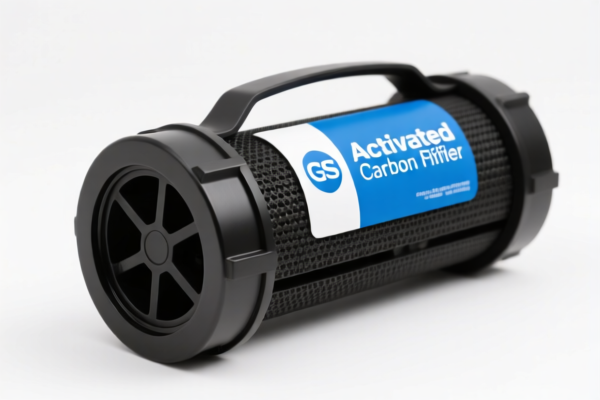
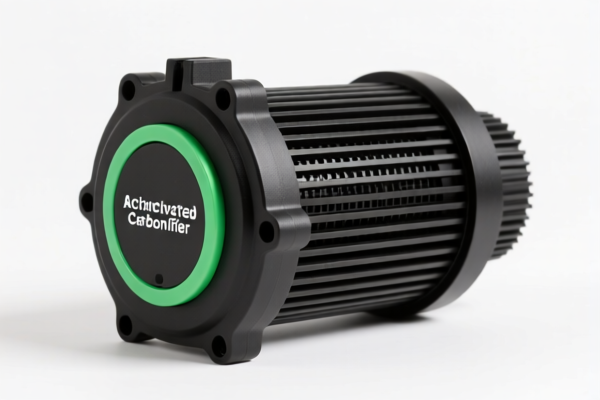
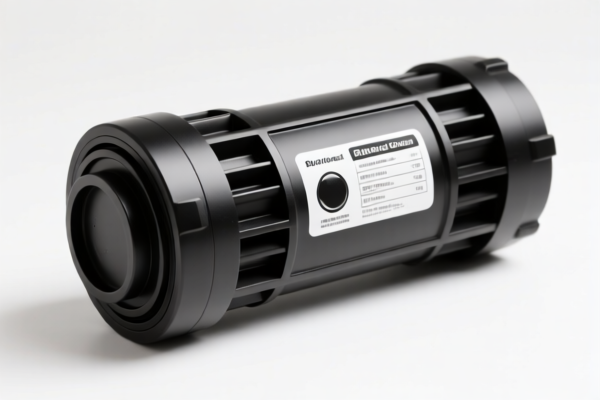
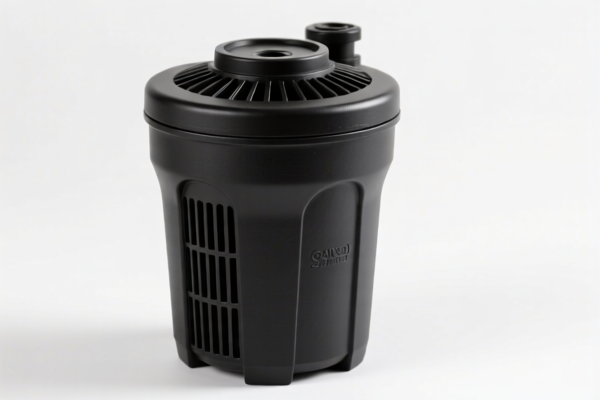
AI Analysis
🌿 Activated Carbon Gas Phase Adsorption
🌐 HS Code Reference & Customs Clearance Guide | 2026 Latest Tariff Analysis | Professional Clearance Strategy
📌 I. Product Definition & Classification: What Exactly is "Activated Carbon Gas Phase Adsorption"?
Activated Carbon Gas Phase Adsorption refers to porous carbon materials primarily used for removing volatile organic compounds (VOCs), odors, and gaseous pollutants from air or gas streams. In international trade, these products are classified based on their material composition (e.g., coal-based, coconut shell-based, chemical wood-based) and form (granular, pelletized, powdered).
Key Distinction: * Adsorbents (Chemical Products): If the product is explicitly defined as an "adsorbent" and prepared/processed specifically for this purpose, it often falls under Chapter 38. * Raw Carbon (Chemical Elements): If the product is essentially raw carbon (charcoal/carbon black) without specific adsorption preparations, it may fall under Chapter 28.
⚠️ Critical Classification Point:
- If the product is "Activated Carbon Adsorbent" (prepared, potentially impregnated or processed specifically for adsorption) → Generally归入 3802.10.
- If the product is simply "Carbon" (even if activated) without specific "adsorbent" characterization in customs documentation → May be misclassified under 2803.00 (Carbon black/Other carbon). Note: Customs authorities often insist on 3802 for activated carbon due to its specific chemical preparation.
📦 II. HS Code Classification Details (2026 Latest Tariff Authority Cross-Reference)
Based on the provided data, here are the specific HS Codes and their rationales:
| HS Code | Product Description | Rationale for Classification | Total Tax Rate |
|---|---|---|---|
3802.10.00.50 |
Activated Carbon Adsorbent | Material: Activated Carbon. Purpose: Adsorbent. Fits definition of other chemical products. | 39.8% |
3802.10.00.10 |
Activated Carbon Adsorbent | Material: Coal/Activated Carbon. Purpose: Adsorbent. No material conflict. | 39.8% |
3802.10.00.10 |
Activated Carbon Adsorbent Material | Material: Activated Carbon. Purpose: Adsorbent Material. Match Successful. | 39.8% |
2803.00.00.10 |
Activated Carbon Adsorbent Material | Material: Carbon. Fits definition of Carbon Black. High Risk of Misclassification | 35.0% |
2803.00.00.50 |
Activated Carbon Adsorbent Material | Material: Carbon. Fits definition of Other Carbon. No conflict with Carbon Black. | 35.0% |
🔍 Key Insight:
- Chapter 38 (3802.10) is the correct and most common classification for "Activated Carbon Adsorbents."
- Chapter 28 (2803.00) is for raw carbon forms (like carbon black). Using this code for activated carbon is risky and may lead to customs audits, as activated carbon is considered a "prepared" chemical product.
💰 III. 2026 Latest Tariff Rate Breakdown (Including Additional Duties & Policy Surcharges)
✅ Applicable Country: USA (US)
✅ Country of Origin: China (CN)
✅ Effective Time: From November 10, 2025 (for subsequent imports)
🎯 1. Chapter 38 Codes: 3802.10.00.10 & 3802.10.00.50
(The Correct Classification for Most Activated Carbon Products)
| Item | Detail |
|---|---|
| Base Tariff | 4.8% (Ad Valorem) |
| Section 301 Additional Duty | +25.0% (USITC Footnote 9903.88.01) |
| IEEPA Surcharge | +10.0% (For products from China/Hong Kong, effective Nov 10, 2025) |
| Total Effective Rate | 39.8% |
| Calculation Method | CIF Value × 39.8% |
| De Minimis Exemption | ❌ Not Applicable (deny_de_minimis) |
| Legal Basis Path | IEEPA:9903.01.25 → IEEPA:9903.01.24 → USITC:3802.10.00.10/50 → FOOTNOTE:9903.88.01 |
📌 Explanation:
- The 4.8% is the standard Most Favored Nation (MFN) rate.
- The 25% is the Section 301 tariff on Chinese goods.
- The 10% is the new IEEPA surcharge.
- Total: 39.8%. This is a significant cost factor.
🎯 2. Chapter 28 Codes: 2803.00.00.10 & 2803.00.00.50
(Riskier Classification – "Raw Carbon")
| Item | Detail |
|---|---|
| Base Tariff | 0.0% (Ad Valorem) |
| Section 301 Additional Duty | +25.0% |
| IEEPA Surcharge | +10.0% |
| Total Effective Rate | 35.0% |
| Calculation Method | CIF Value × 35.0% |
| De Minimis Exemption | ❌ Not Applicable |
| Legal Basis Path | IEEPA:9903.01.25 → IEEPA:9903.01.24 → USITC:2803.00.00.10/50 → FOOTNOTE:9903.88.01 |
📌 Warning:
- While the rate is 4.8% lower, classifying activated carbon as "Carbon" (2803) is highly risky.
- Customs may reclassify it to 3802, leading to back taxes, penalties, and shipment delays.
- Only use this code if the product is truly unprocessed carbon (e.g., raw charcoal) and not chemically treated or "activated" for adsorption.
🛠️ IV. Customs Clearance Practical Advice (Battle-Tested Pitfall Guide)
✅ 1. Required Documentation Checklist (Non-Negotiable)
| Document | Must Provide | Notes |
|---|---|---|
| ✅ Product Specification Sheet | ✔️ | Must state "Activated Carbon," pore size, surface area, and primary use: Gas Phase Adsorption. |
| ✅ Safety Data Sheet (SDS) | ✔️ | Section 1 must clearly state "Activated Carbon" and hazard class (if any). |
| ✅ Product Photos | ✔️ | Show packaging, granule/pellet form, and labeling. |
| ✅ Commercial Invoice | ✔️ | Description must be precise: "Activated Carbon Adsorbent for Gas Phase Filtration" |
| ✅ Packing List | ✔️ | Weight breakdown (net/gross). |
| ✅ Certificate of Origin (CO) | ✔️ | If applicable, to prove origin for IEEPA/Section 301 purposes. |
⚠️ Critical Tip:
Avoid vague terms like "Carbon Powder" or "Charcoal." Use "Activated Carbon Adsorbent" to align with HS 3802.
✅ 2. Declaration Strategy (Key Mnemonics)
🔥 "Adsorbent = 3802, Raw Carbon = 2803 (Risky)!"
| Scenario | Correct Declaration | Wrong Practice |
|---|---|---|
| Granular/Pelletized Activated Carbon | 3802.10.00.10 or .50 |
Mislabeling as "Coal" or "Charcoal" → Risk of reclassification. |
| Powdered Activated Carbon | 3802.10.00.10 or .50 |
Mislabeling as "Carbon Black" → High Audit Risk. |
| Impregnated Activated Carbon | 3802.10.00.10 or .50 |
Must disclose impregnation in SDS. |
| Raw Charcoal (Unactivated) | 4402 or 2803 (if carbonized) |
Do not use 3802 for unactivated charcoal. |
✅ 3. Special Handling Cases
| Case | Recommendation |
|---|---|
| OEM Custom Activated Carbon | Provide client specs + chemical processing details to prove "activation" process. |
| Bulk Bag vs. Drum Packaging | Classification remains the same; ensure weight accuracy on invoice. |
| Mixed Shipments (e.g., with other chemicals) | Declare separately. Do not bundle activated carbon with non-adsorbent chemicals to avoid misclassification. |
🌍 V. Global Market Comparison (2026 Latest)
| Country/Region | Recommended HS Code | Tariff (China Origin) | Certification | Notes |
|---|---|---|---|---|
| 🇺🇸 USA | 3802.10.00.10/50 |
39.8% | None specific | Highest cost due to 301 + IEEPA. |
| 🇨🇳 China | 3802.10.00.10/50 |
~10-15% | None | Standard export. |
| 🇪🇺 EU | 3802.10.00 |
~6.5% | REACH Registration | REACH compliance is mandatory. |
| 🇬🇧 UK | 3802.10.00 |
~6.5% | UK REACH | Post-Brexit regulation. |
| 🇦🇺 Australia | 3802.10.00 |
5% | None | Moderate tariff. |
| 🇯🇵 Japan | 3802.10.00 |
5% | JIS Standards | Commonly used in industrial filtration. |
📌 Conclusion:
- The USA is the most expensive market due to layered tariffs (39.8%).
- EU/UK/AU/JP offer lower tariffs but require chemical compliance (REACH/JIS).
- Cost Optimization: Consider sourcing from non-China origins (e.g., Vietnam, Indonesia) to avoid Section 301 & IEEPA surcharges, but verify Country of Origin rules carefully.
📌 VI. Common Errors & Pitfalls (Lessons Learned)
❌ Error 1: Declaring "Activated Carbon" as "Charcoal" (HS 4402)
👉 Consequence: Customs reclassifies to 3802 → Back taxes + penalties + delay.
❌ Error 2: Declaring as "Carbon Black" (HS 2803.00.00.10)
👉 Consequence: Audit triggered. Activated carbon ≠ Carbon Black. High risk of denial.
❌ Error 3: Vague Description "Carbon Powder"
👉 Consequence: Customs assumes the highest duty rate or requires additional information → Delay.
❌ Error 4: Ignoring IEEPA Surcharge
👉 Consequence: Under-declaring taxes by 10% → Penalties and interest.
✅ Correct Practice:
"Granular Activated Carbon Adsorbent, Coal-Based, Pore Size 1.0nm, Used for VOC Gas Phase Adsorption, Model XYZ, SDS Available"
🎯 VII. Conclusion: Precision Classification Saves Money!
🎯 Remember the Key Rules:
🔹 "Adsorbent = 3802 (39.8% in USA), Raw Carbon = 2803 (35.0% but Risky)"
🔹 "Describe it as 'Activated Carbon Adsorbent' to match 3802"
🔹 "IEEPA 10% is mandatory for China origin since Nov 2025"
📌 Pro Tip:
If your activated carbon is produced in Southeast Asia (e.g., Vietnam, Indonesia), you may qualify for lower tariffs (no Section 301/IEEPA).
👉 Action: Verify Country of Origin rules with your supplier and apply for Advance Ruling if unsure.
📣 Immediate Action:
📞 Engage a licensed customs broker + Provide SDS + Apply for HS Code Pre-ruling if high value.
🚀 Ensure smooth customs clearance, minimize costs, and maximize profit margins!
✨ Professional Clearance Starts with Accurate Classification!
💼 Every percentage point matters!
Customer Reviews
About HS Code Classification
The Harmonized System (HS) is an internationally standardized nomenclature developed by the World Customs Organization (WCO) to classify traded products. Over 200 countries use the HS system as the basis for customs tariffs, trade statistics, and import/export regulations.
Each HS code follows a hierarchical structure:
- Chapter (2 digits) — Broad category of goods (e.g., Chapter 84: Machinery and Mechanical Appliances)
- Heading (4 digits) — More specific grouping within the chapter
- Subheading (6 digits) — Internationally standardized breakdown, used by all WCO member countries
- National subdivisions (8-10 digits) — Country-specific extensions for further classification, such as US HTSUS 10-digit codes
Correct HS code classification is essential for smooth customs clearance, accurate duty payment, and compliance with trade regulations. Misclassification can lead to customs delays, overpayment of duties, or penalties.
When importing from CN to US, the applicable tariff rates may include:
- Most-Favored-Nation (MFN) rate — The standard duty rate applied to WTO members
- General rate — Applied to countries without trade agreements
- Trade remedy duties — Additional tariffs such as Section 301 (anti-dumping), Section 232 (national security), or countervailing duties
The information provided on this page is for reference purposes only. For official classification, please consult with your local customs authority or a licensed customs broker.