Activated Carbon Regenerant
CN → US| HS Code | Tariff Rate | Origin | Destination | Doc |
|---|---|---|---|---|
| 3802100050 | 39.8% | CN | US | Official Doc |
| 3802100010 | 39.8% | CN | US | Official Doc |
| 2803000010 | 35.0% | CN | US | Official Doc |
| 2803000050 | 35.0% | CN | US | Official Doc |
| 8421290005 | 35.0% | CN | US | Official Doc |
Product Images
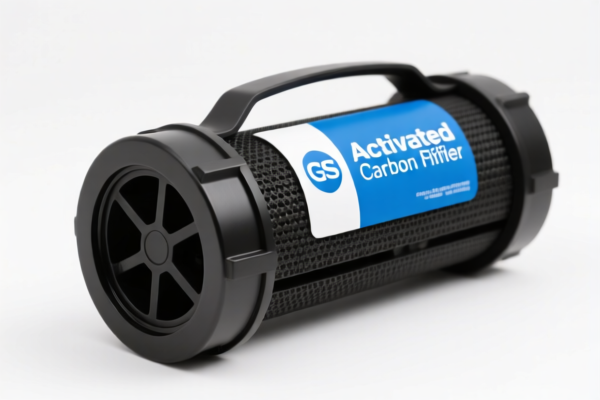
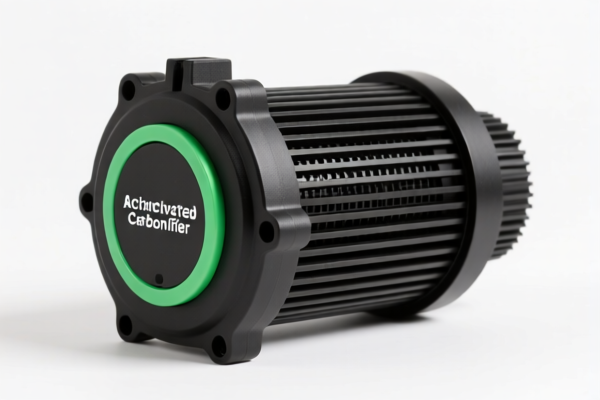
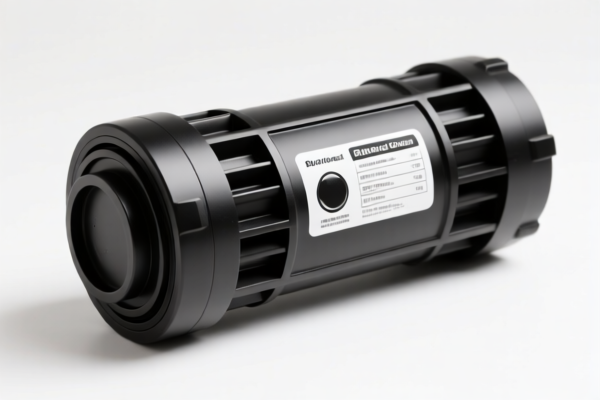
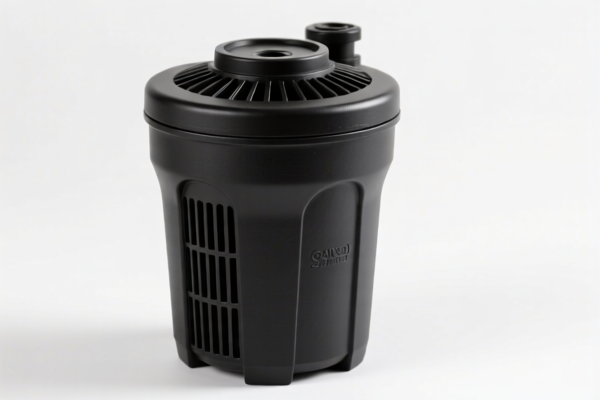
AI Analysis
🔥 Activated Carbon Regenerant: HS Code Classification & 2026 US Customs Clearance Guide
🌐 HS Code Reference & Clearance Strategy | 2026 Latest Tariff Analysis | Professional Customs Strategy
📌 I. Product Definition & Classification: What is "Activated Carbon Regenerant"?
Activated Carbon Regenerant refers to materials used to restore the adsorption capacity of spent activated carbon. In international trade, these products are typically categorized based on their material composition (Carbon vs. Carbonized Coal) and functional form (Powder/Granular Adsorbent vs. Processing Equipment).
There is a critical distinction in customs classification: 1. The Material Itself: If it is pure carbon or carbonized coal powder/granules intended for adsorption or regeneration, it may fall under Chapter 28 (Inorganic Chemicals) or Chapter 38 (Miscellaneous Chemical Products). 2. The Equipment: If the "regenerant" implies a machine or device used for the regeneration process (e.g., solvent recovery units), it falls under Chapter 84 (Machinery).
⚠️ Key Distinction Point: - If the product is a solid material (powder/granules) acting as an adsorbent or regenerant medium → Check 2803.00 or 3802.10. - If the product is a machine/device used for liquid purification or solvent recovery → Check 8421.29.
📦 II. HS Code Classification Details (2026 Latest Tariff Authority Mapping)
Based on the provided data, here are the specific HS Codes and their logical justifications for "Activated Carbon Regenerant" scenarios.
| HS Code | Product Description | Application Scenario | Classification Logic |
|---|---|---|---|
3802.10.00.50 |
Activated Carbon Adsorbent, Material: Activated Carbon | Used as an adsorbent; fits definitions outside other specific categories | Classified under "Miscellaneous Chemical Products" as a specialized adsorbent. |
3802.10.00.10 |
Activated Carbon Adsorbent, Material: Coal/Activated Carbon | Used as an adsorbent; no material conflict | Also classified under Chapter 38. Often used for coal-based activated carbon regenerants. |
2803.00.00.10 |
Activated Carbon, Material: Carbon | Fits definition of "Carbon Black and other Forms of Carbon" | If the regenerant is essentially pure carbon (charcoal/coke form) without significant chemical additives, it falls here. |
2803.00.00.50 |
Activated Carbon, Other Forms of Carbon | Other forms of carbon, not conflicting with specific carbon black categories | Another option for pure carbon-based regenerants not specified elsewhere in 2803. |
8421.29.00.05 |
Solvent Recovery Apparatus | Used for liquid purification and recovery; fits definition of recovery/circulation devices | If "regenerant" refers to the machine doing the regeneration (e.g., thermal regeneration unit or solvent recovery system). |
🔍 Critical Reminder: - Material vs. Function: Do not confuse the chemical material (HS 28/38) with the machinery (HS 84). - Chapter 38 vs. Chapter 28: If the activated carbon has been processed with binders, catalysts, or specific impregnations for regeneration, it leans toward 3802. If it is essentially raw carbon/charcoal, it leans toward 2803. - Machinery: If you are importing the equipment that regenerates the carbon (or recovers solvents from the carbon), use 8421.29.
💰 III. 2026 Latest Tariff Rate Breakdown (Including Surcharges & Policy Add-ons)
✅ Applicable Country: United States (US) ✅ Origin: China (CN) ✅ Effective Date: From November 10, 2025 (and subsequent imports)
🎯 1. Group A: Chapter 38 Products (3802.10.00.50 & 3802.10.00.10)
Scenario: Importing Activated Carbon Adsorbent/Regenerant Material.
| Item | Content |
|---|---|
| Base Tariff | 4.8% |
| Section 301 Surcharge (USITC) | +25.0% |
| IEEPA Surcharge (Section 122) | +10.0% |
| Total Effective Tax Rate | 39.8% |
| Tax Calculation | CIF Value × 39.8% |
| De Minimis Exemption Eligible? | ❌ No (deny_de_minimis) |
| Legal Basis Path | Base: 3802.10 → USITC Footnote: 25% → IEEPA: 10% |
📌 Explanation: - The 25% is the standard Section 301 tariff on Chinese chemical products. - The 10% is an additional IEEPA surcharge (often referred to as "Section 122 tariff" in some contexts, though legally often under emergency powers) applied to specific Chinese imports. - Total Burden: Nearly 40%. This significantly impacts the cost of raw material imports.
🎯 2. Group B: Chapter 28 Products (2803.00.00.10 & 2803.00.00.50)
Scenario: Importing Pure Activated Carbon (Carbon/Charcoal Form).
| Item | Content |
|---|---|
| Base Tariff | 0.0% |
| Section 301 Surcharge (USITC) | +25.0% |
| IEEPA Surcharge (Section 122) | +10.0% |
| Total Effective Tax Rate | 35.0% |
| Tax Calculation | CIF Value × 35.0% |
| De Minimis Exemption Eligible? | ❌ No (deny_de_minimis) |
| Legal Basis Path | Base: 2803.00 → USITC Footnote: 25% → IEEPA: 10% |
📌 Note: - The base rate is 0%, making this slightly more favorable than Chapter 38 products (4.8% base). - However, the surcharges (35% total) are still very high. - Key Condition: The product must strictly meet the definition of "Other Forms of Carbon" or "Carbon Black." If any chemical additives are present that make it an "adsorbent" rather than just "carbon," customs may reclassify it to 3802.10 (39.8% tax).
🎯 3. Group C: Machinery (8421.29.00.05)
Scenario: Importing Solvent Recovery Apparatus / Liquid Purification Devices.
| Item | Content |
|---|---|
| Base Tariff | 0.0% |
| Section 301 Surcharge (USITC) | +25.0% |
| IEEPA Surcharge (Section 122) | +10.0% |
| Total Effective Tax Rate | 35.0% |
| Tax Calculation | CIF Value × 35.0% |
| De Minimis Exemption Eligible? | ❌ No (deny_de_minimis) |
| Legal Basis Path | Base: 8421.29 → USITC Footnote: 25% → IEEPA: 10% |
📌 Note: - Classified as "Machinery for liquid purification." - Critical: Ensure the product is indeed a machine/device and not a chemical consumable. Misclassification here can lead to severe penalties.
🛠️ IV. Customs Clearance Practical Advice (Battle-Tested Pitfall Avoidance)
✅ 1. Required Documentation Checklist (Non-Negotiable)
| Document | Mandatory? | Description |
|---|---|---|
| ✅ Product Specification Sheet | ✔️ | Must detail: Material composition (Coal vs. Pure Carbon), Physical form (Powder/Granule), Adsorption capacity, Regeneration cycle data. |
| ✅ Material Safety Data Sheet (MSDS/SDS) | ✔️ | Critical for determining if it's a hazardous chemical or inert carbon. |
| ✅ Product Photos (Clear & Detailed) | ✔️ | Show packaging, labeling, and physical state. |
| ✅ Commercial Invoice | ✔️ | Must clearly state "Activated Carbon Regenerant" or "Solvent Recovery Unit" and match the HS Code description exactly. |
| ✅ Bill of Lading / Packing List | ✔️ | Weight and volume details. |
| ✅ Certificate of Origin (CO) | ✔️ | If claiming any potential FTA benefits (though unlikely for US from CN here), or to prove origin for surcharge assessment. |
✅ 2. Declaration Strategy (Key Mantra)
🔥 “Material Matters, Base Rate Sets the Stage, Surcharges Are the Hammer!”
| Scenario | Correct Declaration | Common Error | Consequence |
|---|---|---|---|
| Chemical Regenerant (Powder) | Declare as 3802.10.00.XX or 2803.00.00.XX based on purity |
Mixing up Chapter 28 and 38 | Risk of higher tax (39.8% vs 35%) or detention. |
| Regeneration Machine | Declare as 8421.29.00.05 |
Declaring as "Chemical" | Major Risk: Wrong HS, potential fraud allegation, high fines. |
| Mixed Shipment (Chemical + Machine) | Separate Lines | Combined declaration | Customs may reject the entire entry or apply highest rate to all. |
✅ 3. Special Handling for "Regenerant" Terminology
| Situation | Advice |
|---|---|
| Ambiguous "Regenerant" | If the product is a liquid chemical used to clean carbon, it might not fit these codes. Ensure it’s solid carbon/coal or a machine. If liquid, consult a specialist for Chapter 38 subheadings like 3824. |
| Impure Carbon | If the activated carbon contains binders, catalysts, or chemical treatments for regeneration, 3802.10 is safer (Adsorbent definition). Pure carbon goes to 2803. |
| Thermal Regeneration Units | If importing a kiln or furnace to burn off organics from carbon, this is 8417 (Industrial furnaces) or 8421 (Separation/purification equipment). Ensure the description matches the process function. |
🌍 V. Global Market Clearance Comparison (2026)
| Country/Region | Recommended HS Code | Tariff Rate (China Origin) | Certification Requirements | Remarks |
|---|---|---|---|---|
| 🇺🇸 USA | 3802.10 or 2803.00 or 8421.29 |
35.0% - 39.8% | SDS, FCC (if machine) | High Surcharges Apply. No de minimis. |
| 🇨🇳 China | 3802.10 or 2803.00 |
0% - 5% (Import Duty) | CCC (if machine) | Lower tax burden compared to US. |
| 🇪🇺 EU | 3802.10 |
~6.5% (Standard MFN) | REACH Registration | No Section 301/IEEPA equivalent. |
| 🇦🇺 Australia | 3802.10 |
5% | AICIS (Chemical Reg) | Moderate tax, strict chemical entry controls. |
📌 Conclusion: - The US market is the most expensive due to the 25% + 10% surcharges. - Chapter 28 (Pure Carbon) offers a slight advantage (35% vs 39.8%) if the product qualifies as "Other Forms of Carbon." - EU/Australia are significantly more cost-effective for tariffs, but have strict chemical/environmental regulations (REACH, AICIS).
📌 VI. Common Mistakes & Pitfall Guide (Blood & Tears Lessons)
❌ Mistake 1: Declaring Machine Parts as "Activated Carbon" to avoid 25% surcharge. 👉 Consequence: Customs seizure, fine, and blacklisting. The physical form (metal/plastic vs. powder) is obvious to scanners and inspectors.
❌ Mistake 2: Using 2803.00 for chemically treated Activated Carbon. 👉 Consequence: Re-classified to 3802.10. You save 0% base but face 39.8% instead of 35%. Plus, back-tariff penalties.
❌ Mistake 3: Ignoring the IEEPA 10% Surcharge. 👉 Consequence: Under-declaration of value/tax. The 10% is often overlooked by brokers but is strictly enforced by CBP. Total tax is not just 25%.
❌ Mistake 4: Confusing Solvent Recovery Units (8421) with Adsorbents (3802). 👉 Consequence: If you import a pump and call it "carbon," you risk fraud charges. If you import carbon and call it a "pump," you pay unnecessary duties.
✅ Correct Declaration Example:
"ACTIVATED CARBON GRANULES, COAL-BASED, FOR INDUSTRIAL ADSORPTION AND REGENERATION PROCESSES, NOT IMPREGNATED, MODEL XYZ" (For Machine): "SOLVENT RECOVERY APPARATUS, THERMAL REGULATION TYPE, FOR LIQUID PURIFICATION, VOLTAGE 220V"
🎯 VII. Conclusion: Precision Classification Saves Money!
🎯 Remember the Mantra:
🔹 "Pure Carbon? Go 2803 (35%). Treated Carbon? Go 3802 (39.8%). Machine? Go 8421 (35%)."
🔹 "Base Rate + 25% + 10% = The US Reality."
🔹 "Don't Guess, Describe! 'Adsorbent' vs 'Carbon' vs 'Machine' changes everything."
📌 Pro Tip: If your product is chemically impregnated for specific regeneration, consult a customs broker immediately. The boundary between 2803 (Carbon) and 3802 (Adsorbent/Prepared Chemical) is fine and subject to CBP discretion. A Pre-Ruling (PRT) is highly recommended for high-value shipments.
📣 Immediate Action:
📞 Engage a licensed US Customs Broker. 📤 Provide full technical data sheets and photos. 🚀 Get a Binding Ruling to avoid 39.8% surprise tax bills!
✨ Professional Clearance Starts with Accurate Classification! 💼 Every Percentage Point Matters in the Age of Trade Wars!
Customer Reviews
About HS Code Classification
The Harmonized System (HS) is an internationally standardized nomenclature developed by the World Customs Organization (WCO) to classify traded products. Over 200 countries use the HS system as the basis for customs tariffs, trade statistics, and import/export regulations.
Each HS code follows a hierarchical structure:
- Chapter (2 digits) — Broad category of goods (e.g., Chapter 84: Machinery and Mechanical Appliances)
- Heading (4 digits) — More specific grouping within the chapter
- Subheading (6 digits) — Internationally standardized breakdown, used by all WCO member countries
- National subdivisions (8-10 digits) — Country-specific extensions for further classification, such as US HTSUS 10-digit codes
Correct HS code classification is essential for smooth customs clearance, accurate duty payment, and compliance with trade regulations. Misclassification can lead to customs delays, overpayment of duties, or penalties.
When importing from CN to US, the applicable tariff rates may include:
- Most-Favored-Nation (MFN) rate — The standard duty rate applied to WTO members
- General rate — Applied to countries without trade agreements
- Trade remedy duties — Additional tariffs such as Section 301 (anti-dumping), Section 232 (national security), or countervailing duties
The information provided on this page is for reference purposes only. For official classification, please consult with your local customs authority or a licensed customs broker.