Activated Carbon Solvent Recovery System
CN → US| HS Code | Tariff Rate | Origin | Destination | Doc |
|---|---|---|---|---|
| 3802100010 | 39.8% | CN | US | Official Doc |
| 8421290005 | 35.0% | CN | US | Official Doc |
| 8421290065 | 35.0% | CN | US | Official Doc |
| 3802100050 | 39.8% | CN | US | Official Doc |
Product Images
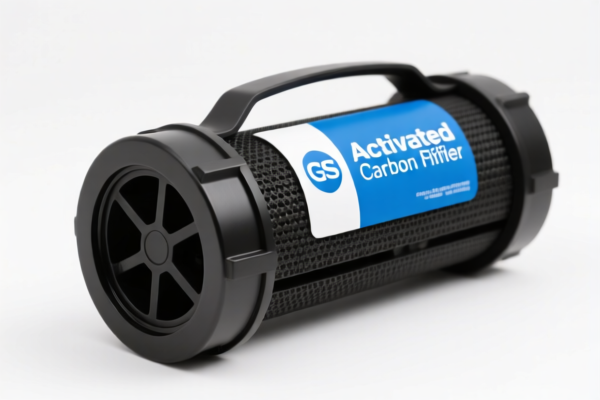
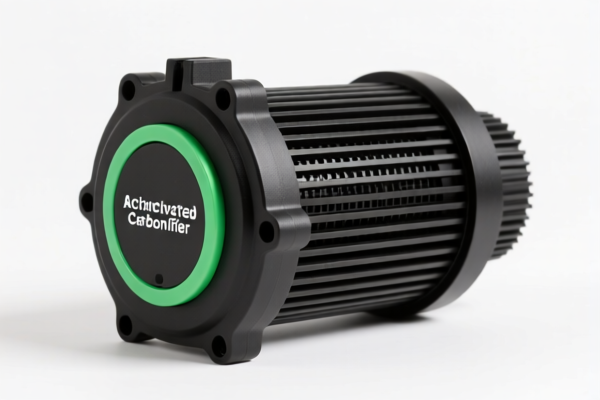
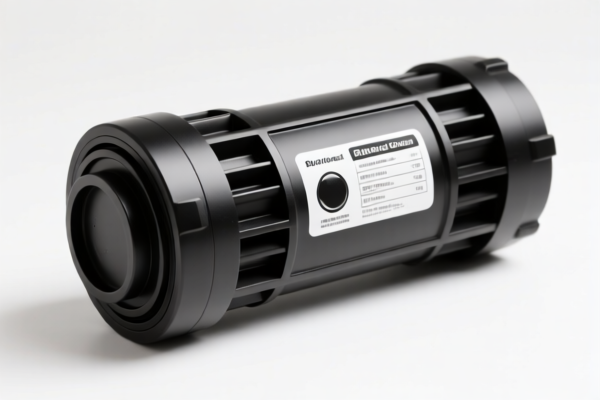
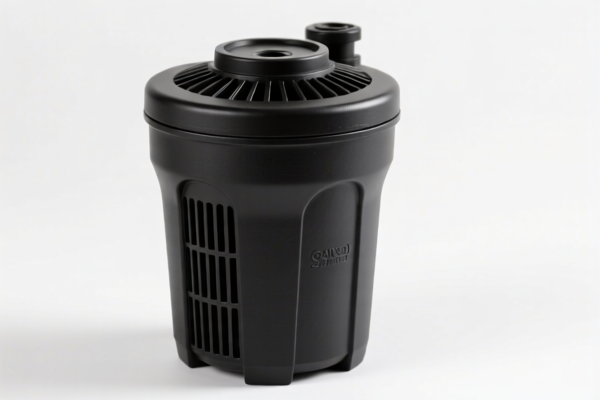
AI Analysis
🌿 Activated Carbon Solvent Recovery System (ACSR)
🌐 HS Code Reference & Clearance Guide | 2026 Latest Tariff Analysis | Professional Entry Strategy
📌 I. Product Definition & Classification: What is an "Activated Carbon Solvent Recovery System"?
An Activated Carbon Solvent Recovery System is an industrial environmental protection equipment used to adsorb and recover volatile organic compounds (VOCs) from waste gas streams. In international trade, its classification depends strictly on whether it is imported as a complete integrated system or as separate components.
Core Distinction:
- Complete System (Intended for Recovery): Includes the adsorption tower, piping, valves, and monitoring instruments designed specifically for solvent recovery → Classified under Mechanical/Processing Equipment.
- Raw Material Only: Activated carbon beads/pellets alone → Classified under Chemical/Carbon Products.
⚠️ Key Classification Point:
- If imported as a functional unit designed to recover solvents → Use HS 8421.
- If imported as adsorbent material only → Use HS 3802.
- Note: Customs will scrutinize the declaration. If you declare "System" but ship only carbon, it’s fraud. If you declare "Carbon" but ship a machine, it’s misclassification.
📦 II. HS Code Classification Details (2026 Latest Tariff Alignment)
Based on the provided data, the classification splits into two categories: Equipment (Solvent Recovery) and Material (Activated Carbon).
| HS Code | Product Description | Application Scenario | Key Attribute |
|---|---|---|---|
8421.29.00.05 |
Apparatus for physical/chemical liquid treatment or purification | Solvent Recovery Units: Specifically designed for recovering solvents from liquid/gas mixtures | ✅ Recovery Equipment |
8421.29.00.65 |
Other centrifuges, filtering/purifying machinery | Liquid Filtration/Purification: Used for cleaning solvents during the recovery process | ✅ Filtration Unit |
3802.10.00.10 |
Activated Carbon (Coal-based or similar carbonaceous raw materials) | Raw Adsorbent: Coal-based activated carbon used as the core material in the recovery system | ✅ Chemical Material |
3802.10.00.50 |
Other Activated Carbon | Other Forms: Other types/forms of activated carbon used in recycling processes | ✅ Chemical Material |
🔍 Critical Warning:
- "Solvent Recovery" is the keyword for HS 8421. If your equipment’s primary function is recovering usable solvents, it falls here.
- "Activated Carbon" is the keyword for HS 3802. If you are importing the media to fill the beds, it falls here.
- Do not mix them in one line item. If importing a full system with carbon installed, you must decide:
- Option A: Declare as "Solvent Recovery Machine" (HS 8421) with a separate line for "Spare Activated Carbon" (HS 3802).
- Option B: Declare as "Assembly" (if possible, but HS 8421 is preferred for functional units).
💰 III. 2026 Latest Tariff Rate Breakdown (Including Surcharges & Policy Add-ons)
✅ Applicable Country: United States (US)
✅ Country of Origin: China (CN)
✅ Effective Date: 2025/2026 Tariff Rates (Current Enforcement)
🎯 1. 8421.29.00.05 & 8421.29.00.65 —— Solvent Recovery & Filtration Equipment
| Item | Details |
|---|---|
| Base Tariff | 0.0% (Ad Valorem) |
| Section 301 Additional Tariff | +25.0% (USITC Footnote: General Machinery) |
| Section 122 (IEEPA) Tariff | +10.0% (Targeted China-specific surcharge) |
| Total Tariff Rate | 35.0% |
| Tax Calculation | CIF Value × 35% |
| De Minimis Eligibility | ❌ Not Eligible (High value machinery) |
| Legal Basis Path | USITC:8421.29.00.05 → Section 301: 8421.29 → Section 122: IEEPA |
📌 Interpretation:
- Although the base tariff is 0%, the 35% total rate is substantial.
- Why 35%? 0% (Base) + 25% (Trade War Tariff) + 10% (Specific China Surcharge).
- This applies to complete solvent recovery units or purification apparatus.
🎯 2. 3802.10.00.10 & 3802.10.00.50 —— Activated Carbon (Raw Material)
| Item | Details |
|---|---|
| Base Tariff | 4.8% (Ad Valorem) |
| Section 301 Additional Tariff | +25.0% (USITC Footnote: Carbon Products) |
| Section 122 (IEEPA) Tariff | +10.0% (Targeted China-specific surcharge) |
| Total Tariff Rate | 39.8% |
| Tax Calculation | CIF Value × 39.8% |
| De Minimis Eligibility | ❌ Not Eligible |
| Legal Basis Path | USITC:3802.10.00.10 → Section 301: 3802.10 → Section 122: IEEPA |
📌 Interpretation:
- The base rate is higher (4.8%) compared to machinery (0%).
- Total 39.8% makes importing bulk activated carbon from China to the US very expensive.
- Tip: If the carbon is part of the system, ensure the value allocation between equipment and media is合理 (reasonable) to optimize total duty, but beware of customs audits on undervaluation.
🛠️ IV. Clearance Practical Advice (Field Pitfall Guide)
✅ 1. Essential Documentation Checklist
| Document | Required? | Description |
|---|---|---|
| ✅ Product Specification Sheet | ✔️ | Must clearly state "Solvent Recovery" function for HS 8421. |
| ✅ Flow Diagram (P&ID) | ✔️ | Proves the system is a functional unit, not just a tank. |
| ✅ Commercial Invoice | ✔️ | Must separate "Equipment" and "Spare Carbon" if applicable. |
| ✅ Material Safety Data Sheet (MSDS) | ✔️ | Required for any residual solvents or carbon dust. |
| ✅ Certificate of Origin | ✔️ | Essential for verifying China origin and applying correct surcharges. |
| ✅ User Manual | ✔️ | Shows intended use: "Recovery of VOCs from industrial waste gas." |
✅ 2. Declaration Strategy (Key Mnemonics)
🔥 "Function First, Material Second. Recover Solvent = 8421. Fill Carbon = 3802."
| Scenario | Correct Declaration | Risk if Incorrect |
|---|---|---|
| Complete Recovery Unit | 8421.29.00.05 (Solvent Recovery) |
If declared as carbon → 39.8% on entire high-value machine → Overpay ~20% |
| Replacement Activated Carbon | 3802.10.00.10 (Coal-based) |
If declared as machine parts → 35% on low-value carbon → Overpay ~30% |
| Mixed Shipment (Machine + 500kg Carbon) | Split: Line 1 (Machine @ 35%), Line 2 (Carbon @ 39.8%) | Combined declaration → Customs may assess highest rate on total value or penalize for misclassification. |
| Non-Activated Carbon Filters | Check other HS codes (e.g., 8421.39) | Wrong HS → 122+301 surcharges may still apply, but base rate differs. |
✅ 3. Special Circumstances Handling
| Situation | Handling Advice |
|---|---|
| OEM Custom System | Provide design drawings. Clearly label "Designed for Solvent Recovery" to secure HS 8421. |
| Refurbished System | Subject to strict scrutiny. Ensure clean history to avoid quarantine or rejection. |
| Carbon Contamination | If carbon is loose in the tank, customs may inspect for "hazardous waste" or "incomplete good." Ensure it is new, unused carbon. |
| Section 122 Exemptions? | Currently, no exemption for these HS codes from China. Plan for 35-39.8% total duty. |
🌍 V. Global Market Comparison (2026 Update)
| Country/Region | Recommended HS Code | Tariff (China Origin) | Notes |
|---|---|---|---|
| 🇺🇸 USA | 8421.29.00.05 / 3802.10.00.10 |
35.0% / 39.8% | High duties due to 301 + 122 clauses. |
| 🇨🇳 China | 8421.29.00.05 / 3802.10.00.10 |
~10-15% | Import duty + VAT. Lower than US. |
| 🇪🇺 EU | 8421.29.90 / 3802.10.00 |
~0-6.5% | No trade war tariffs. Carbon may have slight duty. |
| 🇯🇵 Japan | 8421.29 / 3802.10 |
~5-10% | Moderate duties. No US-style surcharges. |
📌 Conclusion:
- The US market is the most expensive for these goods due to layered tariffs.
- EU/Asia are more cost-effective for end-markets, but if exporting from China to US, the duty is a major cost driver.
📌 VI. Common Errors & Pitfalls (Lessons Learned)
❌ Error 1: Declaring a "Solvent Recovery Machine" as "Industrial Oven" or "Filter"
👉 Consequence: Wrong HS code → Potential penalty for fraud or misdeclaration. Customs may reclassify to 8421.29.00.05 anyway, but delays clearance.
❌ Error 2: Shipping loose Activated Carbon without proper packaging/labeling
👉 Consequence: Seen as potential hazardous material or unregistered chemical. MSDS is mandatory.
❌ Error 3: Combining Machine and Carbon into one line item
👉 Consequence: If valued incorrectly, customs may apply the higher 39.8% rate to the entire shipment (machine + carbon), costing you thousands.
❌ Error 4: Ignoring Section 122 Tariff
👉 Consequence: Failing to declare 10% IEEPA surcharge leads to underpayment penalties and hold-ups.
✅ Correct Practice:
"Mechanical Apparatus for Solvent Recovery, Model XYZ, Including Control Panel, Pumps, and Piping. Spare Activated Carbon (Coal-based), 500kg, New."
(Split into two line items with distinct values)
🎯 VII. Conclusion: Precision Clearance, Cost Control
🎯 Remember the Mantra:
🔹 "Machine = 35% (8421). Carbon = 39.8% (3802). Split them to save!"
🔹 "301 + 122 = 35-40%. Plan your margin!"
🔹 "Prove 'Recovery' Function for 8421. Prove 'Coal-Based' for 3802."
📌 Pro Tip:
- If you are the importer, negotiate DDP (Delivered Duty Paid) with suppliers who can pre-calculate the 35-39.8% duty, or use Section 301 Exclusions if applicable (check current USITC exclusion lists for HS 8421.29 and 3802.10).
- Pre-classification: Request a Binding Ruling from CBP if the system’s function is borderline between "Air Pollution Control" (8421.39) and "Solvent Recovery" (8421.29). The latter may have different specific duty treatments.
📣 Immediate Action:
📞 Consult a US Customs Broker before shipping.
📄 Prepare P&ID diagrams and Product Specs.
🚀 Optimize your supply chain to absorb or shift the 35-40% duty burden.
✨ Professional clearance starts with accurate HS coding!
💼 Every percentage point counts in your bottom line.
Customer Reviews
About HS Code Classification
The Harmonized System (HS) is an internationally standardized nomenclature developed by the World Customs Organization (WCO) to classify traded products. Over 200 countries use the HS system as the basis for customs tariffs, trade statistics, and import/export regulations.
Each HS code follows a hierarchical structure:
- Chapter (2 digits) — Broad category of goods (e.g., Chapter 84: Machinery and Mechanical Appliances)
- Heading (4 digits) — More specific grouping within the chapter
- Subheading (6 digits) — Internationally standardized breakdown, used by all WCO member countries
- National subdivisions (8-10 digits) — Country-specific extensions for further classification, such as US HTSUS 10-digit codes
Correct HS code classification is essential for smooth customs clearance, accurate duty payment, and compliance with trade regulations. Misclassification can lead to customs delays, overpayment of duties, or penalties.
When importing from CN to US, the applicable tariff rates may include:
- Most-Favored-Nation (MFN) rate — The standard duty rate applied to WTO members
- General rate — Applied to countries without trade agreements
- Trade remedy duties — Additional tariffs such as Section 301 (anti-dumping), Section 232 (national security), or countervailing duties
The information provided on this page is for reference purposes only. For official classification, please consult with your local customs authority or a licensed customs broker.