Activated Carbon for Papermaking
CN → US| HS Code | Tariff Rate | Origin | Destination | Doc |
|---|---|---|---|---|
| 2803000010 | 35.0% | CN | US | Official Doc |
| 2803000050 | 35.0% | CN | US | Official Doc |
| 3802100050 | 39.8% | CN | US | Official Doc |
| 3802100010 | 39.8% | CN | US | Official Doc |
Product Images
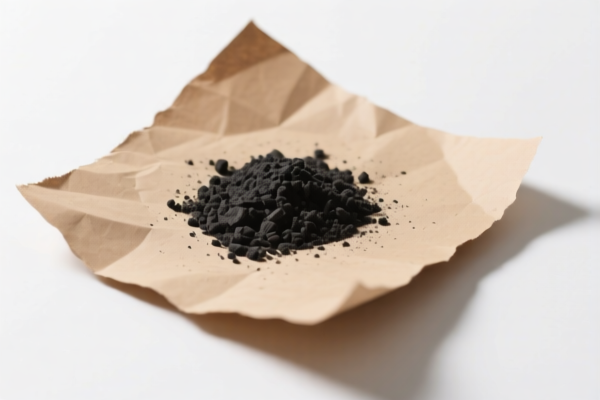
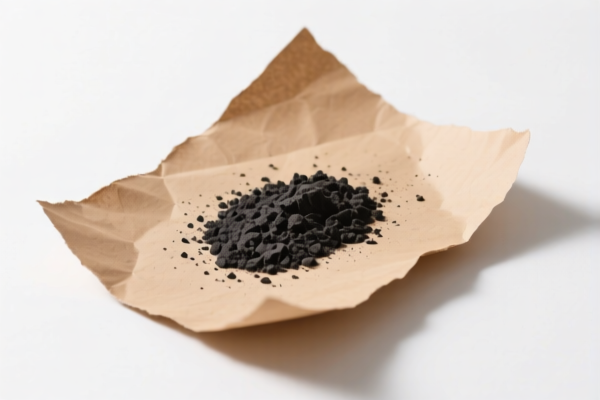
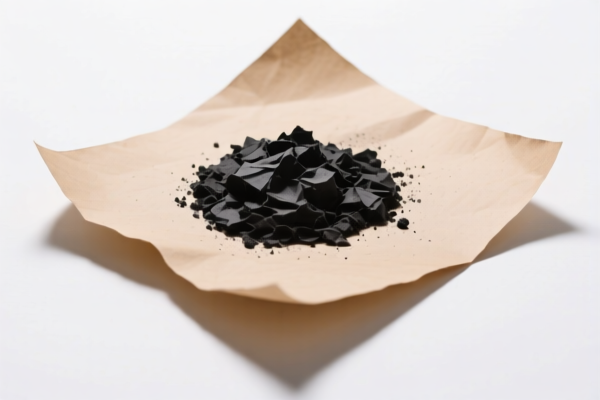
AI Analysis
🧪 Activated Carbon for Papermaking
HS Code Reference & Customs Clearance Guide | 2026 Latest Tariff Analysis | Professional Clearance Strategy
📌 I. Product Definition & Classification: Do You Really Know "Activated Carbon"?
Activated Carbon for Papermaking is a high-purity, porous carbonaceous material used as a bleaching aid and decolorizing agent in the paper industry. It removes residual lignin and chromophores to improve pulp brightness. In international trade, the classification of this product is highly controversial and depends strictly on its chemical form and manufacturing stage.
Key Distinction: * Raw Carbon Form: If it is essentially pure carbon produced via carbonization and activation (often classified under "Other forms of carbon"), it falls under Chapter 28. * Prepared Chemical/Product: If it is treated, mixed with binders, or specifically prepared for industrial use (even if pure carbon), it often falls under Chapter 38 ("Pharmaceutical, Fine Chemical...").
⚠️ Critical Classification Point:
- If the product is considered a "Basic Chemical Element" in a specific physical state → HS 2803
- If the product is considered a "Prepared Industrial Chemical" → HS 3802
📦 II. HS Code Classification Details (2026 Latest Tariff Authoritative Comparison)
| HS Code | Product Description | Applicable Scenario | Material Consistency with Classification |
|---|---|---|---|
2803.00.00.10 |
Industrial Activated Carbon (Basic Carbon Form) | Treated as a form of carbon, consistent with "Carbon black and other forms of carbon" in classification notes. | ✅ High Consistency: Material is pure carbon. |
2803.00.00.50 |
Other Forms of Carbon | Fits the category of "Other forms of carbon," material matches classification requirements. | ✅ High Consistency: Material is pure carbon. |
3802.10.00.50 |
Other Activated Carbon (Prepared) | Explicitly named "Activated Carbon," falls under "Other" category for general industrial use. Matches "Other types of activated carbon." | ✅ Consistent: Fits "Other types" under industrial prepared chemicals. |
3802.10.00.10 |
Activated Carbon for Industrial Use | "Activated Carbon" in name matches target code category; industrial use without material/形态 conflict. | ✅ Consistent: No conflict in material or form. |
🔍 Key Reminder:
- Chapter 28 (2803) treats activated carbon primarily as a chemical element/basic material.
- Chapter 38 (3802) treats it as a preparatory industrial product.
- Misclassification between these two chapters leads to significant duty differences due to USITC and IEEPA sanctions.
💰 III. 2026 Latest Tariff Rate Details (Including Surtaxes, Policy Add-ons)
✅ Applicable Country: United States (US)
✅ Origin: China (CN)
✅ Effective Time: From November 10, 2025 (including subsequent imports)
🎯 1. 2803.00.00.10 & 2803.00.00.50 —— Basic Carbon Forms (Chapter 28)
| Item | Content |
|---|---|
| Basic Tariff Rate | 0.0% (ad valorem) |
| USITC Surtax (Section 301) | +25.0% |
| IEEPA Surtax (Section 122) | +10.0% |
| Total Effective Rate | 35.0% |
| Tax Calculation | CIF Value × 35.0% |
| De Minimis Exemption | ❌ Not Eligible (deny_de_minimis) |
| Legal Basis Path | IEEPA:9903.01.25 → USITC:2803.00.00 → FOOTNOTE:9903.88.01 |
📌 Explanation:
- Although the basic tariff is 0%, the Section 301 additional duty of 25% and the Section 122 (IEEPA) duty of 10% apply to Chinese-origin carbon products. - Total 35% is the mandatory cost. This category is considered a "raw material," but still heavily sanctioned.
🎯 2. 3802.10.00.10 & 3802.10.00.50 —— Prepared Activated Carbon (Chapter 38)
| Item | Content |
|---|---|
| Basic Tariff Rate | 4.8% (ad valorem) |
| USITC Surtax (Section 301) | +25.0% |
| IEEPA Surtax (Section 122) | +10.0% |
| Total Effective Rate | 39.8% |
| Tax Calculation | CIF Value × 39.8% |
| De Minimis Exemption | ❌ Not Eligible (deny_de_minimis) |
| Legal Basis Path | IEEPA:9903.01.25 → USITC:3802.10.00 → FOOTNOTE:9903.88.01 |
📌 Explanation:
- The basic tariff is 4.8%, which is higher than Chapter 28. - However, the surtaxes (25% + 10%) are identical to Chapter 28. - Total 39.8% is higher than Chapter 28 (35.0%). - Therefore, if the product can legally be classified under HS 2803, it is cheaper (by 4.8% of the CIF value) than classifying it under HS 3802.
🛠️ IV. Customs Clearance Practical Advice (Combat Pitfall Avoidance Guide)
✅ 1. Required Documentation Checklist (None Can Be Omitted)
| Material | Must Provide | Explanation |
|---|---|---|
| ✅ Product Specification Sheet | ✔️ | Must specify: Raw material (coconut shell, coal, wood), Activation method, Iodine number, Moisture content. |
| ✅ Technical Data Sheet (TDS) | ✔️ | Proof of purity and physical form (powder, granular, pellet). |
| ✅ Product Photos | ✔️ | Clear view of packaging, label, and material texture. |
| ✅ Third-Party Test Report | ✔️ | SGS, BV, or Intertek report confirming "Activated Carbon" composition. |
| ✅ Commercial Invoice | ✔️ | Must clearly state "Activated Carbon for Papermaking" and HS Code. |
| ✅ Certificate of Origin (CO) | ✔️ | Crucial for proving Chinese origin (triggers surtaxes). |
| ✅ Packing List | ✔️ | Net/Gross weight, number of bags/boxes. |
✅ 2. Declaration Skills (Key Mantra)
🔥 “Material Determines Chapter, Form Defines Code! 28 is Cheaper, 38 is Safer!”
| Situation | Correct Declaration | Wrong Practice | Consequence |
|---|---|---|---|
| Pure Carbon Powder/Granules | HS 2803.00.00.10/50 | Declare as HS 3802 | Overpay by 4.8% (Total 39.8% vs 35.0%) |
| Mixed/Treated Carbon | HS 3802.10.00.10/50 | Declare as HS 2803 | Risk of Re-classification + Penalty |
| Small Sample (<$800) | De Minimis | Declare as Commercial | If origin is CN, De Minimis is DENIED for these codes |
| Incorrect HS Code | N/A | Guessing | Customs Hold + Audit |
✅ 3. Special Situation Handling
| Situation | Handling Advice |
|---|---|
| OEM Custom Activated Carbon | Provide client order + TDS. If it’s just physical activation of coal/wood, fight for HS 2803. |
| Carbon Mixed with Binders | Must declare under HS 3802. Cannot claim raw carbon status. |
| Origin Tracing | Ensure all suppliers declare Chinese origin correctly. If mixed with non-CN materials, complex rules apply. |
| Pre-Clearance Ruling | Highly Recommended. Apply for an Advance Ruling from CBP to confirm HS 2803 vs. 3802. |
🌍 V. Global Market Comparison (2026 Latest)
| Country/Region | Recommended HS Code | Tariff (China Origin) | Certification Requirements | Notes |
|---|---|---|---|---|
| 🇺🇸 USA | 2803.00.00.10 / 3802.10.00.10 |
35.0% (Ch28) / 39.8% (Ch38) | SDS, TDS | High surtaxes apply. |
| 🇨🇳 China | 2803.00.00.10 / 3802.10.00.10 |
0%~6% | N/A (Import) | Lower basic tariffs. |
| 🇪🇺 EU | 3802.10.00 |
6.5% | REACH Registration | No Section 301/122 surtaxes. |
| 🇯🇵 Japan | 3802.10.00 |
5.5% | JIS Standard | Stable tariff. |
| 🇮🇳 India | 3802.10.00 |
10%~15% | BIS Standard | Anti-dumping risks check. |
📌 Conclusion:
- USA is the most challenging market due to 35-40% total tariffs.
- EU and Japan are more favorable with single-digit tariffs.
- Optimization Strategy: If possible, argue for HS 2803 to save 4.8% on the CIF value compared to HS 3802.
📌 VI. Common Mistakes & Pitfall Avoidance Guide (Blood & Tears Lessons)
❌ Mistake 1: Assuming "Activated Carbon" is always "Chemical Product" (Ch38)
👉 Result: Overpaying 4.8% unnecessarily if it qualifies as basic carbon (Ch28).
👉 Fix: Check if it is purely carbonized and activated without binders.
❌ Mistake 2: Ignoring the "Section 122 (IEEPA) 10%" surtax
👉 Result: Underestimating total landed cost by 10%.
👉 Fix: Include 10% IEEPA + 25% Section 301 in all cost calculations.
❌ Mistake 3: Using "De Minimis" (80/86) for shipments under $800
👉 Result: Shipment seized or rejected. US Law denies de minimis for Chinese-origin goods under these specific HS codes.
👉 Fix: File formal entry even for small samples.
❌ Mistake 4: Vague Description "Carbon Powder"
👉 Result: Customs delay for classification review.
👉 Fix: Use precise term: "Granular Activated Carbon, Coconut Shell Base, for Paper Bleaching."
✅ Correct Approach:
"Granular Activated Carbon, Origin: China, HS: 2803.00.00.10, CIF Value: $10,000, Total Duty: $3,500."
🎯 VII. Conclusion: Precise Classification, Cost Optimization!
🎯 Remember the Mantra:
🔹 "Pure Carbon = Ch28 (35% Total), Mixed/Treated = Ch38 (39.8% Total)."
🔹 "Always add 35% for US China-Origin Activated Carbon. No exemptions!"
📌 Pro Tip:
If your activated carbon is sourced from Vietnam, Thailand, or Malaysia, you may avoid Section 301/122 surtaxes entirely, bringing the tariff down to the basic rate only (0% or 4.8%).
Recommendation: Consider supply chain diversification if US tariffs impact profitability.
📣 Immediate Action:
📞 Contact a licensed US Customs Broker
📄 Prepare Technical Data Sheet (TDS) and Certificate of Origin
🚀 Apply for a CBP Advance Ruling to lock in HS Code 2803 vs. 3802 before shipment.
✨ Professional Clearance Starts with Accurate Classification!
💼 Every Percentage Point of Tariff Saved is Pure Profit!
Customer Reviews
About HS Code Classification
The Harmonized System (HS) is an internationally standardized nomenclature developed by the World Customs Organization (WCO) to classify traded products. Over 200 countries use the HS system as the basis for customs tariffs, trade statistics, and import/export regulations.
Each HS code follows a hierarchical structure:
- Chapter (2 digits) — Broad category of goods (e.g., Chapter 84: Machinery and Mechanical Appliances)
- Heading (4 digits) — More specific grouping within the chapter
- Subheading (6 digits) — Internationally standardized breakdown, used by all WCO member countries
- National subdivisions (8-10 digits) — Country-specific extensions for further classification, such as US HTSUS 10-digit codes
Correct HS code classification is essential for smooth customs clearance, accurate duty payment, and compliance with trade regulations. Misclassification can lead to customs delays, overpayment of duties, or penalties.
When importing from CN to US, the applicable tariff rates may include:
- Most-Favored-Nation (MFN) rate — The standard duty rate applied to WTO members
- General rate — Applied to countries without trade agreements
- Trade remedy duties — Additional tariffs such as Section 301 (anti-dumping), Section 232 (national security), or countervailing duties
The information provided on this page is for reference purposes only. For official classification, please consult with your local customs authority or a licensed customs broker.