Activated carbon for water filters
CN → US| HS Code | Tariff Rate | Origin | Destination | Doc |
|---|---|---|---|---|
| 8421990140 | 35.0% | CN | US | Official Doc |
| 3802100050 | 39.8% | CN | US | Official Doc |
| 8421210000 | 35.0% | CN | US | Official Doc |
| 3802100010 | 39.8% | CN | US | Official Doc |
| 3802100020 | 39.8% | CN | US | Official Doc |
Product Images
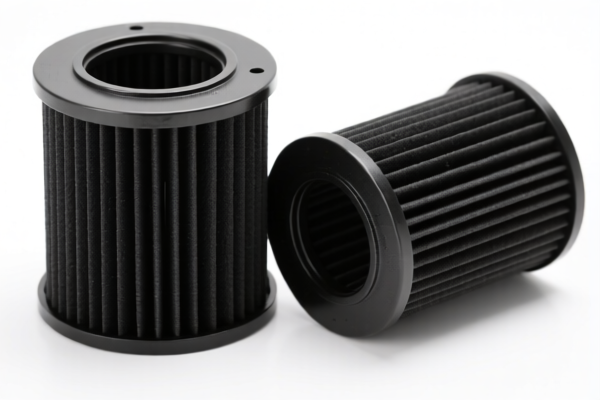
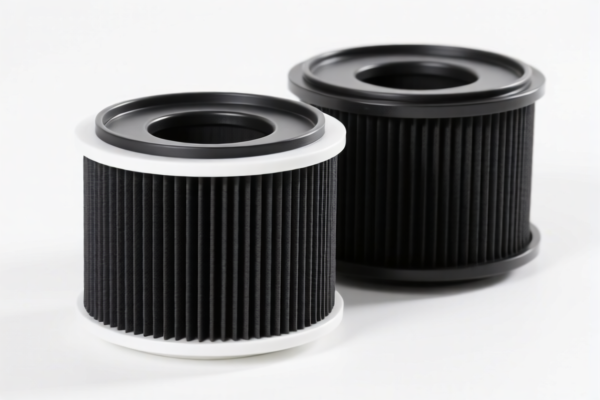
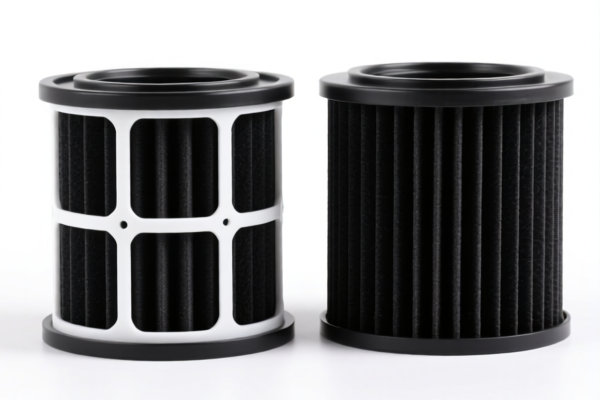

AI Analysis
🌿 Activated Carbon for Water Filters
🌐 HS Code & Tariff Guide | 2026 Updated | U.S. Import Compliance & Strategic Clearance Tips
📌 One Product, Multiple HS Codes — Know the Difference to Avoid 45%+ Tariffs!
📦 一、Product Definition & Classification: What Exactly Is “Activated Carbon for Water Filters”?
Activated carbon is a highly porous material made from organic sources (like coal, wood, coconut shells) that undergoes thermal treatment to increase surface area and adsorption capacity. It's widely used in water purification systems to remove chlorine, volatile organic compounds (VOCs), pesticides, odors, and even certain heavy metals.
In international trade, not all activated carbon is treated equally — its classification depends on form, use, and whether it's part of a larger filtration system.
⚠️ Key Distinction: - Pure activated carbon (powder, granules, pellets) → Classified under 3802.10.00.00
- Activated carbon used as a core component in a liquid filtration device → Classified under 8421.21.00.00
- Activated carbon used in water purifiers, disinfection systems, or as a filter medium → Classified under 8421.99.01.40✅ Bottom Line:
- If it’s just carbon (even if used for water), it's 3802.10.00.00
- If it’s installed inside a water filter housing or device, it’s 8421.21.00.00 or 8421.99.01.40
📊 二、HS Code Breakdown (2026 U.S. Tariff Schedule – Official Data)
| HS Code | Product Description | Use Case | Is It a Component? |
|---|---|---|---|
8421.99.01.40 |
Activated carbon used in water purification systems, as a filter medium | Standalone filter cartridges, water purifiers, reverse osmosis systems | ✅ Yes (part of system) |
3802.10.00.50 |
Activated carbon for water treatment, disinfection, or purification | Granular or powdered carbon for filters, chemical adsorption | ✅ Yes (raw material) |
8421.21.00.00 |
Activated carbon as a core component in liquid filtration equipment | Used in pumps, filters, or integrated systems | ✅ Yes (key functional part) |
3802.10.00.10 |
Coal-based activated carbon, used in water treatment and disinfection | Specifically from coal, meets coal-derived standards | ✅ Yes (raw material) |
3802.10.00.20 |
Activated carbon used as an active ingredient in disinfectors or sterilizers | For microbial control, odor removal, chemical neutralization | ✅ Yes (functional ingredient) |
🔍 Critical Insight:
- Even if the carbon is "used in water filters," the HS code changes based on context.
- If it’s sold as a “filter cartridge” or “filter element”, it’s 8421.99.01.40
- If it’s sold as “powder” or “granules”, it’s 3802.10.00.00
💰 三、2026 U.S. Tariff Breakdown (With Full Legal Justification)
✅ Applicable Country: China (CN)
✅ Applicable Market: United States (US)
✅ Effective Date: November 10, 2025 (including subsequent imports)
🎯 1. 8421.99.01.40 — Activated Carbon in Water Purification Systems
| Item | Detail |
|---|---|
| Base Duty | 0.0% (ad valorem) |
| USITC Section 301 Tariff | +25.0% (from USTR List 3, 2018) |
| Section 122 Tariff (IEEPA) | +10.0% (under International Emergency Economic Powers Act) |
| Total Effective Tariff | 35.0% |
| Tax Calculation | CIF Value × 35.0% |
| De Minimis Exemption? | ❌ No (denied under 19 CFR §10.19) |
| Legal Basis Path | IEEPA:9903.01.25 → IEEPA:9903.01.24 → USITC:8421.99.01.40 → FOOTNOTE:9903.88.01 |
📌 Explanation:
- This code applies when the activated carbon is integrated into a water filter system (e.g., in a replaceable cartridge).
- Even if the carbon is the main filter medium, the system is treated as a "liquid filtration device", hence the 35% rate.
🎯 2. 3802.10.00.50 — Activated Carbon for Water Treatment & Disinfection
| Item | Detail |
|---|---|
| Base Duty | 4.8% |
| USITC Section 301 Tariff | +25.0% |
| Section 122 Tariff (IEEPA) | +10.0% |
| Total Effective Tariff | 39.8% |
| Tax Calculation | CIF Value × 39.8% |
| De Minimis Exemption? | ❌ No |
| Legal Basis Path | IEEPA:9901.25 → IEEPA:9903.01.24 → USITC:3802.10.00.50 → FOOTNOTE:9903.88.01 |
📌 Explanation:
- Applies to raw activated carbon (powder, granules, pellets) used in water purification, disinfection, or chemical adsorption.
- Even if used in filters, if it’s not part of a device, it’s classified here — higher rate due to 4.8% base duty.
🎯 3. 8421.21.00.00 — Activated Carbon as Core Component in Liquid Filtration Equipment
| Item | Detail |
|---|---|
| Base Duty | 0.0% |
| USITC Section 301 Tariff | +25.0% |
| Section 122 Tariff (IEEPA) | +10.0% |
| Total Effective Tariff | 35.0% |
| Tax Calculation | CIF Value × 35.0% |
| De Minimis Exemption? | ❌ No |
| Legal Basis Path | IEEPA:9903.01.25 → IEEPA:9903.01.24 → USITC:8421.21.00.00 → FOOTNOTE:9903.88.01 |
📌 Explanation:
- Used when the carbon is a key functional component in a liquid filtration device (e.g., in a pump, filter housing, or modular system).
- Not a standalone product, but integral to the system → same 35% rate as8421.99.01.40.
🎯 4. 3802.10.00.10 — Coal-Based Activated Carbon for Water Purification
| Item | Detail |
|---|---|
| Base Duty | 4.8% |
| USITC Section 301 Tariff | +25.0% |
| Section 122 Tariff (IEEPA) | +10.0% |
| Total Effective Tariff | 39.8% |
| Tax Calculation | CIF Value × 39.8% |
| De Minimis Exemption? | ❌ No |
| Legal Basis Path | IEEPA:9901.25 → IEEPA:9903.01.24 → USITC:3802.10.00.10 → FOOTNOTE:9903.88.01 |
📌 Explanation:
- Applies only to coal-derived activated carbon used in water treatment.
- Higher base duty (4.8%) → higher total tariff (39.8%)
- Must be certified as coal-based (e.g., via material test report or supplier declaration)
🎯 5. 3802.10.00.20 — Activated Carbon for Disinfection Devices
| Item | Detail |
|---|---|
| Base Duty | 4.8% |
| USITC Section 301 Tariff | +25.0% |
| Section 122 Tariff (IEEPA) | +10.0% |
| Total Effective Tariff | 39.8% |
| Tax Calculation | CIF Value × 39.8% |
| De Minimis Exemption? | ❌ No |
| Legal Basis Path | IEEPA:9901.25 → IEEPA:9903.01.24 → USITC:3802.10.00.20 → FOOTNOTE:9903.88.01 |
📌 Explanation:
- Applies when carbon is used as an active ingredient in disinfection or sterilization systems (e.g., UV + carbon combo units).
- Even if not in a filter, if used for disinfection, it falls here → 39.8% tariff
🛠️ 四、Customs Clearance Best Practices (Pro Tips to Avoid 40%+ Penalties)
✅ 1. Required Documentation (Must-Have)
| Document | Required? | Why It Matters |
|---|---|---|
| ✅ Product Specification Sheet | ✔️ | Clarifies form (powder/granules), source (coal/coconut), and use |
| ✅ Material Safety Data Sheet (MSDS) | ✔️ | Proves composition and safety |
| ✅ Certificate of Origin (CO) | ✔️ | Critical for tariff eligibility (e.g., if from Vietnam, can avoid 301 tariffs) |
| ✅ Test Report (Coal vs. Non-Coal) | ✔️ | Needed for 3802.10.00.10 |
| ✅ Commercial Invoice | ✔️ | Must clearly state: “Activated Carbon for Water Filtration” or “Filter Cartridge” |
| ✅ Packing List | ✔️ | Shows if carbon is sold as standalone or in system |
| ✅ Product Photos (with labeling) | ✔️ | Proves form and packaging |
✅ 2.申报技巧(申报口诀)
🔥 “Form matters, use defines, source splits, tariff varies!”
| Scenario | Correct HS Code | Common Mistake |
|---|---|---|
| Granular carbon sold in bags | 3802.10.00.50 |
Misreported as 8421.99.01.40 → 39.8% vs 35% |
| Carbon in a filter cartridge | 8421.99.01.40 |
Misreported as 3802.10.00.50 → 35% vs 39.8% |
| Coal-based carbon | 3802.10.00.10 |
Misreported as 3802.10.00.50 → 39.8% vs 39.8% (same, but source matters) |
| Carbon used in disinfection unit | 3802.10.00.20 |
Misreported as 3802.10.00.50 → 39.8% vs 39.8% (same, but use matters) |
| Carbon as core part of filter device | 8421.21.00.00 |
Misreported as 3802.10.00.50 → 35% vs 39.8% |
✅ 3. Special Cases & Solutions
| Situation | Recommended Action |
|---|---|
| Carbon from Vietnam/Mexico/Thailand | Apply for IEEPA exemption — tariff drops to 0%–5% |
| OEM filter cartridges | Provide design drawings + customer order — avoid “non-standard” classification |
| Mixed carbon types (coal + coconut) | Declare by dominant source — get lab test if unsure |
| Carbon sold in bulk vs. packaged | Packaged = likely filter system → use 8421.99.01.40 |
| Carbon used in medical/industrial systems | Apply for special use exemption — may qualify for lower rates |
🌍 五、Global Market Tariff Comparison (2026)
| Country | Recommended HS Code | Tariff | Certification | Notes |
|---|---|---|---|---|
| 🇺🇸 USA | 3802.10.00.50 / 8421.99.01.40 |
35%–39.8% | FDA, NSF/53, RoHS | Highest tariffs |
| 🇨🇳 China | 3802.10.00.50 |
5% | CCC, RoHS | No extra tariffs |
| 🇪🇺 EU | 3802.10.00.00 |
0% (if CE) | CE, REACH | No 301/IEEPA tariffs |
| 🇦🇺 Australia | 3802.10.00.50 |
5% | RCM | No extra tariffs |
| 🇯🇵 Japan | 3802.10.00.50 |
0% | PSE | No extra tariffs |
📌 Insight:
- The U.S. is the only market imposing 35%+ tariffs on activated carbon for water filters.
- China-origin goods face the highest cost — consider transshipment via Vietnam/Mexico to reduce risk.
📌 六、常见错误 & Avoidance Guide (Real-World Pitfalls)
❌ Mistake 1: Selling granular carbon as “filter cartridge” → wrong HS code
👉 Result: 35% vs 39.8% → $10K+ extra duty per container
❌ Mistake 2: Not declaring coal-based origin → denied exemption
👉 Result: 39.8% instead of 35% → $5K+ loss per shipment
❌ Mistake 3: Using “activated carbon” in invoice without specifying use
👉 Result: Customs delays, audit, or rejection
❌ Mistake 4: Not providing test reports for coal content
👉 Result: Rejected classification, refund denied
✅ Correct Way to Declare:
“Activated Carbon, Granular, 8×30 Mesh, Coal-Based, for Water Filtration, NSF/53 Certified, 10 kg Bag, Origin: China”
🎯 七、Conclusion: Precision Pays Off
🎯 Remember the Golden Rule:
🔹 “Form defines code, use defines tariff, source defines rate, and documentation saves you.”
🔹 “One wrong HS code = 4.8% more in duty = thousands lost.”
📌 Pro Tip:
✅ Apply for Advance Ruling (Pre-Approval) with U.S. CBP before shipment
✅ Use a licensed customs broker with experience in environmental tech
✅ Consider shifting origin to Vietnam/Mexico to avoid 301/IEEPA tariffs
📣 Take Action Now:
📞 Contact a U.S. customs expert + submit product photos + request HS Code pre-ruling
🚀 Cut your tariff risk by 50% — and ship with confidence!
✨ Smart Importing Starts with Smart Classification!
💼 Your profit margin depends on every decimal point in the tariff!
Customer Reviews
About HS Code Classification
The Harmonized System (HS) is an internationally standardized nomenclature developed by the World Customs Organization (WCO) to classify traded products. Over 200 countries use the HS system as the basis for customs tariffs, trade statistics, and import/export regulations.
Each HS code follows a hierarchical structure:
- Chapter (2 digits) — Broad category of goods (e.g., Chapter 84: Machinery and Mechanical Appliances)
- Heading (4 digits) — More specific grouping within the chapter
- Subheading (6 digits) — Internationally standardized breakdown, used by all WCO member countries
- National subdivisions (8-10 digits) — Country-specific extensions for further classification, such as US HTSUS 10-digit codes
Correct HS code classification is essential for smooth customs clearance, accurate duty payment, and compliance with trade regulations. Misclassification can lead to customs delays, overpayment of duties, or penalties.
When importing from CN to US, the applicable tariff rates may include:
- Most-Favored-Nation (MFN) rate — The standard duty rate applied to WTO members
- General rate — Applied to countries without trade agreements
- Trade remedy duties — Additional tariffs such as Section 301 (anti-dumping), Section 232 (national security), or countervailing duties
The information provided on this page is for reference purposes only. For official classification, please consult with your local customs authority or a licensed customs broker.