Activated charcoal for water filters
CN → US| HS Code | Tariff Rate | Origin | Destination | Doc |
|---|---|---|---|---|
| 8421990140 | 35.0% | CN | US | Official Doc |
| 3802100050 | 39.8% | CN | US | Official Doc |
| 8421210000 | 35.0% | CN | US | Official Doc |
| 3802100010 | 39.8% | CN | US | Official Doc |
| 8421290065 | 35.0% | CN | US | Official Doc |
Product Images
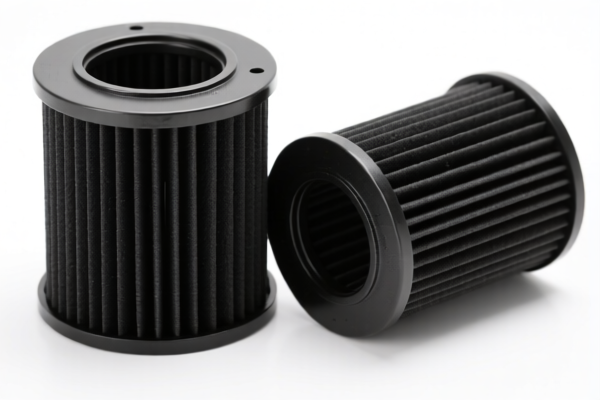
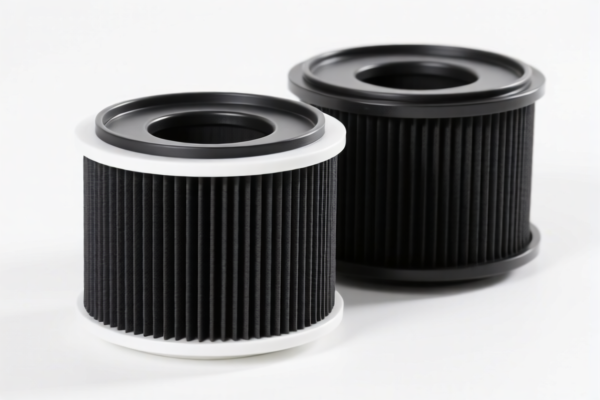
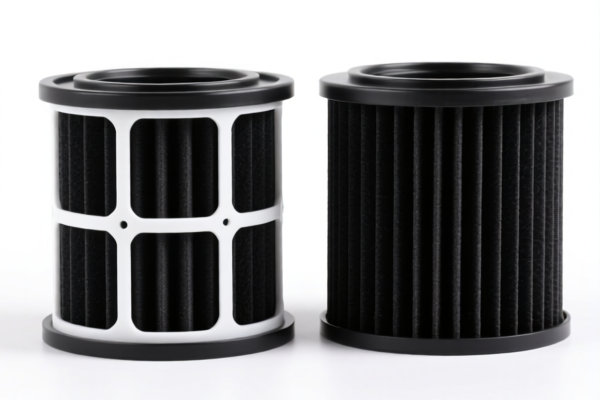

AI Analysis
💧 Activated Charcoal for Water Filters (Carbon Media)
🌐 HS Code Reference & Clearance Guide | 2026 Latest Tariff Analysis | Professional Entry Strategy
📌 I. Product Definition & Classification: What is "Activated Charcoal"?
Activated charcoal (or carbon) is a highly porous form of carbon processed to have small, low-volume pores that increase the surface area available for adsorption. In the context of water treatment, it is used as a filtering medium to remove impurities, chlorine, and organic compounds.
In international trade, this product creates a classification dilemma: Is it a chemical material (HS Chapter 38) or a part/component of a machine (HS Chapter 84)? The answer depends on how it is marketed and integrated, leading to four primary HS Code candidates.
⚠️ Key Distinction Point: - If classified as a machine part (filtering medium logic) → Chapter 84 (Lower Base Duty). - If classified as a chemical material (carbon product) → Chapter 38 (Higher Base Duty).
📦 II. HS Code Classification Details (2026 Latest Tariff Authority)
| HS Code | Product Description | Logic for Classification | Tax Profile |
|---|---|---|---|
8421.99.01.40 |
Parts of filtering machines | Matches water purification use; charcoal as a filtering medium fits the logic of water treatment machinery parts. | Base: 0% |
8421.21.00.00 |
Filtering/cleaning liquids | Matches water purification use and function; charcoal as a filtering medium fits the core logic of liquid filtration equipment. | Base: 0% |
3802.10.00.50 |
Activated Carbon (Other) | Matches charcoal material; water purification use aligns with other types of activated carbon categories. | Base: 4.8% |
3802.10.00.10 |
Activated Carbon (Coal-based) | Matches charcoal material and water use; fits the description of coal-based activated carbon products. | Base: 4.8% |
🔍 Critical Reminder: - Chapter 84 Codes: Focus on the function (filtering medium). They attract 0% base duty. - Chapter 38 Codes: Focus on the material (carbon). They attract 4.8% base duty. - Both categories are subject to significant additional tariffs for US imports from China.
💰 III. 2026 Latest Tariff Rate Details (Including Add-on Tariffs)
✅ Applicable Country: United States (US)
✅ Origin: China (CN)
✅ Effective Date: Post-2025 (Current Trade War Status)
🎯 1. 8421.99.01.40 & 8421.21.00.00 —— Filter Parts/Machines (Function-Based)
| Item | Content |
|---|---|
| Base Duty Rate | 0.0% (Ad Valorem) |
| Section 301 / Additional Duty | +25.0% (USITC Footnote / Trade Remedy) |
| Section 122 Tariff | +10.0% (Specific Section 122 Levy) |
| Total Effective Rate | 35.0% |
| Tax Calculation | CIF Value × 35% |
| De Minimis Exemption | ❌ Not Applicable (High tax rate exceeds exemption thresholds or is explicitly excluded) |
| Legal Basis Path | USITC:8421.xx → Section 301: 25% → Section 122: 10% |
📌 Explanation: - These codes benefit from a 0% base duty because they are viewed as industrial equipment parts rather than raw chemicals. - However, the 25% Section 301 duty (US-China trade war) and 10% Section 122 duty apply heavily, bringing the total to 35%.
🎯 2. 3802.10.00.50 & 3802.10.00.10 —— Activated Carbon (Material-Based)
| Item | Content |
|---|---|
| Base Duty Rate | 4.8% (Ad Valorem) |
| Section 301 / Additional Duty | +25.0% (USITC Footnote / Trade Remedy) |
| Section 122 Tariff | +10.0% (Specific Section 122 Levy) |
| Total Effective Rate | 39.8% |
| Tax Calculation | CIF Value × 39.8% |
| De Minimis Exemption | ❌ Not Applicable |
| Legal Basis Path | USITC:3802.10 → Section 301: 25% → Section 122: 10% |
📌 Note: - Even if the product is simple charcoal, classifying it under Chapter 38 incurs a 4.8% base duty. - The same additional tariffs (25% + 10%) apply, resulting in a total rate of 39.8%. - Comparison: Classifying as a filter part (Chapter 84) saves 4.8% in base duties compared to classifying as raw material (Chapter 38).
🛠️ IV. Clearance Practical Advice (Pitfall Avoidance Guide)
✅ 1. Documentation Checklist (Mandatory)
| Document | Required | Description |
|---|---|---|
| ✅ Product Specification Sheet | ✔️ | Must specify: Iodine number, mesh size, base material (coal/coconut), and intended use: Water Filtration. |
| ✅ Technical Data Sheet (TDS) | ✔️ | Proof of porosity and adsorption capacity; helps justify "filtering medium" classification. |
| ✅ Product Photos | ✔️ | Clear images of the charcoal granules/pellets. If sold in bags for filters, highlight "For Water Filter Use". |
| ✅ Commercial Invoice | ✔️ | Description should read: "Activated Carbon Filtering Media for Water Treatment Systems" rather than just "Charcoal". |
| ✅ Packing List | ✔️ | Detail net/gross weight accurately. |
✅ 2. Declaration Strategy (Key Mantra)
🔥 “Function over Material: Declare as Filter Media, Not Raw Carbon!”
| Scenario | Correct Declaration | Incorrect Declaration |
|---|---|---|
| Charcoal for water filters | 8421.99.01.40 or 8421.21.00.00 |
3802.10.00.10 |
| Result | 35% Total Duty | 39.8% Total Duty |
| Savings | Save 4.8% on CIF value | Pay extra for material classification |
Why? - Customs officers may default to Chapter 38 if the product description is vague (e.g., "Activated Carbon"). - To secure the lower Chapter 84 rate, you must prove it is specifically designed or used as a filtering medium in water treatment machinery.
✅ 3. Special Handling
| Situation | Advice |
|---|---|
| Loose Granules | If sold as bulk granules for industrial filter tanks, emphasize "Industrial Filtration Medium" to support 8421 classification. |
| Pre-packed Filter Cartridges | If the charcoal is sealed inside a plastic housing, declare as a Cartridge/Assembly (also Chapter 84). |
| Small Retail Packs | Even for retail, if labeled "Water Filter Replacement Carbon," argue for Chapter 84 as a "part of a water purifier." |
🌍 V. Global Market Clearance Comparison (2026)
| Country/Region | Recommended HS Code | Estimated Duty (China Origin) | Notes |
|---|---|---|---|
| 🇺🇸 USA | 8421.99.01.40 |
35.0% | High due to Sec 301 (25%) + Sec 122 (10%). |
| 🇨🇳 China | 3802.10.00.10 |
Low/0% (Import Duty) | Domestic trade or import into China has different rates; US exports face high tariffs. |
| 🇪🇺 EU | 3802.10.00 |
~6.5% | No Section 301/122 equivalent. Lower base rate but different structure. |
| 🇬🇧 UK | 3802.10.00 |
~6.5% | Post-Brexit, follows similar EU structure for non-UK origin. |
📌 Conclusion: - The USA is the most expensive market for activated charcoal due to layered punitive tariffs (35-40%). - Classification Strategy is Critical: In the US, choosing
8421over3802saves nearly 5% on every dollar of value.
📌 VI. Common Errors & Pitfall Guide (Lessons Learned)
❌ Mistake 1: Declaring as "Activated Carbon" without specifying "Water Filter Use"
👉 Consequence: Customs defaults to 3802.10 → 39.8% Duty instead of 35%.
❌ Mistake 2: Claiming "De Minimis" (Section 321) for small shipments
👉 Consequence: Rejected. Section 122 and Section 301 duties generally override de minimis thresholds for Chinese goods in certain contexts or if the value exceeds limits. Do not rely on this.
❌ Mistake 3: Ignoring Section 122 Tariff
👉 Consequence: Under-declaring duties. The 10% Section 122 duty is often forgotten by importers, leading to back taxes and penalties upon audit.
✅ Correct Practice:
Description: "Water Treatment Activated Carbon Filter Media, Granular, for Residential/Commercial Water Purifiers, Model XYZ."
HS Code:8421.99.01.40
Total Duty: 35.0%
🎯 VII. Conclusion: Precision Classification for Cost Efficiency
🎯 Key Takeaway:
🔹 "Function First, Material Second" for US imports.
🔹 Save 4.8% by classifying as a filter part (8421) rather than raw carbon (3802).
🔹 Budget for 35-40% total landed duty cost for China-origin goods.
📌 Pro Tip:
If you are importing large volumes, consider Advance Rulings (Pre-Rulings) with US Customs (CBP) to officially lock in the 8421 classification. This protects you from future audits and ensures predictable costs.
📣 Immediate Action:
📞 Review your Product Description → Ensure "Water Filtration Medium" is prominent → Declare under
8421→ Budget for 35% Total Duty.
✨ Professional clearance starts with precise classification!
💼 Every percentage point saved is profit retained!
Customer Reviews
About HS Code Classification
The Harmonized System (HS) is an internationally standardized nomenclature developed by the World Customs Organization (WCO) to classify traded products. Over 200 countries use the HS system as the basis for customs tariffs, trade statistics, and import/export regulations.
Each HS code follows a hierarchical structure:
- Chapter (2 digits) — Broad category of goods (e.g., Chapter 84: Machinery and Mechanical Appliances)
- Heading (4 digits) — More specific grouping within the chapter
- Subheading (6 digits) — Internationally standardized breakdown, used by all WCO member countries
- National subdivisions (8-10 digits) — Country-specific extensions for further classification, such as US HTSUS 10-digit codes
Correct HS code classification is essential for smooth customs clearance, accurate duty payment, and compliance with trade regulations. Misclassification can lead to customs delays, overpayment of duties, or penalties.
When importing from CN to US, the applicable tariff rates may include:
- Most-Favored-Nation (MFN) rate — The standard duty rate applied to WTO members
- General rate — Applied to countries without trade agreements
- Trade remedy duties — Additional tariffs such as Section 301 (anti-dumping), Section 232 (national security), or countervailing duties
The information provided on this page is for reference purposes only. For official classification, please consult with your local customs authority or a licensed customs broker.